
 Voorvertoning
 Verstuur
 Delen
Delen
 Details bekijken

 Download
 Vergelijkbare items
 Röntgenonderzoek
 Diavoorstelling
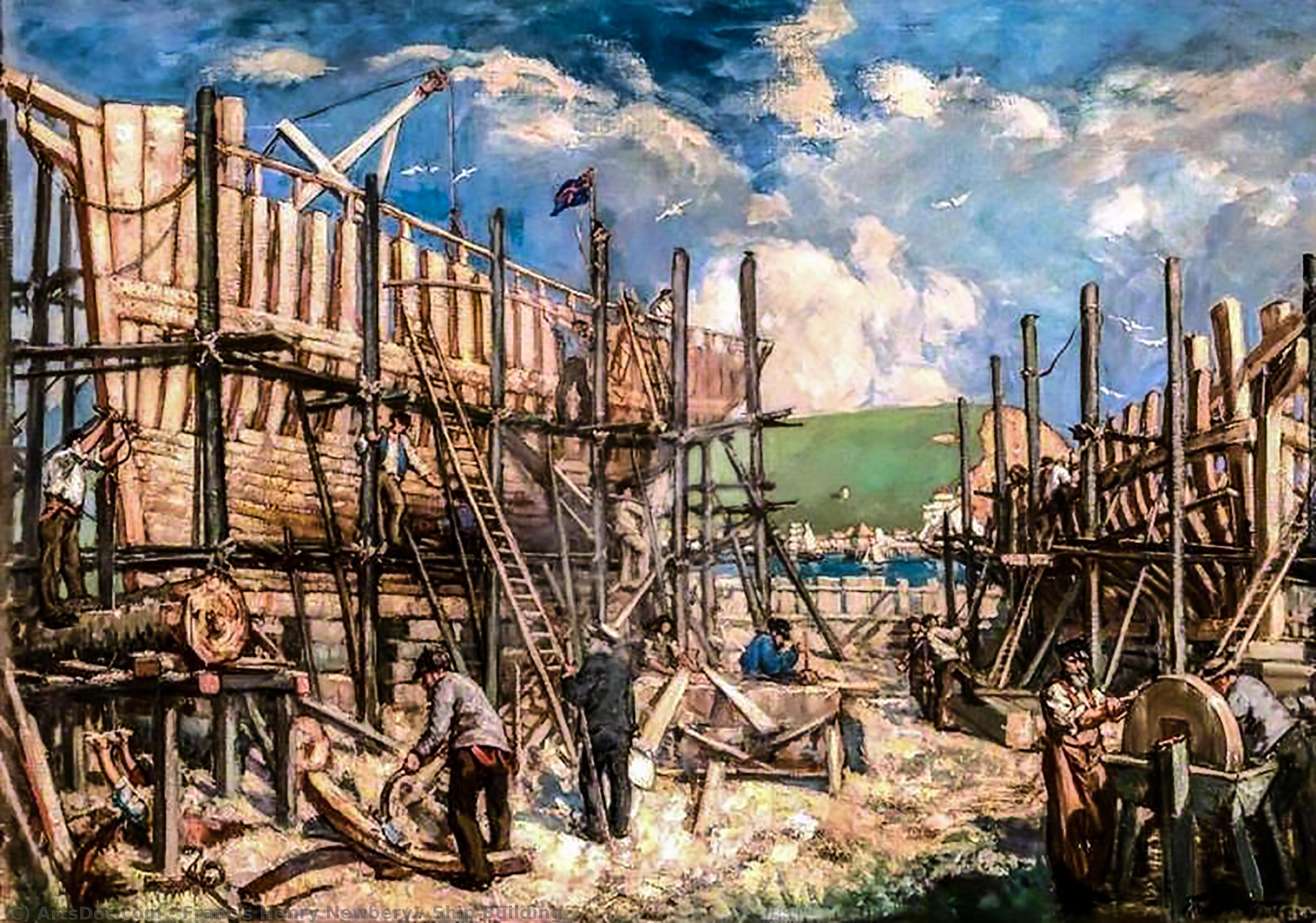
Ship Building
 1927
1927 120.0 x 170.0 cm
 Lees meer
Handgemaakte olieverfreproductie
Met de hand geschilderd in olieverf op canvas in uw gewenste maat en lijst, op bestelling gemaakt door onze kunstenaars. ( Bestel print Koop afbeelding)




































Kies uit onze vooraf ingestelde maten die overeenkomen met de originele verhoudingen van het kunstwerk.

U kunt uw eigen afmetingen invoeren om in een specifieke lijst of ruimte te passen. Als de door u gekozen maat niet overeenkomt met de verhoudingen van het originele beeld, zullen we het kunstwerk bijsnijden of het schilderij uitbreiden met extra handgeschilderde elementen. Een digitale mockup wordt ter goedkeuring naar u verzonden voordat de productie begint.
Houd er rekening mee dat de preview op het scherm niet de werkelijke uitsnede of uitbreiding weergeeft. Alleen de mockup toont de uiteindelijke compositie nauwkeurig.
Hoewel aangepaste afmetingen mogelijk zijn, raden we aan een maat uit de vooraf gedefinieerde lijst te selecteren om de originele verhoudingen te behouden.
Na de bestelling zal het team van OriginalUniqueArt.com per e-mail contact opnemen met de klant voor instructies en een mockup-voorbeeld sturen.
Wereldwijde levering () binnen 3 tot 4 weken in plaats van de standaard 5 weken. (14 augustus). Zonder concessies aan de kwaliteit.

Gratis wereldwijde expressverzending

Hoogwaardig linnen canvas

Volledige verzendverzekering

Garantie op terugbetaling van invoerrechten

Garantie op exacte kleurweergave

Retourbeleid van 60 dagen (alleen bij defecten)

100% Geld-terug-garantie

Korting bij meerdere afnames
 De optie voor glas is alleen beschikbaar bij een formaat kleiner dan 110 cm.

Ship Building
Druktechniek
Afmetingen reproductie
-


Eindtotaal
$ 300
Biografie van de kunstenaar
Francis Henry Newbery: Shaping Scottish Art Through Visionary Leadership
Francis Henry Newbery (1855 – 1946) stands as a pivotal figure in the history of British art education and Glasgow Style painting, leaving an indelible mark on Scotland’s artistic landscape. Born in Devon to shoemaker William Newbery and Eliza (née Treloar), his early life instilled a grounding in craftsmanship alongside a burgeoning passion for visual arts—a duality that would profoundly shape his career trajectory. He pursued formal schooling in Bridport, Dorset, earning qualifications as both a teacher and an art master, experiences which honed his pedagogical skills and deepened his understanding of artistic principles. A scholarship to London’s Slade School of Art in 1881 propelled him into the heart of London’s artistic milieu where he cultivated connections with prominent artists like James Guthrie and John Lavery. These formative years nurtured his artistic sensibilities and solidified his commitment to fostering creativity within young minds. Recognizing the importance of practical training alongside theoretical knowledge, Newbery championed a revolutionary approach at Glasgow School of Art—establishing it as one of the first UK art schools to prioritize practising artists over certificated instructors. This bold decision fostered an environment where innovation thrived and encouraged students to explore their individual artistic voices. His leadership at Glasgow School of Art between 1885 and 1917 cemented his legacy as a transformative educator and visionary director. Crucially, he collaborated closely with Charles Rennie Mackintosh on the design of the school’s iconic building—a testament to his belief in architectural harmony and artistic collaboration. Mackintosh's influence extended beyond the physical structure; Newbery actively promoted Mackintosh’s distinctive Glasgow Style, nurturing a generation of artists who embraced its geometric forms and decorative motifs. Furthermore, he instituted craft workshops and introduced embroidery classes, recognizing the value of diverse artistic disciplines and empowering students to develop multifaceted skills. Newbery’s own painting style aligned with the Glasgow Boys movement—a group of young Scottish painters who championed Impressionism and plein air painting techniques. He produced evocative landscapes and portraits imbued with a sensitivity to light and color, reflecting his profound connection to the Dorset countryside where he resided in Corfe Castle during his retirement years. Continuing to paint until 1932, Newbery remained dedicated to artistic expression until his death on December 18, 1946. His contribution to art education and his role in shaping Glasgow Style—a movement that redefined British decorative arts—solidifies his place as a cornerstone of Scottish artistic heritage.- Notable Works: “The Lady of the Carnation,” “Herbert Fitton Stockdale,” “The Spirit of Bridport, Dorset”
- Influences: Whistler, Barbizon School, Impressionism
- Achievements: Director of Glasgow School of Art; Collaborator with Charles Rennie Mackintosh; Champion of Scottish Artists

francis henry newbery
1855 - 1946
Belangrijkste feiten
- Artistic Movement Or Style: Glasgow Style
- Artists Or Movements Influenced By This Artist: ['Mackintosh Designs']
- Artists Who Influenced This Artist:
- James Guthrie
- John Lavery
- Date Of Birth: 1855
- Date Of Death: 1946
- Full Name: Francis Henry Newbery
- Nationality: British
- Notable Artworks:
- The Lady of the Carnation
- Herbert Fitton Stockdale
- The Spirit of Bridport
- Place Of Birth: Devon, England

