

 Voorvertoning
 Verstuur
 Delen
Delen
 Details bekijken
 Gids
Gids

 Download
 Vergelijkbare items
 Röntgenonderzoek
 Diavoorstelling
 Statistieken
Madonna with Child
 Oil On Panel
- Renaissance Early Renaissance
 1514
1514 93.0 x 68.0 cm
 Hermitage Museum
 Lees meer
Handgemaakte olieverfreproductie
Met de hand geschilderd in olieverf op canvas in uw gewenste maat en lijst, op bestelling gemaakt door onze kunstenaars. ( Schakel over naar print Schakel over naar digitale afbeeldingen)




P118B €10

P118H €10

P118W €10

P438Z €10

P508JH €12

P508YH €12

P805H €10

P805Z €10

P919BZ €10

P919G €10

P919XJ €10

P959ZH €10

P968JZ €12

W106C €8

W218G €10

W218JH €8

W218Y €10

W307PJ €10

W316G €10

W316PJ €8

W316Y €10

W398PJ €8

W4111J €10

W500HY €15

W500JH €15

W692G €12

W849H €8

W940BG €15

W953PJ €8




Kies uit onze vooraf ingestelde maten die overeenkomen met de originele verhoudingen van het kunstwerk.

Voer de breedte en hoogte in die u nodig heeft, passend bij uw lijst of uw muur. Omdat dit handgeschilderd is, kan de kunstenaar bij een afmeting met een andere beeldverhouding iets meer rondom het schilderij schilderen of juist iets meer weglaten — u kiest zelf. Wij sturen u een digitaal mockup ter goedkeuring voordat het schilderwerk begint. De afbeelding die op deze pagina wordt getoond, is niet het uiteindelijke resultaat — alleen de mockup geeft dit weer.
Na de bestelling zal het team van OriginalUniqueArt.com per e-mail contact opnemen met de klant voor instructies en een mockup-voorbeeld sturen.
Wereldwijde levering () binnen 3 tot 4 weken in plaats van de standaard 5 weken. (26 oktober). Zonder concessies aan de kwaliteit.

Gratis wereldwijde expressverzending

Hoogwaardig linnen canvas

Volledige verzendverzekering

Garantie op terugbetaling van invoerrechten

Garantie op exacte kleurweergave

Retourbeleid van 100 dagen (alleen bij defecten)

100% Geld-terug-garantie

Korting bij meerdere afnames
 De optie voor glas is alleen beschikbaar bij een formaat kleiner dan 110 cm.

Madonna with Child
Druktechniek
Afmetingen reproductie
-


Eindtotaal
€ 263
A Portrait of Devotion: Unveiling the Madonna with Child
Within the hallowed halls of the Hermitage Museum in St. Petersburg resides a painting that transcends mere representation, offering instead a profound glimpse into the heart of Renaissance faith and artistry – the Madonna with Child by Francesco Bigi, more commonly known as Franciabigio. Completed around 1514, this oil on panel is not simply a depiction of Mary cradling her infant son; it’s a carefully constructed tableau brimming with symbolism, technical mastery, and an undeniable emotional resonance that continues to captivate viewers centuries later.
Franciabigio, a Florentine artist born around 1482 and tragically passing in 1525, carved out a unique niche within the artistic landscape of his time. Unlike many of his contemporaries who focused primarily on grand religious commissions, Franciabigio distinguished himself through his evocative portraits and masterful frescoes. His work is characterized by an intimate quality, a remarkable ability to capture not just physical likeness but also the subtle nuances of human emotion – qualities that are powerfully evident in this Madonna with Child.
The Anatomy of Faith: Symbolism and Composition
At first glance, the painting presents a serene scene: Mary, depicted as a youthful woman radiating grace and composure, holds the infant Jesus close. His gaze is direct, engaging the viewer with an innocent curiosity that belies his divine status. However, beneath this surface tranquility lies a complex web of symbolism. The dove hovering above the Madonna – a frequent motif in Christian art – represents the Holy Spirit, signifying divine guidance and blessing. The small object held by the infant Jesus, often interpreted as a bird or a small dove, further reinforces this theme of peace and spiritual grace.
Franciabigio’s compositional choices are equally deliberate. The figures are arranged within a balanced, harmonious space, creating a sense of stability and tranquility. The soft, rounded forms, characteristic of the High Renaissance style, lend a lifelike quality to the subjects, while the gentle use of light and shadow imbues the scene with an ethereal glow. The background landscape, rendered in muted greens and blues, provides a subtle yet effective contrast to the vibrant colors of Mary’s robe – a rich red that speaks to her role as Mother of God.
A Master's Touch: Technique and Historical Context
Francibigio’s technical skill is undeniable. His use of color is remarkably sophisticated, particularly in his rendering of textures—the delicate folds of Mary’s robe, the soft curls of the infant Jesus’ hair. The painting demonstrates a keen understanding of perspective and anatomy, reflecting the influence of artists like Leonardo da Vinci, whose anatomical studies profoundly impacted Renaissance art.
The Madonna with Child was created during a period of significant artistic innovation in Florence, a time when artists were pushing the boundaries of realism and exploring new ways to represent religious subjects. Franciabigio’s work stands as a testament to this dynamic creative environment, showcasing his ability to synthesize classical influences with contemporary trends. The painting's creation coincided with the rise of the Medici family, who commissioned numerous works of art to glorify their lineage and demonstrate their patronage of the arts.
A Timeless Legacy: Reproduction and Inspiration
Today, reproductions of the Madonna with Child continue to inspire artists and interior designers alike. Its serene beauty, profound symbolism, and masterful technique make it a timeless masterpiece that transcends its historical context. Whether displayed in a grand gallery or cherished within a private home, this painting offers a powerful reminder of the enduring power of faith, art, and human connection.
Veelgestelde vragen
Wat is de aanbevolen afmeting voor de print van "Madonna with Child" door Franciabigio?
De aanbevolen afmeting voor de print van "Madonna with Child" door Franciabigio is Medium.
Zijn de kleuren van "Madonna with Child" levendig of gedempt?
De kleuren van "Madonna with Child" door Franciabigio vertonen een Subtle Color verzadiging met een Monochromatic intensiteit.
Welk gevoel roepen de kleuren van "Madonna with Child" door Franciabigio op?
"Madonna with Child" door Franciabigio combineert een Earthy palet met een Tranquil toon.
Biografie kunstenaar
Franciabigio: Een Florentijnse Renaissance-portrettist
Franciabigio (ca. 1482 – 24 januari 1525) vormt een uniek figuur binnen het levendige weefsel van de Florentijnse kunst tijdens de Hoogrenaissance—een schilder wiens nalatenschap voornamelijk berust in zijn expressieve portretten en meesterlijke fresco's, eerder dan in grootschalige religieuze opdrachten. Hoewel definitieve biografische details ongrijpbaar blijven, geloven geleerden dat hij in Florence, Italië, werd geboren, waarschijnlijk als Francesco di Cristofano, hoewel variaties zoals Marcantonio Franciabigio of Francia Bigio af en toe in de historische verslagen verschijnen. Zijn vroege artistieke opleiding vond plaats onder de begeleiding van Alberto Altramonte, wat de basis legde voor zijn latere samenwerkingen en stilistische evolutie. Rond 1506 maakte Franciabigio de overstap naar het atelier van Andrea del Sarto, een moment dat een cruciaal keerpunt in zijn carrière markeerde. Dit partnerschap stimuleerde een omgeving van innovatie en experiment, wat uiteindelijk leidde tot de gezamenlijke oprichting van een werkplaats in de Piazza del Grano—een centrum van artistieke activiteit dat andere prominente kunstenaars zoals Rosso Fiorentino, Pontormo, Francesco Indaco en Baccio Bandinelli aantrok. Franciabigio verwierf al snel bekendheid door zijn uitzonderlijke vaardigheid in de fresco-schilderkunst, waarmee hij de onderscheiding verdiende zijn tijdgenoten in deze techniek te overtreffen. Het is juist binnen dit medium dat de artistieke kracht van Franciabigio werkelijk tot bloei kwam—hij wist genuanceerde gezichtsuitdrukkingen vast te leggen en psychologische diepgang met een opmerkelijke gevoeligheid over te brengen. Zijn roem werd verstevigd door portretten doordrenkt met een tastbaar naturalisme, wat hem onderscheidde van veel van zijn tijdgenoten die de voorkeur gaven aan geïdealiseerde representaties. In tegenstelling tot de monumentale fresco's die het klooster van Santa Maria della Annunziata domineren, waar Andrea del Sarto een groter project leidde samen met Franciabigio—een samenwerking die werd overschaduwd door de gevierde “Geboorte van Venus” van del Sarto—richtte het werk van Franciabigio zich op het vastleggen van individueel karakter en emotie. Het huwelijk van de Maagd, uitgevoerd in 1513, is een treffend voorbeeld van deze benadering, waarbij hij zijn vermogen toonde om bijbelse verhalen te doordrenken met humanistisch realisme. Het fresco van het Laatste Avondmaal, in opdracht gemaakt voor het Convento della Calza in Florence (1514), verstevigde zijn reputatie verder—een monumentale onderneming onder toezicht van Andrea del Sarto, met een sterrenveld aan kunstenaars waaronder Pontormo en Indaco. De bijdrage van Franciabigio aan dit ambitieuze project was echter opvallend ingetogen vergeleken met het meesterwerk van del Sarto, wat de stilistische dominantie van zijn mentor benadrukte. Op vergelijkbare wijze werkte Franciabigio in het Convento della Salzo (1518-19) samen met Andrea del Sarto aan “De vertrek van Sint Jan de Doper naar de woestijn” en “De ontmoeting tussen Sint Jan de Doper en Jezus”, wat getuigt van een voortdurende betrokkenheid bij innovatieve artistieke ondernemingen. Zijn artistieke reis bereikte zijn hoogtepunt in de Villa Medici in Poggio a Caiano (1520-21), waar hij de fresco's van “De Triomf van Cicero” uitvoerde—een project dat de stilistische affiniteiten van Franciabigio met Pontormo liet zien, wat vooral duidelijk werd in de lunet die Vertumnus en Pomona afbeeldt. In tegenstelling tot de lichtrijke weergave van mythologische figuren door Pontormo, straalde de compositie van Franciabigio een gevoel van melancholie en onbehagen uit—een reflectie van een proto-maniëristische gevoeligheid die subtiel afweek van de heersende esthetische idealen van die tijd. Opmerkelijk genoeg produceerde hij ook het “Heiligen Job-altaarstuk” (1516), waarin zijn technische beheersing en artistieke visie duidelijk naar voren kwamen. De invloed van Franciabigio reikte verder dan zijn directe tijdgenoten; de stilistische afdruk van Raphael Sanzio is te herkennen in verschillende schilderijen die aan hem worden toegeschreven—met name "Madonna met Kind", wat de alomvattende impact van de artistieke principes van de Renaissance onderstreept. De blijvende nalatenschap van Franciabigio rust op zijn vermogen om humanistische idealen in een visuele vorm te vertalen, waarbij hij de complexiteit van menselijke emotie met ongeëvenaarde kunstzinnigheid wist te vangen—een getuigenis van zijn unieke bijdrage aan de Florentijnse kunstgeschiedenis.
Franciabigio
1482 - 1525 , Italië
Belangrijkste feiten
- Artistic Movement Or Style: Renaissance
- Artists Or Movements Influenced By This Artist: ['Renaissance']
- Artists Who Influenced This Artist:
- Andrea del Sarto
- Raphael Sanzio
- Date Of Birth: Florence, Italië (1482)
- Date Of Death: 24 januari 1525
- Full Name: Francesco Cristofano
- Nationality: Italiaans
- Notable Artworks:
- Portret van een man
- Hoofd van de Madonna
- Engel
- Sint Job-altaarstuk
- Huwelijk van de Maagd
- Laatste Avondmaal
- Vertrek van Johannes de Doper
- Ontmoeting van Johannes de Doper
- Triomf van Cicero
- Vertumnus en Pomona
- Place Of Birth: Florence
Gerelateerde artikelen
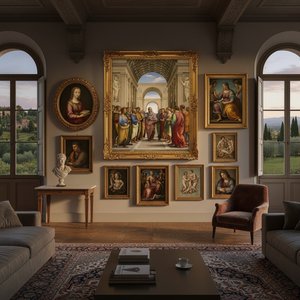
Raphael's Meesterwerken: 25 Iconische Kunstwerken voor uw Interieur | OriginalUniqueArt
Ontdek de 25 meest iconische meesterwerken van Raphael! Duik in de Renaissance kunst, bewonder zijn portretten & religieuze schilderijen. Hoogwaardige reproducties voor uw interieur op OriginalUniqueArt.com.
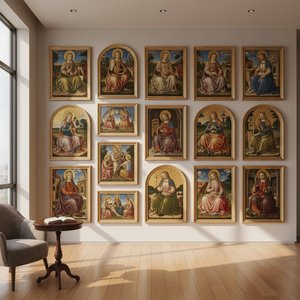
Fra Angelico's Top 25 Meesterwerken: Renaissance Kunst voor uw Interieur | OriginalUniqueArt.com
Ontdek de 25 mooiste meesterwerken van Fra Angelico! Verlies u in de spirituele schoonheid van Renaissance fresco's & panel schilderijen. Koop museumkwaliteit reproducties en breng Italiaanse kunst naar uw interieur op OriginalUniqueArt.com.

The Enduring Power of Painting: A Historical & Contemporary Exploration of Form and Emotion
Explore the rich history & enduring techniques of oil painting with OriginalUniqueArt. Discover masterpieces, learn about art collecting, and find authentic handmade reproductions crafted by skilled artists.

The Enduring Legacy of Oil on Canvas: Technique, History & Aesthetic Impact
Explore the rich history & techniques of oil painting – from Renaissance masters to Impressionism. Discover pigments, layering methods, and why this timeless medium endures. Expert insights for artists & art enthusiasts.

Oil on Canvas: A Historical & Technical Exploration of a Timeless Artistic Medium
Explore the rich history & enduring techniques of oil painting on canvas. Discover the science behind its longevity, conservation practices, and contemporary relevance. Expert insights for art enthusiasts.