
 Voorvertoning
 Verstuur
 Delen
Delen
 Details bekijken
 Gids
Gids

 Download
 Vergelijkbare items
 Röntgenonderzoek
 Diavoorstelling
 Q&A
Q&A Statistieken
Work

- 137.0 x 197.0 cm


 Lees meer
Giclée / Kunstafdrukken
Giclée- of canvasafdruk van museumkwaliteit met een snelle productie en flexibele afwerkingsmogelijkheden. ( Bestel handgeschilderde reproductie Schakel over naar digitale afbeeldingen)




P118B €10

P118H €10

P118W €10

P438Z €10

P508JH €12

P508YH €12

P805H €10

P805Z €10

P919BZ €10

P919G €10

P919XJ €10

P959ZH €10

P968JZ €12

W106C €8

W218G €10

W218JH €8

W218Y €10

W307PJ €10

W316G €10

W316PJ €8

W316Y €10

W398PJ €8

W4111J €10

W500HY €15

W500JH €15

W692G €12

W849H €8

W940BG €15

W953PJ €8




Kies uit onze vooraf ingestelde maten die overeenkomen met de originele verhoudingen van het kunstwerk.

Voer de gewenste breedte en hoogte in, passend bij uw lijst of muur. Een afdruk kan alleen worden ingekort en nooit groter worden gemaakt dan het origineel; een formaat met andere verhoudingen zal daarom een deel van de afbeelding verliezen. Wij sturen u een digitaal mockup ter goedkeuring voordat we tot drukwerk overgaan. De afbeelding op deze pagina toont niet de werkelijke uitsnede — dit is alleen te zien op het mockup.
Wereldwijde levering () binnen 2 weken in plaats van de standaard 4/5 weken. (2 november)

Gratis wereldwijde expressverzending

Hoogwaardig linnen canvas

Volledige verzendverzekering

Garantie op terugbetaling van invoerrechten

Garantie op exacte kleurweergave

Retourbeleid van 100 dagen (alleen bij defecten)

100% Geld-terug-garantie

Korting bij meerdere afnames
 De optie voor glas is alleen beschikbaar bij een formaat kleiner dan 110 cm.

Work
Giclée / Kunstafdrukken
Afmetingen reproductie
-


Eindtotaal
€ 72
Ford Madox Brown’s “Work”: A Symphony of Labor and Salvation
Ford Madox Brown's "Work," completed between 1852 and 1865, isn’t merely a depiction of a bustling Victorian street scene; it’s a profound meditation on the very nature of labor, morality, and the spiritual condition of an era grappling with rapid industrialization. This monumental oil painting, now residing in the Manchester City Art Gallery, stands as a testament to Brown's Pre-Raphaelite vision—a fusion of meticulous realism, vibrant color, and deeply embedded social commentary. The canvas explodes with activity, yet within this apparent chaos lies a carefully orchestrated narrative designed to provoke reflection on the value of honest toil and its connection to divine grace.
The scene unfolds in Hampstead Heath, capturing a group of navvies – laborers constructing a new water supply system—engaged in their arduous task. Brown’s genius lies not just in his technical mastery but in his ability to imbue these figures with dignity and humanity. He avoids the typical romanticized portrayal of manual labor often found in earlier works; instead, he presents them as complex individuals, each contributing to a larger communal effort. The composition is dominated by a semi-circular arrangement, drawing the viewer’s eye towards a central female figure, arguably representing both the Virgin Mary and a symbol of domestic virtue. Surrounding her are a diverse cast—a young couple struggling to feed their child, an unemployed haymaker, a pious middle-class woman distributing temperance tracts, and even a skeptical aristocrat observing the scene from horseback.
A Pre-Raphaelite Vision: Color, Detail, and Symbolism
Brown’s artistic approach is deeply rooted in the Pre-Raphaelite movement's core tenets. He employs a remarkably rich and vibrant palette—a departure from the muted tones often associated with academic painting—to capture the intensity of sunlight and the textures of clothing and skin. The meticulous detail, evident in every brushstroke, invites close scrutiny, revealing an astonishing level of observation and technical skill. The figures are rendered with a heightened sense of realism, yet imbued with a symbolic weight that elevates the scene beyond a simple snapshot of daily life.
Symbolism permeates “Work.” The bright sunlight, for instance, isn’t merely atmospheric; it represents divine illumination—a metaphorical light guiding the laborers towards salvation through honest labor. The placement of figures within the composition is deliberate, creating a visual hierarchy that underscores Brown's moral argument. The central female figure acts as a focal point, connecting the earthly realm of labor with the spiritual realm of grace. Even seemingly mundane details, such as the discarded temperance leaflet or the broken wheelbarrow, carry symbolic weight, highlighting the social injustices and inequalities prevalent in Victorian England.
Historical Context: Industrialization and Moral Reform
“Work” was painted during a period of profound social and economic upheaval. The rise of industrialization had transformed Britain into an empire fueled by factories and railways, but it also created immense poverty, overcrowding, and social unrest. The Pre-Raphaelites, including Brown, sought to challenge the prevailing artistic conventions and address pressing social issues through their art. They were influenced by thinkers like Thomas Carlyle, who argued that labor was a moral imperative—a means of achieving spiritual fulfillment. Carlyle’s ideas resonated deeply with Brown, informing his depiction of work as a pathway to salvation.
The painting reflects the broader intellectual and religious currents of the time. The Victorian era witnessed a resurgence of interest in biblical themes and a renewed emphasis on Christian morality. Brown's decision to depict laborers—often marginalized and ignored by mainstream society—as potential heroes underscores this shift in values. He suggests that true nobility lies not in wealth or status, but in the dedication and perseverance required to earn one’s livelihood through honest work.
Emotional Resonance: A Timeless Message
“Work” continues to resonate with viewers today because of its enduring message about the dignity of labor and the importance of social justice. The painting's raw energy, vibrant colors, and complex symbolism create a powerful emotional experience—one that challenges us to consider our own relationship to work, community, and spirituality. It’s a reminder that even in the midst of hardship and struggle, there is inherent value in contributing to something larger than oneself.
Reproductions of “Work” offer a remarkable opportunity to bring this masterpiece into your home or office—a visual testament to the enduring power of art to inspire reflection and promote social awareness. Each brushstroke captures not just a scene, but an entire era’s anxieties and aspirations, making it a truly timeless addition to any collection.
Veelgestelde vragen
Welk onderwerp en welke sfeer combineert "Work" door Ford Madox Brown?
"Work" door Ford Madox Brown combineert labor, victorian england, social commentary, pre-raphaelite, morality, figures, industry met een Dramatic atmosfeer.
Welke kleuren overheersen in "Work" door Ford Madox Brown?
"Work" door Ford Madox Brown maakt gebruik van een Earthy palet, met Phthalo Green (#2a241e) als dominante kleur.
In welke oriëntatie staat "Work" door Ford Madox Brown?
"Work" door Ford Madox Brown is een Landscape compositie. Het is raadzaam de verhoudingen te controleren voordat u een afmeting voor de print kiest.
Biografie kunstenaar
Een leven geschilderd in moreel en historisch licht
Ford Madox Brown, geboren op 16 april 1821 in Calais, Frankrijk, was een figuur die voortdurend de stromingen van artistieke verandering tijdens het Victoriaanse tijdperk navigeerde. Zijn vroege jaren werden gekenmerkt door een zekere vluchtigheid, gedicteerd door de zoektocht van zijn ouders naar een betaalbare levenswijze—een wisselend bestaan tussen de Franse kust en familieleden in Kent. Deze nomadische opvoeding, hoewel beperkend voor zijn formele opleiding, voedde een scherp observatievermogen en een ontluikend talent voor het reproducerende van prenten van oude meesters, wat de basis legde voor zijn toekomstige artistieke inspanningen. De zaadjes van Browns unieke stijl werden niet gezaaid binnen de muren van grote academies, maar in de stille praktijk van het kopiëren, waarbij hij de technieken en composities van voormalige meesters in zich opnam. De aanvankelijke aspiraties van zijn vader voor een marinecarrière voor de jonge Ford werden uiteindelijk overtroffen door de onweerstaanbare aantrekkingskracht van de kunst, wat leidde tot studies in Brugge, Gent en Antwerpen onder vooraanstaande kunstenaars zoals Albert Gregorius en Pieter van Hanselaere. Deze vormende jaren gaven hem een rigoureuze technische basis, maar Brown zou al snel zijn eigen pad uitstippelen en afwijken van de conventionele artistieke normen. Het vroege verlies van familieleden – zijn moeder in 1839, gevolgd door zijn zus en vader in de daaropvolgende jaren – wierp een schaduw over zijn persoonlijke leven, wat wellicht bijdroeg aan de vaak sombere en reflectieve kwaliteit die in zijn werk te vinden is.De Pre-Rafaëlitische affiniteit en artistieke innovatie
Hoewel hij nooit formeel lid was van de Pre-Rafaëlitische Broederschap, oefende Ford Madox Brown een aanzienlijke invloed uit op hun ontwikkeling en deelde hij veel van hun kernprincipes. Hij was een adviseur en vriend van de oprichters van de groep—Rossetti, Millais en Hunt—en zijn toewijding aan waarachtigheid in de weergave, minutieus detail en levendige kleur resoneerde diep met hun artistieke filosofieën. Toch bezat Browns stijl een eigen karakter dat hem onderscheidde. Waar de Pre-Rafaëlieten zich vaak richtten op geromantiseerde verhalen of literaire onderwerpen, wendde Brown zich regelmatig tot het hedendaagse leven en morele thema's, waardoor hij zijn schilderijen voorzag van een sociaal bewustzijn dat zelden werd gezien in de Victoriaanse kunst.Muurschilderingen, meesterwerken en een blijvende erfenis
Naast zijn schilderijen op ezel is de artistieke nalatenschap van Ford Madox Brown onlosmakelijk verbonden met de Manchester Murals. Deze twaalf monumentale werken, in opdracht gemaakt voor het stadhuis van Manchester, chronologiseren de geschiedenis van de stad, van haar Romeinse oorsprong tot haar industriële heden. De muurschilderingen zijn een getuigenis van Browns vaardigheid als narratief schilder en zijn vermogen om historisch onderzoek te synthetiseren met artistieke visie. Ze vertegenwoordigen enkele van de fijnste voorbeelden van Pre-Rafaëlitische muurschilderkunst, met levendige kleuren, minutieuze details en een meeslepend gevoel van drama. Deze werken waren niet zonder uitdagingen; Brown kreeg te maken met financiële moeilijkheden en logistieke hindernaties tijdens de creatie ervan, maar hij hield vol en liet een blijvend monument achter voor de geschiedenis van Manchester en artistieke innovatie. Zijn invloed reikte verder dan zijn directe kring en inspireerde kunstenaars zoals Thomas Benjamin Kennington, wiens werk The Pinch of Poverty de sociale realiteit uit Browns schilderijen weerspiegelt. Zijn toewijding aan het vangen van de essentie van het moderne leven is ook zichtbaar in werken zoals Study for the Head of Chaucer, een aangrijpend portret dat realistisch detail en een melancholische stemming toont.Persoonlijk leven en blijvende invloed
Het persoonlijke leven van Ford Madox Brown werd gekenmerende door zowel vreugde als verdriet. Hij trouwde tweemaal—eerst met Elizabeth Bromley in 1841, die tragisch genoeg vijf jaar later overleed, en daarna met Emily Hill in 1853. Hij was vader van vijf kinderen, waaronder Lucy Madox Brown, zelf een getalenteerd kunstenaar, en Catherine Madox Brown, die eveneens een creatief pad insloeg. Deze familiale verbindingen verrijkten zijn leven verder en boden inspiratie voor enkele van zijn werken. Ondanks de financiële worstelingen gedurende een groot deel van zijn carrière, bleef Brown toegewijd aan zijn kunst, waarbij hij voortdurend experimenteerde met nieuwe technieken en uitdagende thema's verkende. Zijn toewijding aan artistieke integriteit en sociale kritiek bezegelde zijn plaats als pionier van de Pre-Rafaëlitische beweging en als een belangrijk figuur in de Britse kunst van de 19e eeuw. Hij overleed op 6 oktober 1893, en liet een oeuvre na dat dient als een getuigenis van zijn artistieke visie en zijn onwankelbare toewijding aan waarheid en schoonheid.Het verkennen van de wereld van Ford Madox Brown vandaag
Talrijke bronnen bieden mogelijkheden om dieper in de wereld van Ford Madox Brown te duiken. Zijn werken zijn te vinden in vooraanstaande collecties zoals de Manchester Art Gallery en de Lady Lever Art Gallery, wat bezoekers de kans biedt om zijn meesterwerken van dichtbij te ervaren. Online platforms bieden handgeschilderde reproducties van hoge kwaliteit aan, waardoor kunstliefhebbers zijn visie in hun eigen huis kunnen halen. Verder onderzoek kan worden uitgevoerd via bronnen zoals Wikipedia en Britannica, die uitgebreide biografische informatie en kritische analyses van zijn werk bieden.- Kern thema's: Sociaal realisme, morele commentaar, historische vertelling, Victoriaans leven.

Ford Madox Brown
1821 - 1893 , Frankrijk
Belangrijkste feiten
- Artistic Movement Or Style: Pre-Raphaelite
- Artists Or Movements Influenced By This Artist: ['Nazarenes']
- Artists Who Influenced This Artist:
- William Hogarth
- Thomas Carlyle
- Date Of Birth: 16 april 1821
- Date Of Death: 6 oktober 1893
- Full Name: Ford Madox Brown
- Nationality: Engels
- Notable Artworks:
- Work
- The Last of England
- Manchester Murals
- Place Of Birth: Calais, Frankrijk
Gerelateerde artikelen

Pre-Raphaelite Romanticism: A Guide to Vivid Detail and Medieval Beauty in Victorian Art
Explore the vivid detail and medieval beauty of Pre-Raphaelite Romanticism. Discover the history of masters like Rossetti and Millais through our expert guide to Victorian art, perfect for collectors and professionals seeking authentic, museum-quality reproductions.

Sir John Everett Millais: Pre-Raphaelite Rebellion & Victorian Narrative Detail
Explore the revolutionary art of Sir John Everett Millais & the Pre-Raphaelite Brotherhood. Discover their radical realism, symbolic narratives, and lasting impact on Victorian aesthetics. A deep dive into 19th-century masterpieces.
The Pre-Raphaelite Brotherhood: Reclaiming Beauty, Nature, and Truth in Victorian Art History
Explore the revolutionary Pre-Raphaelite Brotherhood. Discover how these visionary artists rejected academic tradition to reclaim beauty, nature, and truth through luminous detail and literary depth in Victorian art history.

Dante Gabriel Rossetti's Top 25 Meesterwerken: Kunst voor uw Interieur | OriginalUniqueArt
Ontdek de 25 meest betoverende meesterwerken van Dante Gabriel Rossetti! Duik in de wereld van Pre-Raphaëlitische kunst, symbolisme & romantiek. Vind museumkwaliteit reproducties en inspiratie voor uw interieur op OriginalUniqueArt.com.
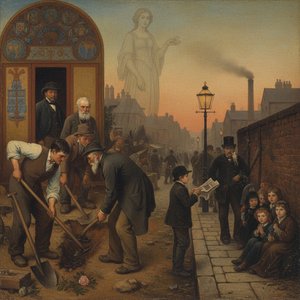
Ford Madox Brown: Pre-Raphaelite Visionary & Victorian Social Commentary
Explore the life & art of Ford Madox Brown, a pivotal Pre-Raphaelite painter renowned for his powerful social commentary and masterpiece 'Work'. Discover his lasting influence on British art history.