Menu
Text size

() ·

A painting made for you, by hand

Figure study

Handgemaakte olieverfreproductie

Met de hand geschilderd in olieverf op canvas in uw gewenste maat en lijst, op bestelling gemaakt door onze kunstenaars. ( Schakel over naar print Schakel over naar digitale afbeeldingen)

Beschrijving verzamelobject

Explore Filippo Lippi's masterful pen drawing 'Figure Study,' capturing the contemplative grace of a Renaissance woman amidst classical drapery and subtle shading techniques.

Biografie kunstenaar

Filippo Lippi (1406-1469): Een revolutionaire Renaissance-schilder met lyrische Madonnen, naturalisme & innovatieve composities. Beïnvloed Botticelli & vormde de Quattrocento kunst. Ontdek zijn leven & werk!

from ·

Chapter 1

How large should it be?

Slide to change the size; the picture on the left shows the frame at its real width. The proportions of the original are kept.

Standaardformaat
op maat gemaakt
CM
INCH

Kies uit onze vooraf ingestelde maten die overeenkomen met de originele verhoudingen van het kunstwerk.

breedte
hoogte

Voer de breedte en hoogte in die u nodig heeft, passend bij uw lijst of uw muur. Omdat dit handgeschilderd is, kan de kunstenaar bij een afmeting met een andere beeldverhouding iets meer rondom het schilderij schilderen of juist iets meer weglaten — u kiest zelf. Wij sturen u een digitaal mockup ter goedkeuring voordat het schilderwerk begint. De afbeelding die op deze pagina wordt getoond, is niet het uiteindelijke resultaat — alleen de mockup geeft dit weer.


Chapter 2

How should it arrive?

Choose the edges of the stretched canvas

Choose your frame

Corner sample of the WhiteWrap canvas edge finish, stretched on massief hout bars
White €1
Corner sample of the BlurSideWrap canvas edge finish, stretched on massief hout bars
Blurside €1
Corner sample of the ExtendedWrap canvas edge finish, stretched on massief hout bars
Extended €1
Corner sample of the P118B picture frame: gegoten polystyreen, 5 cm wide and 3 cm thick
P118B €10
Corner sample of the P118H picture frame: gegoten polystyreen, 5 cm wide and 3 cm thick
P118H €10
Corner sample of the P118W picture frame: gegoten polystyreen, 5 cm wide and 3 cm thick
P118W €10
Corner sample of the P438Z picture frame: gegoten polystyreen, 5.5 cm wide and 3.5 cm thick
P438Z €10
Corner sample of the P508JH picture frame: gegoten polystyreen, 7 cm wide and 3.5 cm thick
P508JH €12
Corner sample of the P508YH picture frame: gegoten polystyreen, 7 cm wide and 3.5 cm thick
P508YH €12
Corner sample of the P805H picture frame: gegoten polystyreen, 5 cm wide and 3.5 cm thick
P805H €10
Corner sample of the P805Z picture frame: gegoten polystyreen, 5 cm wide and 3.5 cm thick
P805Z €10
Corner sample of the P919BZ picture frame: gegoten polystyreen, 7 cm wide and 3.5 cm thick
P919BZ €10
Corner sample of the P919G picture frame: gegoten polystyreen, 7 cm wide and 3.5 cm thick
P919G €10
Corner sample of the P919XJ picture frame: gegoten polystyreen, 7 cm wide and 3.5 cm thick
P919XJ €10
Corner sample of the P959ZH picture frame: gegoten polystyreen, 5 cm wide and 3 cm thick
P959ZH €10
Corner sample of the P968JZ picture frame: gegoten polystyreen, 6 cm wide and 4 cm thick
P968JZ €12
Corner sample of the W106C picture frame: massief hout, 5 cm wide and 3 cm thick
W106C €8
Corner sample of the W218G picture frame: massief hout, 5 cm wide and 3 cm thick
W218G €10
Corner sample of the W218JH picture frame: massief hout, 5 cm wide and 3 cm thick
W218JH €8
Corner sample of the W218Y picture frame: massief hout, 5 cm wide and 3 cm thick
W218Y €10
Corner sample of the W307PJ picture frame: massief hout, 6 cm wide and 3 cm thick
W307PJ €10
Corner sample of the W316G picture frame: massief hout, 6 cm wide and 3 cm thick
W316G €10
Corner sample of the W316PJ picture frame: massief hout, 6 cm wide and 3 cm thick
W316PJ €8
Corner sample of the W316Y picture frame: massief hout, 6 cm wide and 3 cm thick
W316Y €10
Corner sample of the W398PJ picture frame: massief hout, 5 cm wide and 3 cm thick
W398PJ €8
Corner sample of the W4111J picture frame: massief hout, 6.5 cm wide and 3.5 cm thick
W4111J €10
Corner sample of the W500HY picture frame: massief hout, 7 cm wide and 5 cm thick
W500HY €15
Corner sample of the W500JH picture frame: massief hout, 7 cm wide and 5 cm thick
W500JH €15
Corner sample of the W692G picture frame: massief hout, 8 cm wide and 4 cm thick
W692G €12
Corner sample of the W849H picture frame: massief hout, 5 cm wide and 3 cm thick
W849H €8
Corner sample of the W940BG picture frame: massief hout, 7.5 cm wide and 4.5 cm thick
W940BG €15
Corner sample of the W953PJ picture frame: massief hout, 6 cm wide and 3.5 cm thick
W953PJ €8
Corner sample of the H24-GOLD picture frame: gesneden hout met gesso, 10 cm wide and 6 cm thick
H24-GOLD €30
Corner sample of the H24-SILVER picture frame: gesneden hout met gesso, 10 cm wide and 6 cm thick
H24-SILVER €30
Corner sample of the H36-GOLD picture frame: gesneden hout met gesso, 15 cm wide and 6.5 cm thick
H36-GOLD €45
Corner sample of the H36-SILVER picture frame: gesneden hout met gesso, 15 cm wide and 6.5 cm thick
H36-SILVER €45
Lijstvoorbeeld
Ingelijst

Moulding: . Overall size with the frame: .

Chapter 3

Who paints it, and should anything change?

Examples of what can be changed: Replace face with customer photo; Add pet (e.g., replace cat with dog); Include hidden message in background; Change background landscape or elements.
After order, OriginalUniqueArt.com team will email client for instructions and provide a mockup preview

Wereldwijde levering () binnen 3 tot 4 weken in plaats van de standaard 5 weken. (30 oktober). Zonder concessies aan de kwaliteit.

Chapter 4

The finishing touches

A nameplate, as in a museum?

Details van de gegraveerde bronzen plaat

This elegant plaque features the artist's name and the title of the artwork, finely engraved for a timeless presentation.

It is made from bronze with a refined, elegant finish. The text is precisely laser-engraved for a sharp and permanent result. Measuring 9x2 cm, the plaque is compact yet easy to read. It's built to be durable and scratch-resistant, offering a professional, museum-quality look. Mounting is simple thanks to the included adhesive backing.

Details transparante acrylplaat

The plaque includes essential engraved details such as the artist's name, the title of the artwork, the date it was created, the type of media used-like oil on canvas or watercolor-a brief description of the piece, and a QR code that links to the complete artwork information.

It is crafted from clear acrylic, offering a sleek, modern appearance. The text is UV-engraved in black to ensure strong visual contrast. With a size of 10x15 cm, it ensures optimal readability. It comes equipped with two metal hooks for secure wall mounting. The plaque is designed to be weather-resistant, making it suitable for various environments, and it includes interactive features that work seamlessly with smartphone scanning.

Details zwarte acrylplaat

This elegant plaque includes engraved information such as the artist's name, the title of the artwork, the date it was created, the type of media used (like oil on canvas or watercolor), a short description of the artwork, and a QR code for quick access to more information.

The plaque itself is made from refined black acrylic with a premium finish. The text is laser-engraved in white for high contrast and readability. Its size is 10x15 cm, designed to be easy to read. It comes with two metal hooks for professional mounting. The design is sleek and fits any interior style. It is also weather-resistant and durable, with built-in digital integration for mobile compatibility.

A protective varnish?

When do you need it?

Chapter 5

Your painting, as you ordered it

Figure study

Druktechniek

Afmetingen reproductie

-

Geselecteerde topkunstenaars

Meer detail, verfijning en extra productietijd

-

Lijst voor reproductie

-

-

Voor kunstwerken of reproducties die aan één zijde groter zijn dan 105 cm (ongeveer 41 inch), wordt de lijst als een losse set verzonden. Deze methode garandeert een veilige levering en voorkomt schade tijdens het transport.

Professionele montage vereist - dit is geen doe-het-zelfproduct.
De set moet worden gemonteerd en het canvas moet worden gespannen door een ervaren professionele lijstenmaker, met gebruik van houtlijm (niet inbegrepen), een doekspanter en klemmen om de sponningen recht te houden terwijl de lijm droogt. Onjuiste montage of een ongelijkmatige spanning op het canvas kan het kunstwerk permanent beschadigen en wordt niet gedekt door onze garantie.

  • Alle massief houten onderdelen zijn inbegrepen, nauwkeurig op maat gesneden voor montage.

  • Te monteren met de meegeleverde schroeven, plus houtlijm voor de hoekverbindingen, die niet wordt meegeleverd en door uw lijstenmaker moet worden aangeschaft.

  • Professioneel gereedschap is vereist en niet inbegrepen: een spanner voor canvas en klemmen om de latten recht te houden terwijl de lijm droogt.

Belangrijk:
De hoekverbindingen vereisen houtlijm, de latten moeten met lijmklemmen worden vastgehouden tot de lijm volledig is opgedroogd, en het spannen van het canvas op het samengestelde frame vereist een doekspanter. Geen van deze artikelen is inbegrepen in de set. Wij adviseren u om een ervaren professionele lijstenmaker te raadplegen voordat u deze maat bestelt.

Naamplaatje

-

-

Beschermende vernislaag

Glanzende vernis (versterkt de kleuren en biedt bescherming tegen licht en vocht)

-

Mijn kunstwerk aanpassen

Voorbeelden van aanpassingen: vervang het gezicht door een eigen foto; voeg een huisdier toe (bijv. vervang de kat door een hond); verwerk een verborgen boodschap in de achtergrond; wijzig het landschap of andere elementen op de achtergrond.

-

Spoedlevering

Wereldwijde levering () binnen 3 tot 4 weken in plaats van de standaard 5 weken. (30 oktober). Geen concessies aan de kwaliteit.

-

Spoedlevering

Wereldwijde levering naar binnen 5 weken. (6 november).

Inbegrepen

Eindtotaal

€ 266

Totaalprijs € 266

De optie voor glas is alleen beschikbaar bij een formaat kleiner dan 110 cm.

Included with every order

  • Gratis wereldwijde expressverzending
  • Hoogwaardig linnen canvas
  • Volledige verzendverzekering
  • Garantie op terugbetaling van invoerrechten
  • Garantie op exacte kleurweergave
  • Retourbeleid van 100 dagen (alleen bij defecten)
  • 100% Geld-terug-garantie
  • Korting bij meerdere afnames

A Study in Contemplation: Filippo Lippi’s Figure Drawing

The artwork presented here—a meticulously rendered pen drawing titled “Figure study”—offers a glimpse into the artistic sensibilities of Filippo di Tommaso Lippi, one of Florence's most celebrated Renaissance masters. Executed around 1452, this piece transcends mere representation; it embodies the humanist ideals that were reshaping European thought during the period and speaks to themes of introspection and idealized beauty—elements deeply rooted in classical tradition.

Historical Context: The Florentine Renaissance

Lippi’s artistic journey unfolded against the backdrop of Florence's burgeoning Renaissance. Following the rediscovery of Classical texts and art, artists like Lippi sought inspiration from ancient Greece and Rome, striving to capture human form with unprecedented accuracy and grace. This fascination with antiquity wasn’t simply aesthetic; it represented a profound shift in worldview—a belief in human potential and an embrace of reason alongside faith—influencing every facet of Florentine culture and artistic production. The drawing itself reflects this intellectual fervor, mirroring the humanist preoccupation with capturing the essence of humanity through observation and disegno (drawing).

Technique: Mastering Line and Tone

The artist’s mastery is evident in his masterful application of pen and ink on paper. Lippi employed a technique characterized by delicate hatching and cross-hatching—methods that allowed him to achieve remarkable tonal variation without resorting to color. These lines, meticulously crafted with varying pressures, create subtle gradations of gray, simulating the textures of skin and drapery with astonishing realism. The artist’s careful attention to detail is further underscored by the use of fine line weights, emphasizing contours and conveying a sense of movement—particularly noticeable in the upward tilt of the woman's left arm as she draws her hair. This technique wasn’t merely about replicating visual appearances; it was about communicating emotion and capturing the psychological state of the subject.

Composition and Symbolism: Ideal Beauty and Inner Reflection

The composition centers around a single female figure positioned prominently within the frame, directing the viewer's gaze directly to her expressive face. Her posture—slightly turned towards the viewer—suggests contemplation and invites us to consider her inner life. The positioning of her arm contributes to this sense of movement and conveys an unspoken yearning for serenity. Symbolically, the drawing aligns with Renaissance ideals of beauty—specifically, the concept of “ideal bellezza,” which prioritized harmony, proportion, and grace. Lippi’s depiction isn't merely a portrait; it’s an exploration of human dignity and spiritual contemplation—themes that resonated deeply within the humanist worldview of his time.

Emotional Impact: A Moment Frozen in Time

Looking at "Figure study," one senses not just visual precision but also palpable emotion. The soft, diffused lighting enhances the drawing's ethereal quality, creating subtle tonal nuances that convey a sense of quietude and introspection. The artist’s skillful rendering captures a fleeting moment—a gesture of repose—that speaks to the universal human desire for peace and contemplation. It is this ability to evoke feeling through visual form that elevates Lippi’s work beyond mere representation, cementing its place as an enduring testament to Renaissance artistic achievement.

Veelgestelde vragen

Waar kan ik een voorproefje van "Figure study" bekijken?

Om een reproductie van "Figure study" door Filippo Lippi te bekijken, opent u de Voorvertoning pagina van het kunstwerk.

Is "Figure study" door Filippo Lippi een bekend kunstwerk?

"Figure study" door Filippo Lippi heeft een populariteitsniveau van Recognized. Deze classificatie weerspiegelt hoe breed het werk wordt erkend.

Welke emotionele toon gaat gepaard met de Renaissance Humanism-stijl van "Figure study"?

"Figure study" ademt een Reflective emotionele toon uit binnen de Renaissance Humanism-stroming.

More about this painting

Voorvertoning Bekijk in AR Schakel over naar print Schakel over naar digitale afbeeldingen Verstuur
Details bekijken Gids Toevoegen aan favorieten Download Vergelijkbare items Röntgenonderzoek Diavoorstelling Q&A Statistieken

In numbers

  • 1452the year it was painted
  • 29frames to choose from
  • standard sizes, in its own proportions
  • 5weeks to paint and deliver it
Filippo Lippi

Filippo Lippi

1406 - 1469, Italië

Quick facts about Filippo Lippi

  • Artistic Movement Or Style: Vroege Renaissance
  • Artists Or Movements Influenced By This Artist: ['Botticelli']
  • Artists Who Influenced This Artist: ['Masaccio']
  • Date Of Birth: 1406
  • Date Of Death: 1469
  • Full Name: Filippo di Tommaso Lippi
  • Nationality: Italiaans
  • Notable Artworks:
    • Tarquinia Madonna
    • Annunciatie
    • Zeven Heiligen
  • Place Of Birth: Florence, Italië

Biografie kunstenaar

A Florentine Rebel: The Life and Art of Filippo Lippi

Filippo di Tommaso Lippi, beter bekend als Fra Filippo Lippi, was een figuur die zowel door artistieke genialiteit werd verheven als door een leven vol schandaal en onconventionele keuzes. Geboren in Florence in 1406 uit een familie van slachters, waren zijn vroege jaren gekenmerkt door verlies; hij werd op jonge leeftijd wegens de dood van zijn ouders, alleen achtergelaten aan de zorg van zijn tante, Mona Lapaccia. Deze omstandigheden leidden uiteindelijk tot zijn toetreding tot de Carmelietenorde in 1420, een pad dat niet alleen zijn artistieke ontwikkeling vormde maar ook de complexiteit van zijn karakter definieerde. Binnen deze kloostermuren begon jonge Filippo met zijn formele opleiding en ontdekte hij cruciaal zijn passie voor schilderkunst. De invloed van deze omgeving is tastbaar in veel van zijn werk: een delicate balans tussen spirituele toewijding en een toenemende menselijke gevoeligheid.

Van Religieuze Vows tot Artistische Innovatie

Lippi’s toetreding tot de Carmelietenorde in 1420 was niet slechts het gevolg van omstandigheden, maar leek zijn artistieke drang te ontketenen. Hij nam zijn geloften op zestienjarige leeftijd en werd rond 1425 priester, waarbij hij bleef in de priorij tot 1432. Het is tijdens deze periode dat kunsthistoricus Giorgio Vasari beschrijft hoe Lippi gefascineerd raakte door de baanbrekende fresco’s van Masaccio in de Brancacci Kapel – een ontmoeting die cruciaal bleek te zijn. De impact van Masaccio's naturalisme en innovatieve lichtgebruik is duidelijk zichtbaar in Lippi’s vroege werken, zoals de *Tarquinia Madonna*, waar een nieuwe realiteit begint te verschijnen. Echter, Lippi was niet simpelweg een imitator; hij ontwikkelde snel zijn eigen kenmerkende stijl, gekenmerkt door lyrische gratie, delicate kleuren en een subtiele emotionele diepte die hem onderscheidde van zijn tijdgenoten. Hij begon religieuze scènes te vullen met een gevoel van intimiteit en menselijke verbinding, weg van de meer rigide formaliteit van eerdere devotionele kunst.

Een Meester van Compositie en Controverse

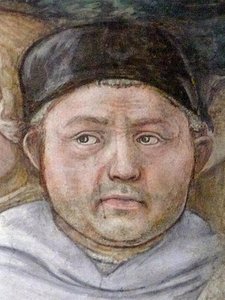
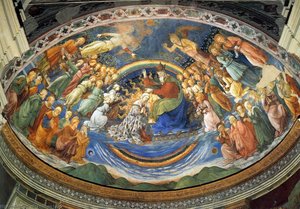
Lippi’s artistieke carrière bloeide op in Florence, waar hij commissies ontving van prominente families zoals de Medici. Werken zoals *De Aankondiging en de Zeven Heiligen* tonen zijn vermogen om complexe composities te creëren vol symbolische betekenis en elegante detail. De *Kroning der Maagd*, voltooid in 1441 voor de nonnen van Sant’Ambrogio, is bijzonder opmerkelijk; het bevat een halflange figuur die velen zien als een zelfportret van Lippi zelf – een moedige uitspraak van artistieke identiteit binnen een religieuze context. Maar zijn leven was verre van sereen. Hij werd vaak verwikkeld in financiële moeilijkheden, juridische geschillen en beschuldigingen van vervalsing. Misschien de meest sensationele episode was zijn ontvoering van Lucrezia Buti, een non uit Prato, met wie hij na jaren van schandaal en controverse uiteindelijk trouwde. Deze daad, hoewel schokkend voor die tijd, spreekt Lippi’s rebelse geest en zijn bereidheid om maatschappelijke normen te verwerpen in de jacht op persoonlijke geluk te spreken.

De Invloed van Masaccio en de Vroege Stijl

Lippi’s artistieke ontwikkeling werd sterk beïnvloed door Masaccio, wiens werk hij ontmoette in de Brancacci Kapel. De nadruk op realisme, het gebruik van licht en schaduw, en de compositie waren allemaal elementen die Lippi overnam. Zijn vroege werken, zoals de *Tarquinia Madonna*, laten deze invloed duidelijk zien. Echter, Lippi was niet alleen een imitator; hij ontwikkelde al snel zijn eigen stijl, gekenmerkt door lyrische gratie, delicate kleuren en een subtiele emotionele diepte. Hij begon religieuze scènes te vullen met een gevoel van intimiteit en menselijke verbinding, weg van de meer rigide formaliteit van eerdere devotionele kunst. De *Annunciatie* en de *Zeven Heiligen*, besteld door Cosimo de Medici, zijn voorbeelden van deze stijl.

Een Meester van Compositie en Controverse

Lippi’s artistieke carrière bloeide op in Florence, waar hij commissies ontving van prominente families zoals de Medici. Werken zoals *De Aankondiging en de Zeven Heiligen* tonen zijn vermogen om complexe composities te creëren vol symbolische betekenis en elegante detail. De *Kroning der Maagd*, voltooid in 1441 voor de nonnen van Sant’Ambrogio, is bijzonder opmerkelijk; het bevat een halflange figuur die velen zien als een zelfportret van Lippi zelf – een moedige uitspraak van artistieke identiteit binnen een religieuze context. Maar zijn leven was verre van sereen. Hij werd vaak verwikkeld in financiële moeilijkheden, juridische geschillen en beschuldigingen van vervalsing. Misschien de meest sensationele episode was zijn ontvoering van Lucrezia Buti, een non uit Prato, met wie hij na jaren van schandaal en controverse uiteindelijk trouwde. Deze daad, hoewel schokkend voor die tijd, spreekt Lippi’s rebelse geest en zijn bereidheid om maatschappelijke normen te verwerpen in de jacht op persoonlijke geluk te spreken.

Legacy and Influence

Ondanks de turbulentie van zijn leven liet Filippo Lippi een onuitwisbare stempel achter op de Renaissance kunst. Hij was een zeer gevraagde schilder, en zijn werkplaats werd een broedplaats voor toekomstige meesters. Onder zijn meest uitstekende leerlingen waren Sandro Botticelli en Francesco di Pesello (Pesellino), beiden van wie afstamming zou leiden tot aanzienlijke erkenning in hun eigen recht. Lippi’s invloed kan worden gezien in de lyrische schoonheid en emotionele expressiviteit die kenmerken veel van de Florentijnse schilderkunst tijdens het late Quattrocento. Hij bracht de kloof tussen de vroege Renaissance naturalisme van Masaccio en de verfijndere esthetiek van de Gouden Eeuw samen, waardoor een nieuwe generatie kunstenaars werd geopend om de mogelijkheden van menselijke vorm en emotie te verkennen. Zijn vermogen om religieuze toewijding te combineren met wereldse realisme, gekoppeld aan zijn innovatieve composities en uitstekende techniek, versterkte zijn plaats als een van de meest belangrijke en boeiende figuren van de Italiaanse Renaissance. Hij stierf in Spoleto in 1469, nalatend een erfenis die tot op de dag van vandaag bewondering en bewondering inspireert. Zijn kunst is een getuigenis van de kracht van menselijke creativiteit en de blijvende aantrekkingskracht van schoonheid.

Snelle feiten

  • Year: 1452
  • Title: Figure study
  • Medium: Pen and ink on paper
  • Location: Private Collection
  • Movement: Early Renaissance
  • Dimensions: 292 x 199 cm

Kunstquiz

Er is slechts één goed antwoord op elke vraag.

Vraag 1:
What artistic movement is Filippo Lippi’s ‘Figure study’ associated with?
Vraag 2:
The image description mentions a 'soft and diffused' lighting effect. Why is this significant in the context of Renaissance art?
Vraag 3:
What technique did Lippi employ to create shading and volume in the drawing?
Vraag 4:
The description notes that the pose of the woman suggests 'introspection or preparation.' What does this imply about Lippi's artistic intentions?
Vraag 5:
What is the primary stylistic characteristic of ‘Figure study’ according to the text?