

 Bekijk op ware grootte
 Verstuur
 Delen
Delen
 Details bekijken
 Gids voor studentenkunstwerken

 Download
 Vergelijkbare items
 Röntgenonderzoek
 Diavoorstelling
 Statistieken
St Jerome
 Oil On Canvas
- WallArt
- Renaissance Art
 1490
1490- Renaissance
 136.0 x 71.0 cm
 Galleria degli Uffizi
 Lees meer
Handgemaakte olieverfreproductie
Met de hand geschilderd in olieverf op canvas in uw gewenste maat en lijst, op bestelling gemaakt door onze kunstenaars. ( Schakel over naar print Schakel over naar digitale afbeeldingen)




P118B €10

P118H €10

P118W €10

P438Z €10

P508JH €12

P508YH €12

P805H €10

P805Z €10

P919BZ €10

P919G €10

P919XJ €10

P959ZH €10

P968JZ €12

W106C €8

W218G €10

W218JH €8

W218Y €10

W307PJ €10

W316G €10

W316PJ €8

W316Y €10

W398PJ €8

W4111J €10

W500HY €15

W500JH €15

W692G €12

W849H €8

W940BG €15

W953PJ €8




Kies uit onze vooraf ingestelde maten die overeenkomen met de originele verhoudingen van het kunstwerk.

Voer de breedte en de hoogte in die u nodig heeft, passend bij uw lijst of uw muur. Dit is handgeschilderd, dus bij een afmeting met een andere vormverhouding kan de kunstenaar iets meer rondom het schilderij schilderen of juist iets meer weglaten — u kiest zelf. Wij sturen u een digitaal mockup ter goedkeuring voordat het schilderwerk begint. De afbeelding die op deze pagina wordt getoond, is niet het uiteindelijke resultaat — alleen de mockup geeft dit weer.
Na de bestelling zal het team van OriginalUniqueArt.com per e-mail contact opnemen met de klant voor instructies en een mockup-voorbeeld sturen.
Wereldwijde levering () binnen 3 tot 4 weken in plaats van de standaard 5 weken. (22 oktober). Zonder concessies aan de kwaliteit.

Gratis wereldwijde expressverzending

Hoogwaardig linnen canvas

Volledige verzendverzekering

Garantie op terugbetaling van invoerrechten

Garantie op exacte kleurweergave

Retourbeleid van 100 dagen (alleen bij defecten)

100% Geld-terug-garantie

Korting bij meerdere afnames
 De optie voor glas is alleen beschikbaar bij een formaat kleiner dan 110 cm.

St Jerome
Reproductiemethode
Formaat reproductie
-


Totaalprijs
€ 263
A Sanctuary of Silence: The Soul of Filippino Lippi’s St Jerome
In the quiet corners of the Galleria degli Uffizi, there exists a window into a world of profound stillness. Filippino Lippi’s St Jerome, executed around 1490, is not merely a portrait of a saint; it is an invitation to pause. As one gazes upon this oil on canvas masterpiece, the frantic pace of the modern world seems to dissolve, replaced by the heavy, sacred atmosphere of the High Renaissance. Lippi, the talented son of Fra Filippo Lippi, possessed a rare ability to bridge the gap between the divine and the human. In this work, he captures the essence of spiritual contemplation, presenting a figure that feels as much a part of our shared humanity as he is a vessel for the divine.
The composition draws the viewer into a moment of deep, internal dialogue. St Jerome is depicted in his characteristic state of scholarly devotion, seated against the rugged textures of a stone wall or rock. His posture—leaning forward with a hand pressed thoughtfully to his forehead—suggests a mind caught in the labyrinth of scripture and prayer. The light in the painting does not strike with harshness; rather, it is a diffused, natural glow that bathes the saint, highlighting the delicate folds of his simple robe and the weathered lines of his face. This masterful use of chiaroscuro creates a palpable sense of three-dimensionality, making the saint’s presence feel almost tangible within the frame.
Symbolism and the Natural World
Lippi weaves a rich tapestry of symbolism into the very landscape that surrounds his subject. The background is far from a mere backdrop; it is a living, breathing extension of Jerome's inner state. Mature trees and lush foliage frame the scene, suggesting the vitality of creation even amidst the saint's solitary asceticism. Perhaps most poignant is the subtle presence of the lion, tucked into the upper corner of the composition. This small but significant detail serves as a powerful nod to the hagiography of St Jerome, recalling the legend of the saint taming the wild beast by removing a thorn from its paw—a metaphor for the power of compassion to subdue even the most ferocious impulses.
The color palette is intentionally subdued, favoring earthy tones and soft shadows that reinforce the mood of penitence and peace. This restraint allows the viewer to focus on the subtle nuances of emotion: the slight furrow of a brow, the weight of a hand, the quiet dignity of age. For the collector or the lover of fine art, this painting offers more than visual beauty; it offers a psychological depth that resonates across centuries. It is a study in how light and shadow can be used to sculpt not just form, but feeling.
An Eternal Inspiration for the Modern Interior
For the discerning interior designer or the dedicated art enthusiast, a high-quality reproduction of St Jerome serves as a profound focal point. This is an artwork that demands a space of reflection—a study, a library, or a quiet corner of a living room where one might seek respite from the day's labors. The painting’s classical elegance and its mastery of Renaissance technique bring a sense of historical weight and intellectual sophistication to any environment.
Integrating such a piece into a contemporary setting allows for a beautiful tension between the old and the new. Whether paired with minimalist modern furniture or nestled within a more traditional, ornate decor, the emotive power of Lippi’s brushwork remains undiminished. To possess a reproduction of this work is to bring a fragment of the Florentine Renaissance into one's own home, ensuring that the spirit of contemplation and the beauty of classical humanism continue to inspire generations to come.
Vragen & Antwoorden
Kan ik een röntgenopname van "St Jerome" door Filippino Lippi bekijken?
De röntgenweergave van "St Jerome" door Filippino Lippi is te vinden op de Röntgenanalyse-pagina van het kunstwerk: een interactieve verkenning van het beeld door middel van elf optische lagen.
Hoe kan ik een reproductie van "St Jerome" door Filippino Lippi bekijken?
Op de Voorvertoning-pagina van "St Jerome" kunt u het kunstwerk bekijken voordat u bestelt.
Welke plaatsing past bij het formaat van "St Jerome" door Filippino Lippi?
Met zijn Tall-vorm wordt een reproductie van "St Jerome" aanbevolen voor een Living Room.
Biografie van de kunstenaar
Vroege Leven en Vorming
Filippino Lippi, geboren in april 1457 te Prato, Italië, was een kind van de Renaissance, letterlijk én figuurlijk. Zijn vader, Fra Filippo Lippi, was reeds een gevestigde naam als schilder, bekend om zijn lyrische Madonnas en innovatieve technieken. Filippino’s jeugd werd echter gekenmerkt door onzekerheid; hij was een buitenechtelijk kind, geboren uit de relatie van Fra Filippo met Lucrezia Buti. Desondanks ontving hij een grondige opleiding in de kunst van zijn vader, wat de basis legde voor zijn eigen artistieke carrière. Deze vroege training omvatte waarschijnlijk het leren mengen van pigmenten, het aanbrengen van goudblad en het bestuderen van anatomie en perspectief. Fra Filippo’s werkplaats was een broedplaats van creativiteit, waar Filippino de eerste beginselen van schilderkunst absorbeerde en zijn eigen talent begon te ontwikkelen. De vroege invloed van zijn vader is duidelijk zichtbaar in zijn latere werken, maar Filippino zou al snel een unieke stijl creëren die hem onderscheidde van zijn meester.Artistieke Loopbaan en Ontwikkeling
Filippino’s artistieke ontwikkeling kan grofweg worden verdeeld in drie periodes. Zijn eerste periode (1475-1480) kenmerkt zich door werken die minder verfijnd zijn dan zijn latere meesterwerken, vaak toegeschreven aan een anonieme kunstenaar bekend als “amico di Sandro”. Deze vroege Madonnas tonen al wel zijn talent voor compositie en kleurgebruik, maar missen de expressiviteit en complexiteit die kenmerkend zouden worden voor zijn volwassen werk. In de periode 1480-1485 begon Filippino een meer persoonlijke en effectieve benadering te ontwikkelen, zichtbaar in werken zoals de *Reizen van Tobias*. Hierin experimenteerde hij met narratieve elementen en dynamische composities. Zijn ware meesterschap bereikte hij echter in de periode 1485-1504, gekenmerkt door zijn beheersing van de High Renaissance stijl, culminerend in werken als *De Verschijning van Christus aan Maria*. Deze periode toont een ongeëvenaarde virtuositeit in anatomie, perspectief en kleurgebruik.Belangrijkste Werken en Samenwerkingen
Filippino Lippi was niet alleen een getalenteerd individueel kunstenaar, maar ook een gewilde collaborator. Hij werkte samen met prominente kunstenaars als Perugino, Ghirlandaio en Botticelli aan fresco’s in de villa van Lorenzo de' Medici, een opdracht die hem in contact bracht met de elite van Florence. Een bijzonder belangrijke taak was het voltooien van Masaccio’s onafgemaakte decoratie in de Brancacci Kapel, samen met Masolino. Dit project vereiste niet alleen technische vaardigheid, maar ook respect voor het werk van zijn voorganger en een diep begrip van de Renaissance kunsttraditie. Tot zijn meest bekende werken behoren *De Kroning van Maria*, *Tobias en de Engel*, *Sint Hiëronimus* en *Scène uit het Leven van Sint Thomas van Aquino*. Deze werken getuigen van zijn veelzijdigheid en beheersing van verschillende genres, van religieuze scènes tot portretten.Invloeden en Artistieke Stijl
Filippino Lippi werd sterk beïnvloed door Sandro Botticelli en zijn vader, Fra Filippo Lippi. Van Botticelli leerde hij de elegantie van lijnvoering en compositie, terwijl hij van zijn vader de warmte van kleurgebruik en de expressiviteit van figuren erfde. Zijn eigen stijl kenmerkt zich door een levendigheid in vorm en lijn, warme colorieten, gedetailleerde landschappen, expressieve figuren en een combinatie van perspectiefgeometrie met intieme interieurs. Tijdens zijn verblijf in Rome bestudeerde hij antieke ruïnes en sculpturen, wat resulteerde in de integratie van klassieke elementen in zijn kunst. Deze invloed is zichtbaar in de architectuur en draperieën in zijn latere werken. Zijn vermogen om perspectief te combineren met realistische details creëerde een unieke visuele diepte en geloofwaardigheid in zijn schilderijen.Historische Betekenis en Erfenis
Filippino Lippi wordt beschouwd als een toonaangevende Florentijnse vertegenwoordiger van de traditie van grote fresco cycli. Zijn invloed op de High Renaissance is onmiskenbaar, met name in zijn gebruik van kleur, compositie en narratieve kracht. Zijn werken bevinden zich in musea over de hele wereld, waaronder de Uffizi Galerie in Florence. Hij wordt geroemd om het overbruggen van de kloof tussen eerdere Renaissance stijlen en de opkomende High Renaissance esthetiek. Zijn vermogen om traditionele thema’s te combineren met innovatieve technieken en een persoonlijke expressie maakte hem tot een van de meest invloedrijke kunstenaars van zijn tijd. De impact van Filippino Lippi is nog steeds zichtbaar in het werk van latere generaties schilders, die zich lieten inspireren door zijn virtuositeit en originaliteit.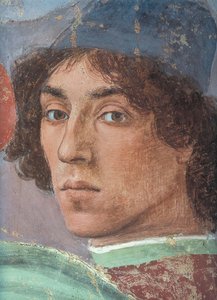
Filippino Lippi
1457 - 1504 , Italië
Snelle feiten
- Artistieke Stroming: Hoge Renaissance
- Bekende Werken:
- Kroon van Maria
- Tobias en Engel
- St. Jeronimus
- Beïnvloed Door Kunstenaars:
- Fra Filippo Lippi
- Sandro Botticelli
- Geboortedatum: April 1457
- Geboorteplaats: Prato, Italië
- Kunstenaars Beïnvloed: ['Raffaellino del Garbo']
- Nationaliteit: Italiaans
- Overlijdensdatum: April 1504
- Volledige Naam: Filippino Lippi
Gerelateerde artikelen
Top 25 Meesterwerken: Een Reis door de Galleria degli Uffizi, Florence | OriginalUniqueArt
Ontdek de top 25 meesterwerken van de Galleria degli Uffizi, Florence! Reis door de Renaissance met Botticelli, Leonardo da Vinci & Michelangelo. Kunst reproducties van museumkwaliteit voor uw interieur. Explore the full collection on OriginalUniqueArt.com.
Top 25 Meesterwerken: Kunstcollectie National Gallery Washington | OriginalUniqueArt
Ontdek de top 25 meesterwerken van National Gallery Washington! Van Cézanne tot Picasso, leer het verhaal achter iconische kunst. Vind museumkwaliteit reproducties & interieurinspiratie op OriginalUniqueArt.com.
Filippo Lippi: Bridging Renaissance Devotion & Artistic Innovation
Explore the life & revolutionary art of Filippo Lippi, a pivotal Renaissance painter. Discover his masterpieces, influence on Botticelli, and investment potential. Expert analysis at OriginalUniqueArt.
Top 25 Meesterwerken: Kunstgeschiedenis herbeleven in de National Gallery London | OriginalUniqueArt
Ontdek de 25 meest iconische meesterwerken van de National Gallery London! Van Van Gogh tot Monet – leer het verhaal achter elk schilderij en vind perfecte kunst reproducties voor uw interieur. OriginalUniqueArt.com: museumkwaliteit prints & decoratie.

Filippino Lippi: Renaissance Innovation Bridging Faith & Humanism
Explore the captivating world of Filippino Lippi, a Renaissance master bridging faith & humanism through innovative art. Discover his key works, influences, and lasting legacy with OriginalUniqueArt.
