Menu
Text size

() ·

A painting made for you, by hand

The Baluster

Handgemaakte olieverfreproductie

Met de hand geschilderd in olieverf op canvas in uw gewenste maat en lijst, op bestelling gemaakt door onze kunstenaars. ( Schakel over naar print Schakel over naar digitale afbeeldingen)

Beschrijving verzamelobject

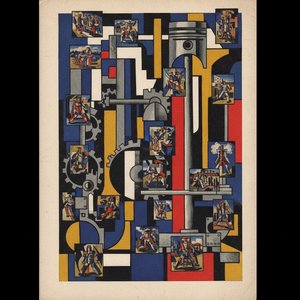
Fernand Léger's 'The Baluster' (1925) is a seminal Cubist painting featuring bold geometric forms, vibrant colors, and a dynamic composition—a masterpiece of modern art.

Biografie kunstenaar

Fernand Léger (1881-1955): Pionier van Cubisme & 'Tubism'! Ontdek baanbrekende schilderijen over moderniteit, machines & de menselijke vorm – een voorloper van Pop Art.

from ·

Chapter 1

How large should it be?

Slide to change the size; the picture on the left shows the frame at its real width. The proportions of the original are kept.

Standaardformaat
op maat gemaakt
CM
INCH

Kies uit onze vooraf ingestelde maten die overeenkomen met de originele verhoudingen van het kunstwerk.

breedte
hoogte

Voer de breedte en hoogte in die u nodig heeft, passend bij uw lijst of uw muur. Omdat dit handgeschilderd is, kan de kunstenaar bij een afmeting met een andere beeldverhouding iets meer rondom het schilderij schilderen of juist iets meer weglaten — u kiest zelf. Wij sturen u een digitaal mockup ter goedkeuring voordat het schilderwerk begint. De afbeelding die op deze pagina wordt getoond, is niet het uiteindelijke resultaat — alleen de mockup geeft dit weer.


Chapter 2

How should it arrive?

Choose the edges of the stretched canvas

Choose your frame

Corner sample of the WhiteWrap canvas edge finish, stretched on massief hout bars
White €1
Corner sample of the BlurSideWrap canvas edge finish, stretched on massief hout bars
Blurside €1
Corner sample of the ExtendedWrap canvas edge finish, stretched on massief hout bars
Extended €1
Corner sample of the P118B picture frame: gegoten polystyreen, 5 cm wide and 3 cm thick
P118B €10
Corner sample of the P118H picture frame: gegoten polystyreen, 5 cm wide and 3 cm thick
P118H €10
Corner sample of the P118W picture frame: gegoten polystyreen, 5 cm wide and 3 cm thick
P118W €10
Corner sample of the P438Z picture frame: gegoten polystyreen, 5.5 cm wide and 3.5 cm thick
P438Z €10
Corner sample of the P508JH picture frame: gegoten polystyreen, 7 cm wide and 3.5 cm thick
P508JH €12
Corner sample of the P508YH picture frame: gegoten polystyreen, 7 cm wide and 3.5 cm thick
P508YH €12
Corner sample of the P805H picture frame: gegoten polystyreen, 5 cm wide and 3.5 cm thick
P805H €10
Corner sample of the P805Z picture frame: gegoten polystyreen, 5 cm wide and 3.5 cm thick
P805Z €10
Corner sample of the P919BZ picture frame: gegoten polystyreen, 7 cm wide and 3.5 cm thick
P919BZ €10
Corner sample of the P919G picture frame: gegoten polystyreen, 7 cm wide and 3.5 cm thick
P919G €10
Corner sample of the P919XJ picture frame: gegoten polystyreen, 7 cm wide and 3.5 cm thick
P919XJ €10
Corner sample of the P959ZH picture frame: gegoten polystyreen, 5 cm wide and 3 cm thick
P959ZH €10
Corner sample of the P968JZ picture frame: gegoten polystyreen, 6 cm wide and 4 cm thick
P968JZ €12
Corner sample of the W106C picture frame: massief hout, 5 cm wide and 3 cm thick
W106C €8
Corner sample of the W218G picture frame: massief hout, 5 cm wide and 3 cm thick
W218G €10
Corner sample of the W218JH picture frame: massief hout, 5 cm wide and 3 cm thick
W218JH €8
Corner sample of the W218Y picture frame: massief hout, 5 cm wide and 3 cm thick
W218Y €10
Corner sample of the W307PJ picture frame: massief hout, 6 cm wide and 3 cm thick
W307PJ €10
Corner sample of the W316G picture frame: massief hout, 6 cm wide and 3 cm thick
W316G €10
Corner sample of the W316PJ picture frame: massief hout, 6 cm wide and 3 cm thick
W316PJ €8
Corner sample of the W316Y picture frame: massief hout, 6 cm wide and 3 cm thick
W316Y €10
Corner sample of the W398PJ picture frame: massief hout, 5 cm wide and 3 cm thick
W398PJ €8
Corner sample of the W4111J picture frame: massief hout, 6.5 cm wide and 3.5 cm thick
W4111J €10
Corner sample of the W500HY picture frame: massief hout, 7 cm wide and 5 cm thick
W500HY €15
Corner sample of the W500JH picture frame: massief hout, 7 cm wide and 5 cm thick
W500JH €15
Corner sample of the W692G picture frame: massief hout, 8 cm wide and 4 cm thick
W692G €12
Corner sample of the W849H picture frame: massief hout, 5 cm wide and 3 cm thick
W849H €8
Corner sample of the W940BG picture frame: massief hout, 7.5 cm wide and 4.5 cm thick
W940BG €15
Corner sample of the W953PJ picture frame: massief hout, 6 cm wide and 3.5 cm thick
W953PJ €8
Corner sample of the H24-GOLD picture frame: gesneden hout met gesso, 10 cm wide and 6 cm thick
H24-GOLD €30
Corner sample of the H24-SILVER picture frame: gesneden hout met gesso, 10 cm wide and 6 cm thick
H24-SILVER €30
Corner sample of the H36-GOLD picture frame: gesneden hout met gesso, 15 cm wide and 6.5 cm thick
H36-GOLD €45
Corner sample of the H36-SILVER picture frame: gesneden hout met gesso, 15 cm wide and 6.5 cm thick
H36-SILVER €45
Lijstvoorbeeld
Ingelijst

Moulding: . Overall size with the frame: .

Chapter 3

Who paints it, and should anything change?

Examples of what can be changed: Replace face with customer photo; Add pet (e.g., replace cat with dog); Include hidden message in background; Change background landscape or elements.
After order, OriginalUniqueArt.com team will email client for instructions and provide a mockup preview

Wereldwijde levering () binnen 3 tot 4 weken in plaats van de standaard 5 weken. (29 oktober). Zonder concessies aan de kwaliteit.

Chapter 4

The finishing touches

A nameplate, as in a museum?

Details van de gegraveerde bronzen plaat

This elegant plaque features the artist's name and the title of the artwork, finely engraved for a timeless presentation.

It is made from bronze with a refined, elegant finish. The text is precisely laser-engraved for a sharp and permanent result. Measuring 9x2 cm, the plaque is compact yet easy to read. It's built to be durable and scratch-resistant, offering a professional, museum-quality look. Mounting is simple thanks to the included adhesive backing.

Details transparante acrylplaat

The plaque includes essential engraved details such as the artist's name, the title of the artwork, the date it was created, the type of media used-like oil on canvas or watercolor-a brief description of the piece, and a QR code that links to the complete artwork information.

It is crafted from clear acrylic, offering a sleek, modern appearance. The text is UV-engraved in black to ensure strong visual contrast. With a size of 10x15 cm, it ensures optimal readability. It comes equipped with two metal hooks for secure wall mounting. The plaque is designed to be weather-resistant, making it suitable for various environments, and it includes interactive features that work seamlessly with smartphone scanning.

Details zwarte acrylplaat

This elegant plaque includes engraved information such as the artist's name, the title of the artwork, the date it was created, the type of media used (like oil on canvas or watercolor), a short description of the artwork, and a QR code for quick access to more information.

The plaque itself is made from refined black acrylic with a premium finish. The text is laser-engraved in white for high contrast and readability. Its size is 10x15 cm, designed to be easy to read. It comes with two metal hooks for professional mounting. The design is sleek and fits any interior style. It is also weather-resistant and durable, with built-in digital integration for mobile compatibility.

A protective varnish?

When do you need it?

Chapter 5

Your painting, as you ordered it

The Baluster

Druktechniek

Afmetingen reproductie

-

Geselecteerde topkunstenaars

Meer detail, verfijning en extra productietijd

-

Lijst voor reproductie

-

-

Voor kunstwerken of reproducties die aan één zijde groter zijn dan 105 cm (ongeveer 41 inch), wordt de lijst als een losse set verzonden. Deze methode garandeert een veilige levering en voorkomt schade tijdens het transport.

Professionele montage vereist - dit is geen doe-het-zelfproduct.
De set moet worden gemonteerd en het canvas moet worden gespannen door een ervaren professionele lijstenmaker, met gebruik van houtlijm (niet inbegrepen), een doekspanter en klemmen om de sponningen recht te houden terwijl de lijm droogt. Onjuiste montage of een ongelijkmatige spanning op het canvas kan het kunstwerk permanent beschadigen en wordt niet gedekt door onze garantie.

  • Alle massief houten onderdelen zijn inbegrepen, nauwkeurig op maat gesneden voor montage.

  • Te monteren met de meegeleverde schroeven, plus houtlijm voor de hoekverbindingen, die niet wordt meegeleverd en door uw lijstenmaker moet worden aangeschaft.

  • Professioneel gereedschap is vereist en niet inbegrepen: een spanner voor canvas en klemmen om de latten recht te houden terwijl de lijm droogt.

Belangrijk:
De hoekverbindingen vereisen houtlijm, de latten moeten met lijmklemmen worden vastgehouden tot de lijm volledig is opgedroogd, en het spannen van het canvas op het samengestelde frame vereist een doekspanter. Geen van deze artikelen is inbegrepen in de set. Wij adviseren u om een ervaren professionele lijstenmaker te raadplegen voordat u deze maat bestelt.

Naamplaatje

-

-

Beschermende vernislaag

Glanzende vernis (versterkt de kleuren en biedt bescherming tegen licht en vocht)

-

Mijn kunstwerk aanpassen

Voorbeelden van aanpassingen: vervang het gezicht door een eigen foto; voeg een huisdier toe (bijv. vervang de kat door een hond); verwerk een verborgen boodschap in de achtergrond; wijzig het landschap of andere elementen op de achtergrond.

-

Spoedlevering

Wereldwijde levering () binnen 3 tot 4 weken in plaats van de standaard 5 weken. (29 oktober). Geen concessies aan de kwaliteit.

-

Spoedlevering

Wereldwijde levering naar binnen 5 weken. (5 november).

Inbegrepen

Eindtotaal

€ 265

Totaalprijs € 265

De optie voor glas is alleen beschikbaar bij een formaat kleiner dan 110 cm.

Included with every order

  • Gratis wereldwijde expressverzending
  • Hoogwaardig linnen canvas
  • Volledige verzendverzekering
  • Garantie op terugbetaling van invoerrechten
  • Garantie op exacte kleurweergave
  • Retourbeleid van 100 dagen (alleen bij defecten)
  • 100% Geld-terug-garantie
  • Korting bij meerdere afnames

Fernand Léger’s “The Baluster”: A Mechanical Dance of Form and Color

Fernand Léger's "The Baluster," painted in 1925, isn’t merely a depiction of an architectural element; it’s a vibrant manifesto of Cubism’s embrace of the modern world. This oil on canvas, currently residing within the esteemed collection of the Museum of Modern Art (MoMA) in New York City, pulsates with a dynamic energy born from the artist's unique synthesis of geometric abstraction and a fascination with industrial forms. Léger, a pivotal figure in the early 20th century’s artistic revolution, sought to translate the rhythms of the machine age – its angularity, its repetitive patterns, its sense of relentless motion – into a visual language that was both intellectually stimulating and emotionally resonant.

The painting immediately commands attention with its bold palette. A dominant blue background provides a striking contrast to the fiery reds, yellows, and oranges that dominate the central composition. This interplay of cool and warm tones isn’t simply decorative; it establishes a visual tension, mirroring the inherent dynamism within the artwork itself. Léger masterfully employs simplified geometric shapes – interlocking circles, rectangles, and stylized cylinders – to construct the balustrade, the very subject of the piece. These forms aren't rendered with meticulous detail but rather are presented in a deliberately abstracted manner, emphasizing their essential qualities over realistic representation.

The Roots of Cubism: Fragmentation and Multiple Perspectives

“The Baluster” firmly situates itself within the broader context of Cubism, a movement pioneered by Pablo Picasso and Georges Braque. Unlike earlier representational art that prioritized illusionistic depth and perspective, Cubism sought to dismantle traditional notions of space and representation. Léger’s approach, often referred to as “Tubism,” further developed this concept by reducing objects to their fundamental geometric components – cylinders, cones, and spheres – and presenting them from multiple viewpoints simultaneously. This fragmentation creates a sense of disorientation and invites the viewer to actively engage with the artwork, piecing together its meaning through observation.

The influence of Futurism is also palpable in Léger’s work. Like the Italian Futurist movement, which celebrated speed, technology, and dynamism, Léger sought to capture the essence of modern life – particularly the impact of industrialization on human experience. The painting's angular forms and sense of movement evoke the imagery of factories, trains, and other symbols of the machine age. However, unlike the often-aggressive aesthetic of Futurism, Léger’s approach is more restrained and contemplative, suggesting a nuanced understanding of both the promise and the potential anxieties associated with modernity.

Decoding the Symbolism: The Balustrade as Focal Point

The title itself – “The Baluster” – immediately draws our attention to the central element of the composition. Léger doesn’t simply depict a balustrade; he elevates it to a symbolic representation of stability, structure, and order within an increasingly chaotic world. The balustrade, traditionally associated with safety and protection, becomes a visual anchor amidst the swirling forms and vibrant colors. It represents a point of reference, a grounding element that provides a sense of equilibrium in the midst of dynamic energy.

Interestingly, Léger’s choice to depict a balustrade – a relatively mundane architectural feature – is itself significant. By focusing on an everyday object, he invites us to reconsider our perceptions of beauty and value. The painting suggests that even the most ordinary elements of our environment can be transformed into works of art through careful observation and creative interpretation.

A Legacy of Modernism: Léger’s Enduring Influence

“The Baluster” stands as a testament to Fernand Léger's innovative spirit and his profound impact on the development of modern art. His bold use of color, simplified forms, and exploration of industrial themes paved the way for subsequent generations of artists, including Pop Art pioneers like Andy Warhol. The painting’s enduring appeal lies in its ability to capture the energy and dynamism of the 20th century while simultaneously inviting viewers to contemplate the fundamental questions about perception, representation, and the relationship between art and life.

Reproductions of “The Baluster” continue to be highly sought after by collectors and interior designers alike. Its vibrant colors and dynamic composition make it a striking addition to any space, while its historical significance offers a glimpse into the artistic currents that shaped the modern world. A piece like this speaks volumes about the artist's vision and his place in art history.

Veelgestelde vragen

In welke ruimte in huis past een reproductie van "The Baluster" goed?

De aanbevolen ruimte voor "The Baluster" door Fernand Léger is een Living Room. Dit advies kan uiteraard worden aangepast aan uw interieur.

Welke emotie straalt "The Baluster" door Fernand Léger uit?

"The Baluster" roept een Energetic gevoel op. De emotionele toon beschrijft de indruk die het werk achterlaat.

Hoe kan ik een digitale afbeelding van "The Baluster" door Fernand Léger verkrijgen?

"The Baluster" is beschikbaar als een digitale afbeelding in hoge resolutie om te downloaden, direct te verkrijgen op de Digitale afbeelding pagina.

More about this painting

Voorvertoning Bekijk in AR Schakel over naar print Schakel over naar digitale afbeeldingen Verstuur
Details bekijken Gids Toevoegen aan favorieten Download Vergelijkbare items Röntgenonderzoek Diavoorstelling Q&A Statistieken

In numbers

  • 1925the year it was painted
  • 29frames to choose from
  • standard sizes, in its own proportions
  • 5weeks to paint and deliver it
Fernand Léger

Fernand Léger

1881 - 1955, Frankrijk

Quick facts about Fernand Léger

  • Artistic Movement Or Style: Cubisme, Tubisme
  • Artists Or Movements Influenced By This Artist: ['Pop Art']
  • Artists Who Influenced This Artist: ['Paul Cézanne']
  • Date Of Birth: 4 feb 1881
  • Date Of Death: 17 aug 1955
  • Full Name: Fernand Léger
  • Nationality: Frans
  • Notable Artworks:
    • Nudes in de Bos
    • Machine Element
    • De Grote Parade
    • De Stad
  • Place Of Birth: Argentan, Frankrijk

Biografie kunstenaar

Fernand Léger: Een Leven Gebeeldhouwd in Vorm

Fernand Léger, geboren Joseph Fernand Henri Léger in 1881 in het rustige Argentan, Normandië, staat als een cruciale figuur in de evolutie van moderne kunst. Zijn reis van de landelijke gebieden van zijn jeugd naar de voorhoede van de Parijse avant-garde is een bewijs van een onwrikbare artistieke visie en een voortdurende zoektocht naar het vastleggen van de geest van de machine-tijdperk. Anders dan veel van zijn tijdgenoten die abstractie omarmden als een terugtrekking uit representatie, zocht Léger naar *integratie* van moderniteit – haar dynamiek, haar mechanische vormen, haar essentie – in een nieuwe visuele taal die zowel krachtig abstract als diep geworteld was in de waargenomen wereld. Zijn vroege leven, doordrenkt met de fysieke ervaringen van landbouwwerk, bood een contrasterende basis ten opzichte van de geindustrialiseerde toekomst waar hij zo gepassioneerd over zou schilderen. In eerste instantie was Léger bestemd voor architectuur, maar zijn pad veranderde naar schilderkunst na aankomst in Parijs rond 1900, waar hij zichzelf steunde door tekenwerk terwijl hij zijn artistieke vaardigheden verder ontwikkelde. Deze periode werd gekenmerkt door traditionele academische training, maar het was pas toen hij de baanbrekende werken van Paul Cézanne ontmoette dat een ware transformatie begon.

De Geboorte van ‘Tubism’ en de Section d’Or

Cézanne's retrospectief in 1907 diende als katalysator, bevrijd Léger van conventionele representatie en stuwde hem naar een meer geometrische en structurele benadering. Hij begon vormen te ontmantelen, hun onderliggende structuren te analyseren en ze op het doek opnieuw op te bouwen met nadruk op soliditeit en volume. Deze verkenning leidde snel tot zijn omgang met Cubisme, maar Léger was niet tevreden om Picasso's of Braque's stijlen simpelweg te kopiëren. In plaats daarvan ontwikkelde hij zijn eigen onderscheidende idiom – een persoonlijke vorm van Cubisme die critici humoristisch ‘Tubism’ noemden. Karakteristiek voor Tubism waren cilindrische vormen, platte vlakken en felle kleurcontrasten, die de mechanische esthetiek vierden nog voordat deze wijdverspreid werd. Het was kunst geboren uit het observeren van de opkomende industriële wereld, met een erkenning van schoonheid in haar functionele vormen en mechanische ritmes. Deze periode zag Léger actief deelnemen aan de avant-garde scène, zich verenigen met kunstenaars zoals Jean Metzinger, Henri Le Fauconnier, Francis Picabia en Marcel Duchamp binnen de Puteaux Group, ook bekend als de Section d’Or (De Gouden Schnitt). De groep onderzocht wiskundige principes van harmonie en proportie, strevend naar het inbrengen van een gevoel van orde en rationaliteit in hun kunst. Hun gezamenlijke onderzoek bracht de grenzen van artistieke expressie op de proef, legde de basis voor toekomstige ontwikkelingen in abstracte kunst.

Oorlog, Mechanisatie en Een Nieuwe Esthetiek

Het uitbreken van de Eerste Wereldoorlog had een diepgaande impact op Léger's leven en werk. Zijn dienstplicht vanaf 1914 leidde hem naar het front, waar hij getuige was van de gruwelen van de moderne oorlogsvoering – artillerievuur, luchtgevechten en de dehumaniserende effecten van mechanische oorlogvoering. Deze ervaring leidde niet tot ontgoocheling of een afwijzing van moderniteit; eerder versterkte het zijn fascinatie voor machines en hun kracht. Schetsen die hij tijdens zijn dienst maakte documenteerden de schitterende schoonheid van militaire technologie, transformeerden instrumenten van vernietiging in onderwerpen voor artistieke contemplatie. Na terugkeer naar de burgerlijke wereld onderging Léger's esthetiek een verdere evolutie. Zijn schilderijen begonnen te reflecteren op een meer gestroomlijnde, mechanische sensatie, die de dynamiek en efficiëntie van de industriële wereld vierden. *Soldier met een pijp* (1916) illustreert deze verschuiving, waarbij vereenvoudigde vormen en felle kleuren een gevoel van mechanische precisie oproepen. Dit was niet alleen een esthetische keuze; het was een filosofisch statement – een bevestiging van de potentie van moderniteit voor vooruitgang en wederopbouw, ondanks de verwoestingen van de oorlog.

Erfgoed en Laatste Invloed

In zijn latere jaren bleef Léger de kruising tussen kunst en industrie verkennen, werken creërend die de moderne levenswijze vierden met een unieke combinatie van abstractie en figuratie. Zijn *Paysages animés* (Geanimeerde Landschappen) reeks uit 1921 toonde figuren en dieren die naadloos in gestroomlijnde composities waren geïntegreerd, waardoor de grenzen tussen organisch en onorganisch werden vervaagd. Hij experimenteerde ook met beeldhouwkunst en filmmaken, breidde zijn artistieke praktijk uit tot buiten de traditionele schilderkunst. Léger's invloed op latere generaties kunstenaars is onmiskenbaar. Zijn gedurfde vereenvoudiging van vorm, zijn omhelzing van industriële beelden en zijn viering van populaire cultuur anticipeerden op het ontstaan van Pop Art decennia later. Kunstenaars als Roy Lichtenstein en Andy Warhol schuldigen een duidelijke staatgenoot aan Léger's baanbrekende werk. Hij bracht de kloof tussen abstracte kunst en figuratieve representatie in kaart, waardoor het mogelijk werd om werken te creëren die zowel intellectueel uitdagend als visueel boeiend waren. Vandaag de dag blijven Fernand Léger's schilderijen worden bewaard in belangrijke musea wereldwijd, waaronder het Musée d’Art et d’Histoire in Frankrijk en het Musée National Fernand Léger, gewijd uitsluitend aan zijn werk. Hij blijft een toonaangevende figuur van de 20e eeuwse kunst – een visionair die durfde schoonheid te vinden in de machine-tijdperk en deze op het doek met ongeëvenaarde moed en originaliteit vast te leggen. Zijn nalatenschap is niet alleen als schilder, maar als profeet van de moderniteit. *Een ware pionier wiens werk nog steeds resoneren met het publiek.*

Snelle feiten

  • Title: The Baluster
  • Movement: Cubism
  • Influences:
    • Picasso
    • Braque
  • Artistic style: Abstract, Mechanistic
  • Artist: Fernand Léger
  • Dimensions: 51 x 38 1/4"

Kunstquiz

Er is slechts één goed antwoord op elke vraag.

Vraag 1:
What artistic movement is most closely associated with Fernand Léger’s ‘The Baluster’?
Vraag 2:
In ‘The Baluster’, what is the primary color of the background?
Vraag 3:
Which of the following best describes Fernand Léger’s approach to Cubism?
Vraag 4:
The title ‘The Baluster’ refers specifically to:
Vraag 5:
Fernand Léger was born in which city?