Voorvertoning
 Verstuur
 Delen
Delen
 Details bekijken
 Gids
Gids

 Download
 Vergelijkbare items
 Röntgenonderzoek
 Diavoorstelling
 Vraag & antwoord
 Statistieken
The Massacre at Chios


 Lees meer
Giclée / Kunstafdrukken
Giclée- of canvasafdruk van museumkwaliteit met een snelle productie en flexibele afwerkingsmogelijkheden. ( Bestel handgeschilderde reproductie Schakel over naar digitale afbeeldingen)




P118B €10

P118H €10

P118W €10

P438Z €10

P508JH €12

P508YH €12

P805H €10

P805Z €10

P919BZ €10

P919G €10

P919XJ €10

P959ZH €10

P968JZ €12

W106C €8

W218G €10

W218JH €8

W218Y €10

W307PJ €10

W316G €10

W316PJ €8

W316Y €10

W398PJ €8

W4111J €10

W500HY €15

W500JH €15

W692G €12

W849H €8

W940BG €15

W953PJ €8




Kies uit onze vooraf ingestelde maten die overeenkomen met de originele verhoudingen van het kunstwerk.

Voer de gewenste breedte en hoogte in, passend bij uw lijst of muur. Een afdruk kan alleen worden ingekort en nooit groter worden gemaakt dan het origineel; een formaat met andere verhoudingen zal daarom een deel van de afbeelding verliezen. Wij sturen u een digitaal mockup ter goedkeuring voordat we tot drukwerk overgaan. De afbeelding op deze pagina toont niet de werkelijke uitsnede — dit is alleen te zien op het mockup.
Wereldwijde levering () binnen 2 weken in plaats van de standaard 4/5 weken. (5 november)

Gratis wereldwijde expressverzending

Hoogwaardig linnen canvas

Volledige verzendverzekering

Garantie op terugbetaling van invoerrechten

Garantie op exacte kleurweergave

Retourbeleid van 100 dagen (alleen bij defecten)

100% Geld-terug-garantie

Korting bij meerdere afnames
 De optie voor glas is alleen beschikbaar bij een formaat kleiner dan 110 cm.

The Massacre at Chios
Giclée / Kunstafdrukken
Afmetingen reproductie
-


Eindtotaal
€ 72
A Symphony of Suffering: Delacroix’s “The Massacre at Chios”
Eugène Delacroix's "The Massacre at Chios" isn’t merely a painting; it’s a visceral scream rendered in oil, a monumental testament to the brutality and injustice inflicted upon the Greek people during their struggle for independence. Completed in 1824, this colossal canvas – measuring over four meters tall – plunges the viewer directly into the heart of a horrific event: the Ottoman Empire's merciless assault on the island of Chios. More than just a historical depiction, it’s an exploration of human suffering, a Romantic drama fueled by outrage and a profound sense of loss.
Delacroix, deeply moved by accounts of the atrocities, sought to capture not just the facts of the battle but also its devastating emotional consequences. He drew inspiration from Rubens' dynamic compositions and the vibrant color palettes of Venetian masters, translating these influences into his own intensely personal interpretation. The painting’s scale alone is deliberately overwhelming, mirroring the sheer magnitude of the tragedy it portrays. The artist himself described the work as a “national wound,” reflecting his own sense of moral obligation to bear witness to this dark chapter in history.
Romanticism Unleashed: Color, Movement, and Dramatic Intensity
“The Massacre at Chios” is a quintessential example of Romantic art. Delacroix’s masterful use of color is immediately arresting – deep reds and browns dominate the foreground, representing blood, smoke, and the ravaged landscape, while flashes of white highlight the victims amidst the chaos. Bold brushstrokes create an incredible sense of movement, pulling the viewer into the swirling vortex of violence. The figures are not rendered with meticulous detail; instead, they’re depicted in a way that emphasizes their raw emotion and desperate struggle. The artist deliberately eschewed classical precision for a more expressive, almost turbulent style – a hallmark of Romanticism's rejection of Neoclassical restraint.
Technically, Delacroix employed a layering technique, building up the paint in thick impasto to create texture and depth. This adds to the painting’s dramatic intensity, making it feel as though you could reach out and touch the chaos unfolding before you. The lighting is stark and theatrical, highlighting key figures and intensifying the sense of horror. The composition itself – a sweeping frieze of suffering – reinforces this feeling of overwhelming drama.
Symbolism Woven into Tragedy: Faces of Despair
Beyond its immediate depiction of violence, “The Massacre at Chios” is rich in symbolic meaning. The central image of the Ottoman soldier on horseback, a symbol of imperial oppression and brutality, dominates the scene. Equally poignant is the figure of the nude woman bound to the horse – a potent representation of vulnerability, helplessness, and the devastating loss of innocence. These figures aren’t simply casualties; they embody the broader suffering inflicted upon an entire nation.
The scattered bodies in the foreground, many depicted with agonizing expressions, further amplify the painting's emotional impact. The burning buildings in the background serve as a constant reminder of the destruction wrought by the Ottoman forces. Even the turbulent sky above mirrors the turmoil and despair on the island. Delacroix masterfully uses these visual elements to convey not just what happened but *how* it felt – a profound sense of injustice, loss, and the enduring spirit of resistance.
A Legacy of Emotion: A Timeless Masterpiece
“The Massacre at Chios” was initially met with mixed reactions upon its debut at the Salon de 1824. While some critics praised Delacroix’s technical skill and dramatic flair, others found the painting too violent and emotionally charged. However, over time, it has come to be recognized as one of Delacroix's most important works and a cornerstone of Romantic art. Now housed in the Louvre Museum, this powerful image continues to resonate with viewers today, reminding us of the enduring consequences of war and oppression. A reproduction captures not only the visual drama but also the profound emotional weight of this unforgettable masterpiece – a testament to Delacroix’s genius and his commitment to portraying the darkest aspects of human experience.
Veelgestelde vragen
Voor welke ruimte wordt "The Massacre at Chios" door Eugène Delacroix aanbevolen?
Een reproductie van "The Massacre at Chios" past uitstekend in een Living Room.
Zijn de kleuren van "The Massacre at Chios" door Eugène Delacroix verzadigd of gedempt?
"The Massacre at Chios" door Eugène Delacroix heeft een Subtle Color verzadiging.
Met welke techniek is "The Massacre at Chios" gemaakt?
"The Massacre at Chios" is uitgevoerd in Acrylic On Canvas.
Biografie kunstenaar
Een Revolutionaire Penseel: Het Leven en de Erfenis van Eugène Delacroix
Ferdinand Victor Eugène Delacroix, geboren in Charenton-Saint-Maurice nabij Parijs in 1798, was meer dan slechts een schilder; hij belichaamde de vurige geest van de Romantiek. Als vooraanstaande figuur in de Franse kunst tijdens een periode van maatschappelijke onrust en verschuivende esthetische idealen verwierp Delacroix het rigide formalisme van het Neoclassicisme, omarmde hij drama, emotie en een levendig palet dat de loop van de schilderkunst voorgoed zou veranderen. Zijn leven, gekenmerkt door persoonlijke tragedie, raakte onlosmakelijk verbonden met zijn artistieke visie – een zoektocht naar het sublieme, het verkennen van exotische gebieden en het uiten van de pure kracht van menselijke ervaring.
De vroege jaren van Delacroix werden gevormd door een complexe familiegeschiedenis en een ietwat fragiele gezondheid. Nadat hij op zestienjarige leeftijd wees werd, vond hij begeleiding bij de invloedrijke Charles-Maurice de Talleyrand-Périgord, die velen beschouwden als zijn ware vader. Deze connectie voorzag hem van cruciale patronage en toegang tot de Parijse kunstwereld. Hij studeerde aanvankelijk onder Pierre-Narcisse Guérin, een gerespecteerde academische schilder, maar het werk van Théodore Géricault – met name zijn monumentale *Het Vlot van de Medusa* – ontstak Delacroix’s artistieke passie werkelijk. Hij poseerde zelfs voor Géricault en absorbeerde de toewijding van de oudere kunstenaar aan realisme en emotionele intensiteit.
Van Historische Scènes tot Exotische Visies
Delacroix brak door op het Salon in 1822 met *Dante en Virgil in de Hel*, een werk dat onmiddellijk zijn afwijking van gevestigde normen signaleerde. Geïnspireerd door Dante Alighieri’s *Inferno* toonde het schilderij een gedurfd kleurgebruik, dynamische compositie en een tastbare psychologische spanning. Dit markeerde het begin van een carrière gewijd aan het verkennen van thema's als passie, conflict en de menselijke conditie. Hoewel aanvankelijk met gemengde reacties ontvangen – sommige critici prezen zijn originaliteit, anderen verwierpen zijn werk als chaotisch en gebrekend aan klassieke verfijning – hield Delacroix vol en ontwikkelde hij een kenmerkende stijl die werd gekenmerkt door losse penseelstreken, rijke texturen en de nadruk op beweging.
Zijn fascinatie strekte zich uit voorbij historische en literaire onderwerpen. Een cruciale reis naar Noord-Afrika in 1832 had een diepe impact op zijn artistieke traject. Door zich onder te dompelen in de levendige cultuur van Marokko, werd Delacroix gefascineerd door de exotische landschappen, de nomadische levensstijl van de Arabische stammen en de intensiteit van hun tradities. Deze ervaring vulde zijn schilderijen met een nieuw gevoel van kleur, licht en energie, zoals te zien is in werken als *Arabische Paarden die Vechten* en talloze studies van Algerijns leven. Hij documenteerde deze scènes niet alleen; hij zocht naar het onderliggende karakter van een cultuur die sterk verschilde van de zijne.
De Kracht van Kleur en Politieke Betrokkenheid
Delacroix’s beheersing van kleur is misschien wel zijn meest blijvende erfenis. Hij putte inspiratie uit de barokke exuberantie van Rubens en de Venetiaanse Renaissance-meesters, waarbij hij chromatische intensiteit boven precieze draftsmanship stelde. Hij begreep dat kleur emotie kon oproepen, sfeer kon creëren en betekenis kon overbrengen op manieren die lijn alleen niet kon. Deze innovatieve benadering beïnvloedde latere generaties kunstenaars aanzienlijk en baande de weg voor het Impressionisme en Post-Impressionisme.
Naast zijn esthetische innovaties was Delacroix een politiek betrokken kunstenaar. Zijn meest iconische werk, *De Vrijheid Leidt het Volk* (1830), is niet simpelweg een weergave van de Julirevolutie; het is een krachtige allegorie voor vrijheid en rebellie. De dynamische compositie, allegorische figuren en rauwe emotionele kracht van het schilderij cementeerden zijn plaats in de kunstgeschiedenis als symbool van de Franse nationale identiteit en revolutionaire idealen. Het ging niet alleen om het vastleggen van een gebeurtenis; het ging om het vangen van de geest van een natie die vocht voor haar vrijheid.
Een Blijvende Invloed
Delacroix bleef zijn hele leven productief schilderen en verkende diverse thema's, variërend van Shakespeareaanse tragedies tot Bijbelse verhalen. Hij leverde ook belangrijke bijdragen als lithograaf en illustreerde werken van literaire giganten zoals William Scott en Johann Wolfgang von Goethe. Zijn studio werd een centrum voor artistieke uitwisseling en trok aspirant-schilders aan die werden aangetrokken door zijn onconventionele benadering.
Toen hij in 1863 stierf, had Delacroix zich stevig gevestigd als een van de grootste kunstenaars van Frankrijk. Zijn invloed reikte verder dan de Romantische beweging en vormde de ontwikkeling van de moderne schilderkunst, waarbij hij talloze kunstenaars inspireerde met zijn gedurfd kleurgebruik, dynamische composities en onwrikbare toewijding aan emotionele expressie. Hij blijft een belangrijk figuur in de kunstgeschiedenis – een getuigenis van de kracht van individuele visie en de blijvende aantrekkingskracht van het sublieme.

Eugène Delacroix
1798 - 1863 , Frankrijk
Belangrijkste feiten
- Artistieke Stroming: Romantiek
- Bekende Werken:
- Vrijheid leidt het volk
- De dood van Sardanapalus
- Beïnvloedde:
- Impressionisme
- Post-impressionisme
- Geboortedatum: 26 april 1798
- Geboorteplaats: Chantonnay, Frankrijk
- Geïnspireerd Door:
- Rubens
- Venetiaanse meesters
- Nationaliteit: Frans
- Overlijdensdatum: 13 augustus 1863
- Volledige Naam: Eugène Delacroix
Gerelateerde artikelen
The Evocative Brushstroke: Exploring Emotion, Individuality & the Sublime in Romanticism's Artistic Landscape
Explore the passionate world of Romanticism! Discover masterpieces by Friedrich & Goya, delve into the sublime, and understand the movement's lasting impact on art history. Expert analysis & insights at OriginalUniqueArt.
Top 10 Romantische Meesterwerken: Kunst die de Ziel Raakt | OriginalUniqueArt.nl
Ontdek de 10 meest iconische meesterwerken van de Romantiek! Van Delacroix tot Friedrich, leer over emotie, drama & kleur in deze beweging. Museumkwaliteit kunst reproducties op OriginalUniqueArt.com. Exploreer de collectie online!

Ferdinand Delacroix: Romanticism's Revolutionary Brush – A Study of Passion, Politics, and Painterly Innovation
Explore the revolutionary art of Eugène Delacroix, leader of French Romanticism. Discover his masterful use of color, political engagement, and lasting influence on modern painting. Learn about key works & history.
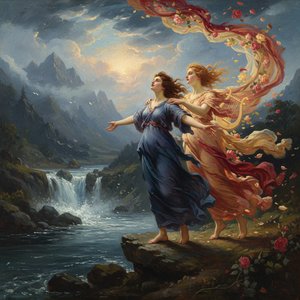
The Sublime and the Sensual: Exploring Emotion & Individuality in Romanticism's Artistic Revolution
Explore the passionate world of Romanticism! Discover masterpieces by Friedrich & Goya, delve into the sublime, and understand the movement's lasting impact on art history. Expert analysis & insights.

Unleashing Emotion: A Sophisticated Guide to the Sublime Power of Romanticism Art
Discover the profound emotional depth of Romanticism art. Explore the dramatic mastery of Delacroix and the sublime landscapes that defined an era. A sophisticated guide for classic art enthusiasts seeking to understand the power of movement, light, and untamed nature.