

 Bekijk op ware grootte
 Verstuur
 Delen
Delen
 Details bekijken
 Gids voor studentenkunstwerken

 Download
 Vergelijkbare items
 Röntgenonderzoek
 Diavoorstelling
 Statistieken
Still Life


 Lees meer
Giclée / Kunstafdrukken
Giclée- of canvasafdruk van museumkwaliteit met een snelle productie en flexibele afwerkingsmogelijkheden. ( Koop handgeschilderd kunstwerk Schakel over naar digitale afbeeldingen)




P118B €10

P118H €10

P118W €10

P438Z €10

P508JH €12

P508YH €12

P805H €10

P805Z €10

P919BZ €10

P919G €10

P919XJ €10

P959ZH €10

P968JZ €12

W106C €8

W218G €10

W218JH €8

W218Y €10

W307PJ €10

W316G €10

W316PJ €8

W316Y €10

W398PJ €8

W4111J €10

W500HY €15

W500JH €15

W692G €12

W849H €8

W940BG €15

W953PJ €8




Kies uit onze vooraf ingestelde maten die overeenkomen met de originele verhoudingen van het kunstwerk.

Voer de breedte en de hoogte in die u nodig heeft, passend bij uw lijst of uw muur. Een afdruk kan alleen worden ingekort, nooit groter worden gemaakt dan het origineel, waardoor een formaat met een andere verhouding een deel van de afbeelding verliest. Wij sturen u een digitaal mockup ter goedkeuring voordat we iets drukken. De afbeelding op deze pagina toont niet de werkelijke uitsnede — dit is alleen te zien op het mockup.
Wereldwijde levering () binnen 2 weken in plaats van de standaard 4/5 weken. (22 oktober)

Gratis wereldwijde expressverzending

Hoogwaardig linnen canvas

Volledige verzendverzekering

Garantie op terugbetaling van invoerrechten

Garantie op exacte kleurweergave

Retourbeleid van 100 dagen (alleen bij defecten)

100% Geld-terug-garantie

Korting bij meerdere afnames
 De optie voor glas is alleen beschikbaar bij een formaat kleiner dan 110 cm.

Still Life
Giclée / Kunstafdrukken
Formaat reproductie
-


Totaalprijs
€ 71
A Moment Frozen in Time: Ferdinand Guillaimin’s “Still Life”
Ferdinand Guillaimin's "Still Life," painted in 1872, isn’t merely a depiction of objects arranged on a table; it’s a carefully constructed tableau brimming with quiet observation and subtle symbolism. This work, rendered in the heart of the Impressionist movement, captures a fleeting moment of domestic tranquility – a scene both familiar and imbued with an understated elegance. The painting immediately draws the eye to the central arrangement: a vase overflowing with vibrant red and yellow flowers, their petals seemingly caught mid-bloom, radiating warmth against the cooler tones that dominate the rest of the composition. Beside them rests a worn book, its pages hinting at untold stories and intellectual pursuits, while a simple bowl holds what appears to be fruit – perhaps apples or pears – adding another layer of earthly abundance.
Guillaimin’s technique is distinctly Impressionistic, prioritizing capturing the *impression* of light and color rather than precise detail. Loose brushstrokes dance across the canvas, creating an atmospheric haze that softens the edges of each object. He masterfully employs broken color – applying small dabs of paint side-by-side to build up hues and create a shimmering effect, particularly noticeable in the reflections on the table’s surface. The dark background serves not as mere backdrop but as a crucial element, intensifying the luminosity of the floral arrangement and lending the scene a sense of intimacy and depth. The artist's focus is less on photographic realism and more on conveying the *feeling* of being present within this quiet space.
The Context of Parisian Impressionism
To fully appreciate “Still Life,” it’s essential to understand the artistic climate in which Guillaimin was working. The 1870s were a period of profound change and experimentation for French art, marked by the rise of Impressionism. Artists like Monet, Renoir, and Pissarro sought to break free from the rigid conventions of academic painting, embracing plein air (outdoor) painting and capturing the ephemeral qualities of light and atmosphere. Guillaimin’s work reflects this spirit of innovation, moving away from traditional subject matter and exploring new ways of representing the world around him.
Guillaimin's connection to Pissarro is particularly noteworthy. The artist spent a significant period painting alongside Pissarro in Pontoise, a suburb of Paris, where he found inspiration in the everyday life of the region. This proximity fostered a collaborative environment, allowing Guillaimin to refine his style and develop his unique approach to capturing light and color. The Impressionists were not simply interested in depicting what they *saw*; they were driven by a desire to express their subjective experience of the world.
Symbolism and the Language of Objects
Beyond its aesthetic qualities, “Still Life” is rich with symbolic meaning. The flowers themselves represent beauty, fragility, and the fleeting nature of life – themes frequently explored in Impressionist art. The book suggests knowledge, contemplation, and a connection to the past. The bowl of fruit symbolizes abundance, nourishment, and the pleasures of earthly existence. Even the dark background can be interpreted as representing mortality or the unknown.
Guillaimin’s use of these objects is deliberate and carefully considered, inviting the viewer to engage in a process of interpretation. He doesn't offer explicit explanations; instead, he presents a series of interconnected symbols that resonate with universal themes of beauty, life, and death. The arrangement feels deliberately balanced, creating a harmonious composition that evokes a sense of peace and serenity.
A Legacy of Delicate Beauty
Ferdinand Guillaimin’s “Still Life” stands as a testament to the power of observation and the enduring appeal of simple subjects rendered with exquisite sensitivity. It's a painting that rewards close attention, revealing layers of meaning and emotional depth with each viewing. Reproductions capture much of the original atmosphere, but nothing quite replicates the subtle nuances of light and color that define Guillaimin’s masterful technique.
Today, this work is celebrated for its evocative beauty and its contribution to the development of Impressionism. It remains a poignant reminder of the quiet moments of everyday life – a timeless meditation on beauty, mortality, and the enduring power of art.
Vragen & Antwoorden
Welk kleurenpalet wordt gebruikt in "Still Life"?
"Still Life" door Armand Guillaumin maakt gebruik van een Earthy kleurenpalet. Het palet vat het algemene kleurkarakter van het werk samen.
Zijn er werken die lijken op "Still Life"?
De pagina Vergelijkbare werken van "Still Life" door Armand Guillaumin presenteert gerelateerde kunstwerken.
Wie heeft "Still Life" gemaakt, en wanneer?
De maker van "Still Life" is Armand Guillaumin, en het werk dateert uit 1872.
Biografie van de kunstenaar
early life and career
Ferdinand Guillaumin, a French Impressionist painter and lithographer, was born on February 16, 1841, in Paris. His artistic journey began amidst the burgeoning fervor of impressionism—a movement that sought to capture the ephemeral beauty of light and color within the natural world. Growing up in a working-class family, he descended from Jean Joseph Guillaumin, a notary who instilled in him an appreciation for intellectual pursuits alongside a fascination with the surrounding landscapes of central France – specifically Moulins. This formative experience profoundly shaped his artistic sensibilities, nurturing a keen observation of light and texture, elements that would become hallmarks of his distinctive style. He pursued formal education at Moulins’ École Normale Supérieure, where he honed his drawing skills under the tutelage of sculptor Louis Caillouet—a pivotal encounter that cemented his commitment to artistic excellence. Shortly thereafter, he relocated to Paris, securing employment as a clerk in his uncle's lingerie shop while simultaneously dedicating himself to mastering painting techniques at the Académie Suisse. It was here that he forged connections with fellow artists who would become lifelong companions and collaborators: Eugène Boudin, Gustave Courbet, Camille Pissarro, and Francisco Oller—a Puerto Rican Impressionist painter whose influence extended far beyond their shared studio space. Courbet’s uncompromising realism served as a counterpoint to Guillaumin's burgeoning interest in capturing fleeting impressions of light, fostering a dialogue that would propel both artists toward innovative artistic explorations. His early works demonstrated an exceptional draughtsmanship—a meticulous attention to detail—combined with a masterful command of color and brushwork—characteristics that distinguished him from many of his contemporaries.contribution to impressionism
Guillaumin’s unwavering dedication to the Impressionist movement solidified his position as one of its most respected figures. He actively participated in six of the Society of Painters, Sculptors, and Engravers' (later The Impressionists’) annual exhibitions—a testament to his commitment to artistic innovation and collaboration. These exhibitions provided a crucial platform for showcasing his unique vision—characterized by dreamy landscapes bathed in soft light—and aligning him squarely with the movement’s core ethos: prioritizing sensory experience over academic conventions. His distinctive technique involved layering thin washes of color onto canvas, creating luminous surfaces that seemed to shimmer with reflected light. Unlike some Impressionists who favored bold contrasts and dramatic compositions, Guillaumin opted for a quieter aesthetic—one imbued with an understated elegance and profound sensitivity to the subtleties of tonal gradation. This approach resonated deeply with the spirit of impressionism, capturing not merely what was seen but also how it felt—a feat that cemented his reputation as a master of atmospheric perspective. The influence of Courbet’s uncompromising realism served as a counterbalance to Guillaumin's exploration of Impressionistic ideals, fostering a dynamic exchange that propelled both artists toward groundbreaking artistic achievements. His stylistic choices reflected a broader trend within the movement—a deliberate rejection of traditional academic painting in favor of capturing the immediacy and vibrancy of everyday life.notable works and associations
Guillaumin’s artistic legacy extends beyond his participation in Impressionist exhibitions; it resides in the enduring beauty and evocative power of his paintings—particularly “Garden in Janville in June” (1886) and “River Scene,” which exemplify his masterful command of color and texture. These canvases capture the tranquil serenity of rural landscapes—infused with a palpable sense of warmth and luminosity—demonstrating Guillaumin’s ability to translate visual impressions into emotionally resonant artworks. He maintained close ties with Eugène Murer, a fellow Impressionist painter and proprietor of a Parisian café—a friendship that nurtured both artistic inspiration and convivial companionship. Their shared passion for art fostered a collaborative spirit that enriched their respective oeuvres and solidified their place within the annals of Impressionist history. Furthermore, Guillaumin’s association with Vincent van Gogh—whom he befriended during his time in Auvers-sur-Oise—represents a poignant intersection of artistic sensibilities—a testament to the enduring power of human connection amidst creative endeavors. His patronage by Emile Zola and his circle of bohemian artists underscored his engagement with intellectual currents that challenged prevailing social norms—reflecting a broader commitment to artistic freedom and expressive experimentation. Guillaumin’s work found its way into prominent collections, including those housed at the Musée d’Orsay in Paris—a testament to its enduring appeal and recognition as a cornerstone of Impressionist art.legacy and remembrance
Ferdinand Guillaumin passed away on June 26, 1927, leaving behind an indelible mark on the history of French painting. His paintings continue to captivate audiences worldwide—serving as reminders of the transformative potential of artistic vision and unwavering dedication to craft. They stand alongside masterpieces by Monet and Cézanne as symbols of Impressionism’s enduring legacy—a testament to Guillaumin's contribution to capturing the fleeting beauty of light and color—and his profound understanding of the human experience. His influence can be seen in subsequent generations of artists who embraced Impressionistic principles—solidifying his position as a pivotal figure within the artistic canon. Explore more of Guillaumin’s works and the Impressionist movement on OriginalUniqueArt: ferdinand guillaumin | 3 artworks impressionism art movement
Armand Guillaumin
1841 - 1927 , Frankrijk
Snelle feiten
- Artistic Movement Or Style: Impressionism
- Artists Or Movements Influenced By This Artist: ['Symbolism']
- Artists Who Influenced This Artist:
- Vincent van Gogh
- Paul Cézanne
- Claude Monet
- Date Of Birth: February 16, 1841
- Date Of Death: June 26, 1927
- Full Name: Jean Baptiste Armand Guillaumin
- Nationality: French
- Notable Artworks:
- Garden in Janville in June
- River Scene
- View of Puy de Dôme
- Place Of Birth: Paris, France
Gerelateerde artikelen

Blossoms of Time: A Historical Journey Through Flower Painting
Explore the captivating history of flower painting! Discover Dutch masters, symbolic meanings, & botanical art. Expert insights & high-quality reproductions at OriginalUniqueArt.
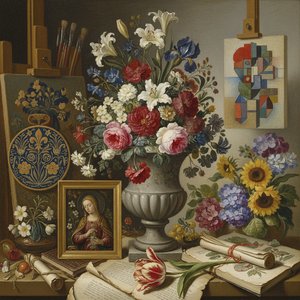
Blossoming Symbolism: A Historical Journey Through Flowers in Western Painting
Explore the rich history of flower symbolism in Western painting! Discover how artists from the Renaissance to Modernism used blossoms to convey meaning, emotion & beauty. Learn about iconic artworks and movements.

Top 10 Impressionistische Meesterwerken: Kleur, Licht & Emotie voor uw Interieur
Ontdek de top 10 impressionistische meesterwerken van Monet, Renoir & meer! Duik in kleur, licht en emotie met deze iconische schilderijen. Vind museumkwaliteit kunst reproducties voor uw interieur op OriginalUniqueArt.com.

Silent Narratives: Exploring the Enduring Appeal of Still Life Painting Across Centuries
Explore the rich history of still life painting with OriginalUniqueArt. Discover Dutch Masters, decode vanitas symbolism & learn about collecting timeless art. Expert insights and museum-quality reproductions.

Paul Cézanne's Top 25 Meesterwerken: Kleur, Vorm & De Basis van Modern Art | OriginalUniqueArt
Ontdek de 25 meest iconische schilderijen van Paul Cézanne! Duik in zijn kleurrijke wereld, leer over impressionisme & post-impressionisme en bewonder meesterwerken als 'De Baders'. Vind museumkwaliteit reproducties & interieurinspiratie op OriginalUniqueArt.com.
