
 Voorvertoning
 Verstuur
 Delen
Delen
 Details bekijken
 Gids
Gids

 Download
 Vergelijkbare items
 Röntgenonderzoek
 Diavoorstelling
 Q&A
Q&A Statistieken
Road at St Paul (Var)


 Lees meer
Giclée / Kunstafdrukken
Giclée- of canvasafdruk van museumkwaliteit met een snelle productie en flexibele afwerkingsmogelijkheden. ( Bestel handgeschilderde reproductie Schakel over naar digitale afbeeldingen)




P118B €10

P118H €10

P118W €10

P438Z €10

P508JH €12

P508YH €12

P805H €10

P805Z €10

P919BZ €10

P919G €10

P919XJ €10

P959ZH €10

P968JZ €12

W106C €8

W218G €10

W218JH €8

W218Y €10

W307PJ €10

W316G €10

W316PJ €8

W316Y €10

W398PJ €8

W4111J €10

W500HY €15

W500JH €15

W692G €12

W849H €8

W940BG €15

W953PJ €8




Kies uit onze vooraf ingestelde maten die overeenkomen met de originele verhoudingen van het kunstwerk.

Voer de gewenste breedte en hoogte in, passend bij uw lijst of muur. Een afdruk kan alleen worden ingekort en nooit groter worden gemaakt dan het origineel; een formaat met andere verhoudingen zal daarom een deel van de afbeelding verliezen. Wij sturen u een digitaal mockup ter goedkeuring voordat we tot drukwerk overgaan. De afbeelding op deze pagina toont niet de werkelijke uitsnede — dit is alleen te zien op het mockup.
Wereldwijde levering () binnen 2 weken in plaats van de standaard 4/5 weken. (2 november)

Gratis wereldwijde expressverzending

Hoogwaardig linnen canvas

Volledige verzendverzekering

Garantie op terugbetaling van invoerrechten

Garantie op exacte kleurweergave

Retourbeleid van 100 dagen (alleen bij defecten)

100% Geld-terug-garantie

Korting bij meerdere afnames
 De optie voor glas is alleen beschikbaar bij een formaat kleiner dan 110 cm.

Road at St Paul (Var)
Giclée / Kunstafdrukken
Afmetingen reproductie
-


Eindtotaal
€ 72
A Moment Frozen in Time: Exploring Félix Vallotton’s “Road at St Paul (Var)”
Félix Vallotton's "Road at St Paul (Var)," painted in 1922, is more than just a depiction of a rural scene; it’s a carefully constructed tableau brimming with quiet observation and an understated elegance. Housed within the Tate Gallery in London, this oil on canvas invites us into a fleeting moment, capturing not just the visual elements but also a palpable sense of atmosphere and human presence. The painting immediately draws the eye to a woman walking down a sun-drenched road, her figure rendered with Vallotton’s signature simplicity – a deliberate rejection of overly detailed realism in favor of suggestive forms and luminous color.
Vallotton, a pivotal figure within the *Nabi* movement, approached art with a unique sensibility. Initially trained in classical techniques, he ultimately forged his own path, moving away from academic constraints to embrace a more modern aesthetic. His work is characterized by bold colors, flattened perspectives, and an emphasis on capturing the essence of a subject rather than its literal representation. “Road at St Paul (Var)” exemplifies this approach perfectly; the landscape isn’t meticulously rendered but presented as a series of carefully chosen hues and shapes that evoke a specific mood – one of serene tranquility punctuated by subtle hints of activity.
The Language of Color and Light
Vallotton's masterful use of color is central to the painting’s impact. The dominant blues of the woman’s dress and the distant church create a cool, calming backdrop against which the warmer tones of the road and the sky stand out. He employs broken color—small, distinct patches of hue rather than blended shades—to achieve a shimmering effect, mimicking the way light interacts with surfaces. Notice how he uses highlights to draw attention to the woman’s form, while simultaneously softening the edges of the surrounding landscape. This creates a sense of depth and spatial ambiguity, inviting the viewer to contemplate the scene from multiple perspectives.
The lighting is particularly noteworthy. It's not a harsh, direct sunlight but rather a diffused glow that seems to emanate from everywhere at once. This contributes significantly to the painting’s overall mood – one of gentle warmth and quiet contemplation. The sky, rendered in shades of grey and blue, hints at an approaching storm, adding a subtle layer of drama to the otherwise peaceful scene.
A Glimpse into a World of Subtle Interactions
Beyond the central figure, “Road at St Paul (Var)” is populated with a series of secondary figures – men and women walking along the road, a horse-drawn cart in the distance, and a church perched on a hillside. These elements aren’t merely decorative; they subtly enrich the narrative, suggesting a community engaged in everyday life. The painting doesn't offer a clear story but rather invites us to imagine the lives of these individuals, their interactions, and their connection to this particular place.
The church itself is rendered with a certain detachment, almost as if it’s an integral part of the landscape. Its presence anchors the scene while simultaneously hinting at themes of faith, tradition, and perhaps even isolation. The composition—the diagonal line of the road leading towards the distant church—creates a sense of movement and directs our gaze across the canvas.
Owning a Piece of Artistic History
“Road at St Paul (Var)” is a testament to Vallotton’s ability to capture the essence of a moment with remarkable clarity and emotional resonance. OriginalUniqueArt offers meticulously crafted, hand-painted reproductions that faithfully recreate the painting's luminous colors, subtle textures, and evocative atmosphere. These reproductions are not simply prints; they are works of art in their own right, allowing you to bring this iconic image into your home or office and experience its beauty firsthand. Explore our collection at OriginalUniqueArt.com to discover a reproduction that perfectly suits your style and space.
For those seeking further insight, we encourage you to visit the Tate Gallery’s online resources: ‘Road at St Paul (Var)’, Félix Vallotton, 1922 | Tate.
Veelgestelde vragen
Hoe kan ik een reproductie van "Road at St Paul (Var)" door Félix Vallotton bekijken?
Om een reproductie van "Road at St Paul (Var)" door Félix Vallotton te bekijken, opent u de Voorvertoning pagina van het kunstwerk.
Met welk medium is "Road at St Paul (Var)" door Félix Vallotton uitgevoerd?
Het medium van "Road at St Paul (Var)" door Félix Vallotton is Oil On Canvas. Reproducties zijn bedoeld om de uitstraling van deze techniek weer te geven.
Waar kan ik het originele werk "Road at St Paul (Var)" door Félix Vallotton bewonderen?
"Road at St Paul (Var)" door Félix Vallotton is te zien in Tate Britain, Londen, Verenigd Koninkrijk. De vermelding van het museum heeft betrekking op het originele werk, niet op reproducties.
Biografie kunstenaar
A Life Bridging Worlds: Félix Vallotton and the Fin de Siècle
Félix Édouard Vallotton, geboren in Lausanne, Zwitserland in 1865, was een kunstenaar wiens werk het complexe spirituele klimaat van het *fin de siècle* weerspiegelt. Hij vond zijn weg tussen zijn Zwitserse roots en de levendige artistieke milieus van Parijs, en werd uiteindelijk een sleutelfiguur in de ontwikkeling van moderne kunst. Zijn vroege leven, doordrenkt met conservatieve protestantse waarden van zijn familie – zijn vader een apotheker, later chocolatier – bood een schril contrast met de bohemienwereld waarin hij zich zou uitleven als kunstenaar. Hoewel aanvankelijk richting klassieke studies op het Collège Cantonal geleid, leidde Vallotton’s passie voor visuele expressie in 1882 naar Parijs, waar hij zich inschreef aan de Académie Julian. Dit markeerde niet alleen een geografische verplaatsing, maar ook een diepe verschuiving in perspectief, waardoor hij het hart van artistische innovatie en intellectuele fermentatie betrad. Zijn academische training bood een stevige basis in techniek, maar het waren zijn ontmoetingen met opkomende avant-garde cirkels die zijn creatieve traject werkelijk in gang zetten.The Nabis and the Language of Intimacy
Vallotton’s artistieke evolutie nam een beslissende wending toen hij in 1892 verbonden werd met *Les Nabis* – een groep jonge kunstenaars waaronder Pierre Bonnard, Édouard Vuillard en Maurice Denis – in Parijs. Hoewel vaak beschouwd als enigszins een buitenstaander binnen de groep, bleek zijn lidmaatschap cruciaal te zijn voor het vormgeven van zijn kenmerkende stijl. De Nabis zochten om kunst met een spirituele kwaliteit aan te vullen, symboliek en decoratieve esthetiek te verkennen. Vallotton absorbeerde deze invloeden, maar filterde ze door zijn eigen unieke gevoeligheid, gekenmerkt door een koele afstandelijkheid en onverbloemde realisme. Dit wordt het meest krachtig uitgedrukt in zijn houtsnuurserie *Intimités* (1898). Deze tien interieurscènes zijn opmerkelijk vanwege hun psychologische intensiteit, die geladen ontmoetingen tussen mannen en vrouwen weergeven met een onheilspellende eerlijkheid. Ze zijn geen narratieven van romantiek of passie, maar eerder verkenningsreizen naar spanning, machtsverhoudingen en de verborgen complexiteiten binnen huishoudelijke leven. De scherpe contrasten van zwart en wit in zijn houtsneden – een bewuste knipoog naar Japanse *ukiyo-e* prints – versterken het gevoel van onbehagen en psychologische scrutinie.Master of Woodcut and Painterly Nuance
Vallotton’s meesterschap strekte zich verder uit dan de wereld van schilderkunst; hij wordt wijdverspreid gecrediteerd als een virtuoos in houtsnijden, waarbij hij het medium revitaliseerde met zijn innovatieve technieken. Hij omarmde de eenvoud en directheid van de vorm, met krachtige lijnen en scherpe contrasten die beelden creëerden die zowel visueel opvallend als emotioneel resoneren. Zijn sneden waren niet alleen illustraties, maar onafhankelijke kunstwerken, vaak satirisch van aard, die commentaar gaven op sociale conventies en politieke kwesties. Tegelijkertijd ontwikkelde Vallotton voortdurend zijn schilderstijl, weg van puur academische benaderingen naar een meer persoonlijke expressie. Hij combineerde behendig realisme met subtiele symbolische ondertonen, waardoor portretten, landschappen en stillevenschilderingen ontstonden die een enigmatisch karakter hebben. Zijn latere schilderijen tonen een verfijnde techniek, gekenmerkt door zorgvuldig gemodificeerde kleuren en nauwkeurige vormweergave. Hij schilderde vaak *paysages composés* (“samengestelde landschappen”), geconstrueerd op basis van herinneringen en waarnemingen, doordrenkt met een gevoel van stilte en melancholie.The Influence of Japanese Art and the Exploration of Intimacy
Vallotton’s artistic vision was profoundly shaped by his encounter with Japanese art, particularly woodblock prints. He became fascinated by their bold compositions, flat perspectives, and use of color, which he incorporated into his own work. This influence is most evident in *Intimités*, a series of ten interior scenes depicting intimate moments between men and women. These works are characterized by a sense of psychological tension and unease, as well as a willingness to depict subjects that were often considered taboo at the time. The stark contrast between black and white in the woodcuts created a dramatic effect, while the use of muted colors in his paintings added to the overall atmosphere of mystery and intrigue. He was particularly interested in capturing the fleeting moments of everyday life, such as conversations, meals, and leisure activities.Legacy and Enduring Influence
Félix Vallotton’s invloed rees in het begin van de 20e eeuw op en beïnvloedde kunstenaars zoals Edvard Munch en Ernst Ludwig Kirchner. Zijn onverbloemende blik, zijn verkenning van psychologische thema's en zijn innovatieve gebruik van printkunst legden de basis voor nieuwe artistieke expressies. Hij stierf in Parijs in 1925, achterlatend een oeuvre dat nog steeds kijkers fascineert en uitdaagt. Zijn kunst dient als een aangrijpend reflectie van de angsten en tegenstellingen van het *fin de siècle*, waardoor een glimp wordt opgevangen van een wereld aan de vooravond van diepgaande veranderingen. Vallotton’s nalatenschap ligt niet alleen in zijn technische briljantie, maar ook in zijn vermogen om menselijke ervaringen met eerlijkheid, intelligentie en een blijvende sensatie van mysterie vast te leggen. Hij blijft een boeiende figuur – een Zwitserse kunstenaar die zijn stem vond in Parijs, traditie en moderniteit, realisme en symboliek verbindend, waardoor een onuitwisbare stempel op de geschiedenis van de kunst wordt gedrukt.
Félix Vallotton
1865 - 1925 , Zwitserland
Belangrijkste feiten
- Artistic Movement Or Style: Post-Impressionisme, Symbolisme
- Artists Or Movements Influenced By This Artist:
- Nabis
- Munch
- Artists Who Influenced This Artist:
- Holbein
- Ingres
- Date Of Birth: 28 dec 1865
- Date Of Death: 29 dec 1925
- Full Name: Félix Édouard Vallotton
- Nationality: Zwitserse/Franse
- Notable Artworks:
- Intimités
- Bathers
- Moonlight
- Place Of Birth: Lausanne, Zwitserland
Gerelateerde artikelen

Paul Klee's Top 25 Meesterwerken: Kleur, Vorm & Emotie voor uw Interieur | OriginalUniqueArt
Ontdek de top 25 meesterwerken van Paul Klee! Duik in zijn kleurrijke wereld vol abstracte kunst, Bauhaus invloeden & expressieve composities. Vind museumkwaliteit reproducties en woondecoratie inspiratie op OriginalUniqueArt.com.

El Greco's Top 25 Meesterwerken: Kunst, Geschiedenis & Decoratie voor Uw Huis
Ontdek de top 25 meesterwerken van El Greco! Duik in het leven en werk van deze renaissance schilder, zijn spirituele kunst & dramatische stijl. Vind museumkwaliteit reproducties voor uw interieur op OriginalUniqueArt.com.
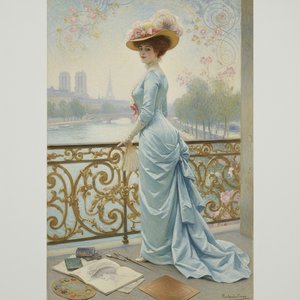
Paul César Helleu: Capturing Belle Époque Elegance & Artistic Innovation
Explore the captivating world of Paul César Helleu, master portraitist of the Belle Époque. Discover his innovative techniques, iconic works like 'Portrait of Margaret Kelly,' and investment potential with OriginalUniqueArt.

Paul Cézanne's Top 25 Meesterwerken: Kleur, Vorm & De Basis van Modern Art | OriginalUniqueArt
Ontdek de 25 meest iconische schilderijen van Paul Cézanne! Duik in zijn kleurrijke wereld, leer over impressionisme & post-impressionisme en bewonder meesterwerken als 'De Baders'. Vind museumkwaliteit reproducties & interieurinspiratie op OriginalUniqueArt.com.

Paul Klee: A Poetics of Form and Color – Exploring the Inner Landscape of a Modern Master
Explore the captivating world of Paul Klee! Discover his innovative art, Bauhaus influence, & unique symbolic language. Expert analysis & high-quality reproductions at OriginalUniqueArt.

