
 Voorvertoning
 Verstuur
 Delen
Delen
 Details bekijken

 Download
 Vergelijkbare items
 Röntgenonderzoek
 Diavoorstelling
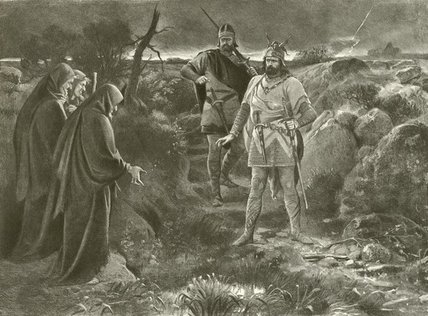
Macbeth

 Lees meer
Koop een digitale afbeelding in hoge resolutie met verbeterde kwaliteit, die veel superieur is aan de online voorvertoning.
Elk bestand wordt met uiterste precisie voorbereid door onze interne specialisten, met behulp van geavanceerde tools en deskundige handmatige retouche. Wij garanderen dat elke afbeelding een uitzonderlijke helderheid, nauwkeurige kleurweergave en verfijnde details bezit.
Het uiteindelijke bestand wordt binnen 72 uur per e-mail geleverd, geoptimaliseerd voor direct gebruik in professionele, redactionele en printomgevingen. Dit is dezelfde kwaliteit waarop vooraanstaande designstudio's, uitgevers en galerieën vertrouwen.
Digitale afbeeldingen
Download een bestand met hoge resolutie voor persoonlijke weergave, afdrukken en creatieve projecten. ( Bestel print Bestel handgeschilderde reproductie)
Inbegrepen bij elke bestelling van een digitale afbeelding
Professionele digitale levering, gegarandeerd
Wanneer u kiest voor OriginalUniqueArt.com, ontvangt u niet alleen een afbeelding – u krijgt een professioneel verbeterd digitaal kunstwerk, met precisie vervaardigd en voorzien van een tevredenheidsgarantie. Dit is alles wat automatisch bij uw bestelling is inbegrepen:

Snelle levering per e-mail
Uw hoogwaardige digitale afbeeldingsbestand wordt binnen 72 uur na bestelling naar u gemaild – klaar voor direct gebruik.

AI-verbeterd digitaal bestand
Uw kunstwerk wordt professioneel geoptimaliseerd met behulp van geavanceerde AI-tools en handmatige bewerkingen, waardoor maximale details, helderheid en kleurnauwkeurigheid worden gegarandeerd.

Gratis levenslange herlevering van digitale afbeeldingen
Je bestand per ongeluk verwijderd of kwijtgeraakt? Geen zorgen – we sturen het u op elk gewenst moment gratis opnieuw toe.

Geen invoerkosten – nooit
Geniet direct van uw kunstwerk zonder invoerrechten, belastingen of verzendkosten – digitale downloads zijn altijd belastingvrij.

Garantie op kleurgetrouwheid
Met behulp van professionele hulpmiddelen en kleurbeheer zorgen wij ervoor dat uw digitale afbeelding de originele kleuren zo nauwkeurig mogelijk weergeeft.

100 dagen tevredenheidsgarantie
Als u niet tevreden bent met uw digitale afbeelding, passen wij deze aan of storten wij 100% terug binnen 100 dagen - zonder vragen te stellen.

100% Geld-terug-garantie
Niet tevreden? Ontvang een volledige terugbetaling binnen 100 dagen na ontvangst van uw digitale bestand - zonder vragen te stellen.

Korting bij grote bestellingen
Koop 3 afbeeldingen, bespaar 10% - Koop 5, bespaar 15% - Koop 10+, bespaar 20%. Ideaal voor creatieve projecten, galerieën en bureaus.
Kunstenaarsbiografie
Felix Octavius Carr Darley: The Pioneer of American Illustration
Felix Octavius Carr Darley (1822-1888) stands as a pivotal figure in the history of American art, not merely for his prolific output but for his role in establishing illustration as a respected and sophisticated artistic medium. Born in Philadelphia during a period of burgeoning industrialization and expanding literacy, Darley’s career coincided with a crucial shift in how Americans engaged with literature and visual culture. He wasn't simply a recorder of scenes; he was a storyteller who imbued the printed page with dramatic energy and a distinctly American sensibility – a blend that profoundly influenced generations of illustrators to follow.
Darley’s early life, marked by his parents’ theatrical backgrounds, instilled in him an appreciation for visual narrative and performance. Unlike many artists of his time who received formal training, Darley was largely self-taught, honing his skills through meticulous observation and a relentless pursuit of technical mastery. He began his career as a staff artist for a Philadelphia publishing house, a position that provided him with invaluable experience in capturing the dynamism of urban life – sketching scenes from the docks, capturing the bustle of city streets, and documenting the everyday dramas of working-class Philadelphia. This early exposure to diverse subjects and perspectives would later inform his rich and varied body of work.
Literary Collaborations and a Defining Style
Darley’s most enduring legacy lies in his collaborations with some of America's greatest literary figures. He was commissioned to illustrate works by Washington Irving, James Fenimore Cooper, Charles Dickens, Nathaniel Hawthorne, Edgar Allan Poe, and many others – a testament to his versatility and the high regard in which he was held. His illustrations for Cooper’s novels, particularly “The Last of the Mohicans” and “Leatherstocking Tales,” are considered masterpieces of American illustration, capturing the rugged beauty of the frontier landscape and the heroic exploits of its characters with remarkable detail and dramatic flair.
Darley's distinctive style was characterized by bold outlines, dynamic compositions, and a vibrant use of color – a departure from the more restrained techniques favored by European illustrators at the time. He employed a technique he called “outline drawing,” creating images primarily through strong lines rather than subtle shading. This approach allowed him to convey movement, emotion, and atmosphere with exceptional clarity and immediacy. His illustrations were not mere decorations; they actively engaged the reader’s imagination, bringing the stories to life in vivid detail. He was particularly adept at capturing the essence of a scene – distilling complex narratives into visually compelling vignettes that resonated deeply with audiences.
The Rise of Illustration as Art
Darley's success coincided with a period of significant change in the American publishing industry. As literacy rates rose and printing technology advanced, books became more accessible to a wider audience. Illustrations began to be recognized not just as decorative elements but as integral components of the reading experience – enhancing comprehension, stimulating imagination, and adding layers of meaning to the text. Darley played a crucial role in this transformation, demonstrating that illustration could be a sophisticated art form worthy of serious artistic consideration.
His work was widely circulated through magazines like *Harper’s Weekly* and *The Saturday Evening Post*, further solidifying his reputation as America's foremost illustrator. He became the first American artist to receive widespread recognition for his illustrations, paving the way for future generations of illustrators to pursue careers in art. His influence can be seen in the work of later illustrators such as Howard Pyle and N.C. Wyeth.
A Legacy Preserved
Felix Octavius Carr Darley’s impact extends beyond his artistic achievements. He established a home, “The Wren’s Nest,” in Claymont, Delaware, which remains open to the public as a historic house museum. The house offers a fascinating glimpse into the life and work of this remarkable artist, showcasing his studio, personal belongings, and a collection of his original illustrations. Darley's legacy is not just one of artistic skill but also of cultural significance – he helped shape the visual landscape of America and established illustration as a respected art form.
His contributions to American literature and art are still celebrated today, ensuring that Felix Octavius Carr Darley’s name will forever be associated with the vibrant spirit and dynamic energy of 19th-century America.

Felix Octavius Carr Darley
1822 - 1888