

 Voorvertoning
 Verstuur
 Delen
Delen
 Details bekijken

 Download
 Vergelijkbare items
 Röntgenonderzoek
 Diavoorstelling
 Statistieken
Pierrot the Photographer


 Lees meer
Handgemaakte olieverfreproductie
Met de hand geschilderd in olieverf op canvas in uw gewenste maat en lijst, op bestelling gemaakt door onze kunstenaars. ( Schakel over naar print Schakel over naar digitale afbeelding)




P118B $10

P118H $10

P118W $10

P438Z $10

P508JH $12

P508YH $12

P805H $10

P805Z $10

P919BZ $10

P919G $10

P919XJ $10

P959ZH $10

P968JZ $12

W106C $8

W218G $10

W218JH $8

W218Y $10

W307PJ $10

W316G $10

W316PJ $8

W316Y $10

W398PJ $8

W4111J $10

W500HY $15

W500JH $15

W692G $12

W849H $8

W940BG $15

W953PJ $8




Kies uit onze vooraf ingestelde maten die overeenkomen met de originele verhoudingen van het kunstwerk.

U kunt uw eigen afmetingen invoeren om in een specifieke lijst of ruimte te passen. Als de door u gekozen maat niet overeenkomt met de verhoudingen van het originele beeld, zullen we het kunstwerk bijsnijden of het schilderij uitbreiden met extra handgeschilderde elementen. Een digitale mockup wordt ter goedkeuring naar u verzonden voordat de productie begint.
Houd er rekening mee dat de preview op het scherm niet de werkelijke uitsnede of uitbreiding weergeeft. Alleen de mockup toont de uiteindelijke compositie nauwkeurig.
Hoewel aangepaste afmetingen mogelijk zijn, raden we aan een maat uit de vooraf gedefinieerde lijst te selecteren om de originele verhoudingen te behouden.
Na de bestelling zal het team van OriginalUniqueArt.com per e-mail contact opnemen met de klant voor instructies en een mockup-voorbeeld sturen.
Wereldwijde levering () binnen 3 tot 4 weken in plaats van de standaard 5 weken. (18 september). Zonder concessies aan de kwaliteit.

Gratis wereldwijde expressverzending

Hoogwaardig linnen canvas

Volledige verzendverzekering

Garantie op terugbetaling van invoerrechten

Garantie op exacte kleurweergave

Retourbeleid van 100 dagen (alleen bij defecten)

100% Geld-terug-garantie

Korting bij meerdere afnames
 De optie voor glas is alleen beschikbaar bij een formaat kleiner dan 110 cm.

Pierrot the Photographer
Druktechniek
Afmetingen reproductie
-


Eindtotaal
$ 300
The Enigmatic Figure: Unveiling “Pierrot the Photographer”
Félix Nadar’s “Pierrot the Photographer,” created in 1854, isn't merely a portrait; it’s a meticulously constructed tableau vivant—a staged scene brimming with quiet observation and subtle commentary on the burgeoning world of photography. The image immediately draws the eye to Pierrot, a figure both familiar and unsettlingly modern, holding a camera poised as if capturing not just a likeness but an essence. He embodies the nascent spirit of the photographer himself – a blend of artist, observer, and documentarian, all wrapped in the playful guise of a traditional clown. The photograph’s power lies not simply in its technical execution, but in the carefully orchestrated narrative it presents, inviting us to contemplate the very nature of representation and identity.
The work's historical context is crucial to understanding its significance. Nadar was a pioneer, pushing against the conventions of portraiture prevalent during the mid-19th century. He rejected the opulent backdrops and theatrical poses favored by his contemporaries, instead opting for natural light and an intimate approach that prioritized capturing the sitter’s personality. “Pierrot the Photographer” exemplifies this shift—a deliberate departure from traditional formality, suggesting a new era of visual storytelling.
A Dance of Light and Shadow: Technical Details & Artistic Choices
Examining the photographic process reveals layers of artistry. “Pierrot the Photographer” was undoubtedly produced using one of the early wet collodion techniques, a demanding method requiring immediate development after exposure. This explains the image’s distinctive grainy texture—a hallmark of photographs from this period—and the subtle variations in tone that contribute to its aged and evocative quality. The careful control of light is particularly noteworthy; diffused illumination creates a soft, almost melancholic atmosphere, highlighting the textures of Pierrot's costume and casting gentle shadows that add depth and dimension.
Nadar’s compositional choices further enhance the photograph’s impact. The tripod, a stark vertical element, anchors the scene while simultaneously creating a sense of formality and precision. Pierrot’s slight tilt of his head—a subtle gesture of engagement—draws us into the frame, inviting us to share in his moment of observation. The two indistinct figures in the background offer a hint of context without disrupting the central focus, suggesting a studio setting and hinting at the collaborative nature of photographic production.
Symbolism & Emotional Resonance: Beyond the Surface
“Pierrot the Photographer” is rich with symbolic meaning. The clown costume itself—a traditional symbol of playfulness and theatricality—contrasts sharply with the seriousness of the act of photography, creating a fascinating tension. The camera becomes an extension of Pierrot’s personality, transforming him into both subject and observer. The image speaks to the evolving role of the photographer in society – moving from mere recorder of reality to active participant in shaping it.
Furthermore, the photograph evokes a sense of nostalgia and timelessness. Its aged appearance—the subtle imperfections and tonal variations—suggests that it has witnessed countless moments, carrying with it the weight of history. “Pierrot the Photographer” is not simply a portrait; it’s a meditation on memory, identity, and the enduring power of visual representation.
A Legacy in Reproduction: Bringing Nadar's Vision to Life
Reproductions of “Pierrot the Photographer” offer a unique opportunity to experience the artistry of Félix Nadar firsthand. The meticulous detail captured in this early photograph—the textures of the costume, the subtle nuances of light and shadow—are faithfully reproduced in high-quality prints, allowing viewers to appreciate the depth and complexity of Nadar’s vision. Whether displayed as a statement piece in a contemporary interior or studied as an historical artifact, this iconic image continues to captivate and inspire.
Biografie van de kunstenaar
Félix Nadar: Een Pionier van de Fotografie
Vroege Leven en Begin
- Geboren: Gaspard-Félix Tournachon op 5 april 1820 in Parijs (hoewel sommige bronnen Lyon suggereren).
- Zijn vader, Victor Tournachon, was een drukker en boekhandelaar.
- Hij studeerde aanvankelijk medicijnen, maar moest deze studie opgeven vanwege financiële moeilijkheden na de dood van zijn vader.
- Nadar, zoals hij later bekend zou worden, begon zijn carrière als karikaturist en romanschrijver, waarbij hij bijdroeg aan diverse kranten.
Van Karikatuur naar Fotografie
- Rond 1853 begon hij te experimenteren met de fotografie.
- Hij opende zijn eerste fotostudio in 1854 aan de 113 rue St. Lazare, en verhuisde later in 1860 naar het 35 Boulevard des Capucines.
- Hij verwierf snel erkenning voor zijn indrukwekkende en psychologisch diepgravende portretten.
- Afwijzing van Conventie: Nadar vermeed de weelderige decors die destijds gebruikelijk waren in de portretkunst; hij gaf de voorkeur aan natuurlijk licht en een focus op de persoonlijkheid van de geportretteerde.
Pionier van de Luchtfotografie
- In 1858 werd Nadar de eerste persoon die luchtfoto's maakte met behulp van luchtballonnen.
- Hij overwon technische uitdagingen met betrekking tot het ontwikkelen van fotografische platen op grote hoogte door een gasbestendige katoenen afdekking voor zijn manden te ontwerpen.
- Daarnaast was hij een pionier in het gebruik van kunstlicht in de fotografie, met name in de Catacomben van Parijs.
- Le Géant: In 1863 gaf hij opdracht tot de bouw van een enorme ballon genaamd “Le Géant” (De Reus), wat direct inspiratie vormde voor Jules Vernes *Vijf weken in een ballon*.
Grote Prestaties en Invloeden
- Portretkunst: Hij fotografeerde talloze prominente figuren, waaronder Victor Hugo, Charles Baudeloet, Sarah Bernhardt en Gustave Courbet.
- Hij richtte de eerste luchtpostdienst ter wereld op tijdens het Beleg van Parijs (1870-71) door gebruik te maken van ballonvluchten.
- In 1874 bood hij in zijn studio een podium aan de eerste impressionistische tentoonstelling, wat cruciaal was voor opkomende kunstenaars.
- In 1886 publiceerde hij wat wordt beschouwd als het eerste foto-interview, met de chemicus Michel Eugène Chevreul.
Latere Leven en Nalatenschap
- Van 1895 tot 1909 verplaatste hij zijn studio naar Marseille.
- Hij overleed op 20 maart 1910 in Parijs en ligt begraven op de begraafplaats Père Lachaise.
- Zijn zoon, Paul Nadar, zette de werkzaamheden van de studio voort na zijn dood.
- Quand j’étais photographe: Hij publiceerde een memoires waarin hij terugblikte op zijn leven en werk, wat waardevolle inzichten biedt in de 19e-eeuwse fotografie.
- Historische Betekenis: De innovatieve technieken en artistieke visie van Nadar hebben de ontwikkeling van de fotografie als kunstvorm diepgaand beïnvloed. Zijn portretten blijven iconische representaties van de Parijsese intellectuele en artistieke kringen.
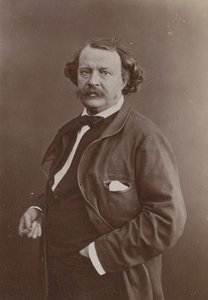
Félix Nadar
1820 - 1910
Belangrijkste feiten
- Birth Date: 5 april 1820
- Death Date: 20 maart 1910
- Influenced: ['Jules Verne']
- Movement:
- Fotografie
- Karikatuur
- Impressionisme (geassocieerd)
- Name: Félix Nadar
- Nationality: Frans
- Notable Works:
- Portretten van Baudelaire, Hugo, Delacroix
- Luchtfotografie
- Foto-interview met Chevreul
Gerelateerde artikelen

Beyond the Lens: Photography's Enduring Influence on Modern & Contemporary Art
Explore photography's pivotal role in shaping modern & contemporary art. Discover key movements, influential artists like Stieglitz, and expert collecting advice from OriginalUniqueArt.
Beyond Color: The Timeless Power and Artistry of Black and White Photography
Explore the profound artistry of black and white photography. From the chemistry of gelatin silver to the chiaroscuro of the Old Masters, discover how monochrome captures the eternal essence of light, form, and emotion for the discerning art collector.
Timeless Shadows: The Artistry, History, and Emotional Resonance of Black and White Photography
Explore the profound artistry of black and white photography. From historical mastery to the interplay of light and shadow, discover how monochrome captures timeless emotion and form through a sophisticated lens of art history.

Beyond the Portrait: Félix Nadar & the Psychological Depths of 19th-Century Photography
Explore the revolutionary photography of Félix Nadar – pioneer of portraiture, aerial imaging & psychological depth. Discover his iconic portraits of Baudelaire, Hugo & more. A deep dive into 19th-century art history.

Monochrome Visions: Exploring the Aesthetic & Historical Significance of Black & White Photography
Explore the rich history & artistic power of black and white photography. From early techniques to iconic masters like Ansel Adams, discover why monochrome continues to captivate art lovers today. Expert insights for collectors.