

 Voorvertoning
 Verstuur
 Delen
Delen
 Details bekijken

 Download
 Vergelijkbare items
 Röntgenonderzoek
 Diavoorstelling
 Statistieken
Cupid with a Tambourine
 Etching
- WallArt
- Symbolist Illustration
 19th Century
 14.0 x 10.0 cm
 Hammer Museum
 Lees meer
Handgemaakte olieverfreproductie
Met de hand geschilderd in olieverf op canvas in uw gewenste maat en lijst, op bestelling gemaakt door onze kunstenaars. ( Schakel over naar print Schakel over naar digitale afbeelding)




P118B $10

P118H $10

P118W $10

P438Z $10

P508JH $12

P508YH $12

P805H $10

P805Z $10

P919BZ $10

P919G $10

P919XJ $10

P959ZH $10

P968JZ $12

W106C $8

W218G $10

W218JH $8

W218Y $10

W307PJ $10

W316G $10

W316PJ $8

W316Y $10

W398PJ $8

W4111J $10

W500HY $15

W500JH $15

W692G $12

W849H $8

W940BG $15

W953PJ $8




Kies uit onze vooraf ingestelde maten die overeenkomen met de originele verhoudingen van het kunstwerk.

U kunt uw eigen afmetingen invoeren om in een specifieke lijst of ruimte te passen. Als de door u gekozen maat niet overeenkomt met de verhoudingen van het originele beeld, zullen we het kunstwerk bijsnijden of het schilderij uitbreiden met extra handgeschilderde elementen. Een digitale mockup wordt ter goedkeuring naar u verzonden voordat de productie begint.
Houd er rekening mee dat de preview op het scherm niet de werkelijke uitsnede of uitbreiding weergeeft. Alleen de mockup toont de uiteindelijke compositie nauwkeurig.
Hoewel aangepaste afmetingen mogelijk zijn, raden we aan een maat uit de vooraf gedefinieerde lijst te selecteren om de originele verhoudingen te behouden.
Na de bestelling zal het team van OriginalUniqueArt.com per e-mail contact opnemen met de klant voor instructies en een mockup-voorbeeld sturen.
Wereldwijde levering () binnen 3 tot 4 weken in plaats van de standaard 5 weken. (18 september). Zonder concessies aan de kwaliteit.

Gratis wereldwijde expressverzending

Hoogwaardig linnen canvas

Volledige verzendverzekering

Garantie op terugbetaling van invoerrechten

Garantie op exacte kleurweergave

Retourbeleid van 100 dagen (alleen bij defecten)

100% Geld-terug-garantie

Korting bij meerdere afnames
 De optie voor glas is alleen beschikbaar bij een formaat kleiner dan 110 cm.

Cupid with a Tambourine
Druktechniek
Afmetingen reproductie
-


Eindtotaal
$ 300
Felicien Rops’s “Cupid with a Tambourine”: A Study in Melancholic Beauty
Felicien Rops's "Cupid with a Tambourine," an etching from 1875, is not merely a depiction of the Roman god of love; it’s a carefully constructed tableau of wistful contemplation and subtle unease. Rops, a pivotal figure bridging Realism, Symbolism, and the nascent world of illustrated storytelling, masterfully employs line and tone to evoke an atmosphere far deeper than simple romantic imagery. The work, now housed within the UCLA Grunwald Center for the Graphic Arts at the Hammer Museum, offers a glimpse into Rops’s uniquely shadowed vision – one that frequently explored themes of beauty intertwined with melancholy and a fascination with the darker corners of human experience.
A Technical Masterpiece: Line, Tone, and Etching
The etching itself is a testament to Rops's technical skill. The foundation lies in the meticulous process of etching – a technique involving scratching lines into a metal plate (typically copper) before applying ink and then transferring the image onto paper through pressure. Rops’s control over this medium is remarkable, evidenced by the incredibly fine, delicate lines that delineate Cupid’s features, his wings, and even the scattered leaves beneath him. The use of hatching and cross-hatching creates a rich tapestry of tones, lending depth and volume to the composition without resorting to broad, flat areas of color. Notice how the varying density of these lines subtly suggests texture – the rough surface of the ground, the smooth curve of the tambourine, and the delicate folds in Cupid’s clothing.
Symbolism and Emotional Resonance: A Quiet Lament
Beyond its technical brilliance, “Cupid with a Tambourine” is laden with symbolic meaning. The figure of Cupid himself is presented not as an exuberant embodiment of passion, but rather in a posture of quiet introspection. He’s seated cross-legged, holding the tambourine close – an instrument often associated with celebration and joy – yet his gaze is averted, suggesting a detachment from the very emotions he represents. The setting, a simple ground plane strewn with leaves, reinforces this sense of solitude. The choice of a muted color palette—primarily shades of gray, white, and black—contributes to the overall mood of melancholy. It’s as if Rops is inviting us to contemplate not the fleeting pleasures of love, but its deeper, more complex implications – perhaps even hinting at the bittersweet nature of longing and unfulfilled desire.
Contextualizing a Symbolist Vision
To fully appreciate “Cupid with a Tambourine,” it’s crucial to understand Rops's place within the broader context of 19th-century art. He was deeply influenced by Symbolism, an artistic movement that sought to express subjective emotions and ideas rather than objective reality. Rops shared this interest in exploring the darker side of human experience, often depicting scenes of beauty intertwined with decay, death, and psychological distress. His work frequently drew inspiration from mythology, folklore, and literature – particularly works by Edgar Allan Poe and Charles Baudelaire. The etching’s quiet intensity and evocative atmosphere align perfectly with the aesthetic sensibilities of the Symbolist movement, offering a poignant meditation on love, loss, and the human condition.
A Timeless Image for Collectors and Designers
“Cupid with a Tambourine” remains a powerfully resonant image today. Its exquisite craftsmanship, evocative symbolism, and haunting beauty make it an ideal choice for collectors seeking works of art that transcend mere decoration. The piece’s understated elegance also lends itself beautifully to interior design – its muted tones and contemplative mood providing a sophisticated counterpoint to brighter spaces. Reproductions, such as those offered by OriginalUniqueArt.com, allow us to experience the full impact of Rops's vision without the limitations of the original medium, ensuring that this timeless image continues to captivate audiences for generations to come.
Biografie van de kunstenaar
A Shadowy Visionary: The Life and Art of Félicien Rops
Félicien Victor Joseph Rops, born in 1833 in Namur, Belgium, emerged as a pivotal figure bridging the gap between Realism, Symbolism, and the burgeoning world of modern graphic storytelling. His life, steeped in both bourgeois comfort – his father was a prosperous textile manufacturer – and a restless artistic spirit, unfolded against a backdrop of rapid social and intellectual change. Early training at local academies provided a foundation, but it was his move to Brussels at twenty that truly ignited his creative trajectory. Though briefly enrolled at the Université Libre de Bruxelles, Rops found himself drawn inexorably towards the Académie de Saint-Luc, where he honed his skills not just in painting and drawing, but also in the art of satire through lithography. His early work quickly gained recognition in student magazines like *Le Crocodile* and *L'Uylenspiegel*, establishing him as a gifted caricaturist with a keen eye for societal foibles. These formative years weren’t merely about developing technical proficiency; they were about finding his voice, a voice that would soon become synonymous with challenging conventions and exploring the darker recesses of the human psyche.Early Years and Artistic Foundations
Rops's childhood was marked by privilege—a secure upbringing fostered by his father’s textile business—yet it was also imbued with an innate curiosity for the world beyond his immediate surroundings. He received excellent schooling in both visual and literary arts through private tutoring and attendance at Notre Dame de la Paix de Namur, the Athénée Royal de Namur, and the Académie de Namur. These formative experiences instilled in him a lifelong appreciation for observation and detail—qualities that would become central to his artistic practice. Recognizing his talent early on, Rops’s family encouraged his pursuit of artistic endeavors, providing him with resources unavailable to many aspiring artists of his time. His initial training encompassed drawing and painting techniques, equipping him with the fundamental tools necessary for mastering various mediums. Simultaneously, he cultivated a passion for literature and intellectual discourse—interests that would inform his worldview and contribute to his distinctive artistic vision.Parisian Encounters and Artistic Transformation
The year 1862 proved decisive in shaping Rops’s artistic path when he relocated to Paris, a city brimming with artistic innovation and intellectual ferment. This move coincided with the arrival of Félix Bracquemond and Jules Ferdinand Jacquemart—influential printmakers who profoundly impacted his experimentation with intaglio techniques – etching and aquatint. Recognizing the limitations of lithography as a medium for conveying complex psychological states, Rops largely abandoned it around 1865, dedicating himself to mastering these more nuanced methods of printmaking. It was during this Parisian period that he encountered Charles Baudelaire—a meeting that would resonate deeply with his artistic sensibilities and propel him toward exploring themes of beauty within decay and transgression. Baudelaire’s poetic vision captivated Rops's imagination, inspiring him to delve into the darker corners of human experience—a preoccupation that would characterize much of his subsequent oeuvre. This encounter solidified Rops’s commitment to Symbolism as an artistic movement, aligning him with fellow artists who sought to express inner emotions and psychological complexities through evocative imagery.The Symbolist Aesthetic: Darkness and Beauty
Rops's artistic style is immediately recognizable for its meticulous detail, dramatic chiaroscuro—the interplay of light and shadow—and a haunting atmosphere that permeates his work. He wasn’t simply depicting scenes; he was conveying psychological states, emotional intensities often veiled in ambiguity. His prints and drawings exemplify the Symbolist aesthetic—characterized by an obsession with dreamlike imagery, mythological references, and explorations of subconscious desires. Unlike Impressionists who captured fleeting moments of sensory experience, Rops aimed to penetrate beneath the surface of reality, revealing hidden truths about human nature and confronting taboo subjects. He skillfully employed soft-ground etching, a technique rarely utilized by his contemporaries, combining it with mezzotint or aquatint—sometimes adding hand-coloring to further enhance the mood and texture of his plates. This masterful manipulation of printmaking techniques allowed him to achieve unparalleled expressive power—a hallmark of his artistic legacy.Notable Works and Legacy
Rops’s oeuvre encompasses a remarkable range of subjects—from erotic fantasies to satirical critiques of societal institutions—demonstrating his unwavering commitment to challenging conventions and pushing creative boundaries. His iconic prints, such as “Pornokratès” (1878)—a powerfully unsettling depiction of female power and transgression—and “Satan Sowing Seeds” (from *Les Sataniques*, 1882)—capture the anxieties of a fin de siècle obsessed with decadence and moral decay. Illustrations for Jules Barbey d’Aurevilly's *Les Diaboliques* exemplify his fascination with psychological darkness—a preoccupation that would define much of his artistic output. Beyond these celebrated images, Rops also produced text comics—making him one of the first modern printmakers to pioneer this emerging art form. His contributions to Belgian student magazines showcased his ability to blend humor and social commentary—reflecting a broader engagement with intellectual currents of his time. Furthermore, Rops’s unwavering dedication to Symbolism cemented his place as a pivotal figure in artistic history—inspiring subsequent generations of artists to explore the complexities of human psychology and confront societal prejudices. His legacy continues to resonate today—a testament to his visionary artistry and enduring influence on the visual arts.- Key Prints: Pornokratès, Satan Sowing Seeds
- Illustrator Collaborations: Baudelaire, Barbey d’Aurevilly
- Printmaking Technique: Soft-ground etching
- Artistic Movement: Symbolism

Félicien Rops
1833 - 1898 , België
Belangrijkste feiten
- Artistic Movement Or Style: Symbolisme, Decadence
- Artists Or Movements Influenced By This Artist:
- Edvard Munch
- Max Klinger
- Artists Who Influenced This Artist:
- Félix Bracquemond
- Jules Jacquemart
- Charles Baudelaire
- Date Of Birth: 7 juli 1833
- Date Of Death: 23 augustus 1898
- Full Name: Félicien Victor Joseph Rops
- Nationality: België
- Notable Artworks:
- Pornokratès
- Satan Sowing Seeds
- Place Of Birth: Namur, België
Gerelateerde artikelen

The Intricate World of Etching: A Historical Survey of Technique, Aesthetic Evolution, and Enduring Artistic Impact
Explore the rich history of etching, from its origins to modern practice. Discover techniques, key artists like Rembrandt, and insights for collectors. A comprehensive guide by OriginalUniqueArt.
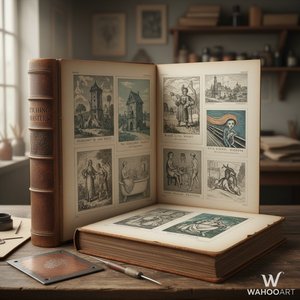
Top 10 Legendarische Etstechnieken die de Kunst Voorgoed Veranderden | OriginalUniqueArt
Ontdek de 10 meest legendarische etsen die de kunstgeschiedenis veranderden! Van Rembrandt tot Goya, leer over meesterlijke technieken en iconische werken. Vind museumkwaliteit reproducties & interieurinspiratie op OriginalUniqueArt.com.

Etching: A Historical Survey of Technique, Aesthetic Qualities & Enduring Artistic Significance
Explore the rich history of etching, from its origins to Rembrandt's masterful innovations. Discover the technique, aesthetic qualities & enduring legacy of this captivating art form. Expert insights for collectors and enthusiasts.
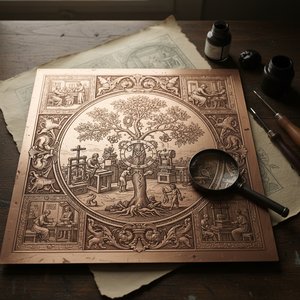
The Art of Etching: Mastering Lines, Texture, and Depth in the Intaglio Tradition
Explore the intricate world of etching and intaglio printmaking. Discover how masters use acid and metal to create profound textures and lines, from Romanticism to modern era, through an expert lens of art history and technical mastery.
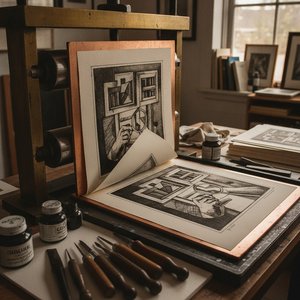
Etching Unlocked: The Sharp, High-Impact Art of Line and Shadow for the Modern Collector
Master the high-impact world of etching. Explore the transformative power of line and shadow through the intaglio tradition, from its armor-making origins to modern collecting strategies for the sophisticated art enthusiast.