

 Bekijk op ware grootte
 Verstuur
 Delen
Delen
 Details bekijken
 Gids
Gids

 Download
 Vergelijkbare items
 Röntgenonderzoek
 Diavoorstelling
 Statistieken
Det lugna vattnet
 Acryl op canvas
- Wanddecoratie
- Regionalist Landscape Painting
 1901
1901 1780.0 x 1420.0 cm
 Nationaalmuseum
 Lees meer
Giclée / Kunstafdrukken
Giclée- of canvasafdruk van museumkwaliteit met een snelle productie en flexibele afwerkingsmogelijkheden. ( Koop handgeschilderd kunstwerk Schakel over naar digitale afbeeldingen)




P118B $10

P118H $10

P118W $10

P438Z $10

P508JH $12

P508YH $12

P805H $10

P805Z $10

P919BZ $10

P919G $10

P919XJ $10

P959ZH $10

P968JZ $12

W106C $8

W218G $10

W218JH $8

W218Y $10

W307PJ $10

W316G $10

W316PJ $8

W316Y $10

W398PJ $8

W4111J $10

W500HY $15

W500JH $15

W692G $12

W849H $8

W940BG $15

W953PJ $8




Kies uit onze vooraf ingestelde maten die overeenkomen met de originele verhoudingen van het kunstwerk.

U kunt uw eigen afmetingen opgeven om in een specifieke lijst of ruimte te passen. Als de door u gekozen maat niet overeenkomt met de proporties van het originele kunstwerk, zullen wij de afbeelding bijsnijden of uitbreiden met een gespiegelde of effen rand. Een digitaal mockup wordt ter goedkeuring naar u verzonden voordat de productie begint.
Houd er rekening mee dat de preview op het scherm de werkelijke bijsneding of uitbreiding niet weergeeft. Alleen de mockup toont de uiteindelijke compositie nauwkeurig.
Hoewel aangepaste maten beschikbaar zijn, raden wij aan een afmeting uit de vooraf bepaalde lijst te kiezen om de originele proporties te behouden.
Wereldwijde levering () binnen 2 weken in plaats van de standaard 4/5 weken. (21 september)

Gratis wereldwijde expressverzending

Hoogwaardig linnen canvas

Volledige verzendverzekering

Garantie op terugbetaling van invoerrechten

Garantie op exacte kleurweergave

Retourbeleid van 100 dagen (alleen bij defecten)

100% Geld-terug-garantie

Korting bij meerdere afnames
 De optie voor glas is alleen beschikbaar bij een formaat kleiner dan 110 cm.

Det lugna vattnet
Giclée / Kunstafdrukken
Formaat reproductie
-


Totaalprijs
$ 81
Een Ademhaling Uit De Zwitserlandse Landschapskunst
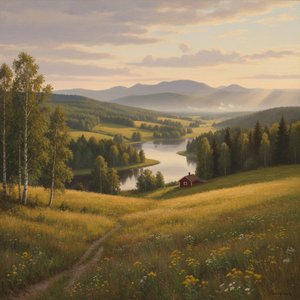
“Det lugna vattnet,” het stille vatten, is een schilderij dat een prachtige panorama biedt van een meer omgeven door bomen. Een lucht gevuld met wolken draagt bij aan de algemene atmosfeer van het beeld, waardoor het een gevoel van sereniteit oproept. Voorgrond wordt ingenomen door enkele paarden, waarvan sommige dichter bij het water staan en anderen verder weg liggen. Een aantal mensen zijn verspreid over het landschap, mogelijk genieten ze van het uitzicht of zijn betrokken bij verschillende activiteiten langs het meer. Het kunstwerk vangt een vredige instantie in de natuur op, waarbij de combinatie van de bewolkte lucht, het kalme water en het aanwezigheid van paarden en mensen een gevoel van rust uitstraalt.
Robert Henri: Een Pionier Van Amerikaanse Regionalisme
Robert Henri, geboren Robert Henry Cozad in Cincinnati, Ohio op 10 februari 1865, en overleden in Lambertville, New Jersey op 17 augustus 1947, staat als een belangrijke figuur in de ontwikkeling van Amerikaanse kunst. Zijn reis vanaf een jongen die naar Nebraska verplaatst werd tot het worden van een beroemde kunstenaar weerspiegelt een toegewijdheid aan het vastleggen van de essentie van het dagelijks leven en de geest van zijn geboorteland – een filosofie die diepgaand invloed heeft gehad op de groeiende regionale stroming. Aanvankelijk werd Henri’s artistieke opleiding enigszins conventioneel, waarbij hij instructies ontving in Cincinnati voordat hij naar New York City verhuisde in 1887. Het was hier, midden in het bruisende kunstenaarsmilieu, dat hij zijn eigen pad begon te vormen, waarbij hij de academische beperkingen van die tijd afwijste en een meer directe en expressieve manier aan het schilderen omarmde.
De Inspiratie Achter Een Stil Landschap
Henri’s vroegste artistieke ontwikkeling werd gevormd door verschillende belangrijke invloeden. De Impressionisten, zoals Claude Monet en Pierre-Auguste Renoir, waren een directe bron van inspiratie voor zijn stijl. Henri wilde de manier waarop het licht op het landschap viel vastleggen, waarbij hij probeerde de kleuren en texturen van de natuur zo nauwkeurig mogelijk weer te geven. Zijn werk wordt gekarakteriseerd door een gebruik van kleur dat zowel helder als subtiel is, waardoor het een gevoel van ruimte en beweging oproept.
Techniek En Materiaal
Het schilderij “Det lugna vattnet” is uitgevoerd in olie op doek. Henri gebruikte een combinatie van verschillende technieken om zijn kunstwerk te creëren, waaronder het gebruik van penseelstreken en kleurlagen. Hij was bijzonder bedreven in het weergeven van licht en schaduw, waardoor hij een gevoel voor diepte en dimensie kon creëren. De aandacht voor detail is kenmerkend voor Henri’s stijl, waarbij hij elke nuance van kleur en textuur zorgvuldig probeerde vast te leggen.
Een Symbool Van Vrede En Harmonie
“Det lugna vattnet” kan worden gezien als een symbool van vredigheid en harmonie. Het stille meer, omgeven door groene bomen, staat voor natuurlijke schoonheid en rust. De aanwezigheid van paarden en mensen draagt bij aan het gevoel van eenvoud en contemplatie dat het kunstwerk oproept. Henri wilde een kunstwerk creëren dat niet alleen mooi was om naar te kijken, maar ook een emotionele reactie veroorzaakte bij de kijker – een doel dat hij succesvol bereikte met dit prachtige landschap.
Biografie van de kunstenaar
Robert Henri: A Pioneer of American Regionalism
Robert Henri, born Robert Henry Cozad in Cincinnati, Ohio on February 10, 1865, and passing away in Lambertville, New Jersey on December 17, 1947, stands as a pivotal figure in the development of American art. His journey from a young boy moving to Nebraska to becoming a celebrated artist reflects a dedication to capturing the essence of everyday life and the spirit of his native land – a philosophy that profoundly influenced the burgeoning Regionalist movement. Initially, Henri’s artistic training was somewhat conventional, receiving instruction in Cincinnati before relocating to New York City in 1887. It was here, amidst the bustling art scene, that he began to forge his distinctive path, rejecting the academic constraints of the time and embracing a more direct and expressive approach to painting.Early Influences and Artistic Development
Henri’s early artistic development was shaped by several key influences. The Impressionists, particularly Monet and Renoir, instilled in him an appreciation for capturing fleeting moments of light and color. However, he quickly moved beyond mere imitation, seeking to infuse his work with a deeper emotional resonance. He also found inspiration in the works of Gustave Courbet, whose commitment to depicting ordinary subjects with honesty and realism resonated deeply with Henri’s own artistic vision. Crucially, Henri's time spent observing the lives of working-class Americans – particularly in New York City – provided him with a rich source of subject matter and a profound understanding of human nature. This immersion in the realities of urban life would become a defining characteristic of his art. His early works often depicted scenes of street life, laborers, and immigrants, rendered with a remarkable sensitivity to their dignity and struggles.The Ashcan School and Regionalism
Henri’s most significant contribution to American art lies in his role as a founder of the Ashcan School. Emerging in the early 1900s, this movement sought to break away from the traditional subjects favored by the established art world – landscapes and historical scenes – and instead focus on depicting the gritty realities of urban life in America. Artists like Henri, John Sloan, George Bellows, and Everett Shinn captured the sights and sounds of New York City’s tenements, factories, and crowded streets with unflinching honesty. Henri's paintings, such as *Table at City Diner* (1913) and *The Newsboy*, are prime examples of this style—characterized by loose brushwork, vibrant colors, and a focus on the lives of ordinary people. He championed a philosophy of “art for life’s sake,” believing that art should reflect the world as it truly is, not as it is idealized or romanticized. This stance directly challenged the prevailing artistic conventions of the time and paved the way for future generations of American artists to explore new subject matter and approaches.Technique and Style
Henri’s distinctive style was characterized by a bold and expressive use of color, loose brushwork, and a dynamic sense of movement. He favored working *alla prima* – directly on the canvas without preliminary sketches – allowing him to capture the immediacy of his subjects. His compositions were often asymmetrical and energetic, reflecting the chaotic energy of urban life. He employed a technique he called “color-plus-form,” prioritizing color as the primary element in his paintings while still maintaining a strong sense of form and structure. Henri’s palette was typically rich and vibrant, utilizing complementary colors to create visual excitement and depth. He wasn't interested in photographic realism; instead, he sought to convey the *feeling* of a scene—the atmosphere, the mood, and the emotional impact.Legacy and Historical Significance
Robert Henri’s influence on American art is undeniable. As a founder of the Ashcan School, he helped to shift the focus of American painting away from traditional subjects and towards the realities of everyday life. His commitment to depicting ordinary people with dignity and respect paved the way for future generations of artists to explore social realism and documentary photography. Henri’s emphasis on “art for life’s sake” continues to resonate today, reminding us that art can be a powerful tool for social commentary and personal expression. His work remains celebrated for its honesty, vitality, and profound understanding of the human condition. He is remembered not just as an artist but as a teacher who inspired countless students to pursue their own artistic visions with passion and conviction. His legacy endures in the continued exploration of regional themes and the celebration of ordinary subjects within American art.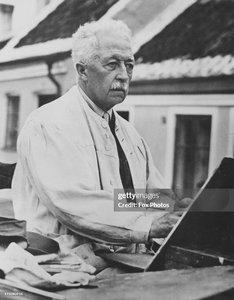
eugen napoleon nicolaus
1865 - 1947 , Sweden
Snelle feiten
- Artistic Movement Or Style: Impressionism
- Artists Or Movements Influenced By This Artist:
- The Ashcan School
- American Impressionism
- Artists Who Influenced This Artist:
- William Merritt Chase
- Jean-Baptiste Camille Corot
- Date Of Birth: 1865
- Date Of Death: 1947
- Full Name: Robert Henri
- Nationality: American
- Notable Artworks:
- The Table
- Spanish Village
- Portrait of a Musician
- Place Of Birth: Cincinnati, Ohio
Gerelateerde artikelen

Romantische Landschappen: Top 10 Meesterwerken voor een Sfeervol Interieur | OriginalUniqueArt.nl
Ontdek de 10 meest iconische meesterwerken van de Romantiek! Reis door de tijd met Caspar David Friedrich, Turner & Delacroix. Laat je inspireren en vind museumkwaliteit kunst reproducties voor een sfeervol interieur op OriginalUniqueArt.com.

Evocations of Place: A Historical Journey Through Landscape Art
Explore the rich history of landscape art with OriginalUniqueArt. Discover renowned artists, movements like Impressionism & tonalism, and expert guidance for collecting timeless pieces. Find your perfect serene escape today!
Johan Krouthén: Navigating Swedish Romanticism Through Landscape & Light
Explore the captivating landscapes of Johan Krouthén, a Swedish artist who broke from tradition to embrace realism & idealism. Discover his technique, influences, and legacy with OriginalUniqueArt.

John Constable's Top 25 Meesterwerken: Landschappen die de Ziel Raaken | OriginalUniqueArt
Ontdek de 25 mooiste schilderijen van John Constable, meester van de Engelse Romantiek. Van idyllische landschappen tot iconische Hay Wain – bewonder zijn techniek en emotie. Museumkwaliteit reproducties & decoratie op OriginalUniqueArt.com.

Evocations of Place: A Historical Journey Through Landscape Art
Explore the rich history of landscape art with OriginalUniqueArt. Discover renowned artists, movements like Impressionism & Romanticism, and expert guidance for collecting timeless pieces. Find your perfect serene escape today!
