
 Verstuur
 Delen
Delen
 Details bekijken

 Download
 Vergelijkbare items
 Diavoorstelling
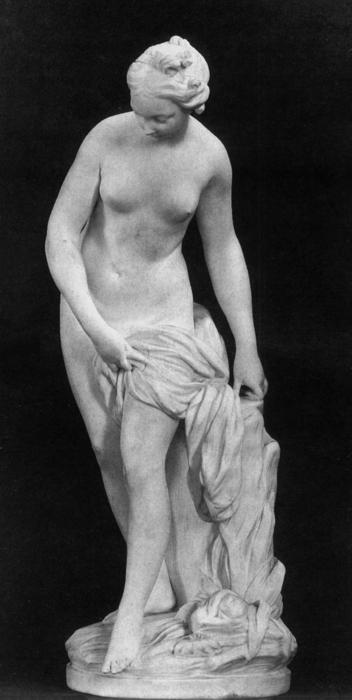
Baigneuse


 Lees meer
Giclée / Kunstafdrukken
Giclée- of canvasafdruk van museumkwaliteit met een snelle productie en flexibele afwerkingsmogelijkheden. ( Bestel handgeschilderde reproductie Koop afbeelding)




































Kies uit onze vooraf ingestelde maten die overeenkomen met de originele verhoudingen van het kunstwerk.

U kunt uw eigen afmetingen opgeven om in een specifieke lijst of ruimte te passen. Als de door u gekozen maat niet overeenkomt met de proporties van het originele kunstwerk, zullen wij de afbeelding bijsnijden of uitbreiden met een gespiegelde of effen rand. Een digitaal mockup wordt ter goedkeuring naar u verzonden voordat de productie begint.
Houd er rekening mee dat de preview op het scherm de werkelijke bijsneding of uitbreiding niet weergeeft. Alleen de mockup toont de uiteindelijke compositie nauwkeurig.
Hoewel aangepaste maten beschikbaar zijn, raden wij aan een afmeting uit de vooraf bepaalde lijst te kiezen om de originele proporties te behouden.
Wereldwijde levering () binnen 2 weken in plaats van de standaard 4/5 weken. (14 augustus)

Gratis wereldwijde expressverzending

Hoogwaardig linnen canvas

Volledige verzendverzekering

Garantie op terugbetaling van invoerrechten

Garantie op exacte kleurweergave

Retourbeleid van 60 dagen (alleen bij defecten)

100% Geld-terug-garantie

Korting bij meerdere afnames
 De optie voor glas is alleen beschikbaar bij een formaat kleiner dan 110 cm.

Baigneuse
Giclée / Kunstafdrukken
Afmetingen reproductie
-


Eindtotaal
$ 81
Beschrijving verzamelobject
The Baigneuse: A Rococo Reverie of Grace and Form
Étienne-Maurice Falconet’s “Baigneuse,” completed in 1757, is more than just a marble sculpture; it's an exquisite distillation of the Rococo aesthetic—a moment captured in stone that speaks volumes about beauty, sensuality, and the burgeoning spirit of Enlightenment France. This captivating work, currently residing within the Louvre’s collection, invites us into a world of delicate grace and subtle emotion, offering a glimpse into the artistic sensibilities of a pivotal era.
The sculpture depicts a young woman emerging from what appears to be water or being gently enveloped in drapery – an image simultaneously poised on the cusp of movement and serene repose. Falconet’s masterful handling of marble elevates this scene beyond mere representation, transforming it into a study of form and texture. The cool, luminous quality of the stone itself seems to shimmer with reflected light, mirroring the fluidity of water and the soft folds of fabric. Notice how the sculptor has expertly rendered the subtle variations in tone within the marble – the darker shadows that define the musculature, contrasted against the brighter highlights that accentuate the curves of the body and drapery. This careful attention to detail is a hallmark of Falconet’s technique, demonstrating his profound understanding of material and its expressive potential.
A Symphony of Rococo Style
“Baigneuse” firmly establishes itself within the context of the Rococo movement, a style that flourished in France during the mid-18th century. Characterized by its emphasis on elegance, lightness, and natural forms, Rococo art sought to evoke feelings of pleasure and delight. Falconet’s sculpture embodies these principles perfectly. The flowing lines of the drapery, reminiscent of shells or waves, create a sense of movement and dynamism. The pose itself—a languid curve of the body, a relaxed hand—suggests an effortless grace and a subtle sensuality that was characteristic of the era. The influence of Boucher’s paintings is readily apparent in the delicate modeling and the emphasis on idealized beauty.
Furthermore, the sculpture's setting – a scene of bathing – carries significant symbolic weight. Bathing rituals were deeply ingrained in aristocratic culture as acts of purification, renewal, and social display. Falconet cleverly utilizes this imagery to explore themes of both physical and spiritual cleansing, suggesting a harmony between the earthly and the divine. The woman’s expression is enigmatic—a hint of serenity mixed with an underlying awareness – inviting viewers to contemplate her inner world.
Craftsmanship and Context
Falconet's creation wasn't merely a solitary artistic endeavor; it was deeply intertwined with the burgeoning porcelain industry at Sèvres. Initially commissioned as a model for soft-paste porcelain figurines, “Baigneuse” quickly gained popularity, leading to numerous reproductions in biscuit (unglazed) form. This widespread dissemination highlights the sculpture’s immediate appeal and its role in shaping artistic tastes of the time. The fact that it was initially intended for the Marquise de Pompadour—a prominent patron of the arts—underscores its significance within the courtly circles of Louis XV's reign.
The sculpture’s journey through history is equally fascinating. After being displayed at the Château de Louveciennes, it was acquired by the Louvre and has since become a beloved centerpiece of the museum’s collection. Its enduring appeal lies not only in its technical brilliance but also in its ability to transport us back to a time of refined elegance and artistic innovation.
A Timeless Masterpiece
“Baigneuse” remains a testament to Falconet's skill as a sculptor and his profound understanding of the Rococo aesthetic. It’s a work that continues to captivate viewers with its graceful beauty, subtle symbolism, and exquisite craftsmanship. Whether admired for its technical mastery or appreciated for its evocative portrayal of human form and emotion, this sculpture stands as a timeless masterpiece—a window into the artistic heart of 18th-century France.
Biografie van de kunstenaar
The Sculptor of Grandeur and Delicate Beauty
Étienne Maurice Falconet stands as a pivotal figure in the late Baroque, Rococo, and early Neoclassical periods of French sculpture. Born in Paris in 1716, his journey from a humble apprenticeship to becoming one of the most celebrated artists of his time is a testament to talent, ambition, and an extraordinary ability to capture both power and grace. Falconet’s early life was marked by practical labor; he began as a marble cutter’s assistant, a far cry from the prestigious artistic circles he would eventually command. However, his innate talent for sculpting quickly shone through, producing clay and wood figures during his leisure hours that attracted the attention of Jean-Baptiste Lemoyne the Younger. This mentorship proved crucial, providing the formal training and guidance necessary to transform a skilled craftsman into a master of fine art.
As Falconet’s reputation grew, so did his ability to navigate the shifting aesthetic tides of the 18th century. His work seamlessly bridged the gap between the ornate, playful energy of the Rococo and the disciplined, heroic ideals of Neoclassicism. Early masterpieces like Milo of Croton (1754) secured his admission to the Académie des Beaux-Arts, marking a significant milestone in his career. In this work, Falconet demonstrated a remarkable capacity for realism and emotional depth, imbuing cold stone with the visceral struggle and legendary strength of the Greek athlete. His talent for capturing human feeling through anatomical precision established him as a rising star within the Parisian art world.
A Legacy in Bronze and Porcelain
While many sculptors are remembered for a single medium, Falconet’s versatility allowed him to leave an indelible mark on both monumental bronze and delicate porcelain. Perhaps his most enduring achievement is the colossal bronze statue of Peter the Great, known as "The Bronze Horseman," located in St. Petersburg, Russia. This monumental work serves as a triumph of scale and symbolism, capturing the imperial spirit of the Russian Tsar through dynamic movement and commanding presence. It remains one of the most iconic sculptural landmarks in Europe, representing the pinnacle of his ability to execute large-scale, historical narratives.
Parallel to his monumental bronze works, Falconet played a transformative role in the Royal Sèvres porcelain manufactory. Here, he elevated small-scale sculpture to an art form in its own right, infusing delicate porcelain figures with the same grace and sophistication found in his marble works. His contributions to Sèvres helped define the aesthetic of the era, blending elegance with intricate detail. His ability to master both the massive and the miniature is reflected in a diverse body of work that includes:
- Pygmalion and Galatea: A stunning marble sculpture capturing the mythical moment Aphrodite breathes life into stone, embodying the essence of artistic creation.
- Flora: A 1751 marble masterpiece that showcases his Neoclassical mastery through serene beauty and elegant form.
- Milo of Croton: A dynamic depiction of strength and struggle that highlights his skill in capturing intense physical emotion.
Through his mastery of various scales and styles, Étienne Maurice Falconet shaped the visual language of his century. Whether through the sweeping drama of a public monument or the intimate charm of a porcelain figurine, his work continues to resonate as a profound exploration of human emotion, myth, and the enduring beauty of form.

étienne maurice falconet
1716 - 1791 , France
Belangrijkste feiten
- Artistic Movement Or Style: Baroque, Rococo, Neoclassical
- Artists Or Movements Influenced By This Artist: ['Boucher']
- Artists Who Influenced This Artist: ['Jean-Baptiste Lemoyne']
- Date Of Birth: December 1, 1716
- Date Of Death: January 24, 1791
- Full Name: Étienne Maurice Falconet
- Nationality: French
- Notable Artworks:
- Bronze Horseman Statue
- Flora
- Milo of Croton
- Place Of Birth: Paris, France
Gerelateerde artikelen

Antonio Canova: Neoclassical Sculpture & the Pursuit of Emotional Perfection
Explore the life & art of Antonio Canova, the greatest Neoclassical sculptor. Discover his masterpieces, innovative techniques, and lasting influence on fine art collecting. Expert insights for discerning investors.
Echoes of Antiquity: Exploring Themes & Techniques in Classical Art Masterpieces
Explore the timeless beauty & profound themes of Classical art! Discover Greek & Roman masterpieces, Neoclassical revivals, and the enduring influence on artistic movements. Expert insights & high-quality reproductions at OriginalUniqueArt.
Jean-Baptiste Pater: Rococo Charm & Ephemeral Beauty of 18th-Century France
Explore the captivating world of Jean-Baptiste Pater, a master of Rococo painting. Discover his elegant *fête galante* scenes and shimmering portraits – a glimpse into 18th-century French aristocracy. Learn about his legacy & find high-quality reproductions.

Antonio Zucchi: A Venetian Master of Rococo & Neoclassical Charm
Explore the captivating world of Antonio Zucchi, a Venetian master of Rococo and Neoclassical art. Discover his collaborations with Robert Adam & Angelica Kauffmann, stunning frescoes, and enduring legacy. Learn about collecting Zucchi's works today.

The Allure of Elegance in Art: A Historical & Aesthetic Exploration of Refined Beauty
Explore the history of elegance in art! Discover Rococo masterpieces & key artists. Expert insights for discerning collectors seeking investment-worthy artworks and custom reproductions at OriginalUniqueArt.

