

 Bekijk op ware grootte
 Verstuur
 Delen
Delen
 Details bekijken
 Gids voor studentenkunstwerken

 Download
 Vergelijkbare items
 Röntgenonderzoek
 Diavoorstelling
 Statistieken
Dance around the golden calf


 Lees meer
Giclée / Kunstafdrukken
Giclée- of canvasafdruk van museumkwaliteit met een snelle productie en flexibele afwerkingsmogelijkheden. ( Koop handgeschilderd kunstwerk Schakel over naar digitale afbeeldingen)




P118B $10

P118H $10

P118W $10

P438Z $10

P508JH $12

P508YH $12

P805H $10

P805Z $10

P919BZ $10

P919G $10

P919XJ $10

P959ZH $10

P968JZ $12

W106C $8

W218G $10

W218JH $8

W218Y $10

W307PJ $10

W316G $10

W316PJ $8

W316Y $10

W398PJ $8

W4111J $10

W500HY $15

W500JH $15

W692G $12

W849H $8

W940BG $15

W953PJ $8




Kies uit onze vooraf ingestelde maten die overeenkomen met de originele verhoudingen van het kunstwerk.

U kunt uw eigen afmetingen opgeven om in een specifieke lijst of ruimte te passen. Als de door u gekozen maat niet overeenkomt met de proporties van het originele kunstwerk, zullen wij de afbeelding bijsnijden of uitbreiden met een gespiegelde of effen rand. Een digitaal mockup wordt ter goedkeuring naar u verzonden voordat de productie begint.
Houd er rekening mee dat de preview op het scherm de werkelijke bijsneding of uitbreiding niet weergeeft. Alleen de mockup toont de uiteindelijke compositie nauwkeurig.
Hoewel aangepaste maten beschikbaar zijn, raden wij aan een afmeting uit de vooraf bepaalde lijst te kiezen om de originele proporties te behouden.
Wereldwijde levering () binnen 2 weken in plaats van de standaard 4/5 weken. (25 september)

Gratis wereldwijde expressverzending

Hoogwaardig linnen canvas

Volledige verzendverzekering

Garantie op terugbetaling van invoerrechten

Garantie op exacte kleurweergave

Retourbeleid van 100 dagen (alleen bij defecten)

100% Geld-terug-garantie

Korting bij meerdere afnames
 De optie voor glas is alleen beschikbaar bij een formaat kleiner dan 110 cm.

Dance around the golden calf
Giclée / Kunstafdrukken
Formaat reproductie
-


Totaalprijs
$ 81
A Primal Rhythm: The Visceral Energy of Nolde’s Vision
In the heart of the Expressionist movement, few works pulse with as much raw, unbridled vitality as Emil Nolde’s 1910 masterpiece, Dance Around the Golden Calf. This monumental canvas is not merely a depiction of a ritual; it is an immersive experience that pulls the viewer into a swirling vortex of human emotion and movement. At first glance, the eye is captured by the striking, rhythmic arrangement of figures locked in a circular dance, their bodies intertwined in a celebration that feels both ancient and urgently modern. Nolde, a master of capturing the primal essence of life, utilizes a palette dominated by deep, nocturnal blues that contrast sharply against earthy ochres and fiery reds, creating a visual tension that mirrors the spiritual fervor of the scene itself.
The subject matter captures a vibrant, almost hypnotic scene of women dancing before an audience, centered around the imposing presence of a golden calf statue. This composition captures a moment of joyous celebration and communal ritual, yet beneath the surface lies a complex layer of meaning. The golden calf serves as a potent symbol of idolatry—a rejection of monotheistic faith in favor of pagan worship—yet the dancing women represent vitality, fertility, and the celebration of life’s pleasures amidst uncertainty. For the discerning collector, this piece offers a profound sense of depth, inviting a contemplation of the eternal struggle between instinctual joy and societal or religious restraint.
Mastery of Expressionist Technique
Nolde’s distinctive style aligns perfectly with the core tenets of Expressionism, characterized by bold colors, simplified forms, and emotionally charged brushstrokes that represent a deliberate departure from academic realism. Eschewing the polished, restrained finishes of traditional painting, Nolde embraced a thick impasto method, applying oil paint with an energetic, almost aggressive brushstroke. This tactile quality gives the surface of the painting a sculptural dimension, where the texture of the paint itself mimics the muscularity and kinetic energy of the dancers. The technique prioritizes expressive color palettes and textural surfaces, ensuring that every movement on the canvas feels heavy with significance.
The historical context of this work is equally compelling. Created during a period of profound societal anxiety following the shifts in European thought leading into the early 20th century, the painting reflects a broader yearning for primal spirituality and an escape from rational thought. Nolde’s ability to translate these complex historical tensions into a visual language of color and form makes this artwork a cornerstone of modern art history. For interior designers and art lovers alike, a high-quality reproduction of this piece brings a commanding presence to any space, offering a focal point that is both intellectually stimulating and visually arresting.
An Emotional Resonance for the Modern Space
The emotional impact of Dance Around the Golden Calf is nothing short of transformative. Nolde's masterful use of color—particularly the interplay of reds, yellows, and blues—creates a palpable atmosphere of excitement and fervor. The painting evokes feelings of liberation, passion, and even a touch of the uncanny, inviting viewers to immerse themselves in the scene’s emotional core. It is an artwork that demands attention, making it an ideal selection for those seeking to infuse a room with energy, drama, and a sense of historical weight.
Whether placed in a contemporary gallery setting or a sophisticated private study, this reproduction serves as a window into the soul of Expressionism. It provides more than just decoration; it offers a piece of history that continues to resonate with the human desire for connection, rhythm, and the celebration of life's most primal instincts.
Biografie van de kunstenaar
Early Life and Artistic Beginnings
Emil Nolde, een bekende Duitse en Deense schilder, werd geboren als Hans Emil Hansen op 7 augustus 1867 in Nolde, Schleswig-Holstein, Duitsland. Hij kwam uit een familie met sterke banden met het platteland en religieuze overtuigingen – factoren die zijn artistieke visie diepgaand zouden beïnvloeden. Ondanks de weerstand van zijn ouders, die hem graag een meer conventionele carrière wilden zien, achtervolgde Nolde onverzettelijk zijn passie voor kunst. In eerste instantie werkte hij als houtbewerker en meubelmaker voordat hij zich in de late twintiger jaren volledig aan het schilderen wijdde. Zijn jeugdige fascinatie voor kleur en vorm werd al vroeg aangewakkerd door de landelijke omgeving en de religieuze tradities van zijn familie, wat later terug zou komen in zijn werk.Artistic Development and Influences
Nolde’s artistieke reis was gekenmerkt door zelfstudie en verkenning. Hij reisde veelvuldig, waarbij hij zich liet inspireren door verschillende culturen en kunstvormen. Vroege invloeden omvatten Vincent van Gogh, Paul Gauguin en traditioneel volkskunst – met name de expressieve kracht van primitieve maskers en houtsnijwerken. Deze ontmoetingen wekten zijn interesse in felle kleuren, gestileerde vormen en emotioneel geladen thema’s op. In eerste instantie experimenteerde hij met Realisme en Impressionisme, maar verplaatste zich snel naar een meer subjectieve en expressieve stijl. Hij was gefascineerd door de werken van primitieve kunstenaars, die hij zag als een bron van onvervalste emotie en kleur. Deze invloeden zouden cruciaal zijn voor het ontwikkelen van zijn unieke visuele taal.Die Brücke and Expressionist Breakthrough
In 1905 richtte Nolde samen met andere kunstenaars de groep Die Brücke (De Brug) op, een cruciale verzamelingsplaats van Duitse expressionisten. Deze collectieve beweging streefde ernaar om zich los te maken van academische tradities en innerlijke emoties uit te drukken door radicaal artistiek experimenteren. Nolde’s bijdrage aan Die Brücke was significant; zijn intense gebruik van kleur en vervormde vormen dwong de grenzen van representatie opnieuw af. Tegelijkertijd behield hij een enigszins onafhankelijke positie binnen de groep, waarbij hij vaak afweek in onderwerpkeuze en stijlaanpak. De expressieve aard van Die Brücke was voor Nolde een manier om zijn innerlijke wereld te uiten, maar ook een uitdaging om zich te onderscheiden van de andere leden.Key Themes and Artistic Style
Nolde’s oeuvre wordt gekenmerkt door verschillende terugkerende thema's: religieuze scènes, landschappen, zeegezichten en portretten. Hij was bijzonder gefascineerd door de kracht van maskers – zowel als fysieke objecten als symbolische representaties van primitieve emoties. Zijn stijl werd gekenmerkt door:- Felle, levendige kleuren die gebruikt werden om intensiteit over te brengen
- Vervormde vormen die expressie boven realisme zetten
- Impasto-techniek – dik aanbrengen van verf waardoor textuur ontstaat
- Een focus op het vastleggen van innerlijke psychologische toestanden
Notable Works and Achievements
Gedurende zijn carrière creëerde Nolde een enorme hoeveelheid werk. Enkele van zijn meest bekende schilderijen omvatten:- Masks (1906-1907) – toonde zijn fascinatie voor primitieve kunst
- The Mocking of Christ (1909) – een krachtig en emotioneel geladen religieus schilderij
- Autumn Sea (1908) - demonstreerde zijn expressieve landschapsschilderkunst.
- Flower Garden (Girl and Washing) (1907)
- Dance around the Golden Calf (1909)
Historical Significance and Legacy
Emil Nolde’s innovatieve gebruik van kleur en expressieve penseelstreken heeft generaties kunstenaars beïnvloed. Zijn werk overbrugde de kloof tussen traditionele representatiekunst en de volgende abstracte bewegingen. Hij blijft een centrale figuur in de geschiedenis van Duitse expressionisme, geëerd om zijn intense emotie, experimentele stijl en blijvende artistieke visie. Zijn nalatenschap inspireert nog steeds kunstenaars en kunstliefhebbers wereldwijd.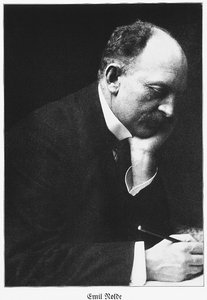
Emil Nolde
1867 - 1956 , Duitsland
Snelle feiten
- Artistic Movement Or Style: Expressionisme / Die Brücke
- Artists Or Movements Influenced By This Artist: ['Brücke']
- Artists Who Influenced This Artist:
- Van Gogh
- Gauguin
- Date Of Birth: 7 aug 1867
- Date Of Death: 15 apr 1956
- Full Name: Emil Nolde / Hans Emil Hansen
- Nationality: Duits-Denemarks
- Notable Artworks:
- Maskers
- Bekentenis van Christus
- Zee in de herfst
- Place Of Birth: Nolde, Duitsland
Gerelateerde artikelen

Oil on Canvas: A Historical & Technical Exploration of a Timeless Artistic Medium
Explore the rich history & enduring techniques of oil painting on canvas. Discover the science behind its longevity, conservation practices, and contemporary relevance. Expert insights for art enthusiasts.

The Enduring Power of Painting: A Historical & Contemporary Exploration of Form and Emotion
Explore the rich history & enduring techniques of oil painting with OriginalUniqueArt. Discover masterpieces, learn about art collecting, and find authentic handmade reproductions crafted by skilled artists.

The Enduring Legacy of Oil on Canvas: Technique, History & Aesthetic Impact
Explore the rich history & techniques of oil painting – from Renaissance masters to Impressionism. Discover pigments, layering methods, and why this timeless medium endures. Expert insights for artists & art enthusiasts.

The Enduring Muse: Women as Subject & Symbol in Art History
Explore the rich history of women in art – from iconic muses to groundbreaking artists. Discover feminist movements, global perspectives & reclaim female narratives with OriginalUniqueArt.

The Soul of Impressionism: Why Oil on Canvas Captures Eternal Light and Timeless Emotion
Discover the enchanting alchemy of Impressionism. Explore how the mastery of oil on canvas, through glazing and impasto, captures eternal light and emotion. Perfect for lovers of Monet and Van Gogh seeking the profound depth of hand-painted fine art.

