
 Voorvertoning
 Verstuur
 Delen
Delen
 Details bekijken
 Gids
Gids

 Download
 Vergelijkbare items
 Röntgenonderzoek
 Diavoorstelling
 Vraag & antwoord
 Statistieken
Interior with a Lady Playing the Virginal


 Lees meer
Giclée / Kunstafdrukken
Giclée- of canvasafdruk van museumkwaliteit met een snelle productie en flexibele afwerkingsmogelijkheden. ( Bestel handgeschilderde reproductie Schakel over naar digitale afbeeldingen)




P118B €10

P118H €10

P118W €10

P438Z €10

P508JH €12

P508YH €12

P805H €10

P805Z €10

P919BZ €10

P919G €10

P919XJ €10

P959ZH €10

P968JZ €12

W106C €8

W218G €10

W218JH €8

W218Y €10

W307PJ €10

W316G €10

W316PJ €8

W316Y €10

W398PJ €8

W4111J €10

W500HY €15

W500JH €15

W692G €12

W849H €8

W940BG €15

W953PJ €8




Kies uit onze vooraf ingestelde maten die overeenkomen met de originele verhoudingen van het kunstwerk.

Voer de gewenste breedte en hoogte in, passend bij uw lijst of muur. Een afdruk kan alleen worden ingekort en nooit groter worden gemaakt dan het origineel; een formaat met andere verhoudingen zal daarom een deel van de afbeelding verliezen. Wij sturen u een digitaal mockup ter goedkeuring voordat we tot drukwerk overgaan. De afbeelding op deze pagina toont niet de werkelijke uitsnede — dit is alleen te zien op het mockup.
Wereldwijde levering () binnen 2 weken in plaats van de standaard 4/5 weken. (7 november)

Gratis wereldwijde expressverzending

Hoogwaardig linnen canvas

Volledige verzendverzekering

Garantie op terugbetaling van invoerrechten

Garantie op exacte kleurweergave

Retourbeleid van 100 dagen (alleen bij defecten)

100% Geld-terug-garantie

Korting bij meerdere afnames
 De optie voor glas is alleen beschikbaar bij een formaat kleiner dan 110 cm.

Interior with a Lady Playing the Virginal
Giclée / Kunstafdrukken
Afmetingen reproductie
-


Eindtotaal
€ 72
A Glimpse into Dutch Golden Age Intimacy
Emanuel de Witte’s “Interior with a Lady Playing the Virginal” isn't merely a painting; it’s a carefully constructed invitation. Completed around 1665, this oil on canvas transports us to a private chamber within a grand Dutch house, radiating an atmosphere of quiet contemplation and subtle drama. De Witte, a master of capturing the essence of space and light, eschews the meticulous architectural documentation favored by his contemporary, Pieter Saenredam, instead focusing on the *feeling* of being present within this intimate scene. The painting whispers stories of domestic life, musical performance, and perhaps even a touch of melancholy – all rendered with an exquisite sensitivity to color, texture, and the play of light.
The composition is immediately arresting. A woman, elegantly dressed and absorbed in her music, dominates the central space. She plays a virginal, a keyboard instrument popular during the period, its intricate workings hinted at by the surrounding instruments – a violin resting against a wall and a harpsichord subtly visible in the background. The room itself is richly detailed: a checkered floor suggesting a sense of order, a chandelier casting a warm glow, and two figures observing the performance from doorways—one standing, one seated. De Witte’s skill lies not just in depicting these objects but in creating an illusion of depth and perspective that draws us into the scene.
The Language of Light and Shadow
De Witte's mastery of chiaroscuro – the dramatic contrast between light and shadow – is central to the painting’s power. He doesn’t simply illuminate the room; he sculpts it with light, creating a sense of intimacy and drawing our attention to key elements. The light source, unseen but implied, casts long shadows that define the forms of the furniture and figures, adding a layer of mystery and sophistication. Notice how the light catches the woman's face, highlighting her expression of concentration, while leaving other areas in soft shadow. This technique isn’t just aesthetic; it contributes to the painting’s overall mood – a blend of serenity and quiet introspection.
The use of color is equally deliberate. De Witte employs a restrained palette of browns, golds, and reds, creating a harmonious and refined atmosphere. The rich hues of the fabrics and furniture are subtly contrasted with the cooler tones of the walls and floor, further enhancing the sense of depth and perspective. He avoids bright, flashy colors, opting instead for muted shades that evoke the warmth and comfort of a domestic setting.
Symbolism and Context
“Interior with a Lady Playing the Virginal” is more than just a snapshot of 17th-century life; it’s laden with symbolism. The virginal itself represents refinement, education, and musical skill – qualities highly valued in aristocratic society. The presence of multiple instruments suggests a gathering or performance, hinting at social interaction and cultural pursuits. Some art historians interpret the scene as a meditation on love and erotic melancholy, perhaps referencing the fleeting nature of beauty and pleasure. The figure observing from the doorway could represent an unspoken longing or a detached contemplation of domestic life.
Created during the Dutch Golden Age, a period of unprecedented prosperity and artistic flourishing, the painting reflects the values and sensibilities of the time. De Witte’s work aligns with the broader trends of the era – a fascination with interior spaces, an interest in capturing fleeting moments of everyday life, and a commitment to realism and naturalism. The painting is currently housed at the Museum Boijmans Van Beuningen in Rotterdam, offering visitors a chance to experience this remarkable masterpiece firsthand.
A Timeless Masterpiece
Emanuel de Witte’s “Interior with a Lady Playing the Virginal” remains a captivating work of art, demonstrating his exceptional skill and artistic vision. Its evocative atmosphere, masterful use of light and shadow, and subtle symbolism continue to resonate with viewers today. Whether you're an art enthusiast, a collector seeking a piece of Dutch history, or simply someone looking for a beautiful addition to your home, this painting offers a glimpse into a bygone era – a world of refined elegance, quiet contemplation, and enduring artistic beauty.
Veelgestelde vragen
Hoe groot is het contrast in "Interior with a Lady Playing the Virginal" door Emanuel De Witte?
Het contrastniveau van "Interior with a Lady Playing the Virginal" door Emanuel De Witte is Serene.
Hoe kan "Interior with a Lady Playing the Virginal" door Emanuel De Witte worden gebruikt in interieurdecoratie?
"Interior with a Lady Playing the Virginal" wordt aanbevolen voor Statement; de ideale plek hiervoor is een Living Room.
Hoe kan ik een print van "Interior with a Lady Playing the Virginal" door Emanuel De Witte verkrijgen?
Om een print van "Interior with a Lady Playing the Virginal" door Emanuel De Witte te bestellen, kunt u terecht op de Fine Art Print pagina: een fine art print op katoenen canvas of archiefwaardig canvaspapier.
Biografie kunstenaar
A Life in Perspective: The World of Emanuel de Witte
Emanuel de Witte, een naam die misschien minder direct herkenbaar is dan die van sommige van zijn Nederlandse Gouden Eeuw collega’s, neemt toch een significante en fascinerende plaats in binnen het pantheon van 17e-eeuwse meesters. Geboren in Alkmaar in 1617, was de artistieke reis van De Witte gekenmerkt door zowel opmerkelijke talent als aanzienlijke persoonlijke omwentelingen – een dualiteit die subtiel lijkt te doorschemeren in de atmosfeer van zijn schilderijen. Hij werd niet gedreven door nauwkeurige architectonische documentatie zoals Pieter Saenredam; in plaats daarvan zocht hij het *gevoel* van ruimte, de kwaliteit van licht en de subtiele drama’s die zich ontvouwen binnen heilige interieurs. Zijn doeken zijn niet simpelweg representaties van kerken; ze zijn meeslepende ervaringen, die kijkers uitnodigen in een wereld van stil contemplatie en spirituele resonans.Van Delftse Opleiding tot Amsterdamse Omarming
De vroege levensjaren van De Witte legden een stevige basis voor zijn artistieke ambities. Zijn vader, een schoolmeester, instilledde in hem een waardering voor leren en intellectuele nieuwsgierigheid – kwaliteiten die later zouden manifesteren in zijn zorgvuldige observatie van perspectief en licht. Hij trad formeel toe tot de kunstwereld door lid te worden van het Sint Lucasgilde in Alkmaar in 1636, maar zijn daaropvolgende leerlingengperiode bij Evert van Aelst in Delft bleek bijzonder vormend. Van Aelst, een gerenommeerde still-life schilder, overleverte De Witte een scherp oog voor detail en een meesterlijke beheersing van licht en schaduw – vaardigheden die kenmerken zouden worden van zijn volwassen stijl. In eerste instantie verkende De Witte verschillende genres—portretten, mythologische scènes, religieuze verhalen—maar het was pas na zijn vestiging in Amsterdam in 1651 dat hij werkelijk zijn roeping vond. De stad’s rijkdom aan indrukwekkende kerken bood een eindeloze bron van inspiratie, en hij begon zich te specialiseren in het weergeven van hun adembenemende interieurs.Meester van Atmosfeer en Verbeelding
Amsterdam bleek cruciaal voor de artistieke ontwikkeling van De Witte. Hij repliceerde de bestaande kerken niet simpelweg; in plaats daarvan synthetiseerde hij behendig elementen uit verschillende gebouwen, waardoor geïdealiseerde interieurs ontstonden die zowel vertrouwd als subtiel ander waren. De Oude Kerk in Amsterdam werd een frequente onderwerpbij zijn doeken, herhaaldelijk weergegeven vanuit verschillende perspectieven. Maar deze waren niet simpelweg rechttoe rechtaan representaties. De Witte manipuleerde perspectief, speelde met licht en schaduw en plaatste figuren in de ruimtes om een specifieke stemming of atmosfeer te oproepen. Zijn canvases zijn dus geen simpele weergaven van kerken; ze zijn meeslepende ervaringen die kijkers uitnodigen in een wereld van stil contemplatie en spirituele resonans. Zoals Walter Liedtke het benoemde, lag zijn primaire interesse niet in de architectuur zelf, maar in “het ruimte zelf – haar licht, kleur, pure omvang en stemming.” Deze nadruk op atmosferische effecten onderscheidt hem van meer staccato-topografische schilders van die tijd. Hij was niet bezorgd over nauwkeurigheid; hij was geïnteresseerd in het creëren van een *gevoel* van grandeur, heiligdom en spirituele diepte.Een Leven Gemerkt door Schatten
Ondanks zijn artistieke succes, werd de persoonlijke levensjaren van De Witte getekend door tegenslagen. Het overlijden van zijn eerste vrouw bracht diepe verdriet teweeg, en latere juridische problemen met betrekking tot zijn tweede vrouw en dochter wierpen een lange schaduw over zijn latere jaren. Financiële moeilijkheden leidden ertoe dat hij zich in de minderwaardige positie bevond van indentured servant bij een kunsthandelaar, Joris de Wijs, een situatie die hij uiteindelijk schendde, wat leidde tot verdere complicaties. Hedendaagse getuigenissen schilderen een beeld van een onstabiele temperament – een man vatbaar voor uitbarstingen tegen klanten en betrokken bij ruzies. Deze innerlijke strijd heeft mogelijk bijgedragen aan de ongelijkmatigheid van zijn latere werk, maar het voegt ook een extra laag complexiteit toe aan onze begrip van de kunstenaar en zijn creaties. Tragisch genoeg kwam De Witte’s leven in 1692 tot een verwoestend einde toen hij naar verluidt zichzelf ophing van een brugbrug; de touw brak, en hij verdronk. Het was een somber einde voor een man die zijn leven had gewijd aan het vastleggen van de schoonheid en sereniteit van heilige ruimtes.Erfgoed en Duurzaam Invloed
Emanuel de Witte staat als een belangrijke figuur in de laatste fase van architectonale schilderkunst in Nederland, die de kloof overbrugt tussen nauwkeurige documentatie en atmosferische interpretatie. Zijn innovatieve gebruik van licht en perspectief heeft toekomstige generaties kunstenaars beïnvloed, en zijn schilderijen bieden nog steeds waardevolle inzichten in 17e-eeuwse Nederlandse religieuze leven en sociale gewoonten. Vandaag de dag worden werken van De Witte gehouden in prestigieuze collecties wereldwijd – bij het Metropolitan Museum of Art in New York, de National Gallery of Art in Washington, D.C., en het Rijksmuseum in Amsterdam, onder meer—waardig aan zijn blijvende nalatenschap als meester van perspectief, atmosfeer en emotionele resonans. Hij herinnert ons eraan dat kunst niet alleen wat we zien is, maar hoe we *voelen* wanneer we naar het kijken.
Emanuel De Witte
1617 - 1692 , Nederland
Belangrijkste feiten
- Artistic Movement Or Style: Barokke kunst
- Artists Or Movements Influenced By This Artist: ['Latere kunstenaars']
- Artists Who Influenced This Artist: ['Evert van Aelst']
- Date Of Birth: 1617
- Date Of Death: 1692
- Full Name: Emanuel de Witte
- Nationality: Nederlands
- Notable Artworks:
- Oude Kerk Amsterdam
- Interieur Oude Kerk
- Place Of Birth: Alkmaar, Nederland
Gerelateerde artikelen

Top 10 Meesterwerken van de Gouden Eeuw: Kunst voor uw interieur | OriginalUniqueArt.nl
Ontdek de 10 meesterwerken van de Gouden Eeuw! Leer over Rembrandt, Vermeer & andere Hollandse schilders. Prachtige kunst reproducties voor uw interieur. Museumkwaliteit prints op OriginalUniqueArt.com.

Mastering Light & Shadow: A Journey Through the Dutch Golden Age's Luminous Legacy
Embark on a cultural journey through the Dutch Golden Age. Explore the masterful interplay of light and shadow in 17th-century masterpieces, from Rembrandt to Vermeer, and discover how this era of profound realism continues to inspire fine art collectors today.

Golden Light & Dutch Skies: The Timeless Magic of Dutch Golden Age Landscapes
Discover the breathtaking beauty of Dutch Golden Age landscapes. Explore the mastery of light, chiaroscuro, and 17th-century realism through an expert art history lens, celebrating the enduring legacy of the Dutch Masters for discerning collectors and art lovers.

Golden Age Reflections: Dutch Baroque Painting & Cultural Innovation
Explore the Dutch Golden Age of painting! Discover key artists like Vermeer & ter Borch, their innovative techniques, and the rich cultural context behind these Baroque masterpieces. Learn about collecting & appreciating this iconic art period.
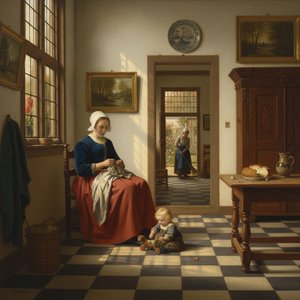
Pieter de Hooch: Illuminating Dutch Domestic Life & Golden Age Charm
Explore the captivating world of Pieter de Hooch, a master of Dutch Golden Age painting. Discover his innovative use of light, intimate domestic scenes, and lasting influence on art history. Learn more at OriginalUniqueArt.