
 Voorvertoning
 Verstuur
 Delen
Delen
 Details bekijken
 Gids
Gids

 Download
 Vergelijkbare items
 Röntgenonderzoek
 Diavoorstelling
 Q&A
Q&A Statistieken
Announcer

- 51.0 x 42.0 cm


 Lees meer
Giclée / Kunstafdrukken
Giclée- of canvasafdruk van museumkwaliteit met een snelle productie en flexibele afwerkingsmogelijkheden. ( Bestel handgeschilderde reproductie Schakel over naar digitale afbeeldingen)




P118B €10

P118H €10

P118W €10

P438Z €10

P508JH €12

P508YH €12

P805H €10

P805Z €10

P919BZ €10

P919G €10

P919XJ €10

P959ZH €10

P968JZ €12

W106C €8

W218G €10

W218JH €8

W218Y €10

W307PJ €10

W316G €10

W316PJ €8

W316Y €10

W398PJ €8

W4111J €10

W500HY €15

W500JH €15

W692G €12

W849H €8

W940BG €15

W953PJ €8




Kies uit onze vooraf ingestelde maten die overeenkomen met de originele verhoudingen van het kunstwerk.

Voer de gewenste breedte en hoogte in, passend bij uw lijst of muur. Een afdruk kan alleen worden ingekort en nooit groter worden gemaakt dan het origineel; een formaat met andere verhoudingen zal daarom een deel van de afbeelding verliezen. Wij sturen u een digitaal mockup ter goedkeuring voordat we tot drukwerk overgaan. De afbeelding op deze pagina toont niet de werkelijke uitsnede — dit is alleen te zien op het mockup.
Wereldwijde levering () binnen 2 weken in plaats van de standaard 4/5 weken. (2 november)

Gratis wereldwijde expressverzending

Hoogwaardig linnen canvas

Volledige verzendverzekering

Garantie op terugbetaling van invoerrechten

Garantie op exacte kleurweergave

Retourbeleid van 100 dagen (alleen bij defecten)

100% Geld-terug-garantie

Korting bij meerdere afnames
 De optie voor glas is alleen beschikbaar bij een formaat kleiner dan 110 cm.

Announcer
Giclée / Kunstafdrukken
Afmetingen reproductie
-


Eindtotaal
€ 72
Announcer by El Lissitzky: A Geometric Echo of Revolution
El Lissitzky’s “Announcer,” painted in 1923, is more than just a depiction of an object; it's a crystallized embodiment of the artistic fervor gripping Russia during the early years of Soviet rule. This striking piece—a vibrant red and white geometric form punctuated by a central circle—immediately draws the eye into its meticulously crafted composition.
- Subject Matter: The artwork presents a stylized horn, seemingly constructed from two interlocking segments. Its simplicity belies a profound conceptual underpinning rooted in Lissitzky’s exploration of visual communication and his unwavering belief in the transformative potential of abstraction.
- Style & Technique: Lissitzky championed Suprematism—a radical movement prioritizing pure geometric forms devoid of representational imagery—and “Announcer” exemplifies this aesthetic perfectly. Employing bold, contrasting colors against a stark white background, Lissitzky achieved an arresting visual impact through precise lines and planar surfaces. The technique is characterized by meticulous execution, reflecting the artist’s commitment to rational precision.
- Historical Context: Created during the height of the Bolshevik Revolution, “Announcer” speaks directly to the ideological currents shaping Soviet art and design. Lissitzky's work aligns with Constructivism—another influential movement advocating for art as a tool for social reform—emphasizing functionality and geometric abstraction as instruments for constructing a new visual language.
Geometric Abstraction: Lissitzky’s Suprematist Vision
Lissitzky's embrace of Suprematism wasn’t merely stylistic preference; it was a philosophical stance. Influenced by Kazimir Malevich—his mentor and fellow pioneer—he sought to liberate art from the constraints of illusionism, arguing that true expression resided in pure geometric forms like squares, circles, and rectangles. This approach mirrored broader intellectual debates concerning the role of art in shaping consciousness and promoting social progress.
- Malevich’s Influence: Malevich's iconic “Black Square,” completed in 1915, served as a catalyst for Lissitzky’s artistic explorations. Both artists rejected traditional representational conventions, prioritizing the fundamental elements of visual perception to convey emotional and intellectual ideas.
Symbolism Beyond Form: Communicating Revolution
While seemingly devoid of recognizable imagery, “Announcer” carries significant symbolic weight. The horn itself can be interpreted as representing sound—specifically broadcasting—a crucial element in disseminating revolutionary propaganda. Simultaneously, the central circle embodies unity and wholeness, symbolizing the aspiration for a harmonious society underpinned by rational thought and geometric order.
- Typography & Design: Lissitzky’s mastery extended beyond painting; he was also a prolific designer, applying Suprematist principles to typography and exhibition displays. His designs aimed to communicate complex ideas concisely and powerfully—a hallmark of Constructivist aesthetics.
Emotional Resonance: A Quiet Assertion of Ideals
"Announcer" possesses an understated elegance that belies its profound ideological significance. Lissitzky’s deliberate simplification of form invites contemplation, prompting viewers to consider the underlying principles of geometric abstraction and its capacity to convey enduring values—such as clarity, precision, and unwavering conviction in the pursuit of social transformation. It remains a testament to Lissitzky's artistic vision and his contribution to the history of modern art.
Veelgestelde vragen
Zijn de kleuren van "Announcer" door El Lissitzky levendig of gedempt?
De kleuren van "Announcer" door El Lissitzky vertonen een Muted verzadiging met een Balanced intensiteit.
In welk jaar en binnen welke stroming werd "Announcer" gemaakt?
"Announcer" werd gemaakt in 1923, binnen de Suprematism-stroming.
Hoe verhoudt "Announcer" zich tot het oeuvre van El Lissitzky?
"Announcer" deelt met andere werken van El Lissitzky de Suprematism-stijl en de terugkerende thema's: geometric abstraction, malevich’s suprematism, social realism, soviet propaganda, constructivism principles, bauhaus impact, symbolic horn, artistic exploration.
Biografie kunstenaar
A Revolutionary Vision: The Life and Art of El Lissitzky
El Lissitzky, geboren Lazar Markovich Lissitzky in 1890 in de kleine Russische stad Pochinok, kwam op als een sleutelfiguur in het tumultueuze kunstlandschap van het vroege 20e eeuw. Zijn leven was een voortdurend proces van heruitvinding, gedreven door een vurige overtuiging in de kracht van kunst om samenleving te vormen en de dynamiek van de moderne wereld weer te geven. Van zijn initiële opleiding als architect en ingenieur – ambities die werden belemmerd door beperkingen opgelegd aan Joodse studenten – volgde Lissitzky een artistieke weg, aanvankelijk via illustraties doordrenkt met Jiddische folklore. Deze vroege werken, zoals zijn omslag voor ‘Chad Gadya’, onthullen een opkomend talent dat al worstelde met narratie en visuele storytelling, wijzend naar de diepe culturele wortels die hij voortdurend zou gebruiken in zijn esthetiek. Een verhuizing naar Berlijn en Darmstadt breidde zijn horizon uit, maar het was pas bij zijn terugkeer naar Rusland dat Lissitzky zijn artistieke stem echt vond, onlosmakelijk verbonden met de revolutionaire hitte die het land teisterde.De Omarming van Abstractie: Suprematisme en Proun
Een baanbrekende gebeurtenis was zijn ontmoeting met Kazimir Malevich en de omhelzing van Suprematisme. Deze radicale beweging, gewijd aan zuiver geometrische abstractie, resonerde diep in Lissitzky’s verlangen om representatiekunst te overstijgen en toegang te krijgen tot een universele visuele taal. Hij werd een sleutelfiguur van UNovis, de Suprematistische groep die in Vitebsk was opgericht, actief verspreidend zijn principes door middel van onderwijs en artistieke productie. Lissitzky kopieerde Malevich’s stijl echter niet simpelweg; hij schapte zijn eigen unieke pad met de ontwikkeling van *Proun*. Deze unieke serie, geboren uit een fusie van Suprematisme en Constructivisme, verkende ruimtelijke relaties en geometrische vormen in dynamische composities die vaak leken op architecturale blauwdrukken of geëxplodeerde diagrammen. Proun was niet alleen schilderen; het was een onderzoek naar de structuur van ruimte zelf, een voorspelling van toekomstige architectonische mogelijkheden. De invloed van zijn ingenieursachtergrond is hier duidelijk te zien, waardoor een structurele logica aan de abstracte vormen wordt toegevoegd.Kunst als Propaganda en Sociale Commentaar
Lissitzky’s artistieke visie strekte zich verder uit dan het doek. Hij geloofde gepassioneerd dat kunst een sociale functie moest vervullen, actief betrokkenheid nam bij politieke ideologieën en op zoek was naar manieren om ontwerp in alledaagse levens te integreren. Deze overtuiging leidde ertoe dat hij diep betrokken raakte bij Sovjet propagandacampagnes, krachtige posters en grafische ontwerpen creëerde bedoeld om het publiek te mobiliseren voor de bolsjewistische regime. Zijn poster van 1941, gericht op tankconstructie, is een getuigenis hiervan – een scherp, indringend beeld dat de urgentie van de oorlog weergeeft. Naast propaganda ontwikkelde Lissitzky typografie, tentoonstellingsontwerp en photomontage. Hij begreep dat effectieve communicatie nieuwe visuele strategieën vereiste, en experimenteerde onvermoedelijk met nieuwe technieken om zijn boodschap over te brengen. Zijn photomontages, zoals ‘De Constructor’ (1924), zijn bijzonder opvallend – zelfportretten die fotografie combineren met geometrische abstractie, een complex commentaar leveren op identiteit en de rol van de kunstenaar in de samenleving.Een Culturele Ambassadeur: Verspreiden van Constructivistische Ideeën
Lissitzky’s invloed ging verder dan de grenzen van het land. Hij diende als een cruciale culturele ambassadeur voor Sovjetkunst, constructivistische ideeën verspreidend in West-Europa, met name in Duitsland. Zijn innovatieve tentoonstellingsontwerpen daagden traditionele galerie-ruimtes uit, creëerden meeslepende omgevingen die kijkers actief betrokken hielden. Deze tentoonstellingen waren niet alleen kunstwerken; het waren zorgvuldig geconstrueerde ervaringen ontworpen om gedachten te stimuleren en actie aan te sporen. Zijn werk werd een belangrijke invloed op de Bauhaus en De Stijl bewegingen, waardoor generaties kunstenaars en ontwerpers werden beïnvloed door zijn nadruk op geometrische abstractie, functionalisme en sociale verantwoordelijkheid. Hij werkte samen met figuren als Kurt Schwitters en Theo van Doesburg, bevorderde een kruisbestuiving van culturen die de artistieke wereld van die tijd verrijkt.Belangrijke Prestaties
Lissitzky’s nalatenschap is tragisch beëindigd in 1941 in Moskou, maar zijn invloed gaat door tot op de dag van vandaag. Hij verbond kunst en architectuur, abstractie en sociale doelgerichtheid, waardoor een oeuvre achterbleef dat zowel intellectueel stimulerend als visueel aantrekkelijk is. De oprichting van de Lissitzky Foundation in 2014 onderstreept het voortdurende engagement om zijn artistieke erfenis te bewaren en een uitgebreide catalogus raisonnée van zijn creaties samen te stellen. Zijn innovaties op het gebied van typografie, tentoonstellingsontwerp en photomontage inspireren nog steeds hedendaagse kunstenaars en ontwerpers, terwijl zijn onwrikbare overtuiging in de kracht van kunst als een kracht voor sociale verandering diepgaand relevant blijft.- Zijn werk wordt in talloze internationale collecties tentoongesteld
- Musea met werken van hem zijn het Taganrogse Kunstmuseum en het Novokuznetskse Kunstmuseum.

El Lissitzky
1890 - 1941 , Rusland
Belangrijkste feiten
- Artistic Movement Or Style:
- Suprematisme
- Constructivisme
- Artists Or Movements Influenced By This Artist:
- Bauhaus
- De Stijl
- Artists Who Influenced This Artist: ['Malevitsj']
- Date Of Birth: 23 nov 1890
- Date Of Death: 30 dec 1941
- Full Name: El Lissitzky
- Nationality: Russisch
- Notable Artworks:
- De Constructor
- Chad Gadya
- Place Of Birth: Pochinki, Rusland
Gerelateerde artikelen

Kazimir Malevich's Top 25 Meesterwerken: Abstracte Kunst voor Uw Interieur | OriginalUniqueArt
Ontdek de 25 meest iconische werken van Kazimir Malevich, pionier van het suprematisme en abstracte kunst. Van 'Zwarte Vierkant' tot 'Witte op Wit', leer over zijn invloedrijke stijl & koop museumkwaliteit reproducties voor uw interieur. Explore the full collection online!

Beyond Form & Color: Geometric Abstraction's Evolution in 20th/21st Century Art
Explore the evolution of geometric abstraction from Cubism to contemporary art. Discover key artists like Malevich & Mondrian, investment insights, and expert collecting advice at OriginalUniqueArt.
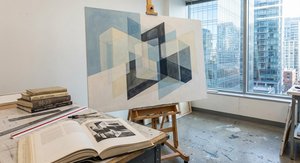
Beyond Form & Color: Geometric Abstraction's Enduring Legacy in Art History
Explore the captivating world of geometric abstraction! Discover its origins, key artists like Malevich & Mondrian, and why this movement remains highly valued by art collectors today. Expert insights at OriginalUniqueArt.

Top 10 Meesterwerken van de Geometrische Abstractie | OriginalUniqueArt.nl
Ontdek de 10 meest invloedrijke meesterwerken van de geometrische abstractie! Van Mondriaan tot Malevich, leer over kunstenaars, technieken & kleuren. Museumkwaliteit reproducties op OriginalUniqueArt.com – voor een unieke interieurstijl.

El Greco's Top 25 Meesterwerken: Kunst, Geschiedenis & Decoratie voor Uw Huis
Ontdek de top 25 meesterwerken van El Greco! Duik in het leven en werk van deze renaissance schilder, zijn spirituele kunst & dramatische stijl. Vind museumkwaliteit reproducties voor uw interieur op OriginalUniqueArt.com.


