

 Bekijk op ware grootte
 Verstuur
 Delen
Delen
 Details bekijken

 Download
 Vergelijkbare items
 Röntgenonderzoek
 Diavoorstelling
 Statistieken
Giacomo Bosio


 Lees meer
Giclée / Kunstafdrukken
Giclée- of canvasafdruk van museumkwaliteit met een snelle productie en flexibele afwerkingsmogelijkheden. ( Koop handgeschilderd kunstwerk Schakel over naar digitale afbeeldingen)




P118B $10

P118H $10

P118W $10

P438Z $10

P508JH $12

P508YH $12

P805H $10

P805Z $10

P919BZ $10

P919G $10

P919XJ $10

P959ZH $10

P968JZ $12

W106C $8

W218G $10

W218JH $8

W218Y $10

W307PJ $10

W316G $10

W316PJ $8

W316Y $10

W398PJ $8

W4111J $10

W500HY $15

W500JH $15

W692G $12

W849H $8

W940BG $15

W953PJ $8




Kies uit onze vooraf ingestelde maten die overeenkomen met de originele verhoudingen van het kunstwerk.

U kunt uw eigen afmetingen opgeven om in een specifieke lijst of ruimte te passen. Als de door u gekozen maat niet overeenkomt met de proporties van het originele kunstwerk, zullen wij de afbeelding bijsnijden of uitbreiden met een gespiegelde of effen rand. Een digitaal mockup wordt ter goedkeuring naar u verzonden voordat de productie begint.
Houd er rekening mee dat de preview op het scherm de werkelijke bijsneding of uitbreiding niet weergeeft. Alleen de mockup toont de uiteindelijke compositie nauwkeurig.
Hoewel aangepaste maten beschikbaar zijn, raden wij aan een afmeting uit de vooraf bepaalde lijst te kiezen om de originele proporties te behouden.
Wereldwijde levering () binnen 2 weken in plaats van de standaard 4/5 weken. (20 september)

Gratis wereldwijde expressverzending

Hoogwaardig linnen canvas

Volledige verzendverzekering

Garantie op terugbetaling van invoerrechten

Garantie op exacte kleurweergave

Retourbeleid van 100 dagen (alleen bij defecten)

100% Geld-terug-garantie

Korting bij meerdere afnames
 De optie voor glas is alleen beschikbaar bij een formaat kleiner dan 110 cm.

Giacomo Bosio
Giclée / Kunstafdrukken
Formaat reproductie
-


Totaalprijs
$ 81
Artist Information
El Greco (Doménikos Theotokopoulos) was a trailblazing Greek artist active during the Spanish Renaissance. A native of Crete, which was then under Venetian rule, he mastered the post-Byzantine art before moving to Venice and then Rome, absorbing the Mannerist and Renaissance styles, notably influenced by Tintoretto and Titian.Painting Information
The painting 'Giacomo Bosio' is an oil on canvas masterpiece created by El Greco in 1580. The dimensions of the artwork are 97 x 102 cm, making it a medium-sized piece that showcases the artist's exceptional skills and attention to detail.Style
El Greco is known for his unique style, which combines elements of Byzantine art with Mannerist and Renaissance influences. His works often feature elongated figures, dramatic lighting, and vivid colors that create a sense of otherworldliness and spirituality. In 'Giacomo Bosio', El Greco uses these techniques to depict the subject in a contemplative and introspective manner, inviting viewers to reflect on their own beliefs and values.Image Analysis
The painting 'Giacomo Bosio' features a portrait of Giacomo Bosio, an Italian historian and writer who lived during the Renaissance period. El Greco depicts Bosio in three-quarter view, with a serious expression that conveys his intellectual prowess and dedication to his work. The background is simple, featuring a dark brown color that highlights the subject's face and clothing. Bosio is dressed in a black robe with white lace collar and cuffs, which adds a touch of elegance and sophistication to the portrait. His right hand holds a pen, while his left hand rests on a book, symbolizing his role as a writer and scholar. The lighting in the painting is dramatic, with a strong light source coming from the left side that illuminates Bosio's face and hands, creating a sense of depth and volume. The composition of the painting is balanced, with the subject's head slightly tilted towards the right side, creating a dynamic tension that engages the viewer's attention. The use of vivid colors, such as red and blue, adds visual interest and creates a harmonious contrast with the dark background.Where to Find El Greco's Art
If you are interested in seeing more works by El Greco, you can visit the Museo de El Greco (Toledo, Spain), which houses an impressive collection of over 6,000 works spanning different periods and styles, with a particular focus on the works of the famous artist. You can also find high-quality reproductions of El Greco's art on OriginalUniqueArt.com, where you can choose from a wide range of sizes, materials, and styles that suit your personal taste and budget.Conclusion
The painting 'Giacomo Bosio' by El Greco is a masterpiece that showcases the artist's unique style and exceptional skills. The portrait of Giacomo Bosio invites viewers to reflect on their own beliefs and values, while the use of vivid colors and dramatic lighting creates a sense of otherworldliness and spirituality. If you are interested in seeing more works by El Greco, you can visit the Museo de El Greco or browse the selection of reproductions on OriginalUniqueArt.com.Biografie van de kunstenaar
Doménikos Theotokópoulos, called El Greco
Doménikos Theotokópoulos, known to the world as El Greco – “the Greek” – was a painter whose life and work defied easy categorization. Born in Crete, Greece (1541), his artistic journey took him through Venice and Rome before finding its ultimate expression in the spiritual heartland of Spain: Toledo. El Greco wasn’t merely a product of these places; he synthesized their influences into something wholly unique, a style that anticipated the emotional intensity of Expressionism and the fragmented forms of Cubism centuries later. His early training within the Byzantine tradition instilled in him a meticulous attention to detail and a profound understanding of religious iconography. This foundation, however, wouldn’t confine him. He signed his works in Greek, often appending “Krḗs” – Cretan – as a proud declaration of his origins, even as he ventured into new artistic territories. The seeds of his distinctive style were sown not just in technique but also in the fervent religious climate of his homeland and the rich tapestry of Venetian art.Early Life and Artistic Training
Doménikos Theotokópoulos was born in Fodele (modern Candia), Crete, which at that time belonged to the Republic of Venice. His father, Nikolaos Zacharias Kantakopoulos, was a wealthy merchant and administrator, providing him with a privileged upbringing. From a young age, Doménikos demonstrated an exceptional talent for drawing and painting, mastering the techniques of Byzantine icon painting – a tradition deeply rooted in Orthodox Christianity – under the tutelage of Eustathios Symonds, a renowned Cretan iconographer. This formative experience instilled in him a reverence for detail, a mastery of color palettes derived from Byzantine iconography, and a profound understanding of religious symbolism. The influence of Byzantium is palpable throughout his early oeuvre, particularly in works depicting saints and biblical figures rendered with serene dignity and luminous colors.Venetian Influence: Embracing Innovation
Around 1567, Doménikos moved to Venice, the epicenter of Renaissance artistic innovation. He immersed himself in the vibrant Venetian art scene, studying the masterpieces of Titian, Tintoretto, and Veronese – artists who had revolutionized painting with their mastery of color, composition, and dramatic lighting. Recognizing the limitations of Byzantine tradition alone, El Greco eagerly embraced the Venetian approach, loosening his brushwork and experimenting with oil paint—a medium previously unfamiliar to Cretan painters. This Venetian influence is vividly evident in *St. Sebastian* (1600), where anatomical detail blends seamlessly with an almost theatrical use of light and shadow. He absorbed the dynamism and expressive fervor characteristic of Venetian painting, preparing himself for a transformative encounter with Mannerism in Rome.Roman Years: Seeking Recognition Amidst Competition
In 1570, Doménikos traveled to Rome, hoping to gain recognition within the competitive artistic milieu of the papal court. However, he struggled to secure commissions and faced considerable challenges navigating the complex social dynamics of Roman art life. Despite his talent, El Greco’s style—characterized by elongated figures, distorted perspectives, and stylized draperies—didn't align with the prevailing aesthetic sensibilities of Mannerism, which favored elegance and refinement. Nevertheless, he continued to hone his craft, absorbing influences from artists like Giulio Romano and Andrea Palladio, broadening his artistic horizons and experimenting with new techniques. His Roman years were marked by a period of artistic introspection and stylistic evolution—a quest for personal expression amidst the pressures of patronage and artistic convention.Toledo: A Synthesis of Tradition and Vision
By 1577, Doménikos settled in Toledo, Spain – a city steeped in religious fervor during the Counter-Reformation and home to numerous churches eager for monumental artworks. This relocation proved decisive for El Greco’s artistic development. He received prestigious commissions from influential patrons—including Cardinal Juan Ruiz Zafra—and produced his most celebrated paintings: *The Burial of the Count of Orgaz*, *View of Toledo*, *The Opening of the Fifth Seal*, and *Christ Cleansing the Temple*. In Toledo, El Greco achieved a remarkable synthesis of Byzantine tradition and Venetian innovation, forging a style that was both deeply rooted in religious faith and strikingly original. His paintings are imbued with an emotional intensity unparalleled in Western art history—a testament to his profound spiritual vision and his unwavering commitment to artistic excellence. He became a symbol of Spanish Renaissance art, and his legacy continues to inspire artists today.
El Greco
1541 - 1614 , Griekenland
Snelle feiten
- Artistic Movement Or Style: Renaissance en Barok
- Artists Who Influenced This Artist:
- Titian
- Tintoretto
- Date Of Birth: 1541
- Full Name: Doménikos Theotokópoulos
- Nationality: Grieks
- Notable Artworks:
- De Begrafenis van Graaf Orgaz
- Een uitzicht op Toledo
- Het Openen van de Vijfde Sleutel
- Place Of Birth: Crete, Greece
Gerelateerde artikelen

El Greco's Top 25 Meesterwerken: Kunst, Geschiedenis & Decoratie voor Uw Huis
Ontdek de top 25 meesterwerken van El Greco! Duik in het leven en werk van deze renaissance schilder, zijn spirituele kunst & dramatische stijl. Vind museumkwaliteit reproducties voor uw interieur op OriginalUniqueArt.com.
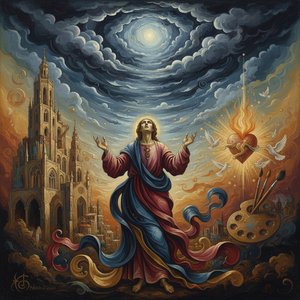
El Greco: Spirituality, Style & Innovation – A Renaissance Master's Legacy
Explore the captivating world of El Greco! Discover his unique style, spiritual intensity, and lasting impact on art history. Learn about this Renaissance master's life, iconic paintings & legacy.

De Blijvende Erfenis van Olieverf op Doek: Techniek, Geschiedenis en Hedendaagse Praktijk
Ontdek de rijke geschiedenis en technieken van olieverfschilderen. Van Renaissance meesterwerken tot moderne toepassingen, leer over pigmenten, glazuur en conservering.

Oil on Canvas: A Historical & Technical Exploration of a Timeless Artistic Medium
Explore the rich history & enduring techniques of oil painting on canvas. Discover the science behind its longevity, conservation practices, and contemporary relevance. Expert insights for art enthusiasts.

The Enduring Legacy of Oil on Canvas: Technique, History & Aesthetic Impact
Explore the rich history & techniques of oil painting – from Renaissance masters to Impressionism. Discover pigments, layering methods, and why this timeless medium endures. Expert insights for artists & art enthusiasts.


