
 Voorvertoning
 Verstuur
 Delen
Delen
 Details bekijken
 Gids
Gids

 Download
 Vergelijkbare items
 Röntgenonderzoek
 Diavoorstelling
 Q&A
Q&A Statistieken
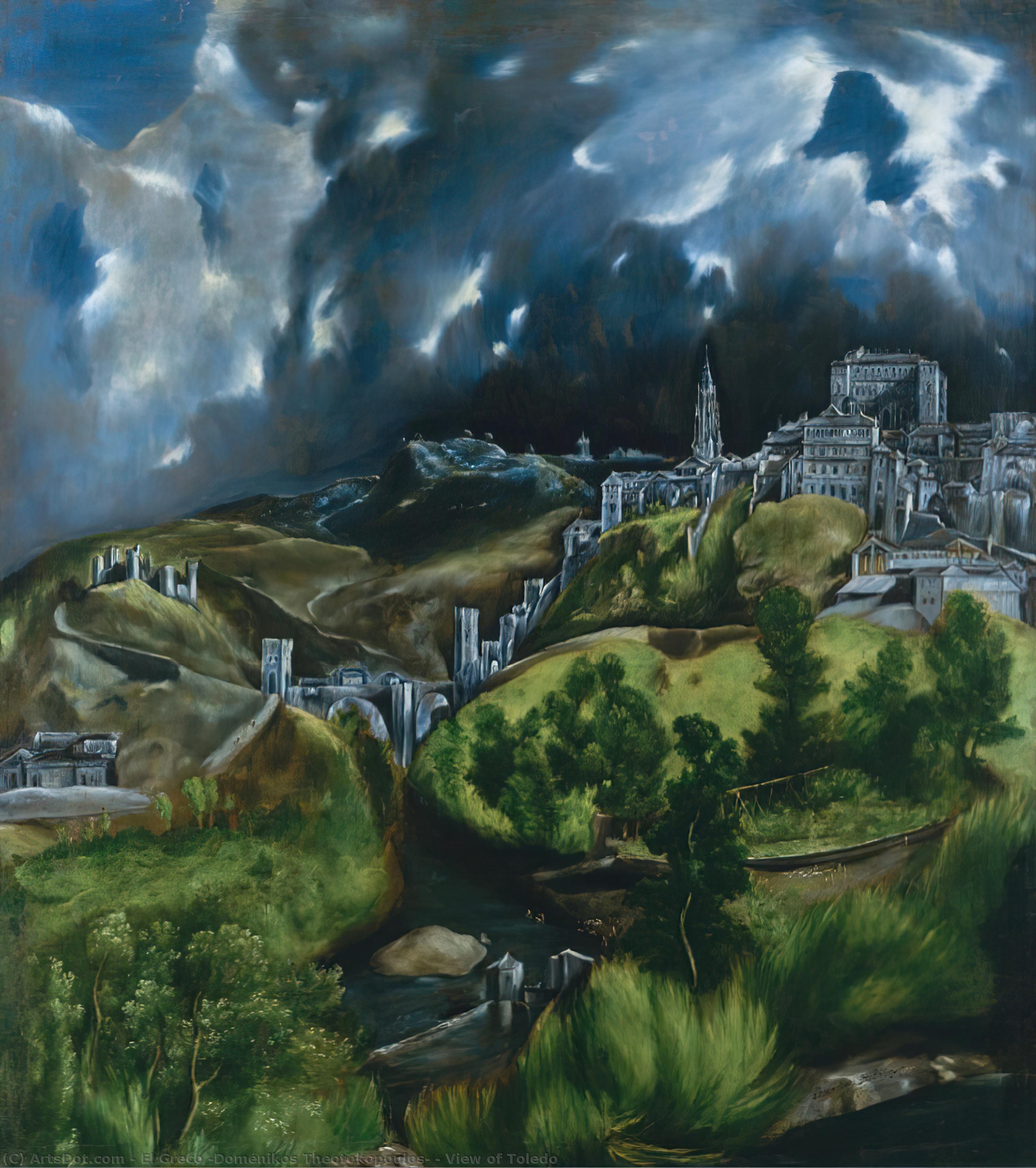
Een uitzicht op Toledo
 Olieverf op canvas
- Wanddecoratie
- Baroque Mannerism
 1599
1599- Renaissance
 121.0 x 109.0 cm
 Metropolitan Museum of Art
 Lees meer
Ontvang een bestand dat klaar is voor drukwerk en de kwaliteit van het online voorbeeld ver overstijgt. Elke digitale afbeelding die wij verkopen, is afkomstig van een high-resolution master uit onze database — meestal tussen de 5.000 en 15.000 pixels breed — zodat u met vertrouwen groot kunt afdrukken, nauwkeurig kunt bijsnijden of fijne details kunt reproduceren.
Geen enkel bestand verlaat ons atelier onbewerkt. Een digitaal expert controleert de kleuren aan de hand van het originele schilderij en corrigeert deze indien nodig, om vervolgens de helderheid en details te verbeteren met professionele retoucheertechnieken — waarbij de penseelstreek en stijl van de kunstenaar altijd strikt worden gerespecteerd. Het resultaat is een afbeelding die oogt als het schilderij zelf, en niet als een gescande foto met een filter.
U keurt de afbeelding goed voordat de bestelling wordt afgerond: onze expert stuurt u binnen 72 uur een e-mail ter beoordeling. Niet tevreden? Vraag om aanpassingen of correcties, of vraag een terugbetaling aan als de kwaliteit niet aan de verwachtingen voldoet.
Dit is de kwaliteit waarop uitgevers, designstudio's, galeries en drukkerijen vertrouwen.
Digitale afbeeldingen
Download een bestand met hoge resolutie voor persoonlijke weergave, afdrukken en creatieve projecten. ( Schakel over naar print Bestel handgeschilderde reproductie)
Inbegrepen bij elke bestelling van een digitale afbeelding
Professionele digitale levering, gegarandeerd
Wanneer u kiest voor OriginalUniqueArt.com, ontvangt u niet alleen een afbeelding – u krijgt een professioneel verbeterd digitaal kunstwerk, met precisie vervaardigd en voorzien van een tevredenheidsgarantie. Dit is alles wat automatisch bij uw bestelling is inbegrepen:

Snelle levering per e-mail
Uw hoogwaardige digitale afbeeldingsbestand wordt binnen 72 uur na bestelling naar u gemaild – klaar voor direct gebruik.

AI-verbeterd digitaal bestand
Uw kunstwerk wordt professioneel geoptimaliseerd met behulp van geavanceerde AI-tools en handmatige bewerkingen, waardoor maximale details, helderheid en kleurnauwkeurigheid worden gegarandeerd.

Gratis levenslange herlevering van digitale bestanden
Je bestand per ongeluk verwijderd of kwijtgeraakt? Geen zorgen – we sturen het u op elk gewenst moment gratis opnieuw toe.

Geen invoerkosten – nooit
Geniet direct van uw kunstwerk zonder invoerrechten, belastingen of verzendkosten – digitale downloads zijn altijd belastingvrij.

Garantie op kleurgetrouwheid
Met behulp van professionele hulpmiddelen en kleurbeheer zorgen wij ervoor dat uw digitale afbeelding de originele kleuren zo nauwkeurig mogelijk weergeeft.

100 dagen tevredenheidsgarantie
Mocht u niet tevreden zijn met uw digitale afbeelding, dan passen wij deze aan of storten wij 100% terug binnen 100 dagen – zonder vragen te stellen.

100% Geld-terug-garantie
Niet tevreden? Ontvang een volledige terugbetaling binnen 100 dagen na ontvangst van uw digitale bestand – zonder vragen te stellen.

Korting bij grote bestellingen
Koop 3 afbeeldingen, bespaar 10% - Koop 5, bespaar 15% - Koop 10+, bespaar 20%. Ideaal voor creatieve projecten, galerieën en bureaus.
Een Meesterwerk van de Spaanse Renaissance
El Greco's "View of Toledo" is een zeldzaam en meeslepend landschapsschilderij dat zijn unieke maniëristische stijl en dramatische kleurgebruik prachtig ten toonlegt. Dit meesterwerk uit 1599 biedt een panoramisch uitzicht op de stad Toledo, waarbij natuurlijke elementen versmelten met architecturale details onder een turbulante hemel. De rijke compositie en atmosferische diepte van het schilderij maken het tot een opvallend werk in het oeuvre van El Greco en een kostbare toevoeging aan elke kunstcollectie.Onderwerp en Compositie
Het kunstwerk presenteert een gedetailleerd landschap met glooiende heuvels, weelderig groen en de stad Toledo in de verte. De compositie is minutieus gestructureerd, waarbij een kronkelende stroom het oog van de kijker door de scène leidt, uitmondend in het imposante centrale gebouw op een heuveltop. Dit gebouw, waarschijnlijk een kerk of kasteel, dient als een centraal focuspunt dat de aandacht vestigt op zijn architecturale grandeur.Stijl en Techniek
De stijl van El Greco wordt gekenmerkt door zijn expressieve omgang met kleur en vorm, beïnvloed door zowel Byzantijnse tradities als westerse schildertechnieken. In "View of Toledo" maakt hij gebruik van een verscheidenheid aan lijnen, vormen en texturen om diepte en beweging te creëren. Het gebruik van atmosferisch perspectief versterkt het gevoel van afstand, waarbij de verre gebouwen minder gedetailleerd en licht vervaagd verschijnen in vergelijking met de elementen op de voorgrond.Historische Context
Landschapsschilderijen waren zeldzaam in de Spaanse Renaissance en Barok, wat "View of Toledo" tot een betekenisvol werk van zijn tijd maakt. Sommige kunsthistorici speculeren dat dit schilderij deel uitmaakte van een grotere compositie, hoewel er geen concreet bewijs is om deze theorie te ondersteunen. Het vermeende verbod van het Concilie van Trente op landschapsschilderkunst voegt nog meer mysterie toe aan dit werk, aangezien het mogelijk een van de eerste Spaanse landschappen vertegenwoordigt.Symboliek en Emotionele Impact
Het schilderij roept een gevoel van rust en tijdloosheid op, waarbij de natuurlijke elementen een sereen decor vormen voor de door mensen gemaakte structuren. De donker wordende lucht voegt echter een element van spanning toe, wat symbool staat voor naderende verandering of onzekerheid. Dit contrast tussen sereniteit en onrust creëert een emotioneel resonerende atmosfeer die de kijker direct in zijn greep houdt.Verrijk uw Ruimte met de Visie van El Greco
Transformeer uw interieur met een hoogwaardige reproductie van "View of Toledo". Dit iconische kunstwerk uit de Spaanse Renaissance is niet alleen een getuigenis van het genie van El Greco, maar ook een tijdloze toevoeging aan elke kunstcollectie. Ervaar de emotionele diepgang en artistieke briljantie van dit meesterwerk door het vandaag nog in uw eigen omgeving te verwelkomen.Veelgestelde vragen
In welke ruimte in huis past een reproductie van "Een uitzicht op Toledo" goed?
De aanbevolen ruimte voor "Een uitzicht op Toledo" door El Greco is een Woonkamer. Dit advies kan uiteraard worden aangepast aan uw interieur.
Welke kleur valt het meest op in "Een uitzicht op Toledo"?
De kleur die het meest opvalt in "Een uitzicht op Toledo" is Ftalogroen (#223227). De dominante kleur is handig bij het afstemmen van een kunstwerk op een interieur.
Kan ik "Een uitzicht op Toledo" door El Greco op mijn eigen muur bekijken voordat ik het koop?
De AR-weergave-pagina van "Een uitzicht op Toledo" door El Greco maakt gebruik van augmented reality om het kunstwerk op een compatibel apparaat in uw eigen ruimte te tonen.
Kunstenaarsbiografie
Doménikos Theotokópoulos, called El Greco
Doménikos Theotokópoulos, known to the world as El Greco – “the Greek” – was a painter whose life and work defied easy categorization. Born in Crete, Greece (1541), his artistic journey took him through Venice and Rome before finding its ultimate expression in the spiritual heartland of Spain: Toledo. El Greco wasn’t merely a product of these places; he synthesized their influences into something wholly unique, a style that anticipated the emotional intensity of Expressionism and the fragmented forms of Cubism centuries later. His early training within the Byzantine tradition instilled in him a meticulous attention to detail and a profound understanding of religious iconography. This foundation, however, wouldn’t confine him. He signed his works in Greek, often appending “Krḗs” – Cretan – as a proud declaration of his origins, even as he ventured into new artistic territories. The seeds of his distinctive style were sown not just in technique but also in the fervent religious climate of his homeland and the rich tapestry of Venetian art.Early Life and Artistic Training
Doménikos Theotokópoulos was born in Fodele (modern Candia), Crete, which at that time belonged to the Republic of Venice. His father, Nikolaos Zacharias Kantakopoulos, was a wealthy merchant and administrator, providing him with a privileged upbringing. From a young age, Doménikos demonstrated an exceptional talent for drawing and painting, mastering the techniques of Byzantine icon painting – a tradition deeply rooted in Orthodox Christianity – under the tutelage of Eustathios Symonds, a renowned Cretan iconographer. This formative experience instilled in him a reverence for detail, a mastery of color palettes derived from Byzantine iconography, and a profound understanding of religious symbolism. The influence of Byzantium is palpable throughout his early oeuvre, particularly in works depicting saints and biblical figures rendered with serene dignity and luminous colors.Venetian Influence: Embracing Innovation
Around 1567, Doménikos moved to Venice, the epicenter of Renaissance artistic innovation. He immersed himself in the vibrant Venetian art scene, studying the masterpieces of Titian, Tintoretto, and Veronese – artists who had revolutionized painting with their mastery of color, composition, and dramatic lighting. Recognizing the limitations of Byzantine tradition alone, El Greco eagerly embraced the Venetian approach, loosening his brushwork and experimenting with oil paint—a medium previously unfamiliar to Cretan painters. This Venetian influence is vividly evident in *St. Sebastian* (1600), where anatomical detail blends seamlessly with an almost theatrical use of light and shadow. He absorbed the dynamism and expressive fervor characteristic of Venetian painting, preparing himself for a transformative encounter with Mannerism in Rome.Roman Years: Seeking Recognition Amidst Competition
In 1570, Doménikos traveled to Rome, hoping to gain recognition within the competitive artistic milieu of the papal court. However, he struggled to secure commissions and faced considerable challenges navigating the complex social dynamics of Roman art life. Despite his talent, El Greco’s style—characterized by elongated figures, distorted perspectives, and stylized draperies—didn't align with the prevailing aesthetic sensibilities of Mannerism, which favored elegance and refinement. Nevertheless, he continued to hone his craft, absorbing influences from artists like Giulio Romano and Andrea Palladio, broadening his artistic horizons and experimenting with new techniques. His Roman years were marked by a period of artistic introspection and stylistic evolution—a quest for personal expression amidst the pressures of patronage and artistic convention.Toledo: A Synthesis of Tradition and Vision
By 1577, Doménikos settled in Toledo, Spain – a city steeped in religious fervor during the Counter-Reformation and home to numerous churches eager for monumental artworks. This relocation proved decisive for El Greco’s artistic development. He received prestigious commissions from influential patrons—including Cardinal Juan Ruiz Zafra—and produced his most celebrated paintings: *The Burial of the Count of Orgaz*, *View of Toledo*, *The Opening of the Fifth Seal*, and *Christ Cleansing the Temple*. In Toledo, El Greco achieved a remarkable synthesis of Byzantine tradition and Venetian innovation, forging a style that was both deeply rooted in religious faith and strikingly original. His paintings are imbued with an emotional intensity unparalleled in Western art history—a testament to his profound spiritual vision and his unwavering commitment to artistic excellence. He became a symbol of Spanish Renaissance art, and his legacy continues to inspire artists today.
El Greco
1541 - 1614 , Griekenland
Belangrijkste feiten
- Artistic Movement Or Style: Renaissance en Barok
- Artists Who Influenced This Artist:
- Titian
- Tintoretto
- Date Of Birth: 1541
- Full Name: Doménikos Theotokópoulos
- Nationality: Grieks
- Notable Artworks:
- De Begrafenis van Graaf Orgaz
- Een uitzicht op Toledo
- Het Openen van de Vijfde Sleutel
- Place Of Birth: Crete, Greece