 Voorvertoning
 Verstuur
 Delen
Delen
 Details bekijken
 Gids
Gids

 Download
 Vergelijkbare items
 Röntgenonderzoek
 Diavoorstelling
 Vraag & antwoord
 Statistieken
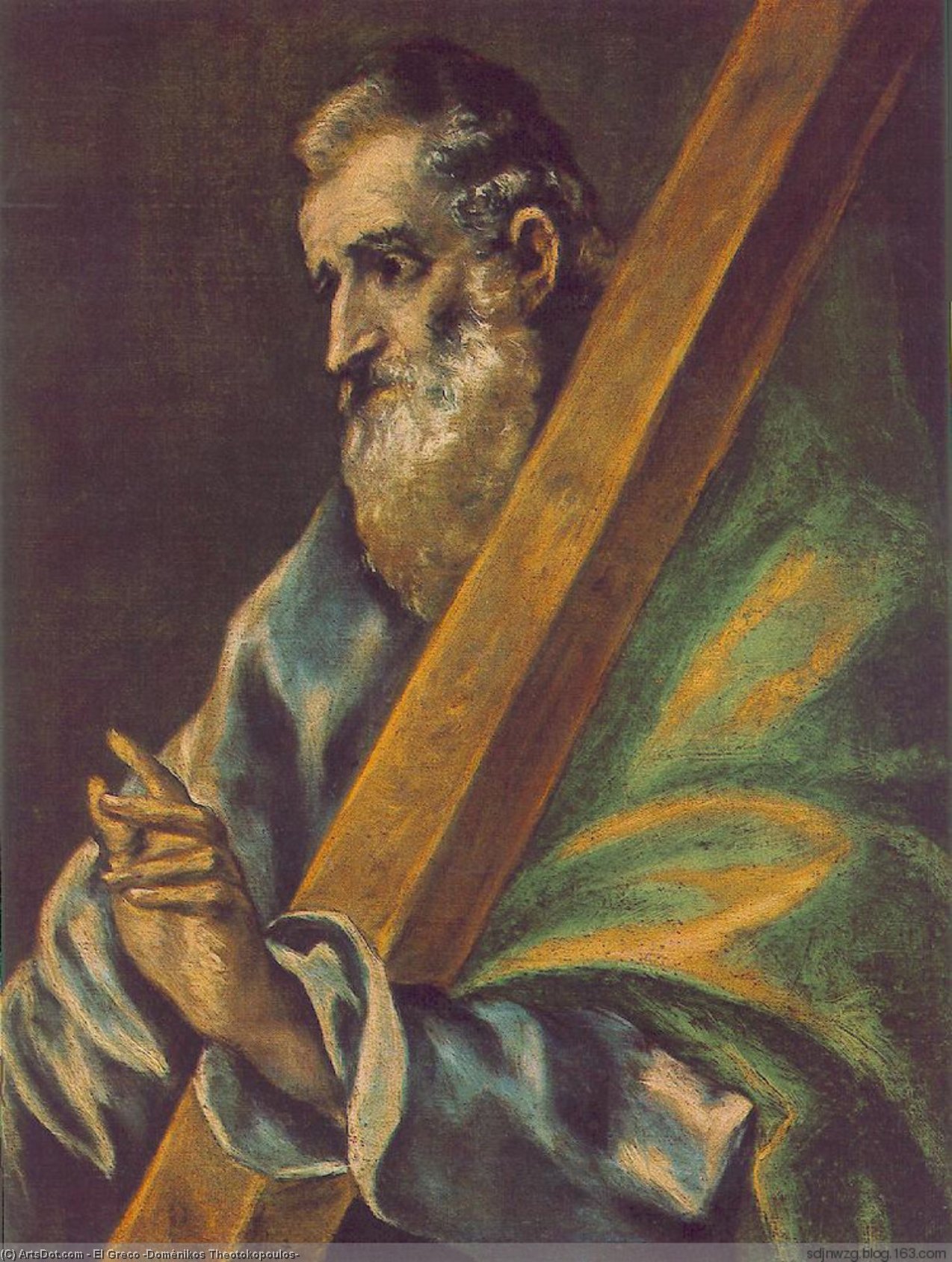
Apostle St Andrew

- 70.0 x 53.0 cm


 Lees meer
Giclée / Kunstafdrukken
Giclée- of canvasafdruk van museumkwaliteit met een snelle productie en flexibele afwerkingsmogelijkheden. ( Bestel handgeschilderde reproductie Schakel over naar digitale afbeeldingen)




P118B €10

P118H €10

P118W €10

P438Z €10

P508JH €12

P508YH €12

P805H €10

P805Z €10

P919BZ €10

P919G €10

P919XJ €10

P959ZH €10

P968JZ €12

W106C €8

W218G €10

W218JH €8

W218Y €10

W307PJ €10

W316G €10

W316PJ €8

W316Y €10

W398PJ €8

W4111J €10

W500HY €15

W500JH €15

W692G €12

W849H €8

W940BG €15

W953PJ €8




Kies uit onze vooraf ingestelde maten die overeenkomen met de originele verhoudingen van het kunstwerk.

Voer de gewenste breedte en hoogte in, passend bij uw lijst of muur. Een afdruk kan alleen worden ingekort en nooit groter worden gemaakt dan het origineel; een formaat met andere verhoudingen zal daarom een deel van de afbeelding verliezen. Wij sturen u een digitaal mockup ter goedkeuring voordat we tot drukwerk overgaan. De afbeelding op deze pagina toont niet de werkelijke uitsnede — dit is alleen te zien op het mockup.
Wereldwijde levering () binnen 2 weken in plaats van de standaard 4/5 weken. (10 november)

Gratis wereldwijde expressverzending

Hoogwaardig linnen canvas

Volledige verzendverzekering

Garantie op terugbetaling van invoerrechten

Garantie op exacte kleurweergave

Retourbeleid van 100 dagen (alleen bij defecten)

100% Geld-terug-garantie

Korting bij meerdere afnames
 De optie voor glas is alleen beschikbaar bij een formaat kleiner dan 110 cm.

Apostle St Andrew
Giclée / Kunstafdrukken
Afmetingen reproductie
-


Eindtotaal
€ 73
A Deep Dive into El Greco’s “Apostle St Andrew”
Doménikos Theotokópoulos, universally known as El Greco – “the Greek” – stands apart from his contemporaries as a painter whose artistic vision transcended conventional boundaries. Born in Crete in 1541, under Venetian dominion, his journey through Venice and Rome ultimately solidified his indelible mark on the artistic landscape of Spain: Toledo became his spiritual home and the crucible for his revolutionary style. El Greco wasn’t merely absorbing influences; he masterfully synthesized them—Byzantine solemnity blended seamlessly with Western Renaissance dynamism—resulting in an aesthetic that foreshadowed movements like Expressionism and Cubism centuries ahead of their time. His formative years within the Byzantine tradition instilled a meticulous attention to detail and a profound understanding of religious iconography, shaping his approach to portraying sacred subjects. Yet, he refused to be confined by dogma, actively pursuing new artistic horizons. He signed his canvases in Greek – “Krḗs” – proudly asserting his Cretan heritage while simultaneously embracing the stylistic currents circulating throughout Europe. The genesis of El Greco’s distinctive style can be traced back to a pivotal moment: witnessing the devastation wrought by the Lisbon earthquake of 1755, which profoundly impacted him emotionally and spurred him to experiment with innovative compositional strategies.The Artist's Singular Style: Long Lines and Vibrant Color
El Greco’s artistic signature is instantly recognizable—characterized by elongated figures rendered in luminous hues against backgrounds imbued with a palpable sense of mysticism. “Apostle St Andrew” exemplifies this approach perfectly. The artist employs dramatic foreshortening, elongating the saint’s body to convey spiritual intensity and conveying an ethereal quality rarely achieved during his era. His palette explodes with rich blues and golds—a deliberate choice reflecting Venetian artistic traditions but infused with a uniquely El Greco sensibility. These colors aren't merely decorative; they serve as conduits for emotion, amplifying the solemn grandeur of the scene. The artist’s technique is equally noteworthy: he utilizes impasto – thick brushstrokes – to sculpt texture onto the canvas surface, creating palpable depth and enhancing the visual impact of the composition. This textural richness contributes significantly to the painting's expressive power.Symbolism Embodied in Light and Gesture
The central element—the cross held by St. Andrew—is laden with symbolic significance. It represents his martyrdom and underscores his unwavering faith, mirroring the broader Christian narrative of sacrifice and redemption. The saint’s gaze is directed upwards, conveying humility and reverence – a gesture that speaks to the spiritual core of Byzantine art. Furthermore, the drapery surrounding St. Andrew is rendered with meticulous detail, capturing folds and creases that convey movement and dynamism—a stylistic departure from more static depictions prevalent in earlier periods. The subtle interplay of light and shadow further enhances the painting’s dramatic atmosphere, guiding the viewer's eye toward the focal point and amplifying the saint’s solemn presence.Historical Context: Venetian Influence Meets Andalusian Spirit
El Greco’s artistic trajectory was shaped by the cultural currents of his time—particularly the influence of Venice, where he honed his skills during a formative period. However, he wasn't merely imitating Venetian aesthetics; he transformed them into something wholly original, reflecting the spiritual fervor of Andalusia and forging an artistic identity that resonated across Europe. His work stands as testament to the enduring power of tradition blended with innovation—a legacy that continues to inspire artists today. To appreciate El Greco’s genius fully, a visit to The Museum Szépmûvészeti Múzeum (Budapest, Hungary) offers invaluable insight into his oeuvre and its broader artistic context.Veelgestelde vragen
Hoe komen stroming en tijdperk samen in "Apostle St Andrew" door El Greco?
"Apostle St Andrew" behoort tot de Baroque-stroming en de maker ervan was werkzaam in het Renaissance-tijdperk.
Is "Apostle St Andrew" vrij van auteursrecht?
"Apostle St Andrew" door El Greco valt onder bevindt zich in het publiek domein - de auteursrechten zijn verlopen. Deze status bepaalt hoe de afbeelding van het werk mag worden gereproduceerd.
Waarvoor wordt een afdruk van "Apostle St Andrew" aanbevolen?
De aanbevolen toepassing voor "Apostle St Andrew" door El Greco is Accent. Het kan echter ook voor andere doeleinden worden gebruikt.
Biografie kunstenaar
De Kretenzische Fundering
Doménikos Theotokópoulos, die de geschiedenis zou binnengaan als El Greco, begon zijn leven in 1541 op het eiland Kreta. In die tijd was het eiland een bezit van Venetië, een feit dat hem er later toe zou brengen de kloof tussen oosterse en westerse tradities te overbruggen. Hij werd opgeleid als icoenschilder binnen de Byzantijnse traditie, een discipline die een minutieuze aandacht voor detail vereiste en een focus op de spirituele essentie van een onderwerp, in plaats van louter de fysieke gelijkenis. Deze vroege onderdompeling in de Kretenzische school gaf hem een gevoel van symbolische precisie dat een constante zou blijven, zelfs toen zijn stijl radicale transformaties onderging.
Op een leeftijd van zesentwintig verhuisde hij naar Venetië, in een poging zijn begrip van de natuurlijke wereld te vergroten. In de Venetiaanse Republiek kwam hij in aanraking met de werken van Titiaan en Tintoretto, waarbij hij hun meesterschap in kleur en het gebruik van licht om vorm te definiëren, in zich opnam. Hij leerde zich los te maken van de rigide lijnen van zijn jeugd en omarmde een vloeiendere penseelvoering en een gevoel van dynamiek. Deze periode was geen verwerping van zijn wortels, maar juist een verbreding ervan, aangezien hij begon de gedisciplineerde iconografie van zijn Griekse erfgoed te versmelten met de atmosferische sensualiteit van de Italiaanse Renaissance.
De Transformatie in Toledo
Na een periode in Rome, waar hij kennismaakte met de verlengde vormen en de verfijnde composities van het Maniërisme, vestigde El Greco zich in 1577 in Toledo, Spanje. Deze verhuizing bleek beslissend. Toledo was tijdens de Contrareformatie een centrum van intense religieuze vurigheid, wat een landschap bood dat perfect aansloot bij zijn steeds mystieker wordende visie. Het was hier dat zijn stijl haar meest kenmerkende fase bereikte, gekenmerkt door figuren die uitgerekt en verwrongen leken, alsof ze werden voortgetrokken door een onzichtbare spirituele kracht. Hij gebruikte kleur niet om de realiteit na te bootsen, maar om de emotionele impact te vergroten, waarbij hij vaak onnatuurlijke tinten inzette om het goddelijke af te beelden.
Zijn werk in Spanje werd gekenmerkt door een spanning tussen het aardse en het etherische. In The Burial of the Count of Orgaz (1586-1588) plaatste hij de realistische voorstelling van hedendaagse figuren tegenover verlengde, hemelse vormen, waardoor een visuele brug ontstond tussen het sterfelijke en het goddelijke. Zijn vermogen om licht en schaduw te manipuleren stelde hem in staat een gevoel van drama te creëren dat zowel theatraal als diep persoonlijk aanvoelde. Hij schilderde niet louter scènes; hij probeerde de emotionele en spirituele realiteiten te vatten die bestaan voorbij de oppervlakte van de fysieke wereld.
Een Erfenis van Vorm en Licht
De latere jaren van zijn leven werden gekenmerkt door een beweging naar nog grotere abstractie en mystiek. Zijn composities werden complexer en zijn figuren vervormder, wat een groeiende distantie van conventionele artistieke normen weerspiegelde. Hoewel hij succes boekte en belangrijke opdrachten ontving van kerken en kloosters in Toledo, werd zijn invloed na zijn dood in 1614 niet onmiddellijk gevoeld door de bredere kunstwereld. Gedurende een lange periode werd hij beschouwd als een excentriekeling, wiens werk grotendeels werd over het hoofd gezien door de mainstream van de kunstgeschiedenis.
Pas in de 20e eeuw werd zijn belang volledig erkend. Modernisten vonden in zijn werk een voorloper van de expressieve en gefragmenteerde stijlen van de toekomst. Zijn vermogen om proporties te vervormen en gedurfde, emotieve kleuren te gebruiken, sloot aan bij hen die de innerlijke psychologische staten wilden overbrengen. Vandaag de dag worden zijn schilderijen beschouwd als vensters naar de menselijke geest, gevierd om hun unieke vermogen om de intensiteit van het geloof en de strijd voor transcendentie vast te leggen.
Opmerkelijke werken zijn onder andere:
- The Burial of the Count of Orgaz (1586-1588)
- View of Toledo (1596-1600)
- The Opening of the Fifth Seal (1608-1614)
- St. Sebastian (1600)
- El Espolio (1577-1579)

El Greco
1541 - 1614 , Griekenland
Belangrijkste feiten
- Artistic Movement Or Style: Renaissance en Barok
- Artists Who Influenced This Artist:
- Titian
- Tintoretto
- Date Of Birth: 1541
- Full Name: Doménikos Theotokópoulos
- Nationality: Grieks
- Notable Artworks:
- De Begrafenis van Graaf Orgaz
- Een uitzicht op Toledo
- Het Openen van de Vijfde Sleutel
- Place Of Birth: Crete, Greece
Gerelateerde artikelen

The Dramatic Flourish: Exploring the Baroque Movement's Enduring Legacy in Art History
Explore the dramatic world of Baroque art! Discover iconic artists like Caravaggio & Rubens, defining techniques, and its lasting impact on art history. Expert insights for collectors & enthusiasts at OriginalUniqueArt.
El Greco: Spirituality, Style & Innovation – A Renaissance Master's Legacy
Explore the captivating world of El Greco! Discover his unique style, spiritual intensity, and lasting impact on art history. Learn about this Renaissance master's life, iconic paintings & legacy.

The Golden Age Reforged: Dramatic Realism & Religious Zeal in Spanish Baroque Art
Explore the dramatic world of Spanish Baroque art! Discover masters like Zurbarán & the powerful influence of religious zeal on painting techniques – a guide for collectors and enthusiasts.

El Greco's Top 25 Meesterwerken: Kunst, Geschiedenis & Decoratie voor Uw Huis
Ontdek de top 25 meesterwerken van El Greco! Duik in het leven en werk van deze renaissance schilder, zijn spirituele kunst & dramatische stijl. Vind museumkwaliteit reproducties voor uw interieur op OriginalUniqueArt.com.

Top 10 Barok Meesterwerken: Kunstgeschiedenis voor uw Interieur | OriginalUniqueArt.nl
Ontdek de 10 meest iconische Barok meesterwerken van Caravaggio, Rembrandt & Rubens! Duik in de geschiedenis en passie achter deze klassieke schilderijen. Vind museumkwaliteit reproducties voor uw interieur op OriginalUniqueArt.com.


