

 Voorvertoning
 Verstuur
 Delen
Delen
 Details bekijken
 Gids
Gids

 Download
 Vergelijkbare items
 Röntgenonderzoek
 Diavoorstelling
 Statistieken
An Abstract Composition with Two Anthropomorphic Figures
 Acrylic On Canvas
- WallArt
- Surrealism
 1940
1940 78.0 x 56.0 cm
 National Trust
 Lees meer
De kunstwerken die op deze pagina worden weergegeven, zijn beschermd door de auteursrechtwetgeving, wat betekent dat het ons wettelijk niet is toegestaan om identieke reproducties te maken of te verkopen. Deze bescherming wordt gehandhaafd onder internationale overeenkomsten zoals de Conventie van Bern en door nationale wetgeving, waaronder de bepalingen van de Amerikaanse auteurswet - Titel 17. Alle rechten voorbehouden. Reproduceren of distribueren van afbeeldingen is niet toegestaan zonder uitdrukkelijke schriftelijke toestemming van WahooArt.com en de rechthebbenden.
Deze methode voldoet volledig aan de auteursrechtwetgeving, omdat het niet gaat om het kopiëren of dupliceren van het beschermde kunstwerk. In plaats daarvan is er sprake van een creatieve herinterpretatie — een nieuw schilderij dat door het origineel wordt geïnspireerd, maar er niet identiek aan is.
Giclée / Kunstafdrukken
Giclée- of canvasafdruk van museumkwaliteit met een snelle productie en flexibele afwerkingsmogelijkheden. ( Bestel handgeschilderde reproductie Schakel over naar digitale afbeeldingen)




P118B €10

P118H €10

P118W €10

P438Z €10

P508JH €12

P508YH €12

P805H €10

P805Z €10

P919BZ €10

P919G €10

P919XJ €10

P959ZH €10

P968JZ €12

W106C €8

W218G €10

W218JH €8

W218Y €10

W307PJ €10

W316G €10

W316PJ €8

W316Y €10

W398PJ €8

W4111J €10

W500HY €15

W500JH €15

W692G €12

W849H €8

W940BG €15

W953PJ €8




Kies uit onze vooraf ingestelde maten die overeenkomen met de originele verhoudingen van het kunstwerk.

Voer de gewenste breedte en hoogte in, passend bij uw lijst of muur. Een afdruk kan alleen worden ingekort en nooit groter worden gemaakt dan het origineel; een formaat met andere verhoudingen zal daarom een deel van de afbeelding verliezen. Wij sturen u een digitaal mockup ter goedkeuring voordat we tot drukwerk overgaan. De afbeelding op deze pagina toont niet de werkelijke uitsnede — dit is alleen te zien op het mockup.
Wereldwijde levering () binnen 2 weken in plaats van de standaard 4/5 weken. (26 oktober)

Gratis wereldwijde expressverzending

Hoogwaardig linnen canvas

Volledige verzendverzekering

Garantie op terugbetaling van invoerrechten

Garantie op exacte kleurweergave

Retourbeleid van 100 dagen (alleen bij defecten)

100% Geld-terug-garantie

Korting bij meerdere afnames
 De optie voor glas is alleen beschikbaar bij een formaat kleiner dan 110 cm.

An Abstract Composition with Two Anthropomorphic Figures
Giclée / Kunstafdrukken
Afmetingen reproductie
-


Eindtotaal
€ 71
Eileen Agar: Bridging Surrealism and Observation
Eileen Agar (1899 – 1991) stands as an enigmatic figure in the annals of British art, simultaneously rooted in the intellectual currents of Surrealism and driven by a profound engagement with the natural world. Her artistic journey began amidst the vibrant cultural landscape of Buenos Aires, Argentina, where she absorbed influences from both European avant-garde movements and her own familial heritage—a blend that would inform her distinctive visual language throughout her prolific career. Formal training at Heathfield St Mary's School and subsequent studies at Byam Shaw School of Art solidified her artistic grounding, yet it was the Parisian crucible of 1928–30 that truly catalyzed her creative evolution, immersing her in the heady atmosphere of Surrealist discourse and collaboration with luminaries like André Breton and Max Ernst.- Early Influences: Agar’s formative years witnessed exposure to artists such as Edmund Dulac and Arthur Rackham, whose fantastical illustrations instilled a fascination for imaginative storytelling and visual embellishment—sensibilities that would permeate her later works.
- Surrealist Engagement: Her participation in the 1936 Surrealist Exhibition in London marked a pivotal moment, establishing her connection with the movement’s core tenets of dreamlike imagery and subconscious exploration. Collaborations with fellow artists fostered experimentation and challenged conventional artistic boundaries.
Three Studies for Figures at the Base of a Crucifixion: A Synthesis of Form and Emotion
Francis Bacon's monumental triptych, Three Studies for Figures at the Base of a Crucifixion (1944), represents a watershed moment in British art history—a daring assertion of abstraction alongside visceral psychological depth. Executed on Sundeala fibre board during a period marked by profound personal turmoil and artistic introspection, the canvases embody Bacon’s unwavering commitment to confronting existential anxieties through unsettling visual metaphors. The work's genesis stemmed from Agar’s fascination with Aeschylus’s Oresteia—specifically, the Furies—and their depiction of retribution and suffering—themes that would resonate throughout her oeuvre.- Stylistic Characteristics: Bacon’s signature style—characterized by elongated, distorted organic forms against stark orange backgrounds—captures the essence of Surrealist principles while simultaneously conveying a palpable sense of unease and vulnerability.
- Material Innovation: The use of Sundeala fibre board offered a novel textural surface for Bacon's explorations, allowing him to achieve remarkable sculptural effects that heighten the emotional impact of his compositions.
Symbolism and Emotional Resonance
Agar’s artistic vision transcended mere stylistic imitation; she sought to distill profound psychological truths into visual representations—a pursuit reflected in her meticulous attention to detail and her masterful manipulation of color and form. Three Studies for Figures at the Base of a Crucifixion exemplifies this ambition, presenting fragmented human figures as emblems of mortality and trauma—symbols that invite contemplation on themes of guilt, remorse, and the inescapable confrontation with death. The painting’s unsettling stillness underscores Bacon's conviction that art should provoke emotional responses—challenging viewers to confront uncomfortable realities and grapple with existential dilemmas.Legacy and Influence
Eileen Agar’s contribution to British art extends far beyond her individual masterpieces; she served as an inspiration for subsequent generations of artists who embraced experimentation and pursued unconventional aesthetic paths. Her unwavering belief in artistic freedom—a stance mirrored in her rejection of conventional notions of beauty—continues to resonate today, reminding us that true creativity resides in defying expectations and forging one’s own distinctive voice. Three Studies for Figures at the Base of a Crucifixion stands as testament to Agar's enduring legacy—a hauntingly beautiful work that embodies the spirit of Surrealism while simultaneously articulating the complexities of human experience.Veelgestelde vragen
In welk jaar werd "An Abstract Composition with Two Anthropomorphic Figures" door Eileen Agar gemaakt?
"An Abstract Composition with Two Anthropomorphic Figures" door Eileen Agar werd gemaakt in 1940.
Waar kan ik het originele werk "An Abstract Composition with Two Anthropomorphic Figures" door Eileen Agar bewonderen?
Het originele werk "An Abstract Composition with Two Anthropomorphic Figures" is te bewonderen in National Trust, Londen, Verenigd Koninkrijk.
Hoe kan "An Abstract Composition with Two Anthropomorphic Figures" door Eileen Agar worden gebruikt in interieurdecoratie?
Aanbevolen gebruik (Accent) en ruimte (Living Room) zijn de twee aanbevelingen voor "An Abstract Composition with Two Anthropomorphic Figures" door Eileen Agar.
Gerelateerde artikelen

Top 10 Abstract Expressionisme Meesterwerken: Kunst voor uw Interieur | OriginalUniqueArt.com
Ontdek de 10 meest invloedrijke werken van Abstract Expressionisme! Leer over Jackson Pollock, Mark Rothko & meer. Museumkwaliteit kunst reproducties voor uw interieur. Bekijk de collectie op OriginalUniqueArt.com.

Kandinsky's Meesterwerken: 25 Abstracte Kunstparels voor uw Interieur | OriginalUniqueArt
Ontdek de 25 meest iconische werken van Wassily Kandinsky! Duik in zijn abstracte wereld vol kleur, expressionisme & spirituele diepgang. Vind museumkwaliteit reproducties en interieurinspiratie op OriginalUniqueArt.com.

Top 10 Meesterwerken van de Geometrische Abstractie | OriginalUniqueArt.nl
Ontdek de 10 meest invloedrijke meesterwerken van de geometrische abstractie! Van Mondriaan tot Malevich, leer over kunstenaars, technieken & kleuren. Museumkwaliteit reproducties op OriginalUniqueArt.com – voor een unieke interieurstijl.

Top 10 Meesterwerken gedomineerd door 'Slate Blue': Kunst voor uw interieur
Ontdek 10 beroemde schilderijen gedomineerd door de prachtige tint 'Slate Blue'. Van Monet tot Van Gogh, leer over kunstgeschiedenis & techniek. Museumkwaliteit reproducties voor uw interieur op OriginalUniqueArt.com! Ontdek de collectie online.
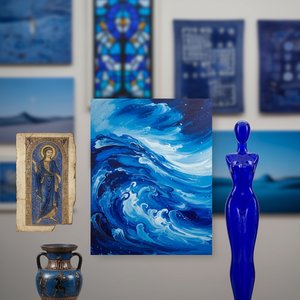
The Allure of Azure: Exploring the Symbolic & Aesthetic Depths of Blue in Art History
Explore the rich history of blue in art! Discover its symbolism, from ancient pigments to modern masterpieces by Kandinsky & Seurat. Uncover the psychological impact and cultural meanings behind this captivating hue.