

 Voorvertoning
 Verstuur
 Delen
Delen
 Details bekijken

 Download
 Vergelijkbare items
 Röntgenonderzoek
 Diavoorstelling
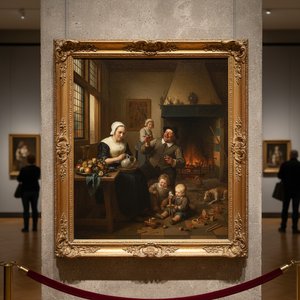
A Tavern Scene
 Dutch Golden Age
 1692
1692 59.0 x 82.0 cm
 National Trust
 Lees meer
Giclée / Kunstafdrukken
Giclée- of canvasafdruk van museumkwaliteit met een snelle productie en flexibele afwerkingsmogelijkheden. ( Bestel handgeschilderde reproductie Koop afbeelding)




































Kies uit onze vooraf ingestelde maten die overeenkomen met de originele verhoudingen van het kunstwerk.

U kunt uw eigen afmetingen opgeven om in een specifieke lijst of ruimte te passen. Als de door u gekozen maat niet overeenkomt met de proporties van het originele kunstwerk, zullen wij de afbeelding bijsnijden of uitbreiden met een gespiegelde of effen rand. Een digitaal mockup wordt ter goedkeuring naar u verzonden voordat de productie begint.
Houd er rekening mee dat de preview op het scherm de werkelijke bijsneding of uitbreiding niet weergeeft. Alleen de mockup toont de uiteindelijke compositie nauwkeurig.
Hoewel aangepaste maten beschikbaar zijn, raden wij aan een afmeting uit de vooraf bepaalde lijst te kiezen om de originele proporties te behouden.
Wereldwijde levering () binnen 2 weken in plaats van de standaard 4/5 weken. (24 augustus)

Gratis wereldwijde expressverzending

Hoogwaardig linnen canvas

Volledige verzendverzekering

Garantie op terugbetaling van invoerrechten

Garantie op exacte kleurweergave

Retourbeleid van 60 dagen (alleen bij defecten)

100% Geld-terug-garantie

Korting bij meerdere afnames
 De optie voor glas is alleen beschikbaar bij een formaat kleiner dan 110 cm.

A Tavern Scene
Giclée / Kunstafdrukken
Afmetingen reproductie
-


Eindtotaal
$ 81
Biografie van de kunstenaar
Jacques Callot: The Chronicler of a Turbulent Age
Jacques Callot, born around 1592 in Nancy, Duchy of Lorraine, and passing away in 1635, remains a pivotal figure in the history of printmaking. More than simply an engraver, he was a chronicler—a visual recorder of his time, capturing the anxieties, entertainments, and hardships of 17th-century Europe with remarkable detail and unsettling honesty. His work, largely focused on scenes of soldiers, clowns, drunken revelers, Romani people, beggars, and even depictions of court life, offers a unique window into a world grappling with war, poverty, and social upheaval. Callot’s legacy isn't defined by grand masterpieces but rather by the sheer volume and poignant realism of his prints—over 1,400 images that collectively form a sprawling tapestry of everyday existence.Early Life and Training: From Goldsmith to Master Engraver
Callot’s early life was steeped in craftsmanship. His father, a master goldsmith, initially intended for him to follow the family trade. However, a youthful fascination with drawing led him to apprentice under a goldsmith first, then a glass engraver named Abraham Toorenvliet. This formative period instilled in him a meticulous attention to detail and an understanding of line quality—skills that would prove crucial to his later success. Crucially, Callot traveled to Rome around 1612, immersing himself in the artistic traditions of the Renaissance. He studied under Philippe Thomassin, a French expatriate engraver who had established a studio there, absorbing techniques and developing his own distinctive style. It was during this time that he honed his skills in etching, a process that allowed for greater subtlety and nuance than engraving alone. His training wasn’t solely focused on technique; Callot's exposure to Roman antiquities and classical literature profoundly shaped his artistic sensibilities, influencing his later depictions of mythological scenes and allegorical narratives.Technical Innovations: Shaping the Old Master Print
Callot was not merely a skilled reproducer of existing images; he was an innovator who significantly advanced the art of printmaking. He is credited with several key technical breakthroughs that fundamentally altered the possibilities of the medium. Perhaps most notably, he developed the *échoppe*, a specialized engraving needle featuring a slanting oval section at its tip. This ingenious tool allowed engravers to create swelling lines—a technique previously unattainable—mimicking the effect of brushstrokes and adding depth and dynamism to his prints. Furthermore, Callot refined the etching ground recipe, utilizing lute-makers’ varnish instead of traditional wax-based formulations. This alteration dramatically increased the durability of the ground, extending the lifespan of the plate and reducing the risk of “foul-biting,” a common problem that could ruin an entire print. These innovations were not simply technical refinements; they represented a shift in the way artists approached printmaking, paving the way for future generations of engravers and establishing Callot as a pioneer of the *old master print*.The “Suite” and Social Commentary: A Chronicle of His Time
Callot’s most enduring contribution lies in his development of the “suite”—a series of prints united by a common theme or narrative. He pioneered this format, meticulously planning each image to work together as a cohesive whole. This approach allowed him to explore complex social and political issues with unprecedented depth and nuance. His most famous suites, *Les Moeurs Natures de Tous les Ages* (The Customs of All Ages), are a searing indictment of the excesses and injustices of his time. These prints depict a wide range of human experiences—from the brutality of war to the poverty and exploitation of the marginalized—with unflinching realism. He also created suites focused on the lives of soldiers, clowns, and Romani people, offering glimpses into their worlds and challenging prevailing stereotypes. His work wasn’t simply observational; it often carried a subtle moral message, prompting viewers to confront uncomfortable truths about themselves and society.Influence and Legacy: A Foundation for Future Artists
Jacques Callot's influence on subsequent generations of printmakers is undeniable. Rembrandt van Rijn, one of the greatest painters of all time, was a devoted collector of Callot’s prints, recognizing their technical brilliance and emotional power. Nicolas Poussin, another influential artist known for his classical compositions, also drew inspiration from Callot's work, particularly his depictions of landscapes and human figures. Callot’s innovations in etching—the *échoppe* and improved ground recipe—were adopted by other engravers, shaping the development of printmaking techniques for decades to come. While he may not be remembered for grand paintings or monumental sculptures, Jacques Callot's legacy rests on his extraordinary prints—a testament to his skill, vision, and profound understanding of the human condition. His work continues to resonate today, offering a powerful reminder of the complexities and contradictions of 17th-century Europe and serving as a poignant commentary on the enduring challenges of social justice and human dignity.
egbert van heemskerck ii
1635 - 1704
Belangrijkste feiten
- Artistic Movement Or Style: Baroque printmaker
- Artists Or Movements Influenced By This Artist: ['Rembrandt']
- Artists Who Influenced This Artist: ['Philippe Thomassin']
- Date Of Death: 1635
- Full Name: Jacques Callot
- Nationality: French
- Notable Artworks:
- The Triumph of Pan
- The Triumph of Bacchus
- Place Of Birth: Nancy, France
Gerelateerde artikelen

Golden Light & Dutch Skies: The Timeless Magic of Dutch Golden Age Landscapes
Discover the breathtaking beauty of Dutch Golden Age landscapes. Explore the mastery of light, chiaroscuro, and 17th-century realism through an expert art history lens, celebrating the enduring legacy of the Dutch Masters for discerning collectors and art lovers.

Top 10 Meesterwerken van de Gouden Eeuw: Kunst voor uw interieur | OriginalUniqueArt.nl
Ontdek de 10 meesterwerken van de Gouden Eeuw! Leer over Rembrandt, Vermeer & andere Hollandse schilders. Prachtige kunst reproducties voor uw interieur. Museumkwaliteit prints op OriginalUniqueArt.com.

Golden Age Reflections: Dutch Baroque Painting & Cultural Innovation
Explore the Dutch Golden Age of painting! Discover key artists like Vermeer & ter Borch, their innovative techniques, and the rich cultural context behind these Baroque masterpieces. Learn about collecting & appreciating this iconic art period.

Mastering Light & Shadow: A Journey Through the Dutch Golden Age's Luminous Legacy
Embark on a cultural journey through the Dutch Golden Age. Explore the masterful interplay of light and shadow in 17th-century masterpieces, from Rembrandt to Vermeer, and discover how this era of profound realism continues to inspire fine art collectors today.
Genre Painting: A Window into Daily Life & Societal Values of the Dutch Golden Age
Explore the captivating world of Dutch Golden Age genre painting! Discover realistic depictions of daily life, masterful artists like Ostade & Metsu, and hidden symbolism. Learn about this influential art movement with OriginalUniqueArt.


