
 Verstuur
 Delen
Delen
 Details bekijken
 Gids
Gids

 Download
 Vergelijkbare items
 Diavoorstelling
 Vraag & antwoord
 Statistieken
Lobby card, Blood and Sand


 Lees meer
De kunstwerken die op deze pagina worden weergegeven, zijn beschermd door de auteursrechtwetgeving, wat betekent dat het ons wettelijk niet is toegestaan om identieke reproducties te maken of te verkopen. Deze bescherming wordt gehandhaafd onder internationale overeenkomsten zoals de Conventie van Bern en door nationale wetgeving, waaronder de bepalingen van de Amerikaanse auteurswet - Titel 17. Alle rechten voorbehouden. Reproduceren of distribueren van afbeeldingen is niet toegestaan zonder uitdrukkelijke schriftelijke toestemming van WahooArt.com en de rechthebbenden.
Deze methode voldoet volledig aan de auteursrechtwetgeving, omdat het niet gaat om het kopiëren of dupliceren van het beschermde kunstwerk. In plaats daarvan is er sprake van een creatieve herinterpretatie — een nieuw schilderij dat door het origineel wordt geïnspireerd, maar er niet identiek aan is.
Giclée / Kunstafdrukken
Giclée- of canvasafdruk van museumkwaliteit met een snelle productie en flexibele afwerkingsmogelijkheden. ( Bestel handgeschilderde reproductie Schakel over naar digitale afbeeldingen)




































Kies uit onze vooraf ingestelde maten die overeenkomen met de originele verhoudingen van het kunstwerk.

Voer de gewenste breedte en hoogte in, passend bij uw lijst of muur. Een afdruk kan alleen worden ingekort en nooit groter worden gemaakt dan het origineel; een formaat met andere verhoudingen zal daarom een deel van de afbeelding verliezen. Wij sturen u een digitaal mockup ter goedkeuring voordat we tot drukwerk overgaan. De afbeelding op deze pagina toont niet de werkelijke uitsnede — dit is alleen te zien op het mockup.
Wereldwijde levering () binnen 2 weken in plaats van de standaard 4/5 weken. (5 november)

Gratis wereldwijde expressverzending

Hoogwaardig linnen canvas

Volledige verzendverzekering

Garantie op terugbetaling van invoerrechten

Garantie op exacte kleurweergave

Retourbeleid van 100 dagen (alleen bij defecten)

100% Geld-terug-garantie

Korting bij meerdere afnames
 De optie voor glas is alleen beschikbaar bij een formaat kleiner dan 110 cm.

Lobby card, Blood and Sand
Giclée / Kunstafdrukken
Afmetingen reproductie
-


Eindtotaal
€ 72
A Glimpse into Cinematic Passion: Blood and Sand
To gaze upon this lobby card for "Blood and Sand" is to step directly onto the vibrant, dramatic set of early cinema history. This piece is not merely a promotional artifact; it is a carefully constructed tableau vivant, capturing the raw energy and intoxicating allure that defined the silent film era. The composition immediately arrests the viewer with its bold chromatic choices—the passionate reds, the electric yellows, and the deep, velvety blacks—colors that seem to bleed off the paper itself, evoking themes of intense romance, danger, and inescapable desire. At the heart of this visual storm stands Rodolph Valentino, portrayed here in formal attire, his direct gaze acting as a magnetic tether between the artwork and the modern observer.
Composition and The Drama of the Figures
The arrangement of figures is masterfully orchestrated to convey narrative tension. Valentino himself anchors the scene with an air of confident magnetism, while the surrounding women complete a complex emotional polyphony. Observe the subtle gestures: the woman on the left, caught in a moment of apparent surprise or concern, contrasts beautifully with the central figure’s radiant smile—a smile that hints at shared secrets and exhilarating moments. Meanwhile, the third woman, gazing away, introduces an element of thoughtful melancholy, suggesting narratives untold. Edward Steichen, whose hand is believed to have guided this visual language, understood that a photograph or print could hold more than just likeness; it could bottle emotion itself. The interplay between these poses creates a dynamic rhythm, making the viewer feel as if they are witnessing a pivotal, breathless moment from the film's climax.
Historical Echoes and Stylistic Resonance
Dating to 1922, this lobby card is a perfect encapsulation of early 20th-century visual marketing. The style speaks volumes about the transition of art into mass media. While rooted in photographic techniques—a hallmark of Edward Steichen’s career—the execution leans heavily into decorative poster art. The stylized typography at the base and the abstract, passionate background shapes elevate it beyond mere documentation. It possesses the grandeur of fine art while retaining the immediate punch required to draw crowds to the cinema. For collectors or designers seeking period authenticity, this piece offers a tangible connection to Hollywood's golden age, imbued with an artistic sophistication that transcends its original function.
Symbolism and Emotional Impact for the Modern Space
The symbolism woven throughout—the blood suggesting passion and sacrifice, the sand evoking timelessness or perhaps exotic locales—lends the piece a universal resonance. It speaks to the enduring human drama of love under pressure. When considering this reproduction for an interior space, one is not simply hanging a picture; one is curating an atmosphere. Imagine it set against rich velvet upholstery or beside Art Deco furnishings; its dramatic flair will act as a powerful focal point. It invites conversation, whispers tales of glamour and high stakes, transforming any room into a space steeped in cinematic romance.
Veelgestelde vragen
Hoe verhoudt het onderwerp van "Lobby card, Blood and Sand" zich tot de gebruikelijke thema's van Edward Steichen?
Binnen de bekende thema's van Edward Steichen - hollywood glamour photography style, early cinema promotion art, dramatic narrative storytelling focus - legt "Lobby card, Blood and Sand" een eigen focus op movie poster art, rodolph valentino, vintage cinema, dramatic scene, early 20th century, passion, formal attire.
Maakt "Lobby card, Blood and Sand" door Edward Steichen gebruik van sterke contrasten of zachte harmonieën?
De kleurcompositie van "Lobby card, Blood and Sand" door Edward Steichen combineert een Statement contrast met een Balanced Harmony harmonie.
Hoe bekend is "Lobby card, Blood and Sand" van Edward Steichen?
"Lobby card, Blood and Sand" door Edward Steichen heeft een populariteitsniveau van Iconic. Deze classificatie weerspiegelt hoe breed het werk wordt erkend.
Biografie kunstenaar
A Life Bridging Worlds: The Artistic Odyssey of Edward Steichen
Edward Steichen, later known as Edward Steichen, was a figure who transcended simple categorization. Born in 1879 in the small village of Bivange, Luxembourg, his life became an extraordinary journey from European roots to becoming one of America’s most influential artists – not merely as a photographer, but as a painter, curator, and visionary who reshaped how we perceive visual culture. The early years were marked by a significant relocation; in 1881, the Steichen family emigrated to Hancock, Michigan, seeking new opportunities. This move instilled in young Edward a sense of displacement and perhaps, a heightened sensitivity to observation – qualities that would profoundly shape his artistic vision. Even as a child, an innate talent for drawing was evident, nurtured by supportive parents who recognized and encouraged his creative inclinations. The pivotal moment arrived at sixteen when he received his first camera, initiating a period of largely self-directed learning through relentless experimentation. This wasn’t merely about mastering technique; it was about discovering a new language, a way to capture the world with an immediacy and intimacy previously unattainable.- Early Influences & Artistic Beginnings: From his childhood fascination with drawing—fueled by his mother’s encouragement—to his apprenticeship as a lithographer in Milwaukee, Steichen cultivated a diverse skillset that would prove invaluable to his artistic pursuits. His early exposure to Impressionism and Tonalism instilled in him a deep appreciation for tonal harmonies and atmospheric depth.
- Pictorialist Roots & Alfred Stieglitz’s Patronage: Steichen’s artistic trajectory intersected with the Pictorialist movement, where he embraced soft focus and painterly effects to elevate photography beyond mere documentation. His collaboration with Alfred Stieglitz—a kindred spirit who championed photography as a legitimate art form—established the Photo-Secession and cemented their role in shaping American visual culture.
- The Photo-Secession & Camera Work: Together, Steichen and Stieglitz founded *Camera Work*, a groundbreaking photographic journal that disseminated innovative ideas and showcased pioneering images. This publication served as a catalyst for challenging conventional artistic boundaries and fostering dialogue between European and American art movements.
- The Birth of Modern Photography & The 291 Gallery: Steichen’s unwavering belief in photography's potential led to the establishment of *The 291* gallery in New York City—a space that bravely presented avant-garde European art alongside photography, sparking cultural exchange and redefining artistic aesthetics.
- World War I & Straight Photography: The upheaval of World War I prompted Steichen’s decisive shift towards “Straight Photography,” characterized by sharp focus, precise detail, and an unadorned representation of reality—a reaction against the sentimentalism prevalent in Pictorialist art.
A Master of Many Mediums: Fashion, Film & The Human Condition
Steichen’s artistic versatility extended far beyond photography. He seamlessly transitioned between painting and filmmaking, demonstrating a remarkable ability to adapt his creative vision to diverse contexts. His work in fashion photography revolutionized the industry during the 1920s and 30s, elevating it from mere visual merchandising to sophisticated storytelling—capturing not just style but also personality and emotion with masterful lighting and composition. He became recognized as the most popular and highest-paid photographer in the world. During World War II, Steichen served his adopted country by directing *The Fighting Lady*, an acclaimed documentary film for the U.S. Navy that offered a visceral portrayal of aerial combat. However, his enduring legacy resides in *The Family of Man*, curated at the Museum of Modern Art in 1955—a monumental exhibition featuring photographs from sixty-eight countries that explored universal human experiences—love, birth, death, joy, sorrow—transcending cultural and geographical divisions. UNESCO recognized it as a “Memory of the World” site, affirming its significance as a testament to Steichen’s conviction in photography's capacity to unite humanity.Notable Works
- *The Pond–Moonlight* (1904): This landmark Pictorialist photograph exemplifies Steichen’s mastery of tonal richness and atmospheric depth—a record-breaking auction price attests to its enduring appeal.
- *The Flatiron* (1904): Another significant early work showcases Steichen's photographic technique and compositional prowess, achieving remarkable recognition at auction.
- Portraits of Celebrities: A vast collection capturing the essence of prominent figures in art, literature, and entertainment with insightful sensitivity—demonstrating Steichen’s profound understanding of human psychology.
- *The Fighting Lady* (1944): This gripping documentary film for the U.S. Navy powerfully conveys the realities of aerial warfare—a testament to Steichen's directorial skill.
- *The Family of Man* (1955): The monumental exhibition at MoMA solidified Steichen’s position as a visionary curator and reaffirmed his belief in photography’s ability to foster empathy and global understanding.
Legacy & Influence
Edward Steichen died in 1973, leaving behind an extraordinary body of work that continues to inspire artists and scholars alike. His influence is multifaceted—he fundamentally altered perceptions of photography, elevating it from a mere technical process to a recognized art form. He revolutionized fashion photography, establishing new standards for visual storytelling within the industry. Furthermore, *The 291* gallery played a crucial role in introducing American audiences to European modernism—promoting cross-cultural dialogue and challenging artistic conventions. Steichen’s unwavering commitment to experimentation and innovation cemented his place as one of the most important figures in twentieth-century art history.
Edward Steichen
1900 - 1973 , Luxemburg
Belangrijkste feiten
- Artistic Movement Or Style: Pictorialisme, Straight Photography
- Artists Or Movements Influenced By This Artist: ['Modernisme']
- Artists Who Influenced This Artist: ['Alfred Stieglitz']
- Date Of Birth: 27 maart 1879
- Full Name: Edward Jean Steichen
- Nationality: Amerikaans
- Notable Artworks:
- De Pond–Moonlight
- De Flatiron
- Place Of Death: West Redding (Connecticut)
Gerelateerde artikelen
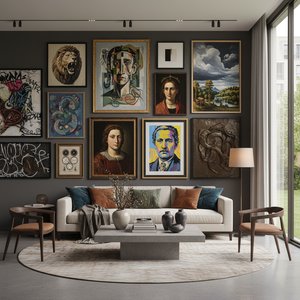
Top 10 Dramatische Kunstwerken: Meesterwerken voor een Impactvol Interieur | OriginalUniqueArt.nl
Ontdek 10 dramatische kunstwerken die emotie en intensiteit uitstralen. Van Barok tot Expressionisme, leer de verhalen achter meesterwerken van beroemde schilders. Vind museumkwaliteit reproducties & interieurinspiratie op OriginalUniqueArt.com.
Echoes of Time: Nostalgia, Technique & Cultural Significance in Vintage Paintings
Explore the captivating world of vintage paintings! Discover key styles, cultural significance & collecting tips from art experts at OriginalUniqueArt. Find authentic reproductions and elevate your home décor.

Van Zilveren Scherm tot Woonkamerwanden: Sfeer en Verhaal Cultiveren door Filmgeïnspireerde Kunst
Ontdek hoe filmische sfeer uw interieur transformeert met OriginalUniqueArt.com's hoogwaardige kunst reproducties en gepersonaliseerde decoratie. Laat u inspireren door de magie van cinema en creëer een unieke woonomgeving.
Echoes of Eras Past: Exploring Themes & Techniques in Vintage Art Collections
Explore the captivating world of vintage art! Discover historical movements, iconic themes & collecting tips. Find handmade reproductions & expert appraisal at OriginalUniqueArt.
Echoes of Time: Exploring the Enduring Appeal of Vintage Artwork
Explore the captivating world of vintage art! Discover its history, enduring appeal, & how to build your own collection. Expert advice, custom reproductions & museum-quality prints at OriginalUniqueArt.


