

 Bekijk op ware grootte
 Verstuur
 Delen
Delen
 Details bekijken
 Gids voor studentenkunstwerken

 Download
 Vergelijkbare items
 Röntgenonderzoek
 Diavoorstelling
 Statistieken
untitled (6282)


 Lees meer
De kunstwerken die op deze pagina worden weergegeven, zijn beschermd door de auteursrechtwetgeving, wat betekent dat het ons wettelijk niet is toegestaan om identieke reproducties te maken of te verkopen. Deze bescherming wordt gehandhaafd onder internationale overeenkomsten zoals de Conventie van Bern en door nationale wetgeving, waaronder de bepalingen van de Amerikaanse auteurswet - Titel 17. Alle rechten voorbehouden. Reproduceren of distribueren van afbeeldingen is niet toegestaan zonder uitdrukkelijke schriftelijke toestemming van WahooArt.com en de rechthebbenden.
Deze methode voldoet volledig aan de auteursrechtwetgeving, omdat het niet gaat om het kopiëren of dupliceren van het beschermde kunstwerk. In plaats daarvan is er sprake van een creatieve herinterpretatie — een nieuw schilderij dat door het origineel wordt geïnspireerd, maar er niet identiek aan is.
Giclée / Kunstafdrukken
Giclée- of canvasafdruk van museumkwaliteit met een snelle productie en flexibele afwerkingsmogelijkheden. ( Koop handgeschilderd kunstwerk Schakel over naar digitale afbeeldingen)




P118B €10

P118H €10

P118W €10

P438Z €10

P508JH €12

P508YH €12

P805H €10

P805Z €10

P919BZ €10

P919G €10

P919XJ €10

P959ZH €10

P968JZ €12

W106C €8

W218G €10

W218JH €8

W218Y €10

W307PJ €10

W316G €10

W316PJ €8

W316Y €10

W398PJ €8

W4111J €10

W500HY €15

W500JH €15

W692G €12

W849H €8

W940BG €15

W953PJ €8




Kies uit onze vooraf ingestelde maten die overeenkomen met de originele verhoudingen van het kunstwerk.

Voer de breedte en de hoogte in die u nodig heeft, passend bij uw lijst of uw muur. Een afdruk kan alleen worden ingekort, nooit groter worden gemaakt dan het origineel, waardoor een formaat met een andere verhouding een deel van de afbeelding verliest. Wij sturen u een digitaal mockup ter goedkeuring voordat we iets drukken. De afbeelding op deze pagina toont niet de werkelijke uitsnede — dit is alleen te zien op het mockup.
Wereldwijde levering () binnen 2 weken in plaats van de standaard 4/5 weken. (21 oktober)

Gratis wereldwijde expressverzending

Hoogwaardig linnen canvas

Volledige verzendverzekering

Garantie op terugbetaling van invoerrechten

Garantie op exacte kleurweergave

Retourbeleid van 100 dagen (alleen bij defecten)

100% Geld-terug-garantie

Korting bij meerdere afnames
 De optie voor glas is alleen beschikbaar bij een formaat kleiner dan 110 cm.

untitled (6282)
Giclée / Kunstafdrukken
Formaat reproductie
-


Totaalprijs
€ 71
The Architecture of Solitude
In the quiet, monochromatic depths of Edward Hopper’s "Untitled (6282)", we encounter more than just a snapshot of mid-century American life; we enter a profound meditation on the human condition. Painted in 1953, this evocative work serves as a masterful distillation of the anxieties and quiet contemplations that defined American modernism. The scene unfolds within the dim, atmospheric confines of a restaurant, where the bustle of urban existence is stripped down to its most skeletal, emotional essence. Through his meticulous use of light and shadow, Hopper captures a moment frozen in time, inviting the viewer to linger in the stillness of a world that feels simultaneously populated and profoundly lonely.
The composition is a study in detachment. Two women occupy bar stools, their postures conveying a palpable sense of stillness that defies the potential energy of a public space. Their gazes are notably averted, suggesting an inward journey of introspection rather than any outward connection with their surroundings. While a man stands nearby, seemingly engaged in the mundane ritual of ordering, his figure remains distant and unremarkable, serving only to emphasize the absence of genuine interaction. This spatial arrangement—the carefully positioned chairs and the gaps between figures—creates a rhythmic sense of isolation, making the diner feel like a stage where the actors are lost in their own private dramas.
Mastery of Light and Realism
Hopper’s technique is rooted in a distinctive realism that transcends mere representation to achieve something far more expressive. Eschewing flamboyant brushstrokes or distracting color palettes, he relies on a precise, almost clinical attention to detail to build his narrative. In this black and white rendering, the absence of color forces the eye to focus on the interplay of light and texture. The stark illumination highlights the faces of the figures, pulling them from the gloom, while deep, velvety shadows envelop the corners of the diner, creating an atmosphere of mystery and weight. This chiaroscuro effect is not merely a stylistic choice but a psychological tool, used to delineate the boundaries between the seen and the unseen, the public and the private.
Every element within the frame contributes to this heavy, contemplative mood. From the scattered bottles that hint at the passage of time to the solitary potted plant that offers a singular, fragile touch of life, the details are rendered with an unwavering accuracy. For the collector or interior designer, this piece offers a sophisticated focal point; its muted tones and structural clarity allow it to integrate seamlessly into modern, minimalist, or classic settings, providing a window into a period of intense psychological depth. To possess a reproduction of such a work is to hold a fragment of American history—a piece that does not merely decorate a wall but commands the emotional temperature of a room.
Vragen & Antwoorden
Waar komen de bezoekers van "untitled (6282)" door Edward Hopper vandaan?
Er bestaat een Statistieken-pagina voor "untitled (6282)". Deze brengt de maandelijkse bezoeken aan het kunstwerk en andere werken van de kunstenaar in kaart, met uitsplitsingen naar land en taal.
Wat is het kleurenpalet van "untitled (6282)" door Edward Hopper?
De kleuridentiteit van "untitled (6282)" door Edward Hopper: een Earthy palet, gedomineerd door Espresso (#3c3337).
Wat is de waargenomen helderheid van "untitled (6282)" door Edward Hopper?
De waargenomen helderheid van "untitled (6282)" door Edward Hopper is balanced. Deze kan worden afgestemd op het licht in de beoogde ruimte.
Biografie van de kunstenaar
A Solitude Observed: The Life and Art of Edward Hopper
Edward Hopper, a name inextricably linked to the quietude and subtle melancholy that permeated 20th-century American life, wasn’t simply a painter of scenes; he was a poet of light and shadow, a chronicler of modern isolation. Born in Nyack, New York, in 1882, to middle-class parents of Dutch ancestry, Hopper's early years provided a stable upbringing that nurtured his artistic inclinations. From childhood sketches meticulously dated and signed, it became evident that keen observation and an innate talent for drawing were central to his being. Though initially encouraged towards commercial illustration – a pragmatic suggestion from his parents – Hopper’s ambitions leaned toward fine art, leading him to the New York School of Art where he studied under William Merritt Chase and Robert Henri. These formative years instilled not only technical skill but also an appreciation for realism and a commitment to depicting the world as he saw it—unvarnished and honest. The writings of Ralph Waldo Emerson resonated deeply with Hopper, reinforcing his sense of individualism and acute observation – qualities that would become hallmarks of his artistic vision. Early travels to Paris exposed him to Impressionism, yet Hopper quickly diverged from its fleeting brushstrokes, forging a path uniquely his own.Finding His Voice: Realism and the American Scene
Hopper’s artistic journey wasn't immediate or effortless. He grappled with discovering his distinctive voice, experimenting with various styles before settling into the realism that would define his career. This wasn’t mere replication of reality; it was a distillation of its essence, stripping away extraneous detail to reveal underlying emotional truths. His paintings began to focus on everyday scenes – houses, diners, offices, hotel rooms – imbued with a sense of stillness and often, loneliness. He possessed an extraordinary ability to capture the psychological states of his subjects, hinting at narratives without explicitly stating them. The precise rendering of light and shadow became crucial, not merely as descriptive elements but as emotional cues, creating atmospheres that were both captivating and unsettling. House by the Railroad (1925), an early masterpiece, exemplifies this approach—a seemingly simple composition radiating a profound sense of isolation and mystery. Hopper’s printmaking, often overlooked, ran parallel to his painting, sharing similar themes and stylistic qualities, demonstrating his mastery across mediums. He wasn't interested in grand historical narratives or allegorical symbolism; he focused on the mundane, elevating it through careful observation and emotional resonance.Iconic Visions: Nighthawks and Beyond
While Hopper’s career unfolded gradually, certain works catapulted him to widespread recognition. Nighthawks (1942), arguably his most famous painting, became an instant icon of American culture. The late-night diner scene, bathed in stark fluorescent light, perfectly encapsulates the alienation and anonymity of modern urban life. The figures within are lost in their own thoughts, disconnected from one another despite their proximity—a poignant commentary on the human condition. Gas (1940), with its striking portrayal of a roadside gas station, showcases Hopper’s fascination with American landscapes and the burgeoning automobile culture. Other notable works like *Automat*, *Office in a Small City*, and *Summertime* each offer unique insights into the complexities of 20th-century American society. These paintings weren't merely depictions of places; they were explorations of mood, psychology, and the subtle dramas unfolding within ordinary settings. His wife, Josephine Nivison Hopper, played a vital role not only as his lifelong companion but also as a frequent model, contributing significantly to the characterization of his female figures.Themes and Legacy: A Lasting Influence
Several recurring themes permeate Hopper’s oeuvre. Urban isolation is perhaps the most prominent—the sense of loneliness experienced by individuals even amidst crowds. He explored the American landscape, both rural and urban, often emphasizing its starkness and emptiness. His work delves into psychological realism, probing the inner lives of his subjects with a sensitivity that transcends mere representation. There’s also an undercurrent of nostalgia for a simpler past, juxtaposed with an acknowledgement of the complexities and anxieties of modern life. Hopper's influence on subsequent artists is undeniable. His unique style has inspired countless painters, including Pierre Sanford Ross, and continues to resonate with contemporary artists seeking to capture the essence of human experience. His paintings remain highly sought after by collectors and are exhibited in major museums worldwide, solidifying his place as a pivotal figure in American art history. More than just an artist, Edward Hopper was a visual philosopher, offering profound insights into the human condition through his masterful use of light, shadow, and composition.- His legacy lies not only in the beauty of his paintings but also in their enduring ability to provoke thought, evoke emotion, and remind us of the quiet solitude that often defines our lives.
- Hopper’s work continues to captivate audiences because it speaks to universal themes of loneliness, isolation, and the search for meaning in a rapidly changing world.
- His paintings have become iconic representations of American culture, often used to symbolize the anxieties and aspirations of the 20th century—and beyond.
- Hopper’s aesthetic has profoundly influenced filmmakers (like Alfred Hitchcock) and writers, inspiring countless works that explore similar themes of alienation and psychological tension.
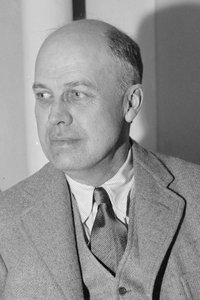
Edward Hopper
1931 - 1967 , Verenigde Staten van Amerika
Snelle feiten
- Artistic Movement Or Style: Realisme
- Artists Or Movements Influenced By This Artist: ['Ross']
- Artists Who Influenced This Artist:
- Chase
- Henri
- Date Of Birth: 22 juli 1882
- Date Of Death: 15 mei 1967
- Full Name: Edward Hopper
- Nationality: Amerikaans
- Notable Artworks:
- Nighthawks
- House
- Gas
- Place Of Birth: Nyack, USA
Gerelateerde artikelen

Top 10 Meesterwerken van het Amerikaans Realisme | Kunst & Decoratie
Ontdek de 10 meest iconische meesterwerken van het Amerikaans Realisme! Van Edward Hopper tot Andrew Wyeth, leer over de kunstenaars en hun tijdloze schilderijen. Vind museumkwaliteit reproducties & decoratie op OriginalUniqueArt.com.

The Unvarnished Truth: A Cultural Journey Through the Soul of American Realism
Explore the profound beauty of American Realism. From the Ashcan School's urban grit to intimate portraits, discover how artists captured the authentic soul of a nation through unvarnished truth and masterful observation.
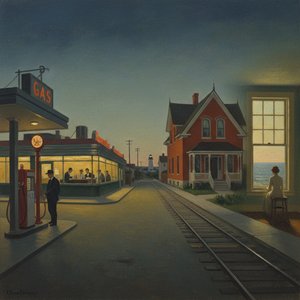
Edward Hopper's Top 25 Meesterwerken: Kunst, Verhalen & Sfeer voor je Interieur
Ontdek de top 25 meesterwerken van Edward Hopper! Duik in de wereld van Amerikaans realisme, iconische diners & verstilde hotelkamers. Kunst kopen? Vind hoogwaardige reproducties & interieurinspiratie op OriginalUniqueArt.com.
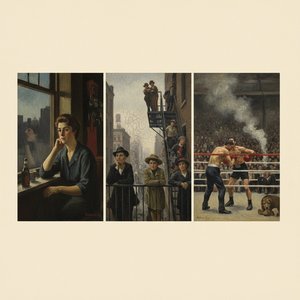
American Realism: Social Commentary & Artistic Representation in Early 20th-Century Painting
Explore the powerful social commentary & artistic representation of American Realism. Discover key artists like Bellows & Sloan, and understand the movement's lasting impact on 20th-century art history.

Top 10 Witte Meesterwerken: Kunstgeschiedenis & Interieurinspiratie
Ontdek de top 10 witte meesterwerken uit de kunstgeschiedenis! Van Monet tot Mondriaan, bewonder abstracte vormen & serene kleuren. Vind museumkwaliteit reproducties en interieurinspiratie op OriginalUniqueArt.com.


