Voorvertoning
 Verstuur
 Delen
Delen
 Details bekijken
 Gids
Gids

 Download
 Vergelijkbare items
 Röntgenonderzoek
 Diavoorstelling
 Vraag & antwoord
 Statistieken
The House at Rueil

- 92.0 x 73.0 cm


 Lees meer
Giclée / Kunstafdrukken
Giclée- of canvasafdruk van museumkwaliteit met een snelle productie en flexibele afwerkingsmogelijkheden. ( Bestel handgeschilderde reproductie Schakel over naar digitale afbeeldingen)




P118B €10

P118H €10

P118W €10

P438Z €10

P508JH €12

P508YH €12

P805H €10

P805Z €10

P919BZ €10

P919G €10

P919XJ €10

P959ZH €10

P968JZ €12

W106C €8

W218G €10

W218JH €8

W218Y €10

W307PJ €10

W316G €10

W316PJ €8

W316Y €10

W398PJ €8

W4111J €10

W500HY €15

W500JH €15

W692G €12

W849H €8

W940BG €15

W953PJ €8




Kies uit onze vooraf ingestelde maten die overeenkomen met de originele verhoudingen van het kunstwerk.

Voer de gewenste breedte en hoogte in, passend bij uw lijst of muur. Een afdruk kan alleen worden ingekort en nooit groter worden gemaakt dan het origineel; een formaat met andere verhoudingen zal daarom een deel van de afbeelding verliezen. Wij sturen u een digitaal mockup ter goedkeuring voordat we tot drukwerk overgaan. De afbeelding op deze pagina toont niet de werkelijke uitsnede — dit is alleen te zien op het mockup.
Wereldwijde levering () binnen 2 weken in plaats van de standaard 4/5 weken. (5 november)

Gratis wereldwijde expressverzending

Hoogwaardig linnen canvas

Volledige verzendverzekering

Garantie op terugbetaling van invoerrechten

Garantie op exacte kleurweergave

Retourbeleid van 100 dagen (alleen bij defecten)

100% Geld-terug-garantie

Korting bij meerdere afnames
 De optie voor glas is alleen beschikbaar bij een formaat kleiner dan 110 cm.

The House at Rueil
Giclée / Kunstafdrukken
Afmetingen reproductie
-


Eindtotaal
€ 72
A Glimpse into Domestic Tranquility: Exploring Manet’s *The House at Rueil*
Édouard Manet's *The House at Rueil*, painted in 1882, offers a captivating study of suburban life and a poignant reflection on the artist’s declining health. This oil-on-canvas painting, existing in two nearly identical versions – one residing in Berlin’s Alte Nationalgalerie and the other in Melbourne's National Gallery of Victoria – exemplifies Manet’s masterful transition between Realism and Impressionism, capturing not just a physical space but also an *atmosphere* of quiet contemplation.Subject & Composition: A Serene Retreat
The painting depicts a modest two-story house in Rueil-Malmaison, a suburb of Paris where Manet sought respite during the final months of his life. The composition is deceptively simple: the house occupies a central position, framed by lush foliage and subtly suggested pathways. Manet deliberately limits the view, using a tree trunk to partially obscure the entrance, creating a sense of intimacy and inviting the viewer to imagine what lies beyond. The Berlin version includes a garden bench, adding to the scene’s invitation for repose, while the Melbourne iteration focuses more tightly on the architectural form itself. The interplay of light and shadow, dappled through the trees, imbues the scene with a gentle warmth.Style & Technique: Bridging Realism and Impressionism
*The House at Rueil* showcases Manet’s evolving style. While rooted in realistic observation – note the careful rendering of architectural details and the attempt to capture the quality of light – the painting employs distinctly *Impressionistic* techniques. Manet utilizes loose, visible brushstrokes, prioritizing the overall impression over meticulous detail. The color palette is restrained yet harmonious, dominated by soft yellows, blues, and greens that evoke a sense of calm and serenity. This approach anticipates the full flowering of Impressionism while retaining Manet’s characteristic focus on form and structure.Historical Context & Personal Significance
Completed in 1882, just a year before his death, *The House at Rueil* is imbued with a sense of melancholy and introspection. Manet was battling a debilitating illness during this period, and the house represented a temporary sanctuary from his suffering. The painting can be interpreted as a meditation on mortality and the fleeting nature of life. It’s also significant that Manet created two versions of the work; this practice wasn't uncommon for him, perhaps reflecting a desire to fully explore the subject or fulfill commissions. The choice of subject matter – a simple domestic scene – was itself radical at the time, challenging traditional academic painting which favored historical or mythological themes.Symbolism & Emotional Impact
Beyond its realistic depiction, *The House at Rueil* carries subtle symbolic weight. The house itself represents shelter, security, and domesticity—values that likely held particular significance for Manet as his health declined. The partially obscured entrance suggests a sense of mystery or the unknown, perhaps alluding to the uncertainties of life and death. The overall effect is one of quiet contemplation and wistful nostalgia. The painting doesn’t shout for attention; instead, it gently draws the viewer into its peaceful world, evoking feelings of tranquility and longing.Influence & Legacy
Manet's work profoundly influenced subsequent generations of artists, paving the way for Impressionism and beyond. *The House at Rueil*, with its innovative use of color, light, and brushwork, served as a model for many painters seeking to capture the fleeting moments of modern life. Its enduring appeal lies in its ability to evoke a powerful emotional response through seemingly simple means.Collecting & Reproduction
For collectors: Owning a reproduction of *The House at Rueil* allows you to bring a piece of art history into your home. The painting’s serene atmosphere and harmonious color palette make it an ideal addition to any interior, complementing both traditional and contemporary décor.- Living Rooms: Creates a calming focal point.
- Bedrooms: Promotes relaxation and tranquility.
- Studies/Home Offices: Inspires contemplation and focus.
Veelgestelde vragen
Onder welke andere namen is Édouard Manet bekend?
Édouard Manet staat ook bekend als Edouard Manet, Manet.
Wat is de techniek en de afmeting van "The House at Rueil"?
"The House at Rueil" door Édouard Manet is uitgevoerd in Oil On Canvas en heeft de afmetingen 92 x 73 cm.
In welke oriëntatie staat "The House at Rueil" door Édouard Manet?
"The House at Rueil" door Édouard Manet heeft een Landscape-formaat. Het formaat beschrijft de verhoudingen van de compositie.
Biografie kunstenaar
Een Parijse Rebel: Het Leven en Werk van Édouard Manet
Édouard Manet, geboren in 1832 in een welgestelde burgerfamilie in Parijs, leek aanvankelijk niet voorbestemd voor het leven van een revolutionair kunstenaar. Zijn vader, een gerespecteerd rechter, koesterde de hoop op een veilige toekomst voor zijn zoon als jurist of misschien marineofficier – respectabele beroepen die pasten bij hun sociale status. Toch lag Manets hart al van jongs af aan bij de kunst. Op elfjarige leeftijd begon hij met formele tekenlessen en hoewel hij kortstondig in de leer ging bij de academische schilder Thomas Couture, vond hij Coutures rigide methoden verstikkend. Deze vroege weerstand was een voorbode van een leven lang uitdagen van artistieke conventies. Manet was niet geïnteresseerd in het simpelweg nabootsen van het verleden; hij zocht naar de levendigheid – en soms de onrustwekkende realiteit – van het moderne Parijse leven. Hij bezocht frequent het Louvre, niet om oude meesters te kopiëren, maar om hun technieken te ontleden, te leren van kunstenaars als Caravaggio en Velázquez hoe licht en schaduw vorm konden geven en emotie konden oproepen. De echte vonk voor zijn creatieve pad kwam echter met een verschuiving in artistieke stromingen, met name de opkomst van het Realisme, gepromoot door Gustave Courbet. Courbets aandringen op het afbeelden van het dagelijks leven zonder idealisering resoneerde diep bij Manet en bevrijdde hem van de beperkingen van historische of mythologische onderwerpen.Doorbraak en Schandaal: De Weg naar Innovatie
De jaren 1860 waren een periode van intense artistieke ferment in Parijs, en Manet bevond zich in het epicentrum ervan. De komst van Japanse prenten – *ukiyo-e* – had een diepgaande invloed op zijn esthetische gevoelens. Hij was gefascineerd door hun afgeplatte perspectieven, gedurfde composities en opvallende kleurgebruik, elementen die kenmerkend zouden worden voor zijn eigen stijl. Deze invloed, gecombineerd met zijn groeiende afkeer van academisch perfectionisme, leidde tot werken die de Parijse kunstwereld choqueerden en schandaliseerden. Le Déjeuner sur l'herbe (Het Luncheon op het Gras), tentoongesteld in de Salon des Refusés in 1863 – een tentoonstelling voor werken afgewezen door de officiële Salon – werd een bliksemafleider voor controverse. Het schilderij, dat een naakte vrouw toont die nonchalant picknickt met twee volledig geklede mannen, ging niet zozeer over naaktheid; het ging om *hoe* die naaktheid werd gepresenteerd. Manets figuren misten de geïdealiseerde vormen en mythologische context van traditionele naakten. Ze waren onmiskenbaar modern, confronterend met een verontrustende directheid. Het schandaal rond Le Déjeuner intensiveerde nog verder met zijn meesterwerk uit 1865, Olympia. Dit schilderij, een bewuste herinterpretatie van Titiaans *Venus van Urbino*, portretteerde een hedendaagse prostituee die de kijker strak aankijkt. De onverbloemde realisme en provocerende thematiek werden met algemene veroordeling ontvangen. Critici beschuldigden Manet van vulgariteit en artistieke incompetentie, maar onder de verontwaardiging school het besef dat hij fundamenteel de taal van de schilderkunst aan het veranderen was.Een Brug naar het Impressionisme: Licht, Penseelvoering en Modern Leven
Hoewel Manet zich nooit volledig omarmde als een “Impressionist”, was zijn invloed op de beweging onmiskenbaar. Hij deelde hun afkeer van academische conventies en hun toewijding aan het vastleggen van de vluchtige effecten van licht en sfeer. Hij exposeerde samen met Monet, Renoir, Degas en anderen op de onafhankelijke tentoonstellingen van de Impressionisten, waarmee hij zijn positie als sleutelfiguur in de avant-garde verstevigde. Manets techniek evolueerde naar een losser penseelvoering, waarbij hij prioriteit gaf aan de impressie van vorm boven gedetailleerd realisme. Hij experimenteerde met kleur, vaak gebruikmakend van scherpe contrasten om dramatische effecten te creëren. Naast de schandalige naakten verkende Manet een breed scala aan onderwerpen: portretten – waaronder opvallende afbeeldingen van zijn vrouw Suzanne en medekunstenaar Émile Zola; scènes uit het Parijse nachtleven, zoals A Bar at the Folies-Bergère, dat meesterlijk de vervreemding en spectakel van het moderne stedelijke leven vastlegt; en intieme huiselijke taferelen. Hij documenteerde deze onderwerpen niet alleen; hij ondervroeg ze, stelde maatschappelijke normen in vraag en daagde conventionele opvattingen over schoonheid uit.Nalatenschap en Blijvende Impact
Édouard Manets voortijdige dood in 1883 aan syfilis maakte een einde aan een carrière die de loop van de kunstgeschiedenis al onherroepelijk had veranderd. Hoewel zijn reputatie na zijn overlijden aanzienlijk groeide, werd zijn impact direct gevoeld door jongere kunstenaars die hem erkenden als een bevrijder. Hij brak barrières af, daagde traditionele opvattingen over thematiek, techniek en artistisch doel uit. Zijn nadruk op het vastleggen van het moderne leven baande de weg voor het Impressionisme en Post-Impressionisme. Zijn innovatieve gebruik van penseelvoering en kleur beïnvloedde generaties schilders. Zijn bereidheid om ongemakkelijke waarheden over de samenleving te confronteren dwong kijkers hun eigen aannames in vraag te stellen. Manets schilderijen blijven tot op de dag van vandaag resoneren, niet alleen vanwege hun esthetische schoonheid, maar ook vanwege hun blijvende relevantie. Hij blijft een sleutelfiguur in de overgang van het Realisme naar het Impressionisme en wordt terecht gevierd als een van de grondleggers van de moderne kunst – een Parijse rebel die durfde de wereld te schilderen zoals hij die zag, met al zijn complexiteit en tegenstrijdigheden. Zijn werk herinnert ons eraan dat ware artistieke innovatie vaak ten koste gaat van het uitdagen van gevestigde normen en het omarmen van de ongemakkelijke waarheden van onze tijd.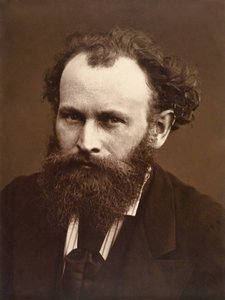
Édouard Manet
1832 - 1883 , Frankrijk
Belangrijkste feiten
- Artistic Movement Or Style: Realisme, Impressionisme
- Artists Or Movements Influenced By This Artist:
- Claude Monet
- Pierre-Auguste Renoir
- Edgar Degas
- Artists Who Influenced This Artist:
- Caravaggio
- Diego Velázquez
- Gustave Courbet
- Date Of Birth: 23 januari 1832
- Date Of Death: 30 april 1883
- Full Name: Édouard Manet
- Nationality: Frans
- Notable Artworks:
- Le Déjeuner sur l'herbe
- Olympia
- A Bar at the Folies-Bergère
- Place Of Birth: Parijs, Frankrijk
Gerelateerde artikelen
Édouard Manet: Pioneering Modernism & Challenging Artistic Conventions
Explore the life & art of Édouard Manet, a pivotal figure bridging Realism and Impressionism. Discover his revolutionary techniques, controversial masterpieces like 'Olympia,' and lasting impact on modern art history.

Impressionistic Realism's Finest: 10 Masterpieces for Your Home | OriginalUniqueArt
Journey through Impressionistic Realism with 10 iconic masterpieces by Monet, Renoir & Van Gogh. Explore art history, techniques & find museum-quality reproductions for your home at OriginalUniqueArt.com. Discover all masterpieces online!

Édouard Manet's Top 25 Meesterwerken: Kunst voor uw Interieur | OriginalUniqueArt
Ontdek de 25 meest iconische schilderijen van Édouard Manet, pionier van het Impressionisme. Lees over Le Déjeuner sur l'herbe, Olympia en meer! Museumkwaliteit reproducties & kunst voor uw interieur op OriginalUniqueArt.com
Top 10 Impressionistische Meesterwerken: Kunst die de Wereld Veranderde | OriginalUniqueArt
Ontdek de 10 meest iconische meesterwerken van het Impressionisme! Van Monet tot Renoir, leer over de kunstenaars, technieken & kleuren die deze beweging definieerden. Vind museumkwaliteit reproducties en inspiratie voor uw interieur op OriginalUniqueArt.com.
Top 10 Meesterwerken van het Impressionisme | Kunstreproducties & Decoratie
Ontdek de 10 meest iconische meesterwerken van het Impressionisme met Monet, Renoir & Manet. Leer over hun technieken en kleuren! Museumkwaliteit kunst reproducties voor uw interieur op .