- Home

- Digitale afbeeldingen
- Dwight William Tryon
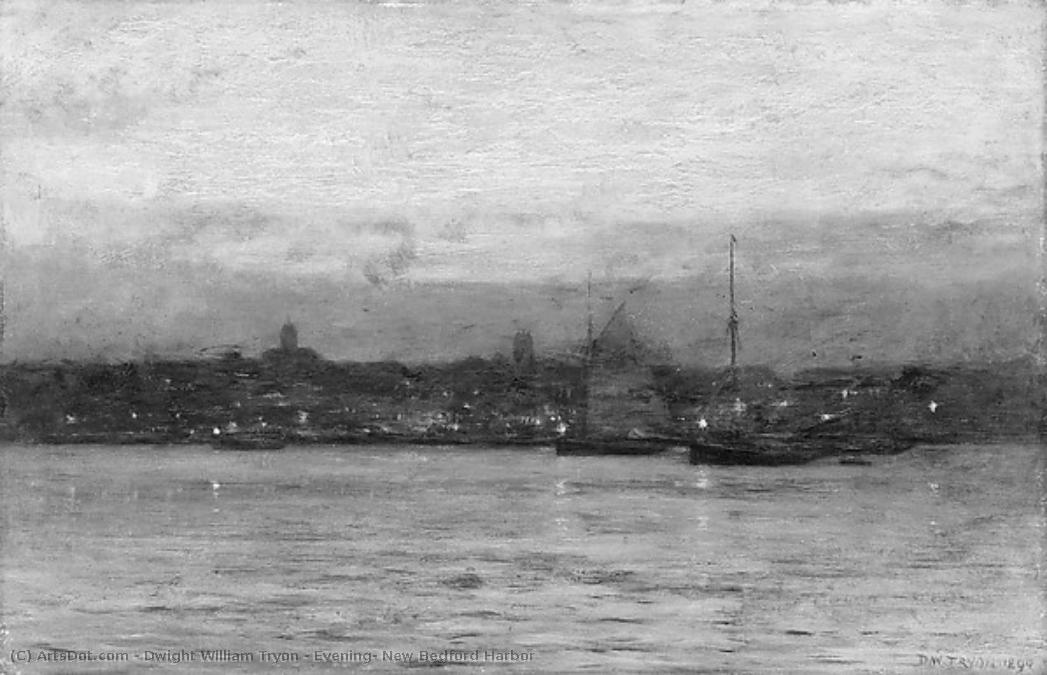
- Evening, New Bedford Harbor
 Preview
 Print kopen Bestel schilderij
 Verstuur
 Delen
Delen
 Details bekijken
 Toevoegen aan favorieten

 Download
 Vergelijkbare werken
 Röntgenonderzoek
 Diavoorstelling
Evening, New Bedford Harbor
 Oil On Canvas
- WallArt
- Tonalist Painting
 1890
1890- 19th Century
 51.0 x 80.0 cm
 Metropolitan Museum of Art
 Lees meer
Koop een digitale afbeelding met hoge resolutie en verbeterde kwaliteit, die veel superieur is aan de online voorvertoning.
Elk bestand wordt met uiterste precisie voorbereid door onze interne specialisten, met behulp van geavanceerde tools en deskundige handmatige retouche. Wij garanderen dat elke afbeelding een uitzonderlijke helderheid, nauwkeurige kleurweergave en verfijnde details bezit.
Het uiteindelijke bestand wordt binnen 72 uur per e-mail geleverd, geoptimaliseerd voor direct gebruik in professionele, redactionele en printomgevingen. Dit is dezelfde kwaliteit waarop topontwerpstudio's, uitgevers en galerieën vertrouwen.
Digitale afbeeldingen
Download een bestand met hoge resolutie voor persoonlijke weergave, afdrukken en creatieve projecten.
Inbegrepen bij elke bestelling van een digitale afbeelding
Professionele digitale levering, gegarandeerd
Wanneer u kiest voor OriginalUniqueArt.com, ontvangt u niet alleen een afbeelding – u krijgt een professioneel verbeterd digitaal kunstwerk, met precisie vervaardigd en voorzien van een tevredenheidsgarantie. Dit is alles wat automatisch bij uw bestelling is inbegrepen:

Snelle digitale levering
Uw hoogwaardige digitale afbeeldingsbestand wordt binnen 72 uur na bestelling naar u gemaild – klaar voor direct gebruik.

Met AI verbeterd digitaal bestand
Uw kunstwerk wordt professioneel geoptimaliseerd met behulp van geavanceerde AI-tools en handmatige bewerkingen, waardoor maximale details, helderheid en kleurnauwkeurigheid worden gegarandeerd.

Gratis levenslange herlevering van digitale afbeeldingen
Je bestand per ongeluk verwijderd of kwijtgeraakt? Geen zorgen – we sturen het u op elk gewenst moment gratis opnieuw toe.

Geen invoerkosten - Altijd
Geniet direct van uw kunstwerk zonder invoerrechten, belastingen of verzendkosten – digitale downloads zijn altijd belastingvrij.

Garantie op kleurgetrouwheid
Met behulp van professionele hulpmiddelen en kleurbeheer zorgen wij ervoor dat uw digitale afbeelding de originele kleuren zo nauwkeurig mogelijk weergeeft.

60 dagen tevredenheidsgarantie
Als u niet tevreden bent met uw digitale afbeelding, passen wij deze aan of storten wij 100% terug binnen 60 dagen – zonder vragen gesteld.

100% Geld-terug-garantie
Niet tevreden? Ontvang binnen 60 dagen na ontvangst van uw digitale bestand uw volledige aankoopbedrag terug – zonder vragen te stellen.

Korting bij grote bestellingen
Koop 3 afbeeldingen, bespaar 10% - Koop 5, bespaar 15% - Koop 10+, bespaar 20%. Ideaal voor creatieve projecten, galerieën en bureaus.
Beschrijving verzamelobject
A Moment of Quietude: The Essence of Dwight William Tryon’s “Evening, New Bedford Harbor”
Dwight William Tryon's "Evening, New Bedford Harbor" isn’t merely a depiction of a maritime scene; it’s an immersion into a specific time and mood. Painted in 1890, this oil on wood canvas captures the profound stillness of twilight over the harbor, offering a glimpse into the lives intertwined with the sea and the quiet dignity of a fading day. The painting immediately draws the viewer in with its monochromatic palette – a carefully orchestrated dance of grays, blacks, and whites that eschews traditional color for an exploration of light, shadow, and atmosphere. It’s a testament to Tryon's mastery of tonalism, an American art movement he embraced wholeheartedly, prioritizing emotional resonance over precise representation.
The composition itself is remarkably balanced, dividing the canvas into distinct yet harmonious zones. The foreground, dominated by the dark, reflective waters of the harbor, anchors the scene and establishes a sense of depth. Beyond this lies the middle ground, populated with several ships – not rendered as individual entities but rather as suggestive forms, blending seamlessly into the hazy distance. Finally, the background reveals the faint outline of New Bedford’s cityscape, softened by atmospheric perspective and appearing almost dreamlike. This careful arrangement creates a feeling of spaciousness and invites contemplation, mirroring the quiet solitude of the scene.
The Language of Tone: Tryon's Tonalist Technique
Tryon’s technique is characterized by an exquisite sensitivity to light and texture. He achieves this through meticulous blending and layering of oil paints – a process that results in surfaces that appear incredibly smooth, almost velvety to the touch. There’s no visible brushstroke; instead, the paint seems to melt into one another, creating subtle gradations of tone that mimic the diffused light of dusk. This deliberate softness contributes significantly to the painting's overall atmosphere of tranquility and melancholy. The artist skillfully utilizes the absence of strong highlights or shadows, relying instead on the nuanced interplay of light and dark to define form and create a sense of volume.
The choice of a monochromatic palette is not arbitrary; it’s integral to Tryon's artistic vision. By stripping away color, he forces the viewer to engage with the painting on a purely sensory level – focusing on the subtle shifts in tone, the play of light and shadow, and the overall mood conveyed by the scene. This approach aligns perfectly with the principles of tonalism, which sought to capture the essence of a subject through its emotional impact rather than its literal appearance.
Symbolism and Emotional Resonance: A Portrait of a Working Harbor
“Evening, New Bedford Harbor” is more than just a landscape; it’s a poignant meditation on labor, community, and the passage of time. The scene evokes the quiet dignity of the fishermen and sailors who worked tirelessly in the harbor, their lives inextricably linked to the rhythms of the sea. The muted colors and soft lighting suggest a sense of weariness and reflection – perhaps a moment of respite before returning to the demands of the next day. The distant cityscape hints at the bustling life of New Bedford, while the vast expanse of water symbolizes both opportunity and uncertainty.
Furthermore, the painting’s overall mood is imbued with a subtle sense of nostalgia. It's as if Tryon is inviting us to step back in time and witness a moment that has long since vanished – a reminder of a bygone era when life revolved around the sea and its bounty. The piece resonates with a quiet beauty, prompting viewers to contemplate their own relationship to nature, community, and the enduring power of memory.
A Legacy of Tonalist Beauty: Tryon’s Enduring Appeal
Dwight William Tryon's "Evening, New Bedford Harbor" stands as a remarkable example of American tonalism – a testament to the artist’s skill and sensitivity. Its evocative atmosphere, meticulous technique, and subtle symbolism continue to captivate viewers today. Reproductions of this masterpiece offer a unique opportunity to bring this serene scene into your home or office, allowing you to experience its quiet beauty and emotional resonance firsthand. It's a piece that speaks volumes without uttering a single word, inviting contemplation and offering a moment of respite from the complexities of modern life.
Kunstenaarsbiografie
Early Life and Artistic Beginnings
Dwight William Tryon’s story begins in the quiet beauty of Hartford, Connecticut, in 1849. Born to Anson Tryon, a builder and contractor, and Delia Roberts Tryon, his early life was shaped by both the practicalities of family business and the profound influence of nature. A poignant event marked his childhood – the untimely death of his father, an experience that instilled within him a deep sense of loss and perhaps, a heightened appreciation for the transient beauty of the world. Consequently, he spent much of his formative years on his grandparents’ farm in East Hartford, immersing himself in the rhythms of rural life, observing the changing seasons, and developing a keen eye for detail. This connection to the land would become the bedrock of his artistic vision, informing every brushstroke and shaping his distinctive style. Initially, Tryon's artistic pursuits were largely self-directed. He discovered a passion for drawing while working as a clerk in a local bookstore, where he eagerly devoured instructional manuals and honed his skills through diligent practice. It was here that he began to translate the landscapes surrounding him onto paper – the weathered barns, the winding riverbanks, and the ever-changing sky. His early works were characterized by a straightforward realism, capturing the essence of everyday scenes with remarkable accuracy. A pivotal moment arrived in 1870 when he sold his first painting, marking the beginning of his journey as an artist. Subsequent local exhibitions garnered attention, hinting at a talent that was poised to blossom into something truly exceptional. In 1873, he achieved a significant milestone by gaining acceptance into the prestigious National Academy of Design in New York City, providing him with formal training and access to a wider artistic community.European Influences and the Shaping of a Style
Driven by an ambition to refine his technique and broaden his artistic horizons, Tryon embarked on a transformative journey to Europe in 1876. He sought out instruction from some of the most influential artists of the time, immersing himself in the vibrant artistic currents flowing through France. He studied under Jacquesson de la Chevreuse at the École des Beaux-Arts in Paris, absorbing the principles of academic painting and learning to master the technical skills required for creating compelling compositions. However, Tryon’s artistic path soon diverged from the rigid conventions of traditional art academies. He actively sought guidance from luminaries like Charles-François Daubigny, Henri Harpignies, and Jean Baptiste-Antoine Guillemet, absorbing their techniques and philosophies. Initially, Tryon's style leaned towards Luminism – a movement characterized by its emphasis on atmospheric effects, the subtle interplay of light and shadow, and the creation of an ethereal quality in his paintings. Yet, he soon found himself drawn to the principles of the Barbizon School—a revolutionary movement that prioritized direct observation of nature, eschewed idealized forms, and favored a more subdued palette. The Barbizon artists sought to capture the essence of the French countryside with honesty and immediacy, rejecting the grand scale and theatricality of earlier artistic traditions. Surrounded by the burgeoning Impressionist movement in France – with its focus on capturing fleeting moments of light and color – Tryon remained steadfastly committed to the Barbizon aesthetic, finding greater resonance in its contemplative mood and realistic depiction of the natural world. The influence of James McNeill Whistler was particularly profound; his tonalist style—emphasizing harmonious arrangements of color and subtle gradations of tone—left an indelible mark on Tryon’s artistic development.Mature Style and Atmospheric Landscapes
By the late 1880s, Dwight William Tryon had fully realized his iconic style – a signature approach that would define his legacy as a leading American Tonalist. His canvases often feature a distinctive composition: a grouping or broken row of trees positioned in the middle distance, acting as a visual bridge between a luminous sky above and a foreground marsh or pasture below. These scenes are frequently imbued with autumnal hues, evoking a sense of tranquility and melancholy. Tryon’s masterful use of color—often muted and delicate—created an atmosphere of quiet contemplation, inviting viewers to lose themselves in the beauty of the natural world. Beyond landscapes, Tryon also excelled at seascapes, utilizing pastel to capture the expansive beauty of water, sky, and beach under varying weather conditions. His paintings were not merely representations of scenes; they were carefully constructed evocations of mood and atmosphere. *Salt-Marsh, December*, which garnered first prize at the Tennessee Centennial Exposition in 1897, stands as a prime example of this skill, showcasing his talent for capturing the serene beauty of the natural world.Patronage, Recognition, and Lasting Legacy
The trajectory of Tryon’s career was significantly enhanced by his relationship with Charles Lang Freer, a discerning collector who became his most important patron. Freer acquired dozens of Tryon's works and even collaborated with the artist on interior design projects for his Detroit home. This generous support allowed Tryon to fully dedicate himself to his art, and many of these paintings now reside in the esteemed Freer Gallery of Art as part of the Smithsonian Institution. Further recognition came in 1908 when he received the Carnegie Prize at the Carnegie Exhibition, solidifying his position among the leading artists of his time. Throughout his career, Tryon was an active member of several prestigious art organizations, including the Society of American Artists, the American Watercolor Society, and the National Institute of Arts and Letters (now the American Academy of Arts and Letters). In 1887 he established a summer home in South Dartmouth, Massachusetts, which served as his primary residence for the remainder of his life. He also dedicated himself to education, teaching painting and drawing at Smith College from 1886 to 1923, where he founded the Tryon Gallery of Art. Dwight William Tryon passed away in 1925, leaving behind a rich artistic legacy defined by his contribution to American Tonalism and his exceptional ability to capture atmospheric landscapes and seascapes with delicate color and refined feeling. His works continue to be celebrated and are held in prominent collections such as the Smithsonian American Art Museum and the Freer Gallery of Art, ensuring that his vision endures for generations to come.
Dwight William Tryon
1849 - 1925 , Verenigde Staten van Amerika
Belangrijkste feiten
- Artistic Movement Or Style: Tonalisme, Barbizon
- Artists Or Movements Influenced By This Artist: ['Impressionisme']
- Artists Who Influenced This Artist:
- Daubigny
- Whistler
- Harpignies
- Date Of Birth: 13 aug 1849
- Date Of Death: 1 juli 1925
- Full Name: Dwight William Tryon
- Nationality: Amerikaans
- Notable Artworks:
- Salt-Marsh
- Spring
- Haystacks
- Place Of Birth: Hartford, USA

