

 Voorvertoning
 Verstuur
 Delen
Delen
 Details bekijken
 Gids
Gids

 Download
 Vergelijkbare items
 Röntgenonderzoek
 Diavoorstelling
 Statistieken
Window
 Acryl op canvas
- Wanddecoratie
- Gothic
 1288
1288- Hoogmiddeleeuwen
 700.0 x 700.0 cm
 Duomo
Duomo
 Lees meer
Giclée / Kunstafdrukken
Giclée- of canvasafdruk van museumkwaliteit met een snelle productie en flexibele afwerkingsmogelijkheden. ( Bestel handgeschilderde reproductie Schakel over naar digitale afbeeldingen)




P118B €10

P118H €10

P118W €10

P438Z €10

P508JH €12

P508YH €12

P805H €10

P805Z €10

P919BZ €10

P919G €10

P919XJ €10

P959ZH €10

P968JZ €12

W106C €8

W218G €10

W218JH €8

W218Y €10

W307PJ €10

W316G €10

W316PJ €8

W316Y €10

W398PJ €8

W4111J €10

W500HY €15

W500JH €15

W692G €12

W849H €8

W940BG €15

W953PJ €8




Kies uit onze vooraf ingestelde maten die overeenkomen met de originele verhoudingen van het kunstwerk.

Voer de gewenste breedte en hoogte in, passend bij uw lijst of muur. Een afdruk kan alleen worden ingekort en nooit groter worden gemaakt dan het origineel; een formaat met andere verhoudingen zal daarom een deel van de afbeelding verliezen. Wij sturen u een digitaal mockup ter goedkeuring voordat we tot drukwerk overgaan. De afbeelding op deze pagina toont niet de werkelijke uitsnede — dit is alleen te zien op het mockup.
Wereldwijde levering () binnen 2 weken in plaats van de standaard 4/5 weken. (26 oktober)

Gratis wereldwijde expressverzending

Hoogwaardig linnen canvas

Volledige verzendverzekering

Garantie op terugbetaling van invoerrechten

Garantie op exacte kleurweergave

Retourbeleid van 100 dagen (alleen bij defecten)

100% Geld-terug-garantie

Korting bij meerdere afnames
 De optie voor glas is alleen beschikbaar bij een formaat kleiner dan 110 cm.

Window
Giclée / Kunstafdrukken
Afmetingen reproductie
-


Eindtotaal
€ 71
Window by Duccio di Buoninsegna: A Masterpiece of Gothic Stained Glass
- Artist: duccio di buoninsegna
- Birth Year: 1255
- Death Year: 1319
- Birth City: Siena
- Birth Country: Italy
Subject and Composition
Duccio di Buoninsegna's "Window," created in 1288, is a stunning example of Gothic stained glass art. This circular window, originally adorning the Duomo in Siena, Italy, depicts scenes primarily related to the Virgin Mary’s life and ascension. The composition is divided into multiple panels within a larger circular design, creating a visually captivating narrative. A central figure, believed to be an angel or saint, holds a book or manuscript, surrounded by other figures with halos, signifying their divine status. These figures are dressed in traditional medieval attire, adding to the historical context of the artwork.
Technique and Artistic Vision
The technique employed by Duccio is remarkable for its time. The predominant use of blue hues accented with red creates a striking visual effect that draws the viewer's eye. Each panel demonstrates meticulous craftsmanship, showcasing the artist’s mastery over stained glasswork. Duccio moved away from strict Byzantine conventions, introducing naturalism and emotional expression into his work. He skillfully blended traditional techniques with emerging innovations, creating a unique style that set him apart.
Historical Context and Significance
Located within the Duomo of Siena, "Window" is an integral part of the cathedral's artistic heritage. The Duomo itself stands as a significant architectural and cultural landmark in Italy. The window’s creation occurred during a period of transition in art, moving away from Byzantine styles towards the more expressive Gothic aesthetic. Records indicate that Duccio was commissioned to create preparatory drawings for the window, further solidifying his role as a leading artist of his time. The presence of Saint Bartholomew, Siena's patron saint at the time, provides evidence of its early dating.
Symbolism and Emotional Impact
The "Window" is rich in symbolism. The circular design itself can be interpreted as representing eternity or divine perfection. The use of blue, often associated with heaven and spirituality, reinforces the religious theme. The halos surrounding the figures symbolize their holiness and connection to the divine. Beyond its symbolic meaning, the window evokes a sense of awe and reverence through the interplay of light and color. The stained glass allows for a dynamic visual effect as sunlight filters through, creating an ethereal atmosphere that enhances the spiritual impact of the artwork.
Veelgestelde vragen
Hoe verhoudt de stijl van "Window" zich tot het tijdperk van de maker?
In "Window" door Duccio di Buoninsegna ontmoet de Gothic-stroming de Hoogmiddeleeuwen-periode.
Welk gebruik en welke ruimte worden aanbevolen voor "Window" door Duccio di Buoninsegna?
Aanbevolen gebruik (Accent) en ruimte (Woonkamer) zijn de twee aanbevelingen voor "Window" door Duccio di Buoninsegna.
Hoe verbindt "Window" door Duccio di Buoninsegna Gothic met het geboorteland van de kunstenaar?
"Window" verbindt de Gothic-stroming met Italië via de geboorteplaats van de maker.
Biografie kunstenaar
The Sienese Luminary: Duccio di Buoninsegna and the Dawn of a New Italian Vision
Duccio di Buoninsegna, geboren in Siena rond 1255, staat als een cruciale figuur tussen de Byzantijnse wereld en de opkomende artistieke gevoelens van Italië. Hoewel biografische details vaak schaars zijn – de man zelf vaak verdoemd tot de glans van zijn kunst – is zijn impact op de Sienese School en de koers van Italiaanse schilderkunst onmiskenbaar. Hij kwam op een tijdstip waarin religieuze iconografie diep geworteld was, maar een verlangen naar meer naturalisme en emotionele resonatie begon te broeien binnen artistieke kringen. Duccio was niet alleen een schilder; hij was een innovator die durfde heilige verhalen in te kleuren met menselijk gevoel, subtiel de focus verschuivend van rigide formaliteit naar een intimere verbinding tussen het goddelijke en het aardse rijk. Zijn vroege opleiding blijft enigszins mysterieus, hoewel speculatie suggereert dat hij invloeden heeft gehad van Florentijnse meesters, mogelijk directe blootstelling aan Byzantijnse kunst – misschien zelfs reizen naar Constantinopel zelf. Wat zijn opvoeding ook was, het kwam samen tot een unieke stijl die een tijdperk zou definiëren.A Synthesis of Tradition and Innovation
Duccio’s artistieke ontwikkeling was geen plotselinge breuk met het verleden, maar eerder een gracieuze evolutie. Zijn vroege werken waren diep geworteld in Byzantijnse conventies: het weelderige gebruik van gouddraad om hemelverlichting te oproepen, gestileerde figuren met een etherische kwaliteit en een nauwkeurige aandacht voor religieuze symboliek. Echter, zelfs binnen deze gevestigde parameters begon Duccio subtiel elementen te introduceren die foreshadowden zijn latere innovaties. Hij experimenteerde met ruimtelijke arrangementen, hintend naar diepte waar eerder vlakheid heerste. Zijn kleurenpaletten, hoewel nog steeds levendig, kregen een nieuwe subtiliteit en harmonie. Meer belangrijk nog, begon hij figuren in te kleuren met een opkomende menselijkheid – een zachte kromming van de mond suggererend… Een zachte curve of the mouth suggesting a smile, a slight tilt of the head conveying contemplation. This wasn’t a rejection of Byzantine ideals but a refinement, an infusion of life into what had often been static representations. He skillfully blended tradition and innovation, creating a style that was both reverent and remarkably fresh.Masterpieces of Faith and Artistry
Twee werken staan als getuigenissen van Duccio’s genie: de *Rucellai Madonna* (1285) en, meest beroemd, de *Maestà* (1308-1311). De *Rucellai Madonna*, besteld voor een kapel in Florence, markeerde een significante verschuiving ten opzichte van conventionele Byzantijnse iconografie. Zijn compositie, hoewel nog steeds vasthoudend aan traditionele vormen, toonde een groter gevoel voor ruimtelijke organisatie en een meer naturalistische weergave van de Heilige Maria en Kind. Maar het *Maestà* – een monumentaal altaarstuk gecreëerd voor Siena Cathedral – heeft Duccio’s erfenis daadwerkelijk verankerd. Deze omvangrijke compositie bestaat uit tal van panelen die scènes uit het leven van de Heilige Maria en Christus weergeven, elk op zichzelf een miniatuur kunstwerk. The Maestà is not merely a collection of paintings; it's a visual narrative, unfolding with breathtaking detail and emotional depth. Duccio’s meesterschap in licht en schaduw, zijn vermogen om complexe emoties over te brengen door subtiele gebaren en zijn innovatieve gebruik van perspectief komen hier samen in één, indrukwekkend kunstwerk. Naast deze monumentale stukken tonen werken zoals *Polyptych No. 28* zijn voortdurende vaardigheid in compositie en zijn nauwkeurige aandacht voor detail.A Lasting Legacy: Shaping the Future of Italian Art
Duccio di Buoninsegna’s invloed strekte zich ver buiten zijn leven uit. Hij revolutioneerde Italiaanse schilderkunst, waardoor de weg vrij werd gemaakt voor de ontwikkeling van de Sienese School – een unieke artistieke traditie gekenmerkt door elegantie, verfijning en emotionele intensiteit. Zijn nadruk op naturalisme, ruimtelijke diepte en menselijkheid had direct invloed op latere generaties kunstenaars, niet alleen binnen Siena maar ook buiten. Hoewel Giotto vaak wordt toegeschreven aan het initiëren van de Renaissance-stijl, waren Duccio’s bijdragen even cruciaal, waardoor de artistieke innovaties werden gelegd die de 14e eeuw en daarna zouden definiëren. Zijn werken worden vandaag de dag in prominente musea over de hele wereld tentoongesteld, waardoor een blik wordt geworpen op een wereld waar geloof, kunst en menselijke emotie samenkomen met adembenemende schoonheid.- Hij pioneered new approaches to depicting space and perspective.
- His paintings are renowned for their vibrant and harmonious color schemes.
- He infused his figures with a sense of humanity and emotional resonance.

Duccio di Buoninsegna
1255 - 1319 , Italië
Belangrijkste feiten
- Artistic Movement Or Style: Gotisch, Sienese School
- Artists Or Movements Influenced By This Artist:
- Sienese School
- Italiaanse Gotiek
- Artists Who Influenced This Artist: ['Byzantijnse kunst']
- Date Of Birth: c. 1255
- Date Of Death: 1319
- Full Name: Duccio di Buoninsegna
- Nationality: Italiaans
- Notable Artworks:
- Maestà
- Rucellai Madonna
- Place Of Birth: Siena, Italië
Gerelateerde artikelen

The Shadow of Faith: Exploring Gothic Art's Spiritual Intensity & Architectural Innovation
Explore the spiritual intensity & architectural innovation of Gothic art! Discover the symbolism behind cathedrals, stained glass & master artists like Giotto and Monet. A deep dive into medieval history & artistic expression.
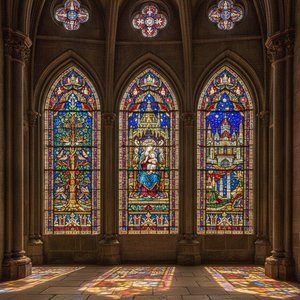
Luminous Masterpieces: The Captivating Beauty and Timeless Elegance of Stained Glass Artworks
Embark on a visual journey through the luminous world of stained glass art. Discover the exquisite craftsmanship, historical significance, and captivating beauty of masterworks from Art Nouveau to the Gothic era, curated for the discerning fine art enthusiast.
Top 25 Kunstwerken Biennale Venetië: Meesterwerken & Inspiratie voor Thuis
Ontdek de top 25 kunstwerken van de Biennale Venetië! Duik in de geschiedenis achter iconische schilderijen, van abstracte meesterwerken tot Italiaanse renaissance. Vind inspiratie voor uw interieur & bestel museumkwaliteit reproducties op OriginalUniqueArt.com.

High Medieval Art: 10 Masterpieces That Shaped an Era | OriginalUniqueArt
Journey through High Medieval Art! Explore 10 iconic masterpieces – from Giotto's frescoes to stunning Gothic cathedrals. Discover the stories behind these timeless paintings, sculptures & illuminated manuscripts. Find museum-quality art reproductions at OriginalUniqueArt.com.
Giotto di Bondone's 25 Meesterwerken: Renaissance Kunst voor uw Interieur | OriginalUniqueArt
Ontdek de 25 meesterwerken van Giotto di Bondone, pionier van de Renaissance. Verlies u in zijn fresco's & religieuze kunst. Museumkwaliteit reproducties voor uw interieur op OriginalUniqueArt.com.


