

 Bekijk op ware grootte
 Verstuur
 Delen
Delen
 Details bekijken
 Gids voor studentenkunstwerken

 Download
 Vergelijkbare items
 Röntgenonderzoek
 Diavoorstelling
 Statistieken
Trinity
 Oil On Panel
- Mannerist
 1513
1513- Renaissance
 152.0 x 228.0 cm
 Pinacoteca Nazionale
 Lees meer
Giclée / Kunstafdrukken
Giclée- of canvasafdruk van museumkwaliteit met een snelle productie en flexibele afwerkingsmogelijkheden. ( Koop handgeschilderd kunstwerk Schakel over naar digitale afbeeldingen)




P118B €10

P118H €10

P118W €10

P438Z €10

P508JH €12

P508YH €12

P805H €10

P805Z €10

P919BZ €10

P919G €10

P919XJ €10

P959ZH €10

P968JZ €12

W106C €8

W218G €10

W218JH €8

W218Y €10

W307PJ €10

W316G €10

W316PJ €8

W316Y €10

W398PJ €8

W4111J €10

W500HY €15

W500JH €15

W692G €12

W849H €8

W940BG €15

W953PJ €8




Kies uit onze vooraf ingestelde maten die overeenkomen met de originele verhoudingen van het kunstwerk.

Voer de breedte en de hoogte in die u nodig heeft, passend bij uw lijst of uw muur. Een afdruk kan alleen worden ingekort, nooit groter worden gemaakt dan het origineel, waardoor een formaat met een andere verhouding een deel van de afbeelding verliest. Wij sturen u een digitaal mockup ter goedkeuring voordat we iets drukken. De afbeelding op deze pagina toont niet de werkelijke uitsnede — dit is alleen te zien op het mockup.
Wereldwijde levering () binnen 2 weken in plaats van de standaard 4/5 weken. (23 oktober)

Gratis wereldwijde expressverzending

Hoogwaardig linnen canvas

Volledige verzendverzekering

Garantie op terugbetaling van invoerrechten

Garantie op exacte kleurweergave

Retourbeleid van 100 dagen (alleen bij defecten)

100% Geld-terug-garantie

Korting bij meerdere afnames
 De optie voor glas is alleen beschikbaar bij een formaat kleiner dan 110 cm.

Trinity
Giclée / Kunstafdrukken
Formaat reproductie
-


Totaalprijs
€ 71
A Visionary Symphony of Faith and Light
In the heart of the Italian Renaissance, amidst the burgeoning humanism of the early sixteenth century, Domenico di Pace Beccafumi crafted a masterpiece that transcends the boundaries of mere religious iconography. His Trinity, completed in 1513, is not simply a depiction of divine figures but a profound exploration of the spiritual psyche. As a prominent figure of the Sienese school, Beccafumi moved away from the rigid, polished perfection found in Florentine works, opting instead for a more emotive and atmospheric approach. This monumental triptych serves as a window into a period where art began to grapple with the tension between classical harmony and the expressive, often distorted, beauty of the emerging Mannerist style.
The composition is a breathtaking tripartite journey, guiding the viewer through layers of celestial and earthly devotion. In the central panel, the Crucifixion takes center stage, anchored by the figure of Christ, flanked by the poignant presence of Mary Magdalene and John the Evangelist. The use of light here is nothing short of miraculous; Beccafumi employs a technique known as glazeware, applying thin, translucent layers of oil paint to create a luminous depth that seems to glow from within. This mastery of light and shadow—the dramatic chiaroscuro—imbues the figures with a weight and a soul, making their divine suffering and eternal grace feel tangibly present to the observer.
The Artistry of Sienese Mannerism
To behold this work is to witness the birth of a new aesthetic language. Beccafumi’s brushwork avoids the static nature of his predecessors, favoring elongated forms and a sense of rhythmic movement that anticipates the complexities of Mannerism. The left panel introduces us to an angelic presence, where soft, light-colored robes contrast against a deep, mysterious background, creating a sense of infinite space. Conversely, the right panel offers a more grounded, yet equally sacred, scene featuring the Virgin Mary and Joseph, wrapped in rich blues and warm earth tones that ground the divine narrative in human emotion.
For the discerning collector or interior designer, this piece offers an unparalleled opportunity to introduce a sense of historical grandeur and intellectual depth into a space. The intricate details—from the delicate folds of the drapery to the expressive, searching gazes of the saints—provide endless points of visual fascination. A high-quality reproduction of this triptych does more than decorate a wall; it anchors a room with a sense of timelessness and contemplative peace. It is an invitation to pause, to reflect, and to immerse oneself in the golden age of Siena, making it a profound centerpiece for any curated collection or sophisticated living environment.
Vragen & Antwoorden
Welk contrastniveau vertoont "Trinity" door Domenico Di Pace Beccafumi?
Het contrastniveau van "Trinity" door Domenico Di Pace Beccafumi is Statement.
Welke stemming straalt "Trinity" door Domenico Di Pace Beccafumi uit binnen Mannerist?
De Mysterious emotie van "Trinity" gaat samen met de Mannerist stijl.
Zijn er werken die lijken op "Trinity"?
Werken die lijken op "Trinity" staan vermeld op de Vergelijkbare werken-pagina van het kunstwerk.
Biografie van de kunstenaar
A Sienese Visionary: The Life and Art of Domenico Beccafumi
Domenico di Pace Beccafumi, a name that resonates less immediately than those of his Florentine contemporaries, nonetheless occupies a pivotal position in the narrative of Italian Renaissance art. Born around 1486 in the small Tuscan town of Montaperto, near Siena, Beccafumi’s artistic journey was one of remarkable development, culminating in a style that bridged the High Renaissance and the burgeoning complexities of Mannerism. His story isn't simply about technical skill; it is about a deeply individual vision—a sensibility steeped in the traditions of his Sienese heritage yet boldly reaching towards new expressive possibilities. His origins were humble: the son of Giacomo di Pace, a peasant who worked on the estate of Lorenzo Beccafumi, his talent was recognized by Lorenzo Beccafumi, who adopted him and provided for his initial artistic training with Mechero, a local Sienese artist. This early grounding in the Sienese school would prove foundational, even as he ventured beyond its established conventions. The Sienese tradition, already diverging from the classical ideals embraced elsewhere in Italy, fostered an environment where emotional intensity and decorative detail were valued, qualities that would become hallmarks of Beccafumi’s unique style.Rome and the Forging of a Unique Style
Around 1509, Beccafumi journeyed to Rome, a transformative moment exposing him to the artistic ferment of the papal city. He encountered the groundbreaking works of Raphael and Michelangelo, absorbing their innovations in composition, anatomy, and dramatic expression. However, unlike many artists who sought to directly emulate these masters, Beccafumi synthesized these influences through his own distinct lens. He didn’t simply *copy* the Roman style; he filtered it through a pre-existing Sienese aesthetic—one characterized by a certain provincialism, an emphasis on decorative detail, and a lingering medieval sensibility. Upon returning to Siena, this synthesis began to manifest in a style increasingly his own. It was a style marked by irrationality, emotional intensity, and a captivating visual experience achieved through discordant colors and hallucinatory settings. His paintings weren’t merely representations of reality; they were explorations of inner states, imbued with a sense of unease and psychological depth. This departure from the harmonious balance of High Renaissance ideals signaled his embrace of Mannerism, though he remained distinctly apart from its more widespread trends. He skillfully blended the decorative elements and emotional intensity of the Sienese school with the emerging stylistic features of Mannerism—a fusion that would define his artistic legacy.The Siena School’s Influence
Beccafumi's formative years were spent in Siena, where he absorbed the distinctive aesthetic sensibilities of the Sienese Renaissance. The city’s artistic environment prioritized expressive emotion and opulent ornamentation, shaping Beccafumi’s approach to painting and sculpture alike. This influence is particularly evident in his early works—particularly those executed before his journey to Rome—where a palpable sense of provincialism coexists with masterful technique. He honed his skills under Mechero, a respected Sienese artist who instilled in him the importance of meticulous observation and careful craftsmanship—values that would continue to guide his artistic endeavors throughout his career. The Siena School’s emphasis on narrative storytelling and symbolic representation profoundly impacted Beccafumi's artistic vision, informing his choice of subjects and shaping his compositional strategies.A Roman Awakening
Around 1509, Beccafumi embarked upon a pivotal voyage to Rome—a pilgrimage that irrevocably altered the trajectory of his artistic development. He arrived at a time when Raphael and Michelangelo were reshaping the visual landscape of the papal city, pushing the boundaries of artistic innovation in terms of perspective, anatomy, and dramatic theatricality. Unlike many artists who sought to replicate these masters’ achievements verbatim, Beccafumi absorbed their stylistic breakthroughs through his own discerning gaze—a process that resulted in a synthesis uniquely his own. He didn't merely imitate Roman grandeur; he transformed it into something profoundly personal—a style characterized by unsettling distortions and hallucinatory color palettes that defied conventional expectations. This encounter with the titans of Renaissance art served as a catalyst for Beccafumi’s stylistic evolution, propelling him toward Mannerism and establishing him as one of its most distinctive voices.Major Achievements and Artistic Legacy
Domenico Beccafumi achieved considerable renown during his lifetime, securing commissions from prominent patrons—both ecclesiastical and aristocratic—and producing an impressive oeuvre encompassing painting, sculpture, mosaic design, and printmaking. Among his most celebrated masterpieces are the frescoes adorning the Oratory of St. Benedict in Siena—a testament to his narrative prowess and expressive mastery. The Trinity Triptych, housed in the Pinacoteca Nazionale di Siena, exemplifies Beccafumi’s ability to convey religious devotion with both grandeur and intimacy—a feat accomplished through masterful use of color and composition. Similarly, *The Annunciation*, also at the Pinacoteca Nazionale, showcases his distinctive stylistic sensibilities—characterized by a subtle interplay of light and shadow and an unsettling psychological depth. However, Beccafumi’s most ambitious undertaking was his direction of the pavement for Siena Cathedral between 1517 and 1544—a monumental project that demanded extraordinary technical skill and artistic vision. He skillfully employed innovative techniques to depict biblical narratives with unprecedented emotional intensity—a bold departure from the prevailing stylistic conventions of the time. Domenico Beccafumi died in Siena in 1551, marking a symbolic end to the city’s long and distinguished tradition of painting. His enduring legacy resides not merely in his artistic output but also in his pioneering role as one of Mannerism's foremost practitioners—a figure who irrevocably transformed the aesthetic landscape of Italy and continues to inspire admiration for his singular creative spirit.
Domenico Di Pace Beccafumi
1486 - 1551 , Italië
Snelle feiten
- Artistic Movement Or Style: Mannerisme
- Artists Who Influenced This Artist:
- Rafael
- Michielangelo
- Date Of Birth: c. 1486
- Date Of Death: May 18, 1551
- Full Name: Domenico di Pace Beccafumi
- Nationality: Italiaans
- Notable Artworks:
- Trinity Triptych
- De Aankondiging
- Transit van de Maagd Maria
- Place Of Birth: Montaperto, Italië
Gerelateerde artikelen

Mannerism: Bridging Renaissance Harmony & Baroque Drama – A Study of Style & Affectation
Explore the fascinating world of Mannerism! Discover its key characteristics, pioneering artists like Pontormo & Bronzino, and its pivotal role in bridging Renaissance harmony to Baroque drama. A comprehensive guide for art enthusiasts.
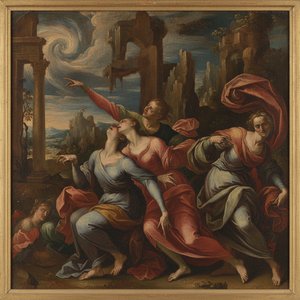
Drama & Distortion: A Journey Through the Captivating World of Baroque Mannerism
Explore the dramatic tension of Mannerism and the opulent grandeur of Baroque art. Discover how masters used light, shadow, and distortion to redefine European history through a captivating journey of emotional intensity and spiritual fervor.
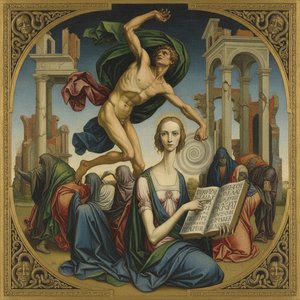
Beyond Perfection: The Dramatic Elegance and Intellectual Tension of Renaissance Mannerism
Explore the captivating world of Renaissance Mannerism. Discover how artists moved beyond High Renaissance harmony into a realm of elegant distortion, psychological tension, and dramatic beauty that bridged the gap to the Baroque era.

Northern Mannerism: The Dramatic Evolution of European Art through Elegant Distortion and Tension
Explore the dramatic evolution of Northern Mannerism. Discover how 16th-century artists moved from Renaissance harmony to elegant distortion, tension, and complex symbolism in European art history.
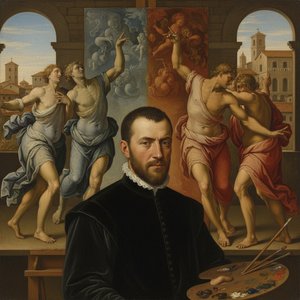
Domenico Beccafumi: A Sienese Master Between Mannerism & Baroque Anticipation
Explore the captivating world of Domenico Beccafumi, a pivotal figure bridging Mannerism & Baroque art. Discover his unique style, religious masterpieces, and lasting legacy with OriginalUniqueArt.

