Pop Art
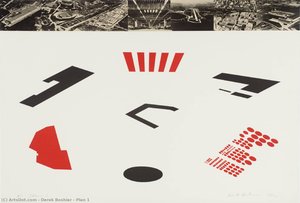
Plan ii (Derek Boshier)
Derek Boshier (1937–2024) maakte Plan ii. Het behoort tot de Pop Art-stroming.

 Voorvertoning

 Met de hand geschilderd olieverfwerk
 Verstuur
 Delen
 Informatieblad


 Download
 Vergelijkbare items
 Röntgenonderzoek
 Diavoorstelling
 Vraag & antwoord

 Statistieken
Plan ii, in het kort
- Titel
- Plan ii
- Kunstenaar
- Derek Boshier (1937–2024)
- Geboren in [jaar]
- Portsmouth, United Kingdom
- Beweging
- Pop Art
Hoogwaardige afbeeldingen van Plan ii
Protected by copyright: these files are for personal reference, not a licence to republish.
Derek Boshier, Plan ii.
Vragen over Plan ii, beantwoord
Behoort "Plan ii" door Derek Boshier tot het publiek domein?
Wat betreft het auteursrecht valt "Plan ii" onder nog steeds auteursrechtelijk beschermd.
Wie heeft "Plan ii" gemaakt?
"Plan ii" is gemaakt door Derek Boshier. De informatie op deze pagina beschrijft het originele werk van Derek Boshier.
Bij welke kunststroming behoort "Plan ii" door Derek Boshier?
De kunststroming die verbonden is aan "Plan ii" door Derek Boshier is Pop Art. Deze classificatie plaatst het werk binnen een context van verwante kunstenaars en kunstwerken.
Wat is de reden voor de auteursrechtelijke status van "Plan ii" door Derek Boshier?
"Plan ii" door Derek Boshier is nog steeds auteursrechtelijk beschermd. De auteursrechtelijke bescherming loopt vanaf het overlijden van de kunstenaar, dat plaatsvond in 2024.
Over de kunstenaar, Derek Boshier
1937–2024, United Kingdom
Derek Boshier
Derek Boshier: A British Pop Icon Challenging the Status Quo Born in Portsmouth, England, in 1937, Derek Boshier’s artistic journey was one of constant evolution and a relentless interrogation of contemporary culture. Initially drawn to painting after studying at Yeovil School of Art and later the Royal College of Art alongside luminaries like David Hockney and Allen Jones, Boshier quickly distinguished himself not merely as a painter but as a critical observer – a role that would define his entire career. His early work, honed during his time at the RCA, was marked by a didactic approach, grappling with themes of the space race, the burgeoning influence of multinational corporations, and the unsettling Americanization of British society. This period reflects a deep engagement with the anxieties of the Cold War era and the rapid shifts in global power dynamics.
 Plan 11972
 Untitled1973
 Serpent stripe
 Naked cowboy