

 Bekijk op ware grootte
 Verstuur
 Delen
Delen
 Details bekijken
 Gids voor studentenkunstwerken

 Download
 Vergelijkbare items
 Röntgenonderzoek
 Diavoorstelling
 Statistieken
Winter Landscape
 Acrylic On Canvas
- WallArt
- Dutch Baroque Landscape
 1610
1610 36.0 x 47.0 cm
 Louvre
 Lees meer
Handgemaakte olieverfreproductie
Met de hand geschilderd in olieverf op canvas in uw gewenste maat en lijst, op bestelling gemaakt door onze kunstenaars. ( Schakel over naar print Schakel over naar digitale afbeeldingen)




P118B €10

P118H €10

P118W €10

P438Z €10

P508JH €12

P508YH €12

P805H €10

P805Z €10

P919BZ €10

P919G €10

P919XJ €10

P959ZH €10

P968JZ €12

W106C €8

W218G €10

W218JH €8

W218Y €10

W307PJ €10

W316G €10

W316PJ €8

W316Y €10

W398PJ €8

W4111J €10

W500HY €15

W500JH €15

W692G €12

W849H €8

W940BG €15

W953PJ €8




Kies uit onze vooraf ingestelde maten die overeenkomen met de originele verhoudingen van het kunstwerk.

Voer de breedte en de hoogte in die u nodig heeft, passend bij uw lijst of uw muur. Dit is handgeschilderd, dus bij een afmeting met een andere vormverhouding kan de kunstenaar iets meer rondom het schilderij schilderen of juist iets meer weglaten — u kiest zelf. Wij sturen u een digitaal mockup ter goedkeuring voordat het schilderwerk begint. De afbeelding die op deze pagina wordt getoond, is niet het uiteindelijke resultaat — alleen de mockup geeft dit weer.
Na de bestelling zal het team van OriginalUniqueArt.com per e-mail contact opnemen met de klant voor instructies en een mockup-voorbeeld sturen.
Wereldwijde levering () binnen 3 tot 4 weken in plaats van de standaard 5 weken. (23 oktober). Zonder concessies aan de kwaliteit.

Gratis wereldwijde expressverzending

Hoogwaardig linnen canvas

Volledige verzendverzekering

Garantie op terugbetaling van invoerrechten

Garantie op exacte kleurweergave

Retourbeleid van 100 dagen (alleen bij defecten)

100% Geld-terug-garantie

Korting bij meerdere afnames
 De optie voor glas is alleen beschikbaar bij een formaat kleiner dan 110 cm.

Winter Landscape
Reproductiemethode
Formaat reproductie
-


Totaalprijs
€ 264
A Winter’s Embrace: Denijs van Alsloot's Tranquil Landscape
Denijs van Alsloot stands as a pivotal figure in the burgeoning artistic landscape of the early 17th century, embodying the delicate transition from Mannerist formalism to the radiant optimism of the Dutch Baroque. Born around 1570 – though precise biographical details remain elusive – his formative years were inextricably linked to the craft of tapestry weaving, a profession that instilled within him an inherent understanding of composition and visual storytelling—skills which would prove invaluable in his subsequent artistic endeavors. Entering the Brussels Guild of St Luke in 1599 as a tapestry designer marked not merely a career change but a deliberate embrace of stylistic influences already shaping the era’s artistic sensibilities. Initially focused on textile artistry, Alsloot gradually honed his painting skills, accepting his first pupil and continuing to mentor apprentices until his death in 1626 – demonstrating a sustained commitment to fostering talent and furthering artistic innovation.The Canvas Speaks: Style and Technique
Alsloot’s oeuvre is characterized by a remarkable blend of realism and atmospheric perspective, reflecting the prevailing trends of the Dutch Golden Age. Unlike his predecessors who often prioritized idealized representations, Alsloot meticulously captured the subtle nuances of winter light and shadow, creating landscapes imbued with palpable depth and spatial illusion. His brushstrokes are deliberate yet fluid, conveying texture and movement—particularly evident in the depiction of snowdrifts and tree branches—a technique honed through years of apprenticeship and informed by observations of nature itself. The artist’s masterful use of color contributes significantly to the overall mood, favoring muted tones that evoke a sense of serenity and solitude. This restrained palette contrasts beautifully with the brilliant blues of the sky, emphasizing the grandeur of the natural world.A Scene Frozen in Time: Historical Context
Painted circa 1610, “Winter Landscape” aligns perfectly with the artistic fervor that gripped Holland during this period—a time marked by burgeoning economic prosperity and a fervent desire to express national identity through art. The painting’s subject matter – a solitary winter vista – speaks to the broader humanist concerns of the era, reflecting an interest in portraying the beauty and majesty of God's creation. Furthermore, Alsloot’s work draws inspiration from the artistic innovations originating in Italy—specifically the atmospheric perspective championed by artists like Jan van Goyen and Cornelis van Poelenburch—demonstrating a willingness to engage with international stylistic currents. The Louvre Museum houses this masterpiece, ensuring its enduring legacy for generations of art enthusiasts.Symbolism Beneath the Surface
Beyond its aesthetic merits, “Winter Landscape” carries subtle symbolic resonances. The barren trees represent mortality and resilience—a poignant reminder that even in dormancy, life persists beneath the frozen surface. The snow symbolizes purity and tranquility, mirroring the spiritual contemplation fostered by the contemplative gaze of the viewer. The distant village offers a glimpse into human habitation amidst the vastness of nature, highlighting the harmonious relationship between humankind and the environment – a theme central to Baroque artistic thought.Emotional Resonance: Capturing Tranquility
Ultimately, “Winter Landscape” succeeds in conveying an unparalleled sense of peace and contemplation. Alsloot’s meticulous attention to detail—from the delicate rendering of snow crystals to the subtle gradations of color—creates a visual experience that transcends mere representation; it invites viewers into a moment of profound stillness. This artwork embodies the spirit of its time, capturing not only the beauty of winter but also the enduring human desire for solace and connection with the natural world. Its timeless appeal continues to inspire collectors and interior designers alike who seek to infuse their spaces with elegance and serenity.Vragen & Antwoorden
Hoe verhoudt de stijl van "Winter Landscape" zich tot het tijdperk van de maker?
"Winter Landscape" door Denis Van Alsloot wordt geplaatst binnen de Dutch Baroque Landscape-stroming, uit de Vroegmoderne tijd-periode van de maker.
Met welk medium is "Winter Landscape" door Denis Van Alsloot uitgevoerd?
"Winter Landscape" is uitgevoerd in Acrylic On Canvas.
Welke afdrukinstellingen worden aanbevolen voor "Winter Landscape" door Denis Van Alsloot?
Voor "Winter Landscape" is de aanbevolen afdrukinstelling een formaat van Large en een Landscape oriëntatie.
Biografie van de kunstenaar
A Life Woven in Landscape: The World of Denijs van Alsloot
Denijs van Alsloot, a name resonating softly through the annals of Flemish art, occupies a fascinating transitional space between the established traditions of the 16th century and the burgeoning Baroque dynamism of the 17th. Born around 1570 in either Mechelen or Brussels, Belgium, his origins were steeped in the craft of tapestry – his father’s profession providing an early immersion into design and visual composition. Though details surrounding his formal artistic training remain elusive, it's clear that this familial connection to textile arts laid a foundational aesthetic sensibility for the young Alsloot. He entered the Brussels Guild of St Luke in 1599 as a tapestry designer, initially focusing on this craft before gradually shifting towards painting, taking on his first pupil the same year and continuing to mentor apprentices until 1625. This period suggests a deliberate evolution, a honing of skills that would eventually blossom into a distinctive landscape style.Early Influences and Artistic Beginnings
Van Alsloot’s artistic journey commenced within the framework of established Flemish traditions. Like many artists of his time, he initially absorbed stylistic elements from Gillis van Coninxloo, whose landscapes prioritized serene compositions and subtle tonal gradations—a characteristic that would persist throughout his oeuvre. The meticulous attention to detail evident in Coninxloo's paintings mirrored Alsloot’s own approach, reflecting a shared commitment to realism and observational accuracy. However, Alsloot swiftly moved beyond mere imitation, demonstrating an eagerness to explore new artistic horizons. His decision to pursue tapestry design alongside painting signaled a willingness to embrace diverse creative pursuits—a practice that would prove invaluable in shaping his artistic vision. The Guild of St Luke served as both a professional incubator and a conduit for artistic exchange, fostering connections between aspiring artists and established masters—influences that undoubtedly contributed to Alsloot’s formative years.Courtly Commissions and Artistic Flourishing
A pivotal moment arrived around 1606 with Alsloot’s appointment as court painter to Albert and Isabella, the Archdukes who governed the Spanish Netherlands. This prestigious position not only provided financial stability but also thrust him into a world of influential patrons and significant commissions. The court became his canvas, demanding depictions of both grandeur and everyday life—a challenge that Alsloot met with remarkable success. He excelled at capturing scenes of civil processions, local festivals, and ceremonial events – vibrant snapshots of 17th-century Brussels society. Perhaps the most notable commission came from Archduchess Isabella herself: a request to paint eight panels commemorating the Ommegang procession of 1615—a monumental undertaking that showcased Alsloot’s artistic prowess and cemented his reputation as a master craftsman. These works weren't merely decorative; they were historical documents, preserving the spectacle and social fabric of the time—a testament to the Archdukes’ patronage and Alsloot’s ability to convey complex narratives through visual imagery. The meticulous rendering of figures and architectural details underscored Alsloot’s technical skill—demonstrating a mastery of perspective and color that aligned with contemporary artistic standards.The Sonian Forest School: A Distinctive Aesthetic
Alsloot is considered a key figure in the emergence of what historians term “the Sonian Forest school” of landscape painters—a movement characterized by its focus on depicting scenes from the woodlands surrounding Brussels. This stylistic preference reflects a broader trend within Flemish art during the early 17th century, wherein artists sought inspiration in the natural world—translating its tranquility and grandeur into visual representations. Like Jacques d’Arthois and Lucas Achtschellinck, Alsloot embraced a compositional style that prioritized panoramic vistas—often incorporating rocky outcrops and distant mountains—creating immersive landscapes that captivated viewers. His paintings frequently employed subtle tonal gradations—a technique borrowed from earlier masters—to convey atmospheric conditions and heighten the emotional impact of his compositions. This stylistic convergence underscores Alsloot’s engagement with artistic heritage—demonstrating a willingness to synthesize influences from diverse traditions into his own distinctive aesthetic.Legacy: A Window Into 17th-Century Brussels
Though he passed away around 1626, likely before 1628, Denijs van Alsloot’s artistic legacy endures. His paintings are now held in esteemed museums worldwide—including the Museo Nacional del Prado in Madrid and the Victoria and Albert Museum in London—ensuring his work continues to inspire and captivate audiences centuries later. He is remembered not only for his technical skill—his topographical accuracy, atmospheric perspective, and meticulous detail—but also for his ability to document 17th-century life in Brussels. His depictions of festivals, processions, and landscapes offer invaluable insights into the social customs, architectural features, and natural beauty of the era—a contribution that transcends mere artistic achievement. As a key representative of the Sonian Forest school and a transitional figure bridging earlier landscape traditions with the emerging Baroque style, Van Alsloot remains a significant subject for scholars studying Flemish art history—a testament to his enduring influence on subsequent generations of painters.
Denis Van Alsloot
1570 - 1626 , België
Snelle feiten
- Artistic Movement Or Style: Sonian Forest school
- Artists Or Movements Influenced By This Artist: ['Hendrick de Clerck']
- Artists Who Influenced This Artist:
- Gillis van Coninxloo
- Jan Brueghel the Elder
- Date Of Birth: c. 1570
- Date Of Death: c. 1626
- Full Name: Denijs van Alsloot
- Nationality: Flemish
- Notable Artworks:
- Het feest van de Ommegang
- Landscape with Tobias...
- De Processie naar Onze-Lieve-Vrouw ter Zavel
- Place Of Birth: Mechelen, Belgium
Gerelateerde artikelen
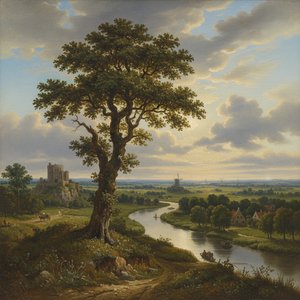
Jacob van Ruisdael: Master of Dutch Landscape & the Evocation of National Identity
Explore the life & work of Jacob van Ruisdael, the preeminent Dutch landscape painter. Discover his technical brilliance, symbolic depth, and lasting influence on art history. Learn about collecting Ruisdael's masterpieces.

Jan van Goyen: Master of Dutch Landscape & Atmospheric Perspective
Discover Jan van Goyen, the master of Dutch landscape painting. Explore his subtle technique, atmospheric realism & lasting influence on art history. Learn about this 17th-century pioneer at OriginalUniqueArt.
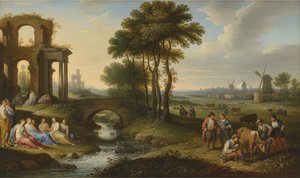
Cornelis van Poelenburch: Bridging Mannerism & the Dutch Baroque Landscape
Discover Cornelis van Poelenburch, a pivotal Dutch Baroque landscape painter bridging Mannerism & Italianate styles. Explore his life, key works, and lasting influence on 17th-century art with OriginalUniqueArt.

Top 10 Nederlandse Barok Meesterwerken: Kunstgeschiedenis voor uw Interieur
Ontdek de 10 meest iconische meesterwerken van de Nederlandse Barok! Leer over Rembrandt, Vermeer en andere Hollandse meesters. Prachtige reproducties voor uw interieur op OriginalUniqueArt.com – museumkwaliteit kunstprints & decoratie.

Rembrandt's Meesterwerken: De Top 25 – Kunst voor uw Interieur | OriginalUniqueArt
Ontdek de 25 meest iconische schilderijen van Rembrandt van Rijn! Duik in de Gouden Eeuw, bewonder zijn portretten & zelfportretten. Museumkwaliteit reproducties voor uw interieur op OriginalUniqueArt.com. Bekijk de collectie!