() ·

A painting made for you, by hand

The Kitchen

Handgemaakte olieverfreproductie

Met de hand geschilderd in olieverf op canvas in uw gewenste maat en lijst, op bestelling gemaakt door onze kunstenaars. ( Schakel over naar print Schakel over naar digitale afbeeldingen)

Beschrijving verzamelobject

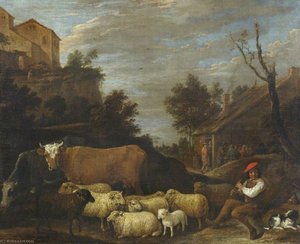
Discover 'The Kitchen' by David Teniers the Younger (1646)! A vibrant Baroque scene of daily life, featuring bustling activity and charming animal interactions – a captivating glimpse into Flemish domesticity.

Biografie kunstenaar

David Teniers De Jonge (1610-1690): Toonaangevende Vlaamse barokschilder van genretaferelen en landschappen. Ontdek deze invloedrijke kunstenaar!

from ·

Chapter 1

How large should it be?

Slide to change the size; the picture on the left shows the frame at its real width. The proportions of the original are kept.

Standaardformaat
op maat gemaakt
CM
INCH

Kies uit onze vooraf ingestelde maten die overeenkomen met de originele verhoudingen van het kunstwerk.

breedte
hoogte

Voer de breedte en hoogte in die u nodig heeft, passend bij uw lijst of uw muur. Omdat dit handgeschilderd is, kan de kunstenaar bij een afmeting met een andere beeldverhouding iets meer rondom het schilderij schilderen of juist iets meer weglaten — u kiest zelf. Wij sturen u een digitaal mockup ter goedkeuring voordat het schilderwerk begint. De afbeelding die op deze pagina wordt getoond, is niet het uiteindelijke resultaat — alleen de mockup geeft dit weer.


Chapter 2

How should it arrive?

Choose the edges of the stretched canvas

Choose your frame

Corner sample of the WhiteWrap canvas edge finish, stretched on massief hout bars
White €1
Corner sample of the BlurSideWrap canvas edge finish, stretched on massief hout bars
Blurside €1
Corner sample of the ExtendedWrap canvas edge finish, stretched on massief hout bars
Extended €1
Corner sample of the P118B picture frame: gegoten polystyreen, 5 cm wide and 3 cm thick
P118B €10
Corner sample of the P118H picture frame: gegoten polystyreen, 5 cm wide and 3 cm thick
P118H €10
Corner sample of the P118W picture frame: gegoten polystyreen, 5 cm wide and 3 cm thick
P118W €10
Corner sample of the P438Z picture frame: gegoten polystyreen, 5.5 cm wide and 3.5 cm thick
P438Z €10
Corner sample of the P508JH picture frame: gegoten polystyreen, 7 cm wide and 3.5 cm thick
P508JH €12
Corner sample of the P508YH picture frame: gegoten polystyreen, 7 cm wide and 3.5 cm thick
P508YH €12
Corner sample of the P805H picture frame: gegoten polystyreen, 5 cm wide and 3.5 cm thick
P805H €10
Corner sample of the P805Z picture frame: gegoten polystyreen, 5 cm wide and 3.5 cm thick
P805Z €10
Corner sample of the P919BZ picture frame: gegoten polystyreen, 7 cm wide and 3.5 cm thick
P919BZ €10
Corner sample of the P919G picture frame: gegoten polystyreen, 7 cm wide and 3.5 cm thick
P919G €10
Corner sample of the P919XJ picture frame: gegoten polystyreen, 7 cm wide and 3.5 cm thick
P919XJ €10
Corner sample of the P959ZH picture frame: gegoten polystyreen, 5 cm wide and 3 cm thick
P959ZH €10
Corner sample of the P968JZ picture frame: gegoten polystyreen, 6 cm wide and 4 cm thick
P968JZ €12
Corner sample of the W106C picture frame: massief hout, 5 cm wide and 3 cm thick
W106C €8
Corner sample of the W218G picture frame: massief hout, 5 cm wide and 3 cm thick
W218G €10
Corner sample of the W218JH picture frame: massief hout, 5 cm wide and 3 cm thick
W218JH €8
Corner sample of the W218Y picture frame: massief hout, 5 cm wide and 3 cm thick
W218Y €10
Corner sample of the W307PJ picture frame: massief hout, 6 cm wide and 3 cm thick
W307PJ €10
Corner sample of the W316G picture frame: massief hout, 6 cm wide and 3 cm thick
W316G €10
Corner sample of the W316PJ picture frame: massief hout, 6 cm wide and 3 cm thick
W316PJ €8
Corner sample of the W316Y picture frame: massief hout, 6 cm wide and 3 cm thick
W316Y €10
Corner sample of the W398PJ picture frame: massief hout, 5 cm wide and 3 cm thick
W398PJ €8
Corner sample of the W4111J picture frame: massief hout, 6.5 cm wide and 3.5 cm thick
W4111J €10
Corner sample of the W500HY picture frame: massief hout, 7 cm wide and 5 cm thick
W500HY €15
Corner sample of the W500JH picture frame: massief hout, 7 cm wide and 5 cm thick
W500JH €15
Corner sample of the W692G picture frame: massief hout, 8 cm wide and 4 cm thick
W692G €12
Corner sample of the W849H picture frame: massief hout, 5 cm wide and 3 cm thick
W849H €8
Corner sample of the W940BG picture frame: massief hout, 7.5 cm wide and 4.5 cm thick
W940BG €15
Corner sample of the W953PJ picture frame: massief hout, 6 cm wide and 3.5 cm thick
W953PJ €8
Corner sample of the H24-GOLD picture frame: gesneden hout met gesso, 10 cm wide and 6 cm thick
H24-GOLD €30
Corner sample of the H24-SILVER picture frame: gesneden hout met gesso, 10 cm wide and 6 cm thick
H24-SILVER €30
Corner sample of the H36-GOLD picture frame: gesneden hout met gesso, 15 cm wide and 6.5 cm thick
H36-GOLD €45
Corner sample of the H36-SILVER picture frame: gesneden hout met gesso, 15 cm wide and 6.5 cm thick
H36-SILVER €45
Lijstvoorbeeld
Ingelijst

Moulding: . Overall size with the frame: .

Chapter 3

Who paints it, and should anything change?

Examples of what can be changed: Replace face with customer photo; Add pet (e.g., replace cat with dog); Include hidden message in background; Change background landscape or elements.
After order, OriginalUniqueArt.com team will email client for instructions and provide a mockup preview

Wereldwijde levering () binnen 3 tot 4 weken in plaats van de standaard 5 weken. (2 november). Zonder concessies aan de kwaliteit.

Chapter 4

The finishing touches

A nameplate, as in a museum?

Details van de gegraveerde bronzen plaat

This elegant plaque features the artist's name and the title of the artwork, finely engraved for a timeless presentation.

It is made from bronze with a refined, elegant finish. The text is precisely laser-engraved for a sharp and permanent result. Measuring 9x2 cm, the plaque is compact yet easy to read. It's built to be durable and scratch-resistant, offering a professional, museum-quality look. Mounting is simple thanks to the included adhesive backing.

Details transparante acrylplaat

The plaque includes essential engraved details such as the artist's name, the title of the artwork, the date it was created, the type of media used-like oil on canvas or watercolor-a brief description of the piece, and a QR code that links to the complete artwork information.

It is crafted from clear acrylic, offering a sleek, modern appearance. The text is UV-engraved in black to ensure strong visual contrast. With a size of 10x15 cm, it ensures optimal readability. It comes equipped with two metal hooks for secure wall mounting. The plaque is designed to be weather-resistant, making it suitable for various environments, and it includes interactive features that work seamlessly with smartphone scanning.

Details zwarte acrylplaat

This elegant plaque includes engraved information such as the artist's name, the title of the artwork, the date it was created, the type of media used (like oil on canvas or watercolor), a short description of the artwork, and a QR code for quick access to more information.

The plaque itself is made from refined black acrylic with a premium finish. The text is laser-engraved in white for high contrast and readability. Its size is 10x15 cm, designed to be easy to read. It comes with two metal hooks for professional mounting. The design is sleek and fits any interior style. It is also weather-resistant and durable, with built-in digital integration for mobile compatibility.

A protective varnish?

When do you need it?

Chapter 5

Your painting, as you ordered it

The Kitchen

Druktechniek

Afmetingen reproductie

-

Geselecteerde topkunstenaars

Meer detail, verfijning en extra productietijd

-

Lijst voor reproductie

-

-

Voor kunstwerken of reproducties die aan één zijde groter zijn dan 105 cm (ongeveer 41 inch), wordt de lijst als een losse set verzonden. Deze methode garandeert een veilige levering en voorkomt schade tijdens het transport.

Professionele montage vereist - dit is geen doe-het-zelfproduct.
De set moet worden gemonteerd en het canvas moet worden gespannen door een ervaren professionele lijstenmaker, met gebruik van houtlijm (niet inbegrepen), een doekspanter en klemmen om de sponningen recht te houden terwijl de lijm droogt. Onjuiste montage of een ongelijkmatige spanning op het canvas kan het kunstwerk permanent beschadigen en wordt niet gedekt door onze garantie.

  • Alle massief houten onderdelen zijn inbegrepen, nauwkeurig op maat gesneden voor montage.

  • Te monteren met de meegeleverde schroeven, plus houtlijm voor de hoekverbindingen, die niet wordt meegeleverd en door uw lijstenmaker moet worden aangeschaft.

  • Professioneel gereedschap is vereist en niet inbegrepen: een spanner voor canvas en klemmen om de latten recht te houden terwijl de lijm droogt.

Belangrijk:
De hoekverbindingen vereisen houtlijm, de latten moeten met lijmklemmen worden vastgehouden tot de lijm volledig is opgedroogd, en het spannen van het canvas op het samengestelde frame vereist een doekspanter. Geen van deze artikelen is inbegrepen in de set. Wij adviseren u om een ervaren professionele lijstenmaker te raadplegen voordat u deze maat bestelt.

Naamplaatje

-

-

Beschermende vernislaag

Glanzende vernis (versterkt de kleuren en biedt bescherming tegen licht en vocht)

-

Mijn kunstwerk aanpassen

Voorbeelden van aanpassingen: vervang het gezicht door een eigen foto; voeg een huisdier toe (bijv. vervang de kat door een hond); verwerk een verborgen boodschap in de achtergrond; wijzig het landschap of andere elementen op de achtergrond.

-

Spoedlevering

Wereldwijde levering () binnen 3 tot 4 weken in plaats van de standaard 5 weken. (2 november). Geen concessies aan de kwaliteit.

-

Spoedlevering

Wereldwijde levering naar binnen 5 weken. (9 november).

Inbegrepen

Eindtotaal

€ 267

Totaalprijs € 267

De optie voor glas is alleen beschikbaar bij een formaat kleiner dan 110 cm.

Included with every order

  • Gratis wereldwijde expressverzending
  • Hoogwaardig linnen canvas
  • Volledige verzendverzekering
  • Garantie op terugbetaling van invoerrechten
  • Garantie op exacte kleurweergave
  • Retourbeleid van 100 dagen (alleen bij defecten)
  • 100% Geld-terug-garantie
  • Korting bij meerdere afnames

A Snapshot of Everyday Life: David Teniers the Younger’s “The Kitchen”

David Teniers the Younger's "The Kitchen," painted in 1646, isn’t merely a depiction of a domestic scene; it’s a vibrant tableau brimming with life, humor, and an astute observation of Flemish society. This remarkable work transcends simple genre painting, offering a glimpse into the heart of a bustling household—a microcosm reflecting the rhythms and relationships of everyday existence. Measuring 171 x 237 cm, the canvas explodes with activity, populated by thirteen individuals engaged in various tasks within a richly detailed kitchen environment. The sheer number of figures, coupled with their diverse interactions – from children playfully chasing birds to adults tending hearths and tables – immediately draws the viewer into this immersive world.

The painting’s Baroque style is evident in its dynamic composition, dramatic lighting, and meticulous attention to detail. Teniers masterfully employs a technique of *alla prima*, working directly onto the wet canvas without underdrawing, resulting in a sense of immediacy and spontaneity. Notice how he captures the textures of rough-hewn wooden furniture, the glint of metal tools, and the folds of fabric with remarkable precision. The artist’s use of color is equally noteworthy – warm earth tones dominate, punctuated by brighter accents that draw attention to key elements within the scene, such as a vibrant red tablecloth or the gleam of copper pots.

A Window into 17th-Century Flanders

To understand “The Kitchen,” it’s crucial to situate it within its historical context. The painting was created during a period of significant artistic and social change in the Netherlands, following the decline of the High Renaissance and the rise of Baroque styles. David Teniers the Younger emerged as a leading figure in this transition, skillfully blending influences from his father's earlier work with contemporary trends. His subject matter often revolved around scenes of rural life, domestic interiors, and tavern gatherings – themes that resonated deeply with the burgeoning middle class.

The inclusion of numerous animals—a dog, two cats, and a flock of birds—adds another layer of interest to the composition. Animals were frequently depicted in Flemish art, often serving as symbols of fertility, abundance, or domesticity. In “The Kitchen,” they seamlessly integrate into the human drama, contributing to the overall sense of lively chaos. The presence of books suggests an appreciation for learning and intellectual pursuits within the household, while the scattered bottles and bowls hint at a life filled with simple pleasures and convivial gatherings.

Symbolism and Social Commentary

Beyond its immediate visual appeal, “The Kitchen” offers subtle insights into 17th-century Flemish society. The scene’s bustling energy reflects the importance of family and community in this era. The various activities taking place—cooking, eating, cleaning, and socializing—highlighted the central role of the home as a focal point for social interaction. The inclusion of both adults and children underscores the multi-generational nature of Flemish households. Furthermore, the painting’s depiction of everyday life provides a valuable glimpse into the material culture and social customs of the time.

Interestingly, Teniers' career was marked by a remarkable versatility. He served as a court painter, a printmaker, and even a curator for Archduke Leopold Wilhelm, demonstrating a broad range of artistic skills and interests. His ability to capture both the grandeur of formal portraits and the intimacy of genre scenes cemented his reputation as one of the most prolific and influential artists of his generation. “The Kitchen” stands as a testament to this remarkable talent, offering a captivating window into a bygone era.

Veelgestelde vragen

Hoe wordt het kleurenpalet van "The Kitchen" door David Teniers De Jonge beschreven?

Het kleurenpalet van "The Kitchen" door David Teniers De Jonge wordt beschreven als Earthy. Het is een beknopte beschrijving van de kleuren in het werk.

In welk jaar werd "The Kitchen" door David Teniers De Jonge gemaakt?

"The Kitchen" dateert uit 1646. Deze datum plaatst het werk binnen de carrière van David Teniers De Jonge en het betreffende tijdperk.

Is "The Kitchen" gebleven in het geboorteland van de kunstenaar?

Nee - het kunstwerk wordt in het buitenland bewaard. "The Kitchen" bevindt zich in Russia, terwijl David Teniers De Jonge werd geboren in België.

More about this painting

Voorvertoning Bekijk in AR Schakel over naar print Schakel over naar digitale afbeeldingen Verstuur
Details bekijken Gids Toevoegen aan favorieten Download Vergelijkbare items Röntgenonderzoek Diavoorstelling Q&A Statistieken

In numbers

  • 1646the year it was painted
  • 29frames to choose from
  • standard sizes, in its own proportions
  • 5weeks to paint and deliver it
David Teniers De Jonge

David Teniers De Jonge

1610 - 1690, België

Quick facts about David Teniers De Jonge

  • Date Of Birth: 1610
  • Date Of Death: 1690
  • Place Of Birth: Antwerpen, België
  • Place Of Death: Brussel, België
  • Birth Date: 1610
  • Birth Place: Antwerpen, België
  • Death Date: 1690
  • Influenced By: Adriaen Brouwer, Adam Elsheimer, Peter Paul Rubens
  • Movement: Barok
  • Name: David Teniers De Jonge
  • Nationality: Vlaams
  • Notable Works:
    • Twee dronkaards
    • Dorpsscène
    • Keukenscène
    • Vlaamse kermis

Biografie kunstenaar

Vroege Leven en Familiale Achtergrond

  • Geboren: Antwerpen, destijds onderdeel van de Spaanse Nederlanden, gedoopt op 15 december 1610.
  • David Teniers De Jonge kwam uit een familie die diep geworteld was in de artistieke traditie van Vlaanderen. Zijn vader, David Teniers de Oudere, was eveneens een schilder, en ook zijn jongere broers Juliaan, Theodoerd en Abraham zouden het pad van de schilderkunst volgen.
  • Opleiding: Vanaf 1626 studeerde hij onder zijn vader, bij wie hij de fundamentele training in schildertechnieken en stijlen ontving.
  • Zijn vader verkeerde vaak in schulden en werd er zelfs periodiek voor gevangen gezet; om het gezin te ondersteunen, maakte de jonge David kopieën van werken van oude meesters.
  • Antwerps Gilde: In 1632–1633 werd hij meester van het Antwerps Sint-Lucasgilde en diende hij als deken in 1644–1645.

Artistieke Ontwikkeling en Invloeden

  • Vroege Invloeden: Zijn vroege werk volgde de kleine kabinetstukken van zijn vader en, via hem, het voorbeeld van Adam Elsheimer. Tot het einde van de jaren 1630 vertoonden zijn werken grote gelijkenis met die van Adriaanc Brouwer wat betreft onderwerp, techniek, kleur en compositie.
  • De Rubens-kring: In 1637 trouwde hij met Anna Brueghel, de dochter van Jan Brueghel de Oudere. Peter Paul Rubens, die na de dood van haar vader haar voogd was geweest, was getuige op het huwelijk, waardoor Teniers werd opgenomen in de kring van de belangrijkste Antwerpse meester.
  • Specialisatie in Genre-schilderkunst: Teniers specialiseerde zich geleidelijk in genreschilderkunst – de weergave van het dagelijds leven – en werd beroemd om zijn levendige scènes van boerenfeesten (kermessen), taverne-interieurs en dorpslandschappen.

Belangrijke Werken en Artistieke Stijl

  • Genrescènes: Zijn meest gevierde werken zijn zijn genreschilderijen. Deze tonen vaak bruisende scènes van het boerenleven, doordrenkt met vrolijkheid, dans, drank en spel.
  • Kermesschilderijen: Dorpsfeesten zoals De Vlaamse Kermis zijn exemplarisch voor zijn stijl – levendige kleuren, gedetailleerde composities en een scherp oog voor menselijk gedrag.
  • Taverne-interieurs: Zijn tavernescènes zijn bijzonder opmerkelijk vanwege hun realistische weergave van het dagelijks leven en de levendige sfeer binnen deze etablissementen.
  • Buiten het Dorp: Hij schilderde ook landschappen, wachtkamer-scènes, alchemisten en artsen aan het werk, en humoristische singeries waarin apen menselijke aangelegenheden naspelen.
  • Galerijschilderijen: Zijn weergaven van de kunstkamer van de Aartshertog, waarvan de muren vol hingen met herkenbare meesterwerken, maakten hem tot een vooraanstaand figuur in dit uitgesproken Vlaamse genre.

Hofschilder en Conservator

  • Dienst aan Aartshertog Leopold Wilhelm: Rond 1650 verhuisde Teniers naar Brussel om de Aartshertog Leopold Wilhelm, de landvoogd van de Spaanse Nederlanden, te dienen als hofschilder en beheerder van zijn kunstcollectie.
  • Beheer van de Collectie: Hij hielp de Aartshertog bij het verwerven van meesterwerken, waaronder schilderijen uit de verspreide Engelse koninklijke collectie en de Hamilton-collectie. De collectie groeide naar ongeveer 1.300 werken en vormde later de basis van het Kunsthistorisches Museum in Wenen.
  • Theatrum Pictorium: In Brussel gepubliceerd in 1660, reproduceerde dit werk 246 Italiaanse schilderijen uit de collectie van de Aartshertog in de vorm van gravures – het eerste geïllustreerde catalogus van een collectie oude meesters.
  • Leerlingen: Er wordt aangenomen dat Gillis van Tilborgh onder hem trainde in Brussel en later dezelfde functie bekleedde als beheerder van de hofcollectie.
  • Latere Leven: Na de dood van Anna trouwde hij in 1656 met Isabella de Fren. Hij verzocht de koning van Spanje om een adellijke titel, maar gaf dit op toen hem werd verteld dat hij daarmee zou moeten stoppen met het verkopen van zijn schilderijen.
  • De Antwerpse Academie: Teniers was de drijvende kracht achter de oprichting van de Academie voor Schone Kunsten in Antwerpen, die in 1663 haar koninklijk charter ontving, met als doel de Vlaamse schilderkunst te revitaliseren na de dood van Rubens en Van Dyck.

Historisch Belang en Nalatenschap

  • Vooraanstaand Genreschilder: David Teniers De Jonge wordt beschouwd als de belangrijkste Vlaamse genreschilder van zijn tijd, die met bewonderenswaardige vaardigheid de essentie van het 17e-eeuwse leven wist te vangen.
  • Invloed op Latere Kunstenaars: Zijn werk beïnvloedde opeenvolgende generaties Noord-Europese schilders en had zelfs impact op Franse Rococo-kunstenaars zoals Antoine Watteau.
  • Productief Oeuvre: Teniers was een ongelooflijk productieve kunstenaar die een enorme hoeveelheid werk voortbracht dat nog steeds wordt bewonderd om zijn charme, detail en historische diepgang.
  • Overlijden: Hij stierf op 25 april 1690 in Brussel en liet een blijvende erfenis na als een van de belangrijkste barokschilders van Vlaanderen.

Snelle feiten

  • Subject or theme: Domestic life
  • Influences:
    • Rubens
    • Bruegel
  • Artistic style: Genre painting
  • Year: 1646
  • Location: Hermitage Museum
  • Medium: Oil on canvas