Voorvertoning
 Verstuur
 Delen
Delen
 Details bekijken
 Gids
Gids

 Download
 Vergelijkbare items
 Röntgenonderzoek
 Diavoorstelling
 Vraag & antwoord
 Statistieken
Smoker

- 19.0 x 23.0 cm


 Lees meer
Giclée / Kunstafdrukken
Giclée- of canvasafdruk van museumkwaliteit met een snelle productie en flexibele afwerkingsmogelijkheden. ( Bestel handgeschilderde reproductie Schakel over naar digitale afbeeldingen)




P118B €10

P118H €10

P118W €10

P438Z €10

P508JH €12

P508YH €12

P805H €10

P805Z €10

P919BZ €10

P919G €10

P919XJ €10

P959ZH €10

P968JZ €12

W106C €8

W218G €10

W218JH €8

W218Y €10

W307PJ €10

W316G €10

W316PJ €8

W316Y €10

W398PJ €8

W4111J €10

W500HY €15

W500JH €15

W692G €12

W849H €8

W940BG €15

W953PJ €8




Kies uit onze vooraf ingestelde maten die overeenkomen met de originele verhoudingen van het kunstwerk.

Voer de gewenste breedte en hoogte in, passend bij uw lijst of muur. Een afdruk kan alleen worden ingekort en nooit groter worden gemaakt dan het origineel; een formaat met andere verhoudingen zal daarom een deel van de afbeelding verliezen. Wij sturen u een digitaal mockup ter goedkeuring voordat we tot drukwerk overgaan. De afbeelding op deze pagina toont niet de werkelijke uitsnede — dit is alleen te zien op het mockup.
Wereldwijde levering () binnen 2 weken in plaats van de standaard 4/5 weken. (7 november)

Gratis wereldwijde expressverzending

Hoogwaardig linnen canvas

Volledige verzendverzekering

Garantie op terugbetaling van invoerrechten

Garantie op exacte kleurweergave

Retourbeleid van 100 dagen (alleen bij defecten)

100% Geld-terug-garantie

Korting bij meerdere afnames
 De optie voor glas is alleen beschikbaar bij een formaat kleiner dan 110 cm.

Smoker
Giclée / Kunstafdrukken
Afmetingen reproductie
-


Eindtotaal
€ 72
David Teniers the Younger’s “Smoker”: A Window into Seventeenth-Century Flemish Life
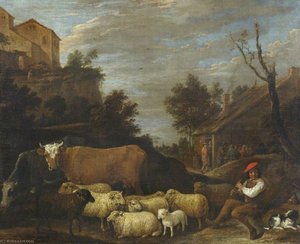
David Teniers the Younger's "Smoker," painted in 1645, offers a remarkably intimate glimpse into the domestic life of 17th-century Flanders. This unassuming genre scene, rendered in a masterful blend of realism and Baroque charm, transcends mere portraiture to become a poignant study of human interaction and the quiet pleasures of everyday existence. Measuring just 19 x 23 cm, the painting’s diminutive scale belies its rich detail and profound observation – it's a testament to Teniers’ skill in capturing fleeting moments and conveying subtle emotional nuances within a confined space.
The central figure is a man seated comfortably in a chair, his legs crossed with an air of relaxed contemplation. He’s deeply engrossed in the act of smoking a pipe, a simple yet significant gesture that immediately draws us into his world. The red hat he wears adds a touch of vibrancy to the predominantly dark palette, hinting at personality and perhaps even social standing. A second figure stands nearby, partially obscured but clearly engaged in conversation with the smoker – their posture suggests a shared moment of camaraderie or perhaps a more formal exchange. This dynamic interaction is crucial; it’s not simply a solitary portrait, but a tableau vivant, a snapshot of human connection.
Baroque Detail and Flemish Tradition
Teniers' style firmly anchors this work within the Baroque tradition, yet he skillfully integrates elements of his earlier training under his father, David Teniers the Elder. The painting is characterized by meticulous detail – observe the textures of the clothing, the worn wood of the chair, and the subtle folds in the fabric. The artist’s use of light and shadow creates a sense of depth and volume, enhancing the realism of the scene. Notice how the light falls across the figures, highlighting their features and casting gentle shadows that add to the painting's atmosphere.
However, Teniers isn’t merely replicating his father’s style; he elevates it with a heightened sense of observation and psychological insight. He captures not just the appearance of the subjects but also hints at their inner lives – the smoker’s contemplative gaze, the listener's attentive posture. This is further reinforced by the inclusion of domestic objects: the vases and bowls scattered around the room are not merely decorative elements; they contribute to the overall sense of a lived-in space, suggesting a comfortable routine and a certain degree of prosperity.
Symbolism and Context
The act of smoking itself carries significant symbolic weight. In 17th-century Flanders, pipe smoking was a common pastime, often associated with leisure, contemplation, and social interaction. It represented a moment of respite from the demands of daily life – a chance to slow down, reflect, and connect with others. The inclusion of multiple objects—the vases, bowls, and the conversation between the figures—further contextualizes the scene, placing it firmly within the domestic sphere.
Considering Teniers’ background as a copyist for wealthy patrons, it's likely that this painting reflects a trend in his work – depicting scenes of everyday life, often with a focus on the middle class. His association with Peter Paul Rubens, particularly through his marriage to Rubens’ daughter Anna Brueghel, undoubtedly influenced his artistic development, introducing him to new techniques and perspectives. The painting stands as a beautiful example of how Teniers skillfully blended traditional Flemish artistry with contemporary subject matter.
A Reproduction for Your Collection
OriginalUniqueArt offers meticulously hand-painted reproductions of David Teniers the Younger’s “Smoker,” capturing the essence of this captivating artwork in stunning detail. Each reproduction is created by skilled artisans using archival-quality materials, ensuring that it will endure for generations to come. Whether you're an art collector, interior designer seeking a touch of historical charm, or simply someone who appreciates fine art, our “Smoker” reproduction provides a beautiful and authentic representation of this remarkable piece.
Veelgestelde vragen
Wie is de maker van "Smoker" en uit welk jaar stamt het werk?
"Smoker" werd in 1645 gecreëerd door David Teniers De Jonge.
Zijn er werken die lijken op "Smoker"?
Op de Vergelijkbare werken-pagina van dit kunstwerk vindt u vergelijkbare werken als "Smoker" door David Teniers De Jonge.
Kan ik een olieverfreproductie van "Smoker" bestellen?
Handgeschilderde reproducties van "Smoker" door David Teniers De Jonge zijn verkrijgbaar via deze website: een met de hand geschilderde olieverfreproductie op linnen canvas, te bestellen op de Handgeschilderde reproductie pagina.
Biografie kunstenaar
Vroege Leven en Familiale Achtergrond
- Geboren: Antwerpen, destijds onderdeel van de Spaanse Nederlanden, gedoopt op 15 december 1610.
- David Teniers De Jonge kwam uit een familie die diep geworteld was in de artistieke traditie van Vlaanderen. Zijn vader, David Teniers de Oudere, was eveneens een schilder, en ook zijn jongere broers Juliaan, Theodoerd en Abraham zouden het pad van de schilderkunst volgen.
- Opleiding: Vanaf 1626 studeerde hij onder zijn vader, bij wie hij de fundamentele training in schildertechnieken en stijlen ontving.
- Zijn vader verkeerde vaak in schulden en werd er zelfs periodiek voor gevangen gezet; om het gezin te ondersteunen, maakte de jonge David kopieën van werken van oude meesters.
- Antwerps Gilde: In 1632–1633 werd hij meester van het Antwerps Sint-Lucasgilde en diende hij als deken in 1644–1645.
Artistieke Ontwikkeling en Invloeden
- Vroege Invloeden: Zijn vroege werk volgde de kleine kabinetstukken van zijn vader en, via hem, het voorbeeld van Adam Elsheimer. Tot het einde van de jaren 1630 vertoonden zijn werken grote gelijkenis met die van Adriaanc Brouwer wat betreft onderwerp, techniek, kleur en compositie.
- De Rubens-kring: In 1637 trouwde hij met Anna Brueghel, de dochter van Jan Brueghel de Oudere. Peter Paul Rubens, die na de dood van haar vader haar voogd was geweest, was getuige op het huwelijk, waardoor Teniers werd opgenomen in de kring van de belangrijkste Antwerpse meester.
- Specialisatie in Genre-schilderkunst: Teniers specialiseerde zich geleidelijk in genreschilderkunst – de weergave van het dagelijds leven – en werd beroemd om zijn levendige scènes van boerenfeesten (kermessen), taverne-interieurs en dorpslandschappen.
Belangrijke Werken en Artistieke Stijl
- Genrescènes: Zijn meest gevierde werken zijn zijn genreschilderijen. Deze tonen vaak bruisende scènes van het boerenleven, doordrenkt met vrolijkheid, dans, drank en spel.
- Kermesschilderijen: Dorpsfeesten zoals De Vlaamse Kermis zijn exemplarisch voor zijn stijl – levendige kleuren, gedetailleerde composities en een scherp oog voor menselijk gedrag.
- Taverne-interieurs: Zijn tavernescènes zijn bijzonder opmerkelijk vanwege hun realistische weergave van het dagelijks leven en de levendige sfeer binnen deze etablissementen.
- Buiten het Dorp: Hij schilderde ook landschappen, wachtkamer-scènes, alchemisten en artsen aan het werk, en humoristische singeries waarin apen menselijke aangelegenheden naspelen.
- Galerijschilderijen: Zijn weergaven van de kunstkamer van de Aartshertog, waarvan de muren vol hingen met herkenbare meesterwerken, maakten hem tot een vooraanstaand figuur in dit uitgesproken Vlaamse genre.
Hofschilder en Conservator
- Dienst aan Aartshertog Leopold Wilhelm: Rond 1650 verhuisde Teniers naar Brussel om de Aartshertog Leopold Wilhelm, de landvoogd van de Spaanse Nederlanden, te dienen als hofschilder en beheerder van zijn kunstcollectie.
- Beheer van de Collectie: Hij hielp de Aartshertog bij het verwerven van meesterwerken, waaronder schilderijen uit de verspreide Engelse koninklijke collectie en de Hamilton-collectie. De collectie groeide naar ongeveer 1.300 werken en vormde later de basis van het Kunsthistorisches Museum in Wenen.
- Theatrum Pictorium: In Brussel gepubliceerd in 1660, reproduceerde dit werk 246 Italiaanse schilderijen uit de collectie van de Aartshertog in de vorm van gravures – het eerste geïllustreerde catalogus van een collectie oude meesters.
- Leerlingen: Er wordt aangenomen dat Gillis van Tilborgh onder hem trainde in Brussel en later dezelfde functie bekleedde als beheerder van de hofcollectie.
- Latere Leven: Na de dood van Anna trouwde hij in 1656 met Isabella de Fren. Hij verzocht de koning van Spanje om een adellijke titel, maar gaf dit op toen hem werd verteld dat hij daarmee zou moeten stoppen met het verkopen van zijn schilderijen.
- De Antwerpse Academie: Teniers was de drijvende kracht achter de oprichting van de Academie voor Schone Kunsten in Antwerpen, die in 1663 haar koninklijk charter ontving, met als doel de Vlaamse schilderkunst te revitaliseren na de dood van Rubens en Van Dyck.
Historisch Belang en Nalatenschap
- Vooraanstaand Genreschilder: David Teniers De Jonge wordt beschouwd als de belangrijkste Vlaamse genreschilder van zijn tijd, die met bewonderenswaardige vaardigheid de essentie van het 17e-eeuwse leven wist te vangen.
- Invloed op Latere Kunstenaars: Zijn werk beïnvloedde opeenvolgende generaties Noord-Europese schilders en had zelfs impact op Franse Rococo-kunstenaars zoals Antoine Watteau.
- Productief Oeuvre: Teniers was een ongelooflijk productieve kunstenaar die een enorme hoeveelheid werk voortbracht dat nog steeds wordt bewonderd om zijn charme, detail en historische diepgang.
- Overlijden: Hij stierf op 25 april 1690 in Brussel en liet een blijvende erfenis na als een van de belangrijkste barokschilders van Vlaanderen.
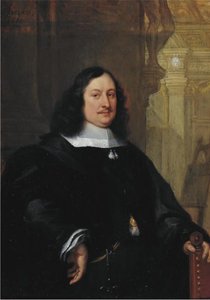
David Teniers De Jonge
1610 - 1690 , België
Belangrijkste feiten
- Date Of Birth: 1610
- Date Of Death: 1690
- Place Of Birth: Antwerpen, België
- Place Of Death: Brussel, België
- Birth Date: 1610
- Birth Place: Antwerpen, België
- Death Date: 1690
- Influenced By: Adriaen Brouwer, Adam Elsheimer, Peter Paul Rubens
- Movement: Barok
- Name: David Teniers De Jonge
- Nationality: Vlaams
- Notable Works:
- Twee dronkaards
- Dorpsscène
- Keukenscène
- Vlaamse kermis
Gerelateerde artikelen

Barok Ontrafeld: De Kracht van Licht, Drama en Emotie in de 17e-eeuwse Kunst
Ontdek de dramatiek en techniek van de Barok door experts. Duik in de wereld van licht en emotie.
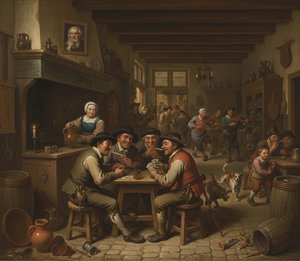
David Teniers II: Master of Flemish Genre & Social Commentary
Explore the captivating world of David Teniers II, a leading Flemish Baroque painter renowned for his lively genre scenes & insightful social commentary. Discover his masterpieces and legacy with OriginalUniqueArt.
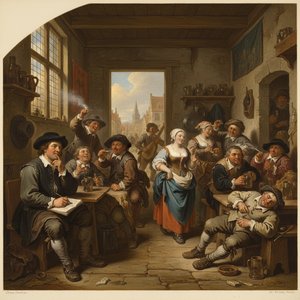
David Teniers the Younger: Genre Painting & Social Commentary in Baroque Flanders
Explore the captivating world of David Teniers the Younger, a leading Flemish Baroque painter. Discover his genre scenes, social commentary, and lasting influence on 17th-century art. Learn about his life, techniques & legacy.

Baroque Classicism: The Grandeur of Order and Drama in 17th-Century Art History
Explore the profound elegance of Baroque Classicism. Discover how 17th-century masters synthesized dramatic emotion with classical order through the lens of the Counter-Reformation and the works of legends like Carlo Maratta and Andrea Sacchi.

The Dramatic Flourish: Exploring the Baroque Movement's Enduring Legacy in Art History
Explore the dramatic world of Baroque art! Discover iconic artists like Caravaggio & Rubens, defining techniques, and its lasting impact on art history. Expert insights for collectors & enthusiasts at OriginalUniqueArt.