B1119d469eec73ca06a2d9f9e9f65708
Handgemaakte olieverfreproductie
Met de hand geschilderd in olieverf op canvas in uw gewenste maat en lijst, op bestelling gemaakt door onze kunstenaars. ( Schakel over naar print
Schakel over naar digitale afbeeldingen)
P118B $10
P118H $10
P118W $10
P438Z $10
P508JH $12
P508YH $12
P805H $10
P805Z $10
P919BZ $10
P919G $10
P919XJ $10
P959ZH $10
P968JZ $12
W106C $8
W218G $10
W218JH $8
W218Y $10
W307PJ $10
W316G $10
W316PJ $8
W316Y $10
W398PJ $8
W4111J $10
W500HY $15
W500JH $15
W692G $12
W849H $8
W940BG $15
W953PJ $8
Kies uit onze vooraf ingestelde maten die overeenkomen met de originele verhoudingen van het kunstwerk.
U kunt uw eigen afmetingen invoeren om in een specifieke lijst of ruimte te passen. Als de door u gekozen maat niet overeenkomt met de verhoudingen van het originele beeld, zullen we het kunstwerk bijsnijden of het schilderij uitbreiden met extra handgeschilderde elementen. Een digitale mockup wordt ter goedkeuring naar u verzonden voordat de productie begint.
Houd er rekening mee dat de preview op het scherm niet de werkelijke uitsnede of uitbreiding weergeeft. Alleen de mockup toont de uiteindelijke compositie nauwkeurig.
Hoewel aangepaste afmetingen mogelijk zijn, raden we aan een maat uit de vooraf gedefinieerde lijst te selecteren om de originele verhoudingen te behouden.
Na de bestelling zal het team van OriginalUniqueArt.com per e-mail contact opnemen met de klant voor instructies en een mockup-voorbeeld sturen.
Wereldwijde levering () binnen 3 tot 4 weken in plaats van de standaard 5 weken. (25 september). Zonder concessies aan de kwaliteit.
Gratis wereldwijde expressverzending
Hoogwaardig linnen canvas
Volledige verzendverzekering
Garantie op terugbetaling van invoerrechten
Garantie op exacte kleurweergave
Retourbeleid van 100 dagen (alleen bij defecten)
100% Geld-terug-garantie
Korting bij meerdere afnames
B1119d469eec73ca06a2d9f9e9f65708
Reproductiemethode
Formaat reproductie
-
Totaalprijs
$ 300
A Symphony of Light and Color
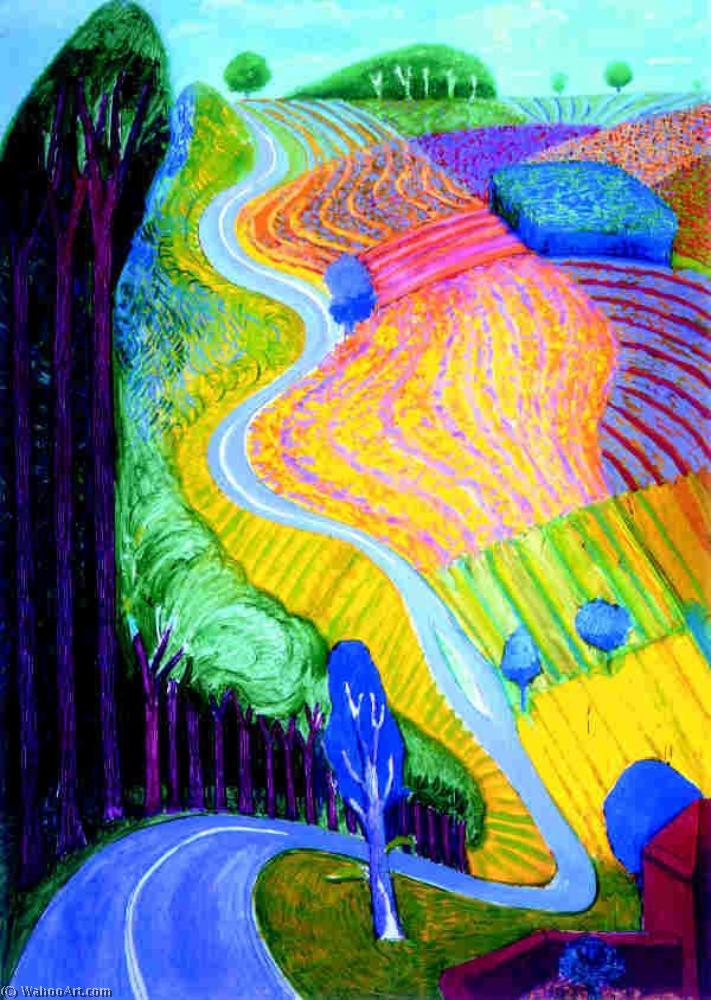
In the vast landscape of contemporary art, few names resonate with as much vibrancy and visual joy as David Hockney. His work, particularly in pieces like this breathtaking landscape, serves as a profound celebration of the act of seeing. The painting presents a sweeping, idyllic countryside where a winding road meanders through lush fields of crops, inviting the viewer to embark on a journey alongside the figures scattered throughout the scene. It is not merely a depiction of a place, but an invitation into a moment of pure, sun-drenched tranquility. Through a masterful use of color, Hockney captures the very essence of warmth, utilizing a bold palette of yellows and oranges that suggests sunlight filtering through dense foliage, evoking the radiant atmosphere of his beloved California as much as the rolling hills of England.
The emotional resonance of this work lies in its ability to bridge the gap between observation and feeling. While the subject matter—a peaceful pastoral setting—might appear simple at first glance, the execution is deeply complex. There is a palpable energy within the brushwork that mirrors the vitality of nature itself. For the collector or interior designer, this piece offers more than just decoration; it provides a window into a state of reverie. It possesses a quiet dignity that can anchor a room, offering a sense of optimism and light that transforms any space it inhabits.
Technique and the Art of Perspective
To understand the brilliance of this work, one must look closer at the innovative techniques that define Hockney’s late-career mastery. Moving away from the traditional single-canvas format, Hockney often employs a method he refers to as “joinery.” By meticulously layering multiple canvases together—sometimes up to six—he creates expansive, panoramic views that defy the standard boundaries of a frame. This technique allows for a synthesized perspective, mimicking the way the human eye naturally scans a horizon, capturing multiple viewpoints within a single, cohesive vision. The resulting surface is beautifully textured and subtly uneven, adding a physical dimension to the light and shadow depicted.

This approach places the work firmly within the lineage of Impressionism, yet it is infused with a distinctly Postmodern sensibility. Unlike the soft, hazy edges of the nineteenth-century masters, Hockney’s lines are often more defined and his colors more saturated, reflecting a modern fascination with clarity and visual sensation. He rejects the heavy intellectualism of much contemporary art in favor of a direct, visceral connection to the natural world. This makes the piece an ideal choice for those seeking high-quality reproductions that bring both sophisticated technique and an approachable, luminous beauty into their homes or galleries.
A Legacy of Observation
Historically, Hockney’s work emerged as a vital response to the dominance of Abstract Expressionism, reintroducing the importance of the figure and the landscape through a lens of stylized realism. His career has been a lifelong exploration of how light transforms reality, a pursuit that has made him one of the most influential artists of the twentieth and twenty-first centuries. This particular landscape stands as a testament to his ability to find extraordinary beauty in the ordinary, turning a simple country road into a monumental study of light, space, and human presence.
For those looking to invest in art that inspires wonder, this reproduction captures the soul of Hockney’s vision. It is a piece that celebrates the enduring beauty of our world and the profound importance of taking the time to truly observe it. Whether placed in a sunlit living area or a curated professional studio, the painting acts as a constant reminder of the warmth and vibrancy that can be found when we look at the world with open eyes.
Biografie van de kunstenaar
A Life Painted in Light: The World of David Hockney
David Hockney, born July 9, 1937, in Bradford, England, is more than simply a painter; he’s a visual polymath whose career has spanned painting, drawing, printmaking, stage design, and photography. His story begins amidst the grit and determination of Bradford, a landscape that instilled within him a keen observational eye, even as his father, Kenneth Hockney, fostered a spirit of independent thought through conscientious objection during World War II. This early environment shaped a young artist who would consistently challenge conventions and forge his own path. Formal education at Wellington Primary School and Bradford Grammar School laid the foundation for a career that would redefine British art in the 20th and 21st centuries, culminating in studies at Bradford College of Art and later, the prestigious Royal College of Art in London. It was during these formative years that Hockney began to articulate a unique artistic voice, one that blended Pop sensibilities with a distinctly British perspective.The Rise of a Pop Icon and Beyond
The 1960s witnessed Hockney’s ascent as a pivotal figure within the burgeoning Pop Art movement. However, unlike some contemporaries who wholeheartedly embraced American commercial culture, Hockney brought a uniquely British sensibility to the genre. His work exploded with vibrant color and bold lines, depicting scenes that were both familiar and subtly subversive. A Bigger Splash (1966), perhaps his most iconic early piece, encapsulates this perfectly – a seemingly simple depiction of a swimming pool becomes a meditation on Californian leisure, artifice, and the very act of seeing. This wasn’t merely representation; it was an exploration of how we perceive reality. Critics noted Hockney's masterful use of color theory, mirroring the influence of Bauhaus principles. His double portraits, like American Collectors (Fred and Marcia Weisman), demonstrate his remarkable ability to capture not just likeness but also the essence of personality and relationship—a technique that foreshadowed later explorations into psychological portraiture. Hockney’s artistic vision was further solidified by collaborations with fellow artists such as Frank Lisle, who encouraged him to experiment with unconventional materials and perspectives.Experimentation, Innovation, and The Rescue Of Painting
Hockney's artistic curiosity has never been confined to a single medium. Throughout his career, he relentlessly experimented with new technologies and approaches. From his early embrace of lithography and etching to his later explorations of photography – particularly his use of Polaroid composites in the 1980s – Hockney consistently pushed the boundaries of what art could be. He famously declared painting wasn’t dead but needed “rescuing” from its own conventions, leading him to develop innovative techniques like perspective distortions and fragmented viewpoints. This desire to revitalize painting led to ambitious projects such as Pearblossom Hwy., 11–18th April 1986, a complex photomontage that challenged traditional notions of space and representation—a bold statement against the prevailing artistic trends of the time. His stage designs for opera, including sets for Mozart's The Magic Flute and Stravinsky’s The Rake’s Progress, further demonstrate his versatility and ability to translate his visual language into a different artistic realm. Hockney’s meticulous attention to detail—evident in his landscapes and portraits alike—established him as one of the foremost artists of his generation.Recognition, Legacy, And Enduring Influence
David Hockney’s contributions to the art world have been widely recognized throughout his illustrious career. He was appointed Order of the Companion of Honour (CH) in 2018, a testament to his profound impact on British culture—a distinction bestowed upon him for his lifetime achievements and unwavering dedication to artistic excellence. Prior to that, he was elected a Fellow of the Royal Society (FRS) in 2003 and received the Laureate of the Praemium Imperiale for Painting in 2000—honors recognizing his groundbreaking innovations and enduring legacy as an artist. His works are held in major museum collections worldwide, ensuring his art continues to inspire new generations. Hockney’s influence extends beyond the visual arts; he has become a cultural icon, celebrated for his wit, intelligence, and unwavering commitment to artistic exploration. He remains an active force in the art world, continually challenging expectations and inspiring artists across disciplines—a figure whose vision will undoubtedly continue to shape the landscape of contemporary art.Further Explorations
- Place Furstenberg, Paris: A captivating example of Hockney’s interior scenes, showcasing his mastery of color and composition.
- Oona Zlamany: A poignant portrait that blends realism with Pop Art influences, revealing the sitter's contemplative nature.
- Lawn Sprinkled: A vibrant depiction of suburban life, characterized by geometric forms and a playful use of color.
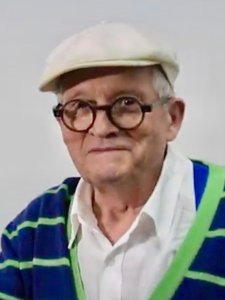
David Hockney
1937 - , Verenigd Koninkrijk
Snelle feiten
- Artistic Movement Or Style: Pop Art
- Artists Or Movements Influenced By This Artist: ['N.v.t.']
- Artists Who Influenced This Artist:
- Pauline Boty
- Francis Bacon
- Date Of Birth: 9 juli 1937
- Full Name: David Hockney
- Nationality: Britse
- Notable Artworks:
- Een Groter Sprongschot
- Portret van een Artiet
- Wij Twee Jongens Samen Vastgeklampt
- Place Of Birth: Bradford, VK

De optie voor glas is alleen beschikbaar bij een formaat kleiner dan 110 cm.