
 Voorvertoning
 Verstuur
 Delen
Delen
 Details bekijken
 Gids
Gids

 Download
 Vergelijkbare items
 Röntgenonderzoek
 Diavoorstelling
 Q&A
Q&A Statistieken
The World (89 degrees)

- 220.0 x 189.0 cm


 Lees meer
De kunstwerken die op deze pagina worden weergegeven, zijn beschermd door de auteursrechtwetgeving, wat betekent dat het ons wettelijk niet is toegestaan om identieke reproducties te maken of te verkopen. Deze bescherming wordt gehandhaafd onder internationale overeenkomsten zoals de Conventie van Bern en door nationale wetgeving, waaronder de bepalingen van de Amerikaanse auteurswet - Titel 17. Alle rechten voorbehouden. Reproduceren of distribueren van afbeeldingen is niet toegestaan zonder uitdrukkelijke schriftelijke toestemming van WahooArt.com en de rechthebbenden.
Deze methode voldoet volledig aan de auteursrechtwetgeving, omdat het niet gaat om het kopiëren of dupliceren van het beschermde kunstwerk. In plaats daarvan is er sprake van een creatieve herinterpretatie — een nieuw schilderij dat door het origineel wordt geïnspireerd, maar er niet identiek aan is.
Giclée / Kunstafdrukken
Giclée- of canvasafdruk van museumkwaliteit met een snelle productie en flexibele afwerkingsmogelijkheden. ( Bestel handgeschilderde reproductie Schakel over naar digitale afbeeldingen)




P118B €10

P118H €10

P118W €10

P438Z €10

P508JH €12

P508YH €12

P805H €10

P805Z €10

P919BZ €10

P919G €10

P919XJ €10

P959ZH €10

P968JZ €12

W106C €8

W218G €10

W218JH €8

W218Y €10

W307PJ €10

W316G €10

W316PJ €8

W316Y €10

W398PJ €8

W4111J €10

W500HY €15

W500JH €15

W692G €12

W849H €8

W940BG €15

W953PJ €8




Kies uit onze vooraf ingestelde maten die overeenkomen met de originele verhoudingen van het kunstwerk.

Voer de gewenste breedte en hoogte in, passend bij uw lijst of muur. Een afdruk kan alleen worden ingekort en nooit groter worden gemaakt dan het origineel; een formaat met andere verhoudingen zal daarom een deel van de afbeelding verliezen. Wij sturen u een digitaal mockup ter goedkeuring voordat we tot drukwerk overgaan. De afbeelding op deze pagina toont niet de werkelijke uitsnede — dit is alleen te zien op het mockup.
Wereldwijde levering () binnen 2 weken in plaats van de standaard 4/5 weken. (2 november)

Gratis wereldwijde expressverzending

Hoogwaardig linnen canvas

Volledige verzendverzekering

Garantie op terugbetaling van invoerrechten

Garantie op exacte kleurweergave

Retourbeleid van 100 dagen (alleen bij defecten)

100% Geld-terug-garantie

Korting bij meerdere afnames
 De optie voor glas is alleen beschikbaar bij een formaat kleiner dan 110 cm.

The World (89 degrees)
Giclée / Kunstafdrukken
Afmetingen reproductie
-


Eindtotaal
€ 72
A Fractured Vision: Unpacking Zaha Hadid’s ‘The World (89 Degrees)’
Zaha Hadid’s “The World (89 degrees),” painted in 1983, isn't merely a cityscape; it’s a meticulously constructed projection of an architectural future, a fever dream rendered in acrylic and imbued with the restless energy that defined her groundbreaking career. Born from a student thesis at the Architectural Association School of Architecture in London, this painting represents a pivotal moment – Hadid’s deliberate rejection of conventional representation and embrace of abstraction as a tool for exploring spatial possibilities. It's a visual manifesto, a declaration that architecture could be more than just static structures; it could be dynamic, fluid, and profoundly expressive.
The image presents a fragmented London, not as a familiar map but as a series of interlocking geometries – the iconic towers of the Shard, the curves of the Thames, and the angular forms of Hadid’s own nascent designs. Notice how she deliberately eschews right angles, replacing them with sweeping curves and distorted perspectives. This wasn't simply an aesthetic choice; it reflected her belief that architecture should challenge our perceptions of space and movement. The painting is a deliberate disruption of established norms, mirroring the radical ideas she would later bring to bear on some of the world’s most recognizable buildings.
Technique and Materiality: A Hybrid Approach
Hadid's technique was remarkably innovative for her time. She didn’t simply paint a cityscape; she layered multiple perspectives, creating an illusion of depth and movement through a complex interplay of lines and colors. The painting is built upon a foundation of acrylic paint, but Hadid incorporated elements of collage – fragments of maps, architectural drawings, and even sections of her own designs were integrated into the composition. This hybrid approach speaks to her desire to synthesize different disciplines—architecture, art, and engineering—into a single, unified vision.
The color palette is equally significant. Dominated by cool blues and greens, punctuated by flashes of vibrant red and yellow, it evokes both the dynamism of urban life and the underlying tension within Hadid’s architectural explorations. The use of layering creates an almost three-dimensional effect, inviting the viewer to step into the painting and become immersed in its fractured world.
Symbolism and a Prophetic Vision
“The World (89 degrees)” is rich with symbolic meaning. The title itself – “89 degrees” – refers to the angle of the horizon, suggesting an attempt to capture a fleeting moment of equilibrium within a constantly shifting environment. The fragmented nature of the cityscape can be interpreted as a reflection of the complexities and uncertainties of modern urban life. Furthermore, the inclusion of elements like airplanes hints at the increasing role of technology and transportation in shaping our world.
Crucially, the painting anticipates Hadid’s later work – her signature use of sweeping curves, dynamic forms, and a rejection of traditional architectural representation. It's a visual blueprint for the fluid, almost sculptural buildings she would go on to design, including the Heydar Aliyev Center in Baku and the Guangzhou Opera House. It represents a bold assertion that architecture could be both functional and profoundly expressive, capable of transforming our experience of space.
Legacy and Reproduction: Bringing Hadid’s Vision to Life
Zaha Hadid's influence on contemporary architecture is undeniable. “The World (89 degrees)” stands as a testament to her visionary thinking and her willingness to challenge established conventions. Today, high-quality reproductions of this iconic painting are available through platforms like OriginalUniqueArt.com, offering art lovers the opportunity to experience Hadid’s groundbreaking work in their own homes or offices.
More than just a beautiful image, “The World (89 degrees)” is a window into the mind of one of the 20th and 21st centuries' most influential architects. It invites us to reconsider our relationship with space, movement, and the built environment – a truly timeless piece that continues to inspire awe and wonder.
Veelgestelde vragen
Hoe verhoudt het onderwerp van "The World (89 degrees)" zich tot de gebruikelijke thema's van Zaha Hadid?
De terugkerende thema's van Zaha Hadid omvatten malevich, suprematism, abstraction, modernism, architectural vision, spatial design, experimentation, fluid forms; "The World (89 degrees)" richt zich op cityscape, architecture, futuristic, urban, painting, hadid, 89 degrees.
Waar kan ik het originele werk "The World (89 degrees)" door Zaha Hadid bewonderen?
"The World (89 degrees)" door Zaha Hadid is te zien in Serpentine Galleries, Londen, Verenigd Koninkrijk. De vermelding van het museum heeft betrekking op het originele werk, niet op reproducties.
Wat is de techniek en de afmeting van "The World (89 degrees)"?
"The World (89 degrees)" door Zaha Hadid is uitgevoerd in Acrylic On Canvas en heeft de afmetingen 220 x 189 cm.
Biografie kunstenaar
Zaha Hadid (1950-2016): A Revolutionary Vision
Dame Zaha Mohammad Hadid (Bagdad, 31 oktober 1950 – Miami, 31 maart 2016), sinds 2012 Dame Zaha Hadid, was een Irakese en Britse architecte van internationale bekendheid. Ze staat bekend als een pionier binnen de architectuur van het laat-20ste en begin-21ste eeuw en wordt beschouwd als een van de meest invloedrijke vrouwen in haar vakgebied.
Hadid werd geboren in Bagdad, Irak, dochter van Muhammad al-Hajj Husayn Hadid, een succesvolle industrieel en politicus, en Wajiha al-Sabunji, die een passie voor kunst ontwikkelde. Deze unieke combinatie van pragmatisme en creativiteit zou haar jeugdige wereldbeeld vormgeven. Ze begon haar studie aan de Amerikaanse Universiteit in Beirut met wiskunde en vervolgde deze met een opleiding tot architectuur aan de Architectural Association School of Architecture in Londen in 1972.
Zoekend naar een alternatief voor traditioneel architectuurontwerp, en geïnspireerd door Suprematisme en het Russische avant-garde, ontwikkelde Hadid een stijl die gebaseerd was op abstracte principes en niet-rechte geometrieën. Een belangrijke invloed vormden de werken van Kazimir Malevich en El Lissitzky.
Early Life and Education
Haar jeugdige interesse voor kunst werd verder aangewakkerd door haar moeder, die haar een liefde voor tekenen en schilderen mee gaf. Deze combinatie zou haar creatieve ontwikkeling enorm stimuleren. Hadid’s opleiding tot architectuur aan de Architectural Association School of Architecture leidde tot een baanbrekende stijl die zich onderscheidt van vele andere architecten.
Architectural Style and Influences
Hadid ontwikkelde een stijl die bekend staat als deconstructivisme, waarbij rechte lijnen en symmetrie werden afgezworen voor complexe vormen en beweging. Haar gebouwen zijn vaak gekarakteriseerd door fragmentatie, dynamische kromlijnige oppervlakken en een gevoel van vloeiende beweging.
Haar stijl werd sterk beïnvloed door kunstenaars zoals Kazimir Malevich en El Lissitzky, die haar leerden om de grenzen van architectuur te verkennen. Hadid gebruikte vaak geometrische vormen en kleuren om haar ideeën uit te drukken en haar gebouwen een unieke persoonlijkheid te geven.
Major Achievements and Recognition
Zaha Hadid Architectures heeft een aantal iconische gebouwen voltooid die de wereld hebben veroverd, waaronder het Aquatics Centre voor de Olympische Zomerspelen 2012 in Londen, het Broad Art Museum in Michigan, USA, MAXXI – National Museum of 21st Century Arts in Rome, Italië en het Heydar Aliyev Center in Baku, Azerbeidzjan. Haar gebouwen zijn een prachtige combinatie van kunst en wetenschap.
Hadid ontving vele prijzen voor haar werk, waaronder de Pritzker Architectuurprijs in 2004, waardoor ze de eerste vrouw werd die deze prestigieuze prijs individueel ontving. Daarnaast werd zij bekroond met de Stirling Prize en andere internationale onderscheidingen.
Legacy and Influence
Zaha Hadid wordt beschouwd als een van de meest invloedrijke vrouwen in haar vakgebied en heeft een blijvend gevoel achtergelaten bij toekomstige architecten. Haar stijl heeft een belangrijke rol gespeeld bij het vormgeven van de moderne architectuur en inspireerde vele nieuwe gebouwen over de hele wereld.
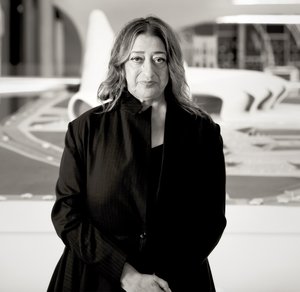
Zaha Hadid
1950 - 2016 , Irak
Belangrijkste feiten
- Artistic Movement Or Style: Deconstructivistiek
- Artists Or Movements Influenced By This Artist: ['Suprematisme']
- Artists Who Influenced This Artist:
- Kazimir Malevich
- Rem Koolhaas
- Date Of Birth: 31 oktober 1950
- Date Of Death: 31 maart 2016
- Full Name: Zaha Mohammad Hadid
- Nationality: Irakese en Britse
- Notable Artworks:
- London Aquatics Centre
- MAXXI Museum
- Heydar Aliyev Cultureel Centrum
- Place Of Birth: Bagdad, Irak
Gerelateerde artikelen

Top 10 Abstract Expressionisme Meesterwerken: Kunst voor uw Interieur | OriginalUniqueArt.com
Ontdek de 10 meest invloedrijke werken van Abstract Expressionisme! Leer over Jackson Pollock, Mark Rothko & meer. Museumkwaliteit kunst reproducties voor uw interieur. Bekijk de collectie op OriginalUniqueArt.com.

Kandinsky's Meesterwerken: 25 Abstracte Kunstparels voor uw Interieur | OriginalUniqueArt
Ontdek de 25 meest iconische werken van Wassily Kandinsky! Duik in zijn abstracte wereld vol kleur, expressionisme & spirituele diepgang. Vind museumkwaliteit reproducties en interieurinspiratie op OriginalUniqueArt.com.
The Soul of Color: A Journey into the Emotional Resonance of Lyrical Abstraction
Embark on a cultural journey through Lyrical Abstraction. Explore how masters like Kandinsky used color and motion to translate emotion into visual poetry. Discover the profound beauty of abstract expressionism and learn to curate emotional resonance in your own art collection.
Beyond the Lines: Mastering the High-Impact World of Contemporary Abstraction
Master the high-impact world of contemporary abstraction. Discover how bold colors, textures, and modern movements like Abstract Expressionism can transform your space with premium, high-energy art curated for the design-conscious professional.

Top 10 Meesterwerken van de Geometrische Abstractie | OriginalUniqueArt.nl
Ontdek de 10 meest invloedrijke meesterwerken van de geometrische abstractie! Van Mondriaan tot Malevich, leer over kunstenaars, technieken & kleuren. Museumkwaliteit reproducties op OriginalUniqueArt.com – voor een unieke interieurstijl.