Bekijk op ware grootte
 Verstuur
 Delen
Delen
 Details bekijken
 Gids voor studentenkunstwerken

 Download
 Vergelijkbare items
 Röntgenonderzoek
 Diavoorstelling
 Statistieken
De Haven van La Rochelle


 Lees meer
Handgemaakte olieverfreproductie
Met de hand geschilderd in olieverf op canvas in uw gewenste maat en lijst, op bestelling gemaakt door onze kunstenaars. ( Schakel over naar print Schakel over naar digitale afbeeldingen)




P118B €10

P118H €10

P118W €10

P438Z €10

P508JH €12

P508YH €12

P805H €10

P805Z €10

P919BZ €10

P919G €10

P919XJ €10

P959ZH €10

P968JZ €12

W106C €8

W218G €10

W218JH €8

W218Y €10

W307PJ €10

W316G €10

W316PJ €8

W316Y €10

W398PJ €8

W4111J €10

W500HY €15

W500JH €15

W692G €12

W849H €8

W940BG €15

W953PJ €8




Kies uit onze vooraf ingestelde maten die overeenkomen met de originele verhoudingen van het kunstwerk.

Voer de breedte en de hoogte in die u nodig heeft, passend bij uw lijst of uw muur. Dit is handgeschilderd, dus bij een afmeting met een andere vormverhouding kan de kunstenaar iets meer rondom het schilderij schilderen of juist iets meer weglaten — u kiest zelf. Wij sturen u een digitaal mockup ter goedkeuring voordat het schilderwerk begint. De afbeelding die op deze pagina wordt getoond, is niet het uiteindelijke resultaat — alleen de mockup geeft dit weer.
Na de bestelling zal het team van OriginalUniqueArt.com per e-mail contact opnemen met de klant voor instructies en een mockup-voorbeeld sturen.
Wereldwijde levering () binnen 3 tot 4 weken in plaats van de standaard 5 weken. (23 oktober). Zonder concessies aan de kwaliteit.

Gratis wereldwijde expressverzending

Hoogwaardig linnen canvas

Volledige verzendverzekering

Garantie op terugbetaling van invoerrechten

Garantie op exacte kleurweergave

Retourbeleid van 100 dagen (alleen bij defecten)

100% Geld-terug-garantie

Korting bij meerdere afnames
 De optie voor glas is alleen beschikbaar bij een formaat kleiner dan 110 cm.

De Haven van La Rochelle
Reproductiemethode
Formaat reproductie
-


Totaalprijs
€ 264
De Haven van La Rochelle
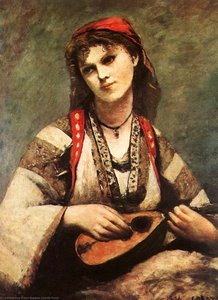
Jean Baptiste Camille Corot’s “De Haven van La Rochelle” is een meesterwerk uit het Nederlandse kunstgeschiedenisboek, een schilderij dat niet alleen prachtige kleuren en lichtgebruik biedt maar ook een belangrijke historische boodschap draagt. Geregistreerd in de Yale University Art Gallery te Hartford, Verenigde Staten, staat dit werk symbool voor Corot’s ongeëvenaarde beheersing van het landschapsschilderij en zijn vermogen om een gevoel van tijd en plaats vast te leggen. Het schilderij, geschreven in 1851, biedt een gedetailleerde weergave van de havenstad La Rochelle aan de kustlijn van de Atlantische Oceaan tijdens het Belgisch Koninkrijk. Een kunstenaar als Corot was gefascineerd door het natuurlijke licht en zijn manier om dit op het doek te vatten, wat zichtbaar is in de warme kleuren en subtiele schaduwen die een gevoel van ruimte en atmosfeer creëren. De haven zelf wordt afgebeeld met verschillende schepen – zowel grote handelsschepen als kleinere vissersboten – die vredig tegen de achtergrond van een blauwe hemel staan. Een enkele persoon staat op het strand, mogelijk bezig met het verkennen van de omgeving of gewoon het genieten van het prachtige uitzicht. Een paard staat nabij een andere figuur, wat een element van rust en eenvoudige schoonheid aan het beeld toevoegt. ### Stijl en Techniek Corot’s stijl wordt gekenmerkt door een combinatie van impressionisme en romantische traditie. Hij gebruikte een losse penseelstreek om beweging en energie over te brengen, terwijl hij ook aandacht besteedde aan de nauwkeurige weergave van natuurlijke vormen en texturen. Zijn techniek werd bepaald door een zorgvuldige studie van het licht en zijn manier om dit op het doek te gebruiken – een praktijk die hij ontwikkelde tijdens zijn vele reisavonden naar Italië en andere Europese landen. De kunstenaar werkte met olie opdoek, een populaire keuze voor landschapsschilders in die tijd, waardoor hij een rijke kleurenpallet kon gebruiken en een gevoel van diepte en dimensie kon creëren dat bijdraagt aan het emotionele impact van het werk. Een bijzonder belangrijk aspect is de manier waarop Corot gebruik maakt van kleur om de sfeer van het beeld te onderstrepen; de blauwe tinten van de zee en lucht worden aangevuld met warme kleuren zoals geel en bruin, waardoor een gevoel van harmonie en natuurlijke schoonheid ontstaat. ### Historische Context en Symbolisme “De Haven van La Rochelle” is meer dan alleen een prachtige afbeelding van een historische locatie; het biedt ook een kijkje achter de schermen in het leven van mensen tijdens het Belgisch Koninkrijk. De havenstad La Rochelle was een belangrijke handelsplaats en een centrum van economische activiteit, wat wordt weergegeven in het schilderij door middel van gedetailleerde voorstellingen van schepen en handelaren. Daarnaast kan het werk worden gezien als een uitdrukking van de romantische interesse voor natuur en schoonheid die kenmerkend was voor zijn tijdperiode. Corot wilde niet alleen een exacte reproductie maken van het landschap, maar ook een gevoel van emotie en ervaring overbrengen aan de kijker – een doel dat hij succesvol bereikt door middel van zijn prachtige kleurgebruik en zijn expressieve penseelstreek. Een belangrijke historische verwijzing is het feit dat La Rochelle tijdens de Napoleontische oorlogen een belangrijke stad was voor de Republiek Nederland, wat een gevoel van nationale trots en identiteit oproept bij wie het schilderij bekijkt. ### Emotionele Impact en Inspiratie “De Haven van La Rochelle” roept een gevoel van rust en contemplatie op bij iedereen die het aanschouwt. De kunstenaar heeft een prachtige balans gevonden tussen technische precisie en emotionele expressie, waardoor het werk een blijvende plaats inneemt in de geschiedenis van de Nederlandse kunstcultuur. Het schilderij inspireert tot gedachten over natuurlijke schoonheid, eenvoudige levenswijze en de kracht van het licht om een gevoel van welzijn te creëren. Een hoogwaardige reproductie kan een prachtige aanvulling vormen op elke woning en biedt een manier om de schoonheid van Corot’s kunstwerk voor iedereen toegankelijk te maken. Een bezoek aan de Yale University Art Gallery is een essentiële ervaring voor kunstliefhebbers die het origineel willen aanschouwen en zich onderdompelen in de prachtige wereld van het Nederlandse landschapsschilderij.Vragen & Antwoorden
Welke stemming en emotie komen samen in "De Haven van La Rochelle"?
In "De Haven van La Rochelle" gaat een Sereniteit stemming gepaard met een Rustgevend emotie.
Kan ik een röntgenopname van "De Haven van La Rochelle" door Corot bekijken?
"De Haven van La Rochelle" kan laag voor laag worden onderzocht op de Röntgenanalyse pagina van het kunstwerk, een viewer geïnspireerd op de lichttafel van een restaurator met elf optische weergaven van de afbeelding.
Waar past "De Haven van La Rochelle" binnen het oeuvre van Corot?
"De Haven van La Rochelle" behoort tot het Romantic Landscape Painting-werk van Corot, waarvan de bekende thema's onder meer romantic idealism & observation, rural harmony & reflection, nature’s sublime beauty, corot’s signature style, landscape tradition legacy omvatten.
Biografie van de kunstenaar
A Life Immersed in Light and Landscape
Jean-Baptiste-Camille Corot, a name that resonates with the tranquil beauty of 19th-century French landscape painting, was born into a comfortable Parisian bourgeois family on July 16, 1796. Though initially steered towards a commercial path, destiny – and perhaps an innate artistic sensibility – intervened. His early years were marked by an unconventional upbringing; entrusted to the care of a nurse in the countryside near L’Isle-Adam until age four, he developed a profound connection with nature that would indelibly shape his artistic vision. This initial immersion in rural tranquility stood in stark contrast to the bustling city life awaiting him, yet it laid the foundation for a lifelong pursuit of capturing the ephemeral qualities of light and atmosphere. His parents, successful milliners, provided financial stability, allowing Corot the freedom to explore his burgeoning passion for painting after an unsuccessful attempt at mercantile pursuits – a rare privilege for aspiring artists of that era. This support was crucial, enabling him to dedicate himself fully to artistic training without the immediate pressures of earning a livelihood.From Academic Foundations to Plein-Air Innovation
Corot’s formal artistic education began with studies under Achille Etna Michallon and later Jean-Victor Bertin, both esteemed landscape painters steeped in the neoclassical tradition. This grounding instilled in him a meticulous approach to composition and form, emphasizing clarity and structure. However, Corot wasn't content merely replicating established styles; he yearned for something more authentic, a way to convey not just *what* he saw, but *how* it felt to be immersed within the landscape. A pivotal moment arrived with his first journey to Italy in 1825. The Roman Campagna, bathed in golden light and steeped in history, ignited his imagination. He spent years sketching and painting en plein air – directly from nature – a practice that was still relatively uncommon at the time. This dedication to direct observation allowed him to capture the subtle nuances of light and shadow, the delicate atmospheric effects that would become hallmarks of his style. He wasn’t simply recording topographical details; he was striving to evoke a mood, a feeling of tranquility and harmony. His early Italian works demonstrate a clarity of form and bright palette influenced by classical ideals, yet already hint at the softer, more evocative approach that would define his mature style. He meticulously studied the masters, copying their work in the Roman galleries, but always filtered these lessons through his own increasingly sensitive perception of nature.A Bridge Between Traditions
Corot’s artistic development wasn't linear; it was a delicate balancing act between tradition and innovation. He exhibited regularly at the Paris Salon, initially gaining recognition for works rooted in neoclassical conventions. However, as he continued to explore plein-air painting, his style began to evolve. He moved away from highly finished, detailed compositions towards looser brushwork and a more muted palette. This shift wasn't a rejection of academic principles entirely; rather, it was an attempt to infuse them with the immediacy and emotional resonance of direct observation. He became a master of tonalism, using subtle variations in value to create depth and atmosphere. His landscapes weren’t about dramatic narratives or grand gestures; they were about quiet contemplation, the beauty of everyday scenes – a forest glade, a sun-dappled meadow, a tranquil riverbank. This approach resonated with a growing audience seeking respite from the rapid industrialization and social upheaval of 19th-century France. He skillfully blended elements of realism with an almost poetic sensibility, creating landscapes that felt both familiar and deeply personal. He wasn’t interested in grand pronouncements or political statements; his art was about finding beauty in the ordinary, elevating the commonplace to a realm of serene contemplation.Influence and Legacy
Jean-Baptiste-Camille Corot's influence on subsequent generations of artists is immeasurable. He served as a crucial link between the neoclassical tradition and the emerging Impressionist movement. Artists like Monet, Pissarro, and Sisley deeply admired his ability to capture the fleeting effects of light and atmosphere, and they built upon his innovations in their own groundbreaking work. Corot’s emphasis on direct observation and plein-air painting paved the way for the Impressionists' radical departure from studio-based practices. However, Corot wasn’t simply a precursor to Impressionism; he was a unique and significant artist in his own right. His vast output – encompassing landscapes, portraits, and figure studies – continues to captivate audiences with its serene beauty and emotional depth. His works can be found in major museums around the world, including the Musée des Beaux-Arts in Dunkirk and the Musée Courbet in Ornans, France, as well as the National Gallery in London and the Metropolitan Museum of Art in New York. He died on February 22, 1875, leaving behind a legacy that continues to inspire artists and art lovers alike – a testament to the enduring power of light, landscape, and quiet contemplation. The Repose, Interrupted Reading, and Agostina remain iconic examples of his mastery, showcasing his ability to capture both the physical world and the inner life of his subjects with remarkable sensitivity and grace. His influence extends beyond painting; he fostered a spirit of artistic freedom and encouraged younger artists to find their own voice, solidifying his place as a pivotal figure in the history of art.
Corot
1796 - 1875 , Frankrijk
Snelle feiten
- Artistic Movement Or Style: Realisme, Impressionisme
- Artists Or Movements Influenced By This Artist:
- Monet
- Pissarro
- Sisley
- Artists Who Influenced This Artist:
- Michallon
- Bertin
- Date Of Birth: 16 juli 1796
- Date Of Death: 22 februari 1875
- Full Name: Jean-Baptiste-Camille Corot
- Nationality: Frans
- Notable Artworks:
- Le Repose
- Interrupted Reading
- Agostina
- Place Of Birth: Parijs, Frankrijk
Gerelateerde artikelen

Evocations of Place: A Historical Journey Through Landscape Art
Explore the rich history of landscape art with OriginalUniqueArt. Discover renowned artists, movements like Impressionism & tonalism, and expert guidance for collecting timeless pieces. Find your perfect serene escape today!

Romantische Landschappen: Top 10 Meesterwerken voor een Sfeervol Interieur | OriginalUniqueArt.nl
Ontdek de 10 meest iconische meesterwerken van de Romantiek! Reis door de tijd met Caspar David Friedrich, Turner & Delacroix. Laat je inspireren en vind museumkwaliteit kunst reproducties voor een sfeervol interieur op OriginalUniqueArt.com.

Evocations of Place: A Historical Journey Through Landscape Art
Explore the rich history of landscape art with OriginalUniqueArt. Discover renowned artists, movements like Impressionism & Romanticism, and expert guidance for collecting timeless pieces. Find your perfect serene escape today!
Jean-Baptiste-Camille Corot: A Poetic Realism – Bridging the Barbizon School and Early Impressionism
Explore the life & art of Camille Corot, a pivotal figure bridging the Barbizon School & Impressionism. Discover his poetic realism, signature style, and lasting influence on landscape painting. Learn more at OriginalUniqueArt.
Master of Light: Exploring the Timeless Landscapes and Atmospheric Brilliance of Jean-Baptiste-Camille Corot
Discover the ethereal beauty of Jean-Baptiste-Camille Corot. Explore how this master of light bridged Neoclassicism and Impressionism through his atmospheric landscapes, capturing the timeless essence of the French countryside with unparalleled poetic brilliance.