Rococo · 1736
Bear Hunt (Charles André van Loo, 1736)
Charles André van Loo (1705–1765) maakte Bear Hunt. Het dateert uit 1736. Het behoort tot de Rococo-stroming. Het is gemaakt van Oil On Canvas. Het is te vinden in Musée de Picardie in Amiens, Frankrijk. De afmetingen zijn 184 × 129 cm.
- 1736
- Oil On Canvas
- 184 × 129 cm
- Musée de Picardie, Amiens

 Voorvertoning

 Met de hand geschilderd olieverfwerk
 Verstuur
 Delen
 Informatieblad


 Download
 Vergelijkbare items
 Röntgenonderzoek
 Diavoorstelling
 Vraag & antwoord

 Statistieken
Bear Hunt, in het kort
- Titel
- Bear Hunt
- Kunstenaar
- Charles André van Loo (1705–1765)
- Geboren in [jaar]
- Nice, Frankrijk
- Datum
- 1736
- Medium
- Oil On Canvas
- Afmetingen
- 184 × 129 cm
- Te zien in
- Musée de Picardie, Amiens, Frankrijk
- Beweging
- Rococo
- Periode
- Early Modern
- Onderwerp
- people, bears, dogs, horses, guns, rocks
Wat stelt Bear Hunt voor?
Identification of the Artwork and Artist
The oil on canvas titled Bear Hunt was painted by Charles-André van Loo in 1736. This work emerged from the hand of an artist born in Nice, France, in 1705. He belonged to a successful dynasty of Dutch painters, a lineage of creators who shaped the visual language of their era. His life spanned the decades between his birth and his death in 1765.
Charles-André van Loo brought a specific precision to this scene. The canvas captures a moment of movement within the wilderness. It is a piece from a period of significant activity for the artist. His brushwork defines the tension of the chase. The light falls upon the figures and the animals in the landscape.
The work remains a specific record of a hunt. It carries the weight of the artist's early career. A quiet stillness exists beneath the action of the hunt. The shadows of the trees stretch across the ground.
Visual Composition and Subject Matter
This large oil on canvas captures a moment of sudden movement in the wild. Near a cluster of jagged rocks, the landscape opens into a rugged wilderness. Several men grip guns, their bodies poised for the chase. Dogs weave through the brush, their instincts driving them toward the scent of the prey. Horses stand nearby, silent witnesses to the exertion, ready to carry the hunters across the uneven ground.
The bears are scattered throughout the scene, some looming in the foreground and others fading into the distant greenery. The composition relies on this distribution of weight to create a sense of scale. There is a palpable tension in the air, a rush of adrenaline that defines the hunt. The great outdoors provides a chaotic, unscripted stage for this encounter. The hunt moves with a sudden, sharp energy.
Related Works by the Same Artist
The artist’s hand moved through many realms, from the quietude of a Self Portrait to the grand scale of mythological drama. In Venus and Amor, held at the Kunsthalle Bremen, the brush captures a different kind of grace. He explored the tension of legend in Jupiter and Antiope and rendered the myth of Perseus and Andromeda in multiple versions. These figures exist alongside the courtly presence of the Portrait of Marie Leszczynska, Queen of France. A smaller, focused study of Mademoiselle Clairon as Medea appeared in 1760.
The hunt remains a recurring pulse in his oeuvre. He captured aristocratic leisure in Halt of the Hunt, a work now held at The Metropolitan Museum of Art. This interest in the chase extends to the overdoor paintings created for the petits appartements of Louis XV at Versailles. Such works reflect a life spent navigating the precise requirements of royal patronage and the fluid movement of the Rococo style. The paint dries on the canvas, leaving only the shadow of the chase.
In welk museum bevindt Bear Hunt zich?
Musée de Picardie
Amiens, Frankrijk
Een Heiligdom van de Tijd: De Ziel van het Musée de Picardie Gelegen in het historische hart van Amiens, Frankrijk, staat het Musée de Picardie als een diepgaand getuigenis van de voortdurende dialoog tussen de mensheid en haar creatieve impulsen. De drempel overstappen betekent het betreden van een rijk waar de grenzen van de tijd vervagen, net zoals het licht dat door de imposante, luchtige zalen danst. De structuur van het museum zelf, een meesterwerk uit het Tweede Keizerrijk, ontworpen door architecten Henri Parent en Arthur-Stanislas Diet, fungeert als een stille verteller van de culturele opkomst van Frankrijk.


Hoogwaardige afbeeldingen van Bear Hunt
Publiek domein: de kunstenaar is overleden in 1765.
Charles André van Loo, Bear Hunt (1736), Musée de Picardie. Publiek domein
Veelgestelde vragen over Bear Hunt
In welk museum is het originele werk "Bear Hunt" te zien?
Het originele werk "Bear Hunt" is te bewonderen in Musée de Picardie, Amiens, Frankrijk.
In welk jaar werd "Bear Hunt" door Charles André van Loo gemaakt?
"Bear Hunt" door Charles André van Loo werd gecreëerd in 1736.
Met welke techniek is "Bear Hunt" door Charles André van Loo vervaardigd?
"Bear Hunt" is uitgevoerd in Oil On Canvas.
Wat zijn de werkelijke afmetingen van "Bear Hunt" door Charles André van Loo?
Het originele werk "Bear Hunt" door Charles André van Loo heeft de afmetingen 184 x 129 cm.
Wat stelt "Bear Hunt" door Charles André van Loo voor?
De onderwerpen van "Bear Hunt" zijn people, bears, dogs, horses, guns, rocks, wilderness.
Behoort "Bear Hunt" door Charles André van Loo tot het publiek domein?
De auteursrechtelijke status van "Bear Hunt" door Charles André van Loo: het werk is bevindt zich in het publiek domein - de auteursrechten zijn verlopen. Dit bepaalt of reproducties van de afbeelding vrijelijk mogen worden gemaakt.
Wie heeft "Bear Hunt" gemaakt?
"Bear Hunt" wordt toegeschreven aan Charles André van Loo.
Bij welke kunststroming behoort "Bear Hunt" door Charles André van Loo?
De kunststroming die verbonden is aan "Bear Hunt" door Charles André van Loo is Rococo. Deze classificatie plaatst het werk binnen een context van verwante kunstenaars en kunstwerken.
Tot welke periode in de carrière van Charles André van Loo behoort "Bear Hunt"?
Binnen de carrière van Charles André van Loo valt "Bear Hunt" in de Mature Period. Deze fase helpt om het werk te vergelijken met andere werken van de kunstenaar.
Over de kunstenaar, Charles André van Loo
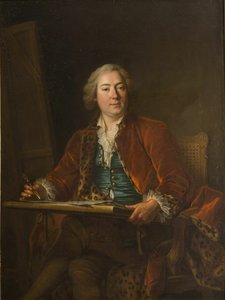
1705–1765, Frankrijk
Charles André van Loo
Charles André van Loo (Carle van Loo) Charles André van Loo, ook wel Carle van Loo (Nice, 15 februari 1705 – Parijs, 15 juli 1765) was een Franse schilder, en de jongere broer van Jean-Baptiste van Loo. Hij was de beroemdste schilder uit een succesvolle schildersfamilie van Nederlandse origine. Zijn oeuvre omvatte elke categorie: religie, geschiedenis schilderen, mythologie, portretten, allegorische tafelen en genre kunststukken. Een uitzonderlijke kunstenaar die zijn tijd vooruit zag!
Over Charles André van Loo Bekende werken van Charles André van Loo
Ook van Charles André van Loo
 Spanish Concert (Spanish Сonversation)1754
 Aeneas Carrying Anchises1729
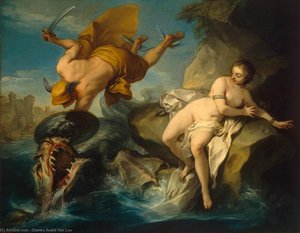 Perseus and Andromeda1735
 The sultana1747
Essays over Bear Hunt
 Charles-André van Loo: A Study in Rococo Portraiture & the French Court's Artistic DynamicsExplore the elegant world of Charles-André van Loo, a master of Rococo portraiture at the French court. Discover his life, techniques, and …
 16th century Flemish paintersMasterpieces by Bruegel and Jan Brueghel define 16th century Flemish art. Explore the full collection online at OriginalUniqueArt.com.
 17th century Flemish paintersMasterpieces by Van Dyck and Teniers define Flemish Baroque. Explore museum-quality reproductions on OriginalUniqueArt.com.