

 Bekijk op ware grootte
 Verstuur
 Delen
Delen
 Details bekijken
 Gids voor studentenkunstwerken

 Download
 Vergelijkbare items
 Röntgenonderzoek
 Diavoorstelling
 Statistieken
Aeneas Carrying Anchises
 Oil On Canvas
- WallArt
- Rococo
 1729
1729 110.0 x 105.0 cm
 Louvre
 Lees meer
Giclée / Kunstafdrukken
Giclée- of canvasafdruk van museumkwaliteit met een snelle productie en flexibele afwerkingsmogelijkheden. ( Koop handgeschilderd kunstwerk Schakel over naar digitale afbeeldingen)




P118B €10

P118H €10

P118W €10

P438Z €10

P508JH €12

P508YH €12

P805H €10

P805Z €10

P919BZ €10

P919G €10

P919XJ €10

P959ZH €10

P968JZ €12

W106C €8

W218G €10

W218JH €8

W218Y €10

W307PJ €10

W316G €10

W316PJ €8

W316Y €10

W398PJ €8

W4111J €10

W500HY €15

W500JH €15

W692G €12

W849H €8

W940BG €15

W953PJ €8




Kies uit onze vooraf ingestelde maten die overeenkomen met de originele verhoudingen van het kunstwerk.

Voer de breedte en de hoogte in die u nodig heeft, passend bij uw lijst of uw muur. Een afdruk kan alleen worden ingekort, nooit groter worden gemaakt dan het origineel, waardoor een formaat met een andere verhouding een deel van de afbeelding verliest. Wij sturen u een digitaal mockup ter goedkeuring voordat we iets drukken. De afbeelding op deze pagina toont niet de werkelijke uitsnede — dit is alleen te zien op het mockup.
Wereldwijde levering () binnen 2 weken in plaats van de standaard 4/5 weken. (21 oktober)

Gratis wereldwijde expressverzending

Hoogwaardig linnen canvas

Volledige verzendverzekering

Garantie op terugbetaling van invoerrechten

Garantie op exacte kleurweergave

Retourbeleid van 100 dagen (alleen bij defecten)

100% Geld-terug-garantie

Korting bij meerdere afnames
 De optie voor glas is alleen beschikbaar bij een formaat kleiner dan 110 cm.

Aeneas Carrying Anchises
Giclée / Kunstafdrukken
Formaat reproductie
-


Totaalprijs
€ 71
Aeneas Carrying Anchises: A Testament to Roman Heroism and Rococo Elegance
Charles-André van Loo’s “Aeneas Carrying Anchises,” painted in 1729, is more than just a depiction of a pivotal moment from Virgil's *Aeneid*; it’s a masterful distillation of the Rococo style, imbued with a profound sense of drama and classical gravitas. This artwork, now meticulously reproduced on hand-painted canvas by OriginalUniqueArt, offers a captivating glimpse into 18th-century French artistic sensibilities – a world where mythological narratives intertwined seamlessly with aristocratic life and an exquisite attention to detail reigned supreme.
The scene unfolds within a classically inspired architectural setting, reminiscent of the Temple of Venus or perhaps even the Parthenon, lending an air of timeless grandeur. Van Loo skillfully employs atmospheric perspective – the subtle blurring of details in the background – to draw the viewer’s eye towards the central figures: Aeneas, the Trojan hero, and his aged father, Anchises. The composition is carefully balanced, utilizing a pyramidal structure that reinforces the importance of these two patriarchs. Note the deliberate use of light; it illuminates Aeneas's determined face and the weight of responsibility he carries, while casting a softer glow upon Anchises, suggesting both vulnerability and profound wisdom.
The Rococo Palette: Color, Texture, and Ornamentation
As a leading figure in the Rococo movement, Van Loo’s signature style is immediately recognizable. The painting bursts with rich, layered colors – deep reds, blues, and golds dominate the palette, creating an opulent and luxurious atmosphere. The artist's meticulous brushwork reveals a remarkable attention to texture; from the folds of Aeneas’s cloak to the weathered skin of Anchises, every surface is rendered with incredible realism. Observe how he uses shimmering highlights to capture the light reflecting off polished marble columns and the fabric of their garments – a hallmark of Rococo technique.
The decorative elements are equally noteworthy. The architectural details, while rooted in classical forms, are embellished with intricate moldings, garlands, and subtle flourishes characteristic of the era. Van Loo’s mastery extends to portraying the human form; Aeneas and Anchises are depicted with a graceful elegance that reflects the ideals of beauty prevalent during the Rococo period. The inclusion of other figures in the background – soldiers, attendants, and perhaps even a veiled woman – adds depth and narrative complexity to the scene, hinting at the broader context of the Trojan War and its aftermath.
Symbolism and Narrative Resonance
Beyond its aesthetic beauty, “Aeneas Carrying Anchises” is rich in symbolic meaning. The act of Aeneas carrying his father represents not only filial devotion but also the burden of leadership and the transmission of legacy. Anchises, a descendant of Aeneas and the rightful heir to Troy, embodies the continuity of Roman civilization. The setting itself – a temple or monumental structure – elevates the scene to a realm of mythic importance, suggesting that Aeneas’s journey is not merely a personal quest but a destiny ordained by the gods.
Furthermore, the presence of the woman in the background has been interpreted as representing Fides (Faith) or perhaps even Venus herself, subtly reinforcing the themes of duty, honor, and divine guidance. The painting's overall mood is one of solemn determination tempered with a poignant sense of loss – a reminder of the sacrifices required to fulfill a noble purpose. OriginalUniqueArt’s faithful reproduction captures this nuanced emotional depth, allowing viewers to fully appreciate the artistry and storytelling embedded within Van Loo’s masterpiece.
Bringing “Aeneas Carrying Anchises” Home
Whether you're an art enthusiast, a collector seeking to enrich your collection, or simply someone looking for a stunning addition to your interior décor, OriginalUniqueArt’s hand-painted reproduction of “Aeneas Carrying Anchises” offers the perfect opportunity to own a piece of 18th-century artistic history. The meticulous detail and vibrant colors faithfully recreate Van Loo's original vision, while the canvas medium provides a timeless quality that will endure for generations to come. Explore our selection of sizes and framing options to find the ideal representation for your space – and experience the enduring power of this iconic artwork.
Vragen & Antwoorden
Waar kan ik kunstwerken vinden die lijken op "Aeneas Carrying Anchises" door Charles André van Loo?
De pagina Vergelijkbare werken van "Aeneas Carrying Anchises" door Charles André van Loo presenteert gerelateerde kunstwerken.
Hoe past "Aeneas Carrying Anchises" binnen de thema's en stijl van Charles André van Loo?
"Aeneas Carrying Anchises" behoort tot het Rococo-werk van Charles André van Loo, waarvan de bekende thema's onder meer italian baroque influence, mythological, roman themes, courtly patronage, luxury, dynasty’s artistic legacy, classical narrative depiction omvatten.
Welke emotionele toon gaat gepaard met de Rococo-stijl van "Aeneas Carrying Anchises"?
"Aeneas Carrying Anchises" draagt een Melancholic emotionele toon in zich binnen de Rococo-stroming."
Biografie van de kunstenaar
Charles André van Loo (Carle van Loo)
Charles André van Loo, ook wel Carle van Loo (Nice, 15 februari 1705 – Parijs, 15 juli 1765) was een Franse schilder, en de jongere broer van Jean-Baptiste van Loo. Hij was de beroemdste schilder uit een succesvolle schildersfamilie van Nederlandse origine. Zijn oeuvre omvatte elke categorie: religie, geschiedenis schilderen, mythologie, portretten, allegorische tafelen en genre kunststukken. Een uitzonderlijke kunstenaar die zijn tijd vooruit zag!Leven
Van Loo volgde het spoor van zijn oudere broer Jean-Baptiste naar Turin, waar hij een eerste opleiding genoot onder Benedetto Luti en Pierre Legros. Vervolgens studeerde hij in Rome (1712) onder dezelfde begeleidingen, waarbij hij zich verdiepte in de klassieke kunsttraditie. Zijn artistieke ontwikkeling werd sterk beïnvloed door het familiegeheim van zijn vader en broer, beide bekroonde schilders die een belangrijke rol speelden bij het vormgeven van de Nederlandse kunstgeschiedenis. Een prachtige dynastie! Hij trouwde met Marie Louise Vigée Le Brun en kreeg kinderen. Zijn persoonlijke leven werd gekenmerkt door een liefdevolle zorg voor zijn familie en een betrokkenheid bij het Parijse sociale milieu. Hij studeerde aan de Académie royale, waar hij in 1723 eerste prijs won voor tekenen en in 1727 voor historische schilderen – een prestigieuze erkenning die hem ook concurrentie gaf met François Boucher, een andere prominente Rococo kunstenaar. Een intense rivaliteit die het kunstenaarschap van beide mannen verder stimulerede! Hij verkreeg de eerste prijs voor tekenen en historische schilderen bij de Academie Royale in Parijs. Zijn talent werd aangemoedigd door Madame de Pompadour, een invloedrijke vrouw uit het hof die hem een belangrijke opdracht gaf om een reeks werken te maken voor haar château aan Bellevue. Een prachtige samenwerking! Hij werd gepromoveerd tot Directeur van de Académie Royale en kreeg daarvoor de titel ‘Premier peintre du Roi’. Een symbool van Koninklijke goedkeuring! Hij werd gedecoreerd met het Order of Saint Michael, wat een teken was van Koning Lodewijk XV’s vertrouwen. Een prachtige onderscheiding voor zijn artistieke carrière.Kunstenaar en Bekende Werken
Van Loo stond bekend als een meester van de Rococo stijl, gekenmerkt door elegantie, gratie en opvallend gedetailleerde ornamentiek. Zijn kunstenaarschap omvatte een breed scala aan onderwerpen, waaronder portretten van Europese koningen en edelen, mythologische scènes die het Griekse en Romeinse erfgoed aanspraken, historische schilderijen die belangrijke gebeurtenissen uit de geschiedenis weergaverden, allegorische tafelen die ideeën en emoties uitdrukten en genre kunststukken die het dagelijks leven vastlegden. Zijn stijl werd sterk beïnvloed door zijn vader en broer, waardoor hij een unieke artistieke identiteit ontwikkelde. Een echte familie traditie! Een aantal van zijn meest bekende werken omvatten:- Venus en Amor (Kunsthalle Bremen): Een prachtige illustratie van de Rococo stijl die de schoonheid en sensualiteit van liefde weergeeft. Een kunstwerk dat nog steeds wordt bewonderd voor zijn technische perfectie en emotionele kracht.
- De Halt van de Jacht (Het Metropolitan Museum of Art): Een historische scène die het aristocratische leven van de tijd laat zien, waarbij een groep edelen zich bezig houdt met activiteiten van adel en natuurlijke schoonheid. Een kunstwerk dat een beeld geeft van de sociale mores van het Rococo tijdperk.
- Portret van Marie Leszczynska: Een belangrijk koninklijk portret dat Marie Leszczynska, Koningin van Frankrijk, laat zien in haar glorieuze verschijning. Een kunstwerk dat een prachtige combinatie vormt van technische vaardigheid en artistieke expressie.
- Jupiter en Antiope: Een mythologische scène die de macht en grandeur van Zeus weergeeft terwijl hij Antiope, een vrouw uit het Griekse pantheon, verblindt met zijn licht. Een kunstwerk dat een prachtige combinatie vormt van kleurgebruik en compositie.
- Zelfportret: Een persoonlijke afbeelding van Van Loo zelf die een kijkje geeft naar zijn innerlijke wereld en zijn artistieke visie. Een kunstwerk dat een uniek beeld geeft van de kunstenaar als individu en zijn plaats in de kunstgeschiedenis.
- Perseus en Andromeda (verschillende versies): Een klassieke mythologische scène die Perseus’ dappelse poging weergeeft om Andromeda te redden uit het gezelschap van een draak. Een kunstwerk dat een prachtige combinatie vormt van dynamische beweging en technische precisie.
- Mademoiselle Clairon als Medea (kleine versie): Een prachtige Rococo portret dat Mademoiselle Clairon laat zien als Medea, een Griekse koningin die bekend staat om haar woede en kracht. Een kunstwerk dat een prachtige combinatie vormt van kleurgebruik en compositie.
Invloed en Erfgoed
Charles André van Loo oefende een grote invloed uit op de moderne Franse schilderkunst, waarbij zijn stijl werd gekenmerkt door eenvoudige lijnen en nauwkeurige ontwerptechnieken. Zijn werk inspireerde vele andere kunstenaars en droeg bij aan het vormgeven van de esthetische traditie van het Rococo tijdperk. Hij wordt beschouwd als een belangrijke figuur in de Franse kunstgeschiedenis en zijn kunstwerken blijven tot op de dag van vandaag worden bewonderd voor hun schoonheid en technische kwaliteit. Een echte klassieker! Zijn stijl werd gekenmerkt door eenvoudige lijnen en nauwkeurige ontwerptechnieken, wat een belangrijke invloed had op het moderne Franse schilderkunstenaarschap. Een kunstenaar die zijn tijd vooruit zag!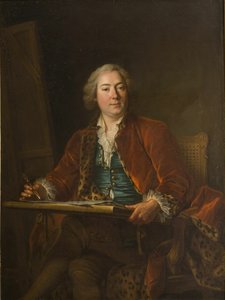
Charles André van Loo
1705 - 1765 , Frankrijk
Snelle feiten
- Artistic Movement Or Style: Rococo schilderkunst
- Artists Or Movements Influenced By This Artist: ['Moderne Franse schilderkunst']
- Artists Who Influenced This Artist:
- Benedetto Luti
- Pierre Le Gros
- Date Of Birth: 15 februari 1705
- Full Name: Charles André van Loo
- Nationality: Frans
- Notable Artworks:
- Venus en Amor
- Halt van de Jacht
- Portret van Marie Leszczynska
- Place Of Birth: Nice, Frankrijk
Gerelateerde artikelen

Top 10 Rococo Meesterwerken: Kunstgeschiedenis voor uw Interieur | OriginalUniqueArt.com
Ontdek de 10 meest iconische Rococo meesterwerken! Duik in de wereld van Fragonard, Boucher & Watteau. Leer over lieflijkheid, pastelkleuren en aristocratie. Museumkwaliteit kunst reproducties op OriginalUniqueArt.com.
Top 10 Meesterwerken van de Vroege Nederlandse Renaissance | Kunst & Decoratie
Ontdek de 10 meesterwerken van de Vroege Nederlandse Renaissance! Van Jan van Eyck tot Rogier van der Weyden, leer over hun techniek & symboliek. Vind museumkwaliteit kunst reproducties en decoratie-inspiratie op OriginalUniqueArt.com.

Charles-André van Loo: A Study in Rococo Portraiture & the French Court's Artistic Dynamics
Explore the elegant world of Charles-André van Loo, a master of Rococo portraiture at the French court. Discover his life, techniques, and enduring influence on 18th-century art. Hand-painted reproductions available.

Top 10 Meesterwerken van de Vroege Nederlandse Schilderkunst | OriginalUniqueArt
Ontdek de 10 meesterwerken van Jan van Eyck, Rogier van der Weyden & andere Vlaamse Primitieven. Duik in de rijke symboliek en olieverfschilderijen van de Vroege Nederlandse Schilderkunst. Vind museumkwaliteit reproducties op OriginalUniqueArt.com!

Rembrandt's Meesterwerken: De Top 25 – Kunst voor uw Interieur | OriginalUniqueArt
Ontdek de 25 meest iconische schilderijen van Rembrandt van Rijn! Duik in de Gouden Eeuw, bewonder zijn portretten & zelfportretten. Museumkwaliteit reproducties voor uw interieur op OriginalUniqueArt.com. Bekijk de collectie!


