

 Voorvertoning
 Verstuur
 Delen
Delen
 Details bekijken

 Download
 Vergelijkbare items
 Röntgenonderzoek
 Diavoorstelling
Christ Crowned with Thorns


 Lees meer
Handgemaakte olieverfreproductie
Met de hand geschilderd in olieverf op canvas in uw gewenste maat en lijst, op bestelling gemaakt door onze kunstenaars. ( Bestel print Koop afbeelding)




































Kies uit onze vooraf ingestelde maten die overeenkomen met de originele verhoudingen van het kunstwerk.

U kunt uw eigen afmetingen invoeren om in een specifieke lijst of ruimte te passen. Als de door u gekozen maat niet overeenkomt met de verhoudingen van het originele beeld, zullen we het kunstwerk bijsnijden of het schilderij uitbreiden met extra handgeschilderde elementen. Een digitale mockup wordt ter goedkeuring naar u verzonden voordat de productie begint.
Houd er rekening mee dat de preview op het scherm niet de werkelijke uitsnede of uitbreiding weergeeft. Alleen de mockup toont de uiteindelijke compositie nauwkeurig.
Hoewel aangepaste afmetingen mogelijk zijn, raden we aan een maat uit de vooraf gedefinieerde lijst te selecteren om de originele verhoudingen te behouden.
Na de bestelling zal het team van OriginalUniqueArt.com per e-mail contact opnemen met de klant voor instructies en een mockup-voorbeeld sturen.
Wereldwijde levering () binnen 3 tot 4 weken in plaats van de standaard 5 weken. (22 augustus). Zonder concessies aan de kwaliteit.

Gratis wereldwijde expressverzending

Hoogwaardig linnen canvas

Volledige verzendverzekering

Garantie op terugbetaling van invoerrechten

Garantie op exacte kleurweergave

Retourbeleid van 60 dagen (alleen bij defecten)

100% Geld-terug-garantie

Korting bij meerdere afnames
 De optie voor glas is alleen beschikbaar bij een formaat kleiner dan 110 cm.

Christ Crowned with Thorns
Druktechniek
Afmetingen reproductie
-


Eindtotaal
$ 300
Biografie van de kunstenaar
Cesare Nebbia: A Master of Roman Mannerism
Cesare Nebbia (1536-1614), born in Orvieto, Italy, stands as a pivotal figure within the vibrant tapestry of late 16th-century Italian art. His career, spanning nearly six decades, witnessed him evolve from a promising apprentice under Girolamo Muziano to a highly sought-after frescoist and painter deeply embedded within the artistic circles of Rome and Milan. Nebbia’s legacy isn't defined by individual masterpieces in isolation but rather by his crucial role in monumental projects—the decoration of grand churches, papal residences, and even Vatican libraries – where he collaborated with some of the era’s most celebrated artists. His work embodies the complex aesthetic principles of Mannerism, characterized by elongated figures, dramatic contrasts of light and shadow, intricate details, and a deliberate departure from the idealized forms of the High Renaissance.Early Training and Orvieto's Cathedral
Nebbia’s artistic journey commenced in his birthplace of Orvieto, where he received his foundational training under Girolamo Muziano. This apprenticeship proved formative, exposing him to Muziano’s refined style and meticulous approach to fresco painting. However, Nebbia quickly surpassed his mentor, demonstrating a distinctive sensibility that would soon distinguish his work. His most significant early contribution was his involvement in the ambitious decoration of Orvieto Cathedral (Duomo). From 1562 until 1575, he tirelessly labored alongside Muziano, contributing to a flurry of decorative panels and altarpieces that adorned the cathedral’s interior. These works—including depictions of saints, biblical scenes, and allegorical figures—are now housed within the Museo del Duomo in Orvieto, offering invaluable insight into Nebbia's developing style and technical prowess. The sheer scale and complexity of this project provided him with extensive experience and a deep understanding of fresco techniques, setting the stage for his future endeavors.Rome and Papal Commissions
Following his work in Orvieto, Nebbia relocated to Rome, where he quickly established himself as a highly valued artist within the papal court. He became an integral part of a collective of painters—including Muziano, Giovanni Guerra, Taddeo Zuccari, Federico Zuccari, and Niccolò Circignani—who were entrusted with decorating some of Rome’s most prestigious buildings. A particularly notable commission was his participation in the lavish decoration of the Gregorian Chapel within St. Peter's Basilica during the pontificate of Gregory XIII (1572-1585). This project, a showcase of Mannerist elegance and dramatic intensity, involved creating intricate frescoes depicting scenes from the life of the Virgin Mary. Nebbia’s contributions to this chapel are particularly noteworthy for their dynamic compositions and masterful use of color and light. Furthermore, Nebbia played a crucial role in the decoration of Santa Maria Maggiore, specifically within the newly constructed *Capella Sistina*, commissioned by Pope Sixtus V (1585-1590). This ambitious undertaking involved recreating scenes from the life of the Virgin Mary, alongside Giovanni Baglione and other prominent artists. Nebbia’s involvement in this project demonstrated his ability to work within a large team and contribute significantly to a complex artistic endeavor. He also supervised the refurbishment of the Scala Sancta in the Lateran Palace, a monumental staircase that connected the papal apartments with the church of San Giovanni in Laterano, alongside Giovanni Guerra.Later Works and Milanese Patronage
During his later years, Nebbia continued to accept commissions throughout Italy, including work in Palazzo Simonelli in Torre San Severo near Orvieto, where he painted a *Resurrection of Lazarus*. He also spent time in Milan, serving as a painter for Federico Borromeo, creating frescoes depicting the life of Saint Carlo Borromeo for various locations within the city. These later works reveal a continued refinement of his style and a deepening engagement with Mannerist principles. Nebbia’s work during this period showcases an increased attention to detail, a heightened sense of drama, and a masterful manipulation of perspective and spatial relationships.Legacy and Significance
Cesare Nebbia's significance lies not in isolated masterpieces but in his sustained contribution to the artistic landscape of late 16th-century Italy. He was a key figure within the Mannerist movement, embodying its complex aesthetic principles and demonstrating an exceptional ability to collaborate with other leading artists. His work served as a vital link between the High Renaissance and the Baroque period, shaping the visual language of Italian art for generations to come. The Museo del Duomo in Orvieto, the St. Peter’s Basilica, Santa Maria Maggiore, and various churches throughout Italy stand as enduring testaments to his skill, dedication, and artistic vision. His legacy continues to be studied and appreciated by scholars and art enthusiasts alike, solidifying his place as a significant figure in the history of Italian painting.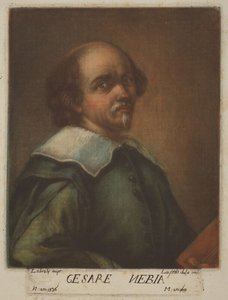
Cesare Nebbia
1536 - 1614 , Italy
Belangrijkste feiten
- Artistic Movement Or Style: Mannerism
- Artists Or Movements Influenced By This Artist: ['Federico Zuccari']
- Artists Who Influenced This Artist: ['Girolamo Muziano']
- Date Of Birth: 1536, Orvieto
- Date Of Death: 1614
- Full Name: Cesare Nebbia
- Nationality: Italian
- Notable Artworks:
- Christ Crowned with Thorns
- Resurrection of Lazarus
- Place Of Birth: Orvieto, Italy

