() ·

Een schilderij speciaal voor u gemaakt, met de hand

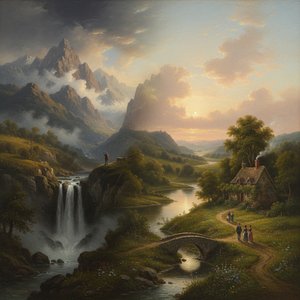
Eule am Grab

Handgemaakte olieverfreproductie

Met de hand geschilderd in olieverf op canvas in uw gewenste maat en lijst, op bestelling gemaakt door onze kunstenaars. ( Schakel over naar print Schakel over naar digitale afbeeldingen)

Beschrijving verzamelobject

Een prachtige afbeelding van een uil op een grafsteen door Caspar David Friedrich, een icoon van de Duitse Romantiek. Laat je inspireren door zijn symbolische kunst en de schoonheid van de natuur.

Biografie kunstenaar

Caspar David Friedrich (1774-1840): Duitse Romantiek kunstenaar die prachtige landschappen schilderde & symbolische kunst verkende, geïnspireerd door natuur en spiritualiteit. Een pionier van zijn tijd.

vanaf ·

Hoofdstuk 1

Hoe groot moet het zijn?

Schuif om de afmetingen te wijzigen; de afbeelding aan de linkerzijde toont de lijst in de werkelijke breedte. De oorspronkelijke verhoudingen blijven behouden.

Standaardformaat
op maat gemaakt
CM
INCH

Kies uit onze vooraf ingestelde maten die overeenkomen met de originele verhoudingen van het kunstwerk.

breedte
hoogte

Voer de breedte en hoogte in die u nodig heeft, passend bij uw lijst of uw muur. Omdat dit handgeschilderd is, kan de kunstenaar bij een afmeting met een andere beeldverhouding iets meer rondom het schilderij schilderen of juist iets meer weglaten — u kiest zelf. Wij sturen u een digitaal mockup ter goedkeuring voordat het schilderwerk begint. De afbeelding die op deze pagina wordt getoond, is niet het uiteindelijke resultaat — alleen de mockup geeft dit weer.


Hoofdstuk 2

Hoe moet het worden geleverd?

Kies de randen van het canvas

Kies uw lijst

Corner sample of the WhiteWrap canvas edge finish, stretched on massief hout bars
Wit €1
Corner sample of the BlurSideWrap canvas edge finish, stretched on massief hout bars
Vervagende randen €1
Corner sample of the ExtendedWrap canvas edge finish, stretched on massief hout bars
Doorlopende rand €1
Corner sample of the P118B picture frame: gegoten polystyreen, 5 cm wide and 3 cm thick
P118B €10
Corner sample of the P118H picture frame: gegoten polystyreen, 5 cm wide and 3 cm thick
P118H €10
Corner sample of the P118W picture frame: gegoten polystyreen, 5 cm wide and 3 cm thick
P118W €10
Corner sample of the P438Z picture frame: gegoten polystyreen, 5.5 cm wide and 3.5 cm thick
P438Z €10
Corner sample of the P508JH picture frame: gegoten polystyreen, 7 cm wide and 3.5 cm thick
P508JH €12
Corner sample of the P508YH picture frame: gegoten polystyreen, 7 cm wide and 3.5 cm thick
P508YH €12
Corner sample of the P805H picture frame: gegoten polystyreen, 5 cm wide and 3.5 cm thick
P805H €10
Corner sample of the P805Z picture frame: gegoten polystyreen, 5 cm wide and 3.5 cm thick
P805Z €10
Corner sample of the P919BZ picture frame: gegoten polystyreen, 7 cm wide and 3.5 cm thick
P919BZ €10
Corner sample of the P919G picture frame: gegoten polystyreen, 7 cm wide and 3.5 cm thick
P919G €10
Corner sample of the P919XJ picture frame: gegoten polystyreen, 7 cm wide and 3.5 cm thick
P919XJ €10
Corner sample of the P959ZH picture frame: gegoten polystyreen, 5 cm wide and 3 cm thick
P959ZH €10
Corner sample of the P968JZ picture frame: gegoten polystyreen, 6 cm wide and 4 cm thick
P968JZ €12
Corner sample of the W106C picture frame: massief hout, 5 cm wide and 3 cm thick
W106C €8
Corner sample of the W218G picture frame: massief hout, 5 cm wide and 3 cm thick
W218G €10
Corner sample of the W218JH picture frame: massief hout, 5 cm wide and 3 cm thick
W218JH €8
Corner sample of the W218Y picture frame: massief hout, 5 cm wide and 3 cm thick
W218Y €10
Corner sample of the W307PJ picture frame: massief hout, 6 cm wide and 3 cm thick
W307PJ €10
Corner sample of the W316G picture frame: massief hout, 6 cm wide and 3 cm thick
W316G €10
Corner sample of the W316PJ picture frame: massief hout, 6 cm wide and 3 cm thick
W316PJ €8
Corner sample of the W316Y picture frame: massief hout, 6 cm wide and 3 cm thick
W316Y €10
Corner sample of the W398PJ picture frame: massief hout, 5 cm wide and 3 cm thick
W398PJ €8
Corner sample of the W4111J picture frame: massief hout, 6.5 cm wide and 3.5 cm thick
W4111J €10
Corner sample of the W500HY picture frame: massief hout, 7 cm wide and 5 cm thick
W500HY €15
Corner sample of the W500JH picture frame: massief hout, 7 cm wide and 5 cm thick
W500JH €15
Corner sample of the W692G picture frame: massief hout, 8 cm wide and 4 cm thick
W692G €12
Corner sample of the W849H picture frame: massief hout, 5 cm wide and 3 cm thick
W849H €8
Corner sample of the W940BG picture frame: massief hout, 7.5 cm wide and 4.5 cm thick
W940BG €15
Corner sample of the W953PJ picture frame: massief hout, 6 cm wide and 3.5 cm thick
W953PJ €8
Corner sample of the H24-GOLD picture frame: gesneden hout met gesso, 10 cm wide and 6 cm thick
H24-GOLD €30
Corner sample of the H24-SILVER picture frame: gesneden hout met gesso, 10 cm wide and 6 cm thick
H24-SILVER €30
Corner sample of the H36-GOLD picture frame: gesneden hout met gesso, 15 cm wide and 6.5 cm thick
H36-GOLD €45
Corner sample of the H36-SILVER picture frame: gesneden hout met gesso, 15 cm wide and 6.5 cm thick
H36-SILVER €45
Lijstvoorbeeld
Ingelijst

Lijstrand: . Totale afmetingen inclusief lijst: .

Hoofdstuk 3

Wie schildert het, en moet er iets veranderen?

Voorbeelden van wat aangepast kan worden: Vervang het gezicht door een foto van de klant; Voeg een huisdier toe (bijv. vervang de kat door een hond); Voeg een verborgen boodschap toe aan de achtergrond; Wijzig het landschap of de elementen in de achtergrond.
Na de bestelling zal het team van OriginalUniqueArt.com per e-mail contact opnemen met de klant voor instructies en een mockup-voorbeeld verstrekken

Wereldwijde levering () binnen 3 tot 4 weken in plaats van de standaard 5 weken. (4 november). Zonder concessies aan de kwaliteit.

Hoofdstuk 4

De laatste hand aan

Een naambordje, zoals in een museum?

Details van de gegraveerde bronzen plaat

This elegant plaque features the artist's name and the title of the artwork, finely engraved for a timeless presentation.

It is made from bronze with a refined, elegant finish. The text is precisely laser-engraved for a sharp and permanent result. Measuring 9x2 cm, the plaque is compact yet easy to read. It's built to be durable and scratch-resistant, offering a professional, museum-quality look. Mounting is simple thanks to the included adhesive backing.

Details transparante acrylplaat

The plaque includes essential engraved details such as the artist's name, the title of the artwork, the date it was created, the type of media used-like oil on canvas or watercolor-a brief description of the piece, and a QR code that links to the complete artwork information.

It is crafted from clear acrylic, offering a sleek, modern appearance. The text is UV-engraved in black to ensure strong visual contrast. With a size of 10x15 cm, it ensures optimal readability. It comes equipped with two metal hooks for secure wall mounting. The plaque is designed to be weather-resistant, making it suitable for various environments, and it includes interactive features that work seamlessly with smartphone scanning.

Details zwarte acrylplaat

This elegant plaque includes engraved information such as the artist's name, the title of the artwork, the date it was created, the type of media used (like oil on canvas or watercolor), a short description of the artwork, and a QR code for quick access to more information.

The plaque itself is made from refined black acrylic with a premium finish. The text is laser-engraved in white for high contrast and readability. Its size is 10x15 cm, designed to be easy to read. It comes with two metal hooks for professional mounting. The design is sleek and fits any interior style. It is also weather-resistant and durable, with built-in digital integration for mobile compatibility.

Een beschermende vernis?

Wanneer heeft u het nodig?

Hoofdstuk 5

Uw schilderij, zoals u het heeft besteld

Eule am Grab

Druktechniek

Afmetingen reproductie

-

Geselecteerde topkunstenaars

Meer detail, verfijning en extra productietijd

-

Lijst voor reproductie

-

-

Voor kunstwerken of reproducties die aan één zijde groter zijn dan 105 cm (ongeveer 41 inch), wordt de lijst als een losse set verzonden. Deze methode garandeert een veilige levering en voorkomt schade tijdens het transport.

Professionele montage vereist - dit is geen doe-het-zelfproduct.
De set moet worden gemonteerd en het canvas moet worden gespannen door een ervaren professionele lijstenmaker, met gebruik van houtlijm (niet inbegrepen), een doekspanter en klemmen om de sponningen recht te houden terwijl de lijm droogt. Onjuiste montage of een ongelijkmatige spanning op het canvas kan het kunstwerk permanent beschadigen en wordt niet gedekt door onze garantie.

  • Alle massief houten onderdelen zijn inbegrepen, nauwkeurig op maat gesneden voor montage.

  • Te monteren met de meegeleverde schroeven, plus houtlijm voor de hoekverbindingen, die niet wordt meegeleverd en door uw lijstenmaker moet worden aangeschaft.

  • Professioneel gereedschap is vereist en niet inbegrepen: een spanner voor canvas en klemmen om de latten recht te houden terwijl de lijm droogt.

Belangrijk:
De hoekverbindingen vereisen houtlijm, de latten moeten met lijmklemmen worden vastgehouden tot de lijm volledig is opgedroogd, en het spannen van het canvas op het samengestelde frame vereist een doekspanter. Geen van deze artikelen is inbegrepen in de set. Wij adviseren u om een ervaren professionele lijstenmaker te raadplegen voordat u deze maat bestelt.

Naamplaatje

-

-

Beschermende vernislaag

Glanzende vernis (versterkt de kleuren en biedt bescherming tegen licht en vocht)

-

Mijn kunstwerk aanpassen

Voorbeelden van aanpassingen: vervang het gezicht door een eigen foto; voeg een huisdier toe (bijv. vervang de kat door een hond); verwerk een verborgen boodschap in de achtergrond; wijzig het landschap of andere elementen op de achtergrond.

-

Spoedlevering

Wereldwijde levering () binnen 3 tot 4 weken in plaats van de standaard 5 weken. (4 november). Geen concessies aan de kwaliteit.

-

Spoedlevering

Wereldwijde levering naar binnen 5 weken. (11 november).

Inbegrepen

Eindtotaal

€ 267

Totaalprijs € 267

De optie voor glas is alleen beschikbaar bij een formaat kleiner dan 110 cm.

Inbegrepen bij elke bestelling

  • Gratis wereldwijde expressverzending
  • Hoogwaardig linnen canvas
  • Volledige verzendverzekering
  • Garantie op terugbetaling van invoerrechten
  • Garantie op exacte kleurweergave
  • Retourbeleid van 100 dagen (alleen bij defecten)
  • 100% Geld-terug-garantie
  • Korting bij meerdere afnames

Landscape with Grave, Coffin and Owl

Caspar David Friedrich’s “Owl on a Grave” stands as an emblem of Romanticism—a movement that sought to transcend the rational Enlightenment in favor of emotion and intuition, channeling the profound influence of nature onto artistic expression. Painted around 1837, this hauntingly beautiful artwork captures not merely a visual scene but embodies the core philosophical tenets of its time, inviting contemplation about mortality and humanity’s place within the vastness of existence. Friedrich's meticulous approach to composition and his masterful use of pencil contribute to an experience that transcends mere observation—it aspires to stir the soul. ## Composition and Symbolism: The Language of Silence Friedrich’s artistic vision was deeply rooted in the prevailing spiritual climate of 19th-century Germany, where thinkers wrestled with questions of faith and purpose amidst rapid industrialization. He championed the notion that art should inspire awe and reverence for the natural world—a stance mirrored by fellow Romantic artists like Turner and Constable—who similarly endeavored to depict landscapes as arenas for profound emotional engagement. The central figure in “Owl on a Grave” is an owl perched atop a weathered wooden post or grave marker, a deliberate choice reflecting the pervasive preoccupation with death and decay within Romantic thought. Its downward gaze establishes a palpable atmosphere of introspection, prompting viewers to confront existential dilemmas—a characteristic feature of Friedrich’s oeuvre. Complementing this solemn presence are subtle additions: another bird nestled in the upper left corner – likely mirroring the owl's watchful posture – and a solitary flower positioned on the right side, injecting a touch of fragile beauty into the otherwise austere landscape. The owl itself carries profound symbolic weight—representing wisdom, death, and the afterlife—themes central to Romantic spirituality. Similarly, the grave marker serves as a poignant reminder of mortality, grounding the viewer in the inescapable reality of human existence. ## Artistic Style and Technique: Gothic Influence Meets Pencil Precision Friedrich’s artistic style is characterized by its embrace of gothic elements—particularly the dramatic interplay of light and shadow—to evoke feelings of melancholy and spiritual contemplation. He skillfully employs pencil as his medium, achieving remarkable detail and textural nuance. This technique allows him to capture the subtle nuances of atmospheric perspective, conveying a sense of depth and realism that distinguishes it from earlier neoclassical styles. Unlike many Romantic painters who favored bold brushstrokes and vibrant colors, Friedrich prioritized tonal gradation—creating a visual harmony that underscores the painting’s contemplative character. The muted palette—primarily browns, greys, and ochres—further reinforces the painting’s solemn mood and aligns with Friedrich's desire to depict nature as an arena for profound spiritual experience. ## Context and Significance: Friedrich’s Vision of Humanity’s Place in Nature Friedrich’s artistic endeavors were profoundly influenced by the intellectual currents of his time—specifically the burgeoning Romantic movement’s rejection of Enlightenment rationalism in favor of emotion and intuition. He championed the idea that art should inspire awe and reverence for the natural world, mirroring a broader cultural shift toward valuing experience over dogma. Like Turner and Constable before him, Friedrich sought to capture not merely what he saw but how it *felt*. His paintings frequently featured solitary figures dwarfed by expansive landscapes—a deliberate strategy designed to convey the insignificance of human existence against the backdrop of cosmic grandeur. This visual motif powerfully communicates the Romantic preoccupation with confronting mortality and contemplating the sublime—the experience of encountering something beyond comprehension that simultaneously inspires terror and delight. ## Preservation and Display: A Testament to Artistic Legacy The original “Owl on a Grave” resides within the Pomerania State Museum, Greifswald, Germany—a repository of art and cultural heritage that houses over 14,000 years of Pomeranian history. The museum’s architectural ensemble—characterized by its harmonious blend of Gothic and neo-classical styles—provides an ideal setting for appreciating Friedrich's masterpiece alongside other significant artworks from the Romantic era. Its careful curation ensures that future generations can experience the enduring beauty and intellectual depth of this iconic painting. Experience the beauty and symbolism of Caspar David Friedrich's "Owl on a Grave" through OriginalUniqueArt’s handmade oil painting reproductions.

Veelgestelde vragen

Wie is de maker van "Eule am Grab" en bij welke stroming hoort dit werk?

"Eule am Grab" werd gecreëerd door Caspar David Friedrich in de Romanticism-stijl. De kunstenaar en de stroming bepalen de traditie van het werk.

In welke oriëntatie staat "Eule am Grab" door Caspar David Friedrich?

"Eule am Grab" door Caspar David Friedrich is een Staand formaat compositie. Het is raadzaam de verhoudingen te controleren voordat u een afmeting voor de print kiest.

Is er een gids beschikbaar voor "Eule am Grab" door Caspar David Friedrich?

De Informatieblad-pagina van "Eule am Grab" door Caspar David Friedrich biedt een printbaar factsheet van twee pagina's: het kunstwerk met de bijbehorende identificatietabel, een tijdlijn die het werk plaatst binnen de levensloop van de kunstenaar, andere werken van de kunstenaar, het gemeten kleurenpalet en kant-en-klare citaten in vier verschillende stijlen.

Meer over dit schilderij

Voorvertoning Bekijk in AR Schakel over naar print Schakel over naar digitale afbeeldingen Verstuur
Details bekijken Gids Toevoegen aan favorieten Download Vergelijkbare items Röntgenonderzoek Diavoorstelling Vraag & antwoord Statistieken

In cijfers

  • 1837het jaar waarin het werd geschilderd
  • 29lijsten om uit te kiezen
  • standaardmaten, in hun eigen verhoudingen
  • 5weken om te schilderen en te leveren
Caspar David Friedrich

Caspar David Friedrich

1774 - 1840, Duitsland

Snelle feiten over Caspar David Friedrich

  • Artistic Movement Or Style: Romantiek
  • Artists Or Movements Influenced By This Artist:
    • Symbolisten
    • Surrealisten
  • Artists Who Influenced This Artist:
    • Nederlandse Meesters
    • J.C. Dahl
  • Date Of Birth: 5 september 1774
  • Full Name: Caspar David Friedrich
  • Nationality: Duits
  • Notable Artworks:
    • Abtei im Eichwald
    • Wanderer über dem Nebelmeer

    • Kreideklippen auf Rügens
    • Das Eissee
  • Place Of Birth: Greifswald, Duitsland

Biografie kunstenaar

A Solitary Vision: The Life and Art of Caspar David Friedrich

Born in the Baltic port city of Greifswald in 1774, Caspar David Friedrich’s life was steeped in a melancholic atmosphere that would profoundly shape his artistic vision. His early years were marked by loss – the deaths of his mother and siblings cast a long shadow, fostering a sensitivity to mortality and transience that became central themes in his work. Initially educated by his older brother Christian in drawing, Friedrich’s formal training began at the University of Leipzig, where he pursued both art and theology, though neither degree was completed. This dual interest – a fascination with the visual world alongside a deep spiritual questioning – would prove crucial to his development as an artist. Further studies in Copenhagen honed his technical skills, exposing him to landscape painting traditions that would serve as a foundation for his unique style, yet it was not imitation he sought but rather expression—a means of conveying inner emotional states through the language of nature.

The Birth of Romantic Landscape

Friedrich’s artistic journey wasn't merely about depicting scenery; it was about imbuing landscapes with profound symbolic meaning. He moved away from the meticulous detail favored by earlier artists, embracing a more personal and expressive approach. His paintings are characterized by an emphasis on the sublime – evoking feelings of awe, terror, and spiritual connection in the face of nature’s grandeur. The use of *Rückenfiguren*, figures seen from behind, became a signature element, inviting viewers to step into the scene and share in the contemplative experience. Natural elements like ancient trees, towering mountains, swirling fog, and crumbling ruins weren't simply picturesque details; they were potent symbols representing life’s cycles, spiritual longing, and the weight of history. His palette, often muted with blues, grays, and browns, further enhanced the mood of introspection and solemnity that pervades his work. He pioneered a way to depict landscapes not as mere views but as reflections of the human soul—a revolutionary concept for its time.

Iconic Works and Enduring Themes

Several paintings stand out as defining examples of Friedrich’s artistic achievement. “Abbey in the Oakwood” (1809-1810), a haunting image of a ruined churchyard enveloped by bare trees, speaks powerfully to themes of mortality and spiritual decay. The composition is deliberately sparse, emphasizing the desolate beauty of ruin and prompting reflection on the passage of time. “Wanderer Above the Sea of Fog” (c. 1818), arguably his most recognizable work, depicts a solitary man gazing out over a misty mountain landscape. This iconic image embodies the Romantic ideal of the individual confronting the vastness and mystery of existence—a figure dwarfed by nature yet simultaneously connected to it on a spiritual level. The Rückenfigur technique powerfully conveys this sense of contemplation and vulnerability. “Chalk Cliffs on Rügen” (1818) demonstrates Friedrich’s mastery of atmospheric effects, capturing the ethereal quality of dawn light filtering through fog-laden cliffs. It subtly evokes German national identity—a growing concern in the fragmented political landscape of early 19th-century Germany. Finally, “The Sea of Ice” (1824) presents a dramatic depiction of an Arctic wasteland, representing nature’s immense power and indifference to human fate. The painting's chilling realism underscores Friedrich’s fascination with confronting the sublime—the awe-inspiring beauty that simultaneously inspires terror and reverence.

Influences and Artistic Style

Friedrich drew inspiration from diverse sources, including Dutch Golden Age landscape painters like Jacob van Ruisdael, whose masterful use of light and atmosphere profoundly impacted his artistic sensibilities. He was also deeply influenced by the philosophical writings of Immanuel Kant, particularly Kant’s concept of transcendental idealism—the idea that our experience is shaped by innate mental structures rather than solely by sensory input. This intellectual framework informed Friedrich's belief in the importance of subjective perception and emotional expression as pathways to spiritual understanding. His artistic style is characterized by a deliberate simplification of form, prioritizing mood and symbolism over precise detail. He eschewed academic conventions, favoring instead a painterly technique that conveyed emotion through tonal gradations and textural variations—a radical departure from prevailing artistic trends.

Legacy and Rediscovery

Friedrich’s art achieved considerable renown during his lifetime, though it remained largely unrecognized for decades after his death in Dresden in 1840. However, he experienced a significant revival in the late 20th century, becoming widely celebrated as one of the most important figures in German Romanticism. His emphasis on subjective experience and emotional expression paved the way for later movements like Symbolism and Surrealism, influencing generations of artists who sought to explore the inner world through visual means. He didn’t simply paint what he saw; he painted what he *felt*, and it is this profound honesty that continues to captivate and inspire audiences today. His work stands as a testament to the enduring power of art to confront existential questions—to contemplate our relationship with nature, with God, and with ourselves—a timeless contribution to Western artistic heritage.

Snelle feiten

  • Location: Pomerania State Museum, Greifswald
  • Subject or theme: Mortality & Nature
  • Movement: Romanticism
  • Artist: Caspar David Friedrich
  • Title: Owl on a grave
  • Dimensions: 25,9 x 22,2 cm

Kunstquiz

Er is slechts één goed antwoord op elke vraag.

Vraag 1:
¿Quién fue Caspar David Friedrich?
Vraag 2:
¿En qué movimiento artístico pertenece esta obra?
Vraag 3:
¿Cuál es el elemento simbólico más destacado en la pintura?
Vraag 4:
¿Qué técnica artística utilizó Friedrich para crear esta obra?
Vraag 5:
¿Dónde se encuentra actualmente la pintura original?