

 Voorvertoning
 Verstuur
 Delen
Delen
 Details bekijken

 Download
 Vergelijkbare items
 Röntgenonderzoek
 Diavoorstelling
 Statistieken
Matthew Boulton
 Acrylic On Canvas
- WallArt
- Neoclassical
 1772
1772 127.0 x 102.0 cm
 Birmingham Museums And Art Gallery
 Lees meer
Giclée / Kunstafdrukken
Giclée- of canvasafdruk van museumkwaliteit met een snelle productie en flexibele afwerkingsmogelijkheden. ( Bestel handgeschilderde reproductie Schakel over naar digitale afbeelding)




P118B $10

P118H $10

P118W $10

P438Z $10

P508JH $12

P508YH $12

P805H $10

P805Z $10

P919BZ $10

P919G $10

P919XJ $10

P959ZH $10

P968JZ $12

W106C $8

W218G $10

W218JH $8

W218Y $10

W307PJ $10

W316G $10

W316PJ $8

W316Y $10

W398PJ $8

W4111J $10

W500HY $15

W500JH $15

W692G $12

W849H $8

W940BG $15

W953PJ $8




Kies uit onze vooraf ingestelde maten die overeenkomen met de originele verhoudingen van het kunstwerk.

U kunt uw eigen afmetingen opgeven om in een specifieke lijst of ruimte te passen. Als de door u gekozen maat niet overeenkomt met de proporties van het originele kunstwerk, zullen wij de afbeelding bijsnijden of uitbreiden met een gespiegelde of effen rand. Een digitaal mockup wordt ter goedkeuring naar u verzonden voordat de productie begint.
Houd er rekening mee dat de preview op het scherm de werkelijke bijsneding of uitbreiding niet weergeeft. Alleen de mockup toont de uiteindelijke compositie nauwkeurig.
Hoewel aangepaste maten beschikbaar zijn, raden wij aan een afmeting uit de vooraf bepaalde lijst te kiezen om de originele proporties te behouden.
Wereldwijde levering () binnen 2 weken in plaats van de standaard 4/5 weken. (16 september)

Gratis wereldwijde expressverzending

Hoogwaardig linnen canvas

Volledige verzendverzekering

Garantie op terugbetaling van invoerrechten

Garantie op exacte kleurweergave

Retourbeleid van 100 dagen (alleen bij defecten)

100% Geld-terug-garantie

Korting bij meerdere afnames
 De optie voor glas is alleen beschikbaar bij een formaat kleiner dan 110 cm.

Matthew Boulton
Giclée / Kunstafdrukken
Afmetingen reproductie
-


Eindtotaal
$ 81
The Subject – Matthew Boulton, Architect of Industry
Carl Fredrik von Breda’s 1772 portrait of Matthew Boulton is more than a simple likeness; it's a carefully constructed tableau of ambition, industry, and the burgeoning spirit of the Industrial Revolution. Boulton himself was a pivotal figure in this transformative era – a Birmingham manufacturer who revolutionized iron production, coin minting, and ultimately, the very fabric of British commerce. The painting captures him not merely as a businessman, but as a man deeply invested in shaping his world, radiating an aura of shrewdness and determined innovation. His seated posture, hands deliberately placed, speaks to a mind constantly engaged in calculation and strategic planning – a visual representation of his relentless drive.
A Neoclassical Composition – Echoes of Reynolds and the Age of Reason
Von Breda, trained under the influence of Joshua Reynolds, a leading figure in the British Royal Academy, skillfully employs the principles of neoclassical portraiture. The composition is meticulously balanced, reflecting the order and rationality that defined the era. The dark red curtain serves as a dramatic backdrop, framing Boulton against a subtle suggestion of an outdoor scene – perhaps a glimpse of Birmingham’s developing cityscape through a window. This carefully orchestrated space isn't merely decorative; it subtly elevates Boulton’s status, associating him with both the stability of tradition and the promise of progress. The lighting is directional, highlighting his face and hands, drawing the viewer’s attention to his intellect and authority.
- The use of chiaroscuro (strong contrasts between light and dark) creates a sense of depth and drama.
- Boulton's attire – the dark coat, white shirt, and waistcoat – adheres to the formal dress codes of the period, signifying his wealth and social standing.
- The composition’s symmetry reinforces Boulton’s position as a central figure in the narrative.
Symbolism and Context – The Lunar Society and Birmingham's Rise
To fully appreciate this portrait, it’s crucial to understand the context of 18th-century Birmingham. The city was undergoing an unprecedented transformation, fueled by coal mining, iron production, and the rise of a vibrant merchant class. Matthew Boulton was at the heart of this revolution, alongside James Watt, forming the core of the Lunar Society – a group of intellectuals, scientists, and industrialists who met regularly to exchange ideas and push the boundaries of knowledge. Von Breda’s painting subtly reflects this intellectual ferment; Boulton's thoughtful gaze suggests a man deeply engaged in philosophical inquiry as well as practical innovation. The small object he holds—likely a tool or instrument related to his work – hints at the constant activity of his mind.
Further Research:- Matthew Boulton (1728–1809) | Art UK
- Carl Frederik von Breda
- Matthew Boulton (1728–1809) | Wikipedia
A Legacy in Oil – The Artist’s Hand and the Enduring Image
Von Breda's masterful brushwork, evident in the rich textures of Boulton’s clothing and the subtle modeling of his face, speaks to a deep understanding of oil painting techniques. The portrait is not merely a representation; it’s an embodiment of Boulton’s character – a man of intellect, determination, and entrepreneurial spirit. The enduring appeal of this image lies in its ability to capture a pivotal moment in British history, portraying a figure who fundamentally reshaped the nation's economy and technological landscape. Reproductions of this work offer a tangible connection to this remarkable era, inviting viewers to contemplate the legacy of Matthew Boulton and the transformative power of innovation.
Biografie van de kunstenaar
A Swedish Master Across Borders: The Life and Art of Carl Frederik von Breda
Carl Frederik von Breda, a name often whispered alongside the revered likenesses of Van Dyck, stands as a pivotal figure in the history of European portraiture. Born in Stockholm in 1759, his artistic journey wasn’t confined by national boundaries but rather blossomed through a captivating interplay between Swedish tradition and the vibrant innovations of Britain. His lineage—descended from Pieter von Breda, a Dutch emigrant who established roots in Sweden around 1670—carried not only an artistic legacy – his grandfather Lucas was a painter, and his father, Lucas the younger, an art collector and arbitrator – but also a cosmopolitan sensibility that profoundly shaped his career. From a young age, Breda demonstrated exceptional talent, enrolling at the Royal Swedish Academy of Arts at nineteen where he studied historical and portrait painting under Lorens Pasch the Younger. Early recognition swiftly arrived; prizes accumulated, and by 1784, he was already exhibiting nineteen paintings and receiving commissions for royal portraits – including those of Duchess Hedvig Elisabeth Charlotte, Crown Prince Gustavus Adolphus, and King Gustavus III himself. These early works reveal a nascent talent, firmly rooted in the established Swedish style yet hinting at an ambition that stretched far beyond its borders.London Calling: The Influence of Reynolds and British Portraiture
A transformative moment arrived when Breda faced a difficult choice after losing a competition at the Academy. Rather than adhering to the conventional path towards Paris or Rome, he made the bold decision to relocate to London with his family in 1786. This move proved nothing short of revolutionary. In London, Breda sought out and secured tutelage under Sir Joshua Reynolds, an encounter that fundamentally altered the trajectory of his artistic development. While Reynolds wasn’t known for intensive instruction, his influence was profound, instigating what has been described as a “revolutionary change” in the young artist's style. Breda quickly established a successful studio on St James’s Street, attracting a clientele drawn from London’s intellectual and social elite – the ‘learned men and literati,’ as they were known. He became sought after for his ability to capture not just likeness but also character and intellect. His portraits during this period include prominent figures such as abolitionists Thomas Clarkson and James Ramsay, engineers James Watt and Matthew Boulton of the famed Lunar Society, botanist William Withering, and Mary Priestley. These weren’t merely commissions; they were engagements with some of the most forward-thinking minds of the era. A testament to his growing reputation was his portrait of Reynolds himself, completed as a diploma piece for admission to the Stockholm Academy of Arts in 1791 – a symbolic acknowledgement of his artistic debt and achievement. The shift towards a more dynamic, expressive style, evident in the subtle shifts of expression and the use of light and shadow, is directly attributable to Reynolds’s influence.Return to Sweden and Artistic Maturity
In 1796, Breda returned to Stockholm, accepting a professorship at the Royal Swedish Academy of Arts. This marked a new phase in his career, one characterized by artistic maturity and a distinctive style honed during his years in England. He was immediately inundated with portrait commissions, quickly becoming a leading figure in the Swedish art scene. His brushwork became bolder and more spirited, reflecting the energy and dynamism he had absorbed in London. The late 1790s are often considered to be among his finest years, with works exhibiting an early embrace of Romantic sensibilities. Notable portraits from this period include those of his father Lucas, two of his nephews, the scholar Nils von Rosenstein, and perhaps most celebrated of all, Teresa Vandoni, a renowned Italian opera singer performing at the Royal Swedish Opera. The portrait of Vandoni is particularly striking, capturing her dramatic presence and vocal artistry with remarkable sensitivity – a testament to Breda’s ability to convey not just physical likeness but also inner emotion. This period saw him experimenting with looser brushstrokes and brighter palettes, moving away from the more formal conventions of earlier works.Key Works & Collections
- James Watt: A compelling portrait of the renowned engineer, held in the National Portrait Gallery, London.
- Matthew Boulton: Another significant work depicting a member of the Lunar Society, residing in Birmingham Museum and Art Gallery.
- Teresa Vandoni: Often considered his most celebrated piece, capturing the essence of the Italian opera singer.
- Portrait of Joshua Reynolds: A testament to Breda’s admiration for his mentor and a key work in establishing his own artistic credentials.
- Mrs. William Hartigan: An example of his skill in capturing the elegance and refinement of society figures.
Legacy and Historical Significance
Carl Frederik von Breda's impact on Swedish art extended far beyond his own prolific output. His exposure to British artistic trends – particularly the influence of Reynolds – helped modernize portraiture in Sweden, inspiring subsequent generations of artists to embrace new techniques and stylistic approaches. He wasn’t simply a painter of faces; he was a chronicler of his time, creating a visual record of some of the leading scientific, intellectual, and cultural figures of the late 18th and early 19th centuries. His portraits of members of the Lunar Society, for example, offer invaluable insights into this influential group of innovators. The artistic legacy continued within his family; his son, Johan Fredrik von Breda, followed in his father’s footsteps, receiving tutelage from him and continuing the family tradition. While some critics noted a perceived decline in consistency in his later works – a tendency towards monotony – Breda remained an important figure in Swedish art history until his death in Stockholm in 1818. He is remembered today as “the Van Dyck of Sweden,” a testament to his skill, elegance, and enduring contribution to the world of portraiture. His work serves as a bridge between the formal traditions of the 18th century and the burgeoning Romanticism of the early 19th, solidifying his place as a truly unique and significant artist.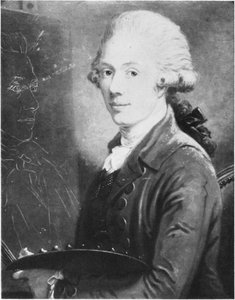
Carl Fredrik von Breda
1759 - 1818 , Zweden
Belangrijkste feiten
- Artistic Movement Or Style: Portretkunst, Romantiek
- Artists Or Movements Influenced By This Artist: ['Zwedische portretschilders']
- Artists Who Influenced This Artist:
- Lorens Pasch
- Joshua Reynolds
- Date Of Birth: 1759
- Date Of Death: 1818
- Full Name: Carl Frederik von Breda
- Nationality: Zwitsers
- Notable Artworks:
- Reynolds portret
- Teresa Vandoni
- James Watt
- Matthew Boulton
- Place Of Birth: Stockholm, Zweden
Gerelateerde artikelen

Neoclassical Art: The Timeless Elegance of Order, Virtue, and Classical Grace
Explore the profound elegance of Neoclassical art. Discover the principles of order, symmetry, and virtue through the works of masters like David and Mengs. Immerse yourself in a journey of classical grace and timeless aesthetic perfection.
Eugen von Blaas: Capturing Alpine Life & Sentiment in 19th-Century Austrian Painting
Discover the captivating world of Eugen von Blaas! Explore his exquisite 19th-century paintings capturing Venetian life & Alpine beauty. Learn about his Academic Classicism style and find museum-quality reproductions at OriginalUniqueArt.
Top 10 Neoclassicistische Meesterwerken: Kunstgeschiedenis voor uw Interieur
Ontdek de top 10 neoclassicistische meesterwerken! Leer over David, Ingres & Canova en hun tijdloze kunst. Vind museumkwaliteit reproducties voor een elegante inrichting op OriginalUniqueArt.com. Exploreer de collectie online!

Neoclassical Portraiture: The Timeless Elegance of Order, Grace, and Academic Mastery
Explore the refined world of Neoclassical portraiture. Discover the mastery of line, light, and order through an expert exploration of academic art history, from Jacques-Louis David to Jean-Antoine Houdon. Immerse yourself in the timeless elegance of classical realism.
Timeless Elegance: The Grace, Order, and Intellectual Majesty of Neoclassical Portraiture
Explore the profound beauty of Neoclassical portraiture. Discover how masters used order, grace, and antiquity to transform portraits into timeless monuments of virtue and character through academic excellence.
