

 Voorvertoning
 Verstuur
 Delen
Delen
 Details bekijken
 Gids
Gids

 Download
 Vergelijkbare items
 Röntgenonderzoek
 Diavoorstelling
 Statistieken
James Watt

 Lees meer
Ontvang een bestand dat klaar is voor drukwerk en de kwaliteit van het online voorbeeld ver overstijgt. Elke digitale afbeelding die wij verkopen, is afkomstig van een high-resolution master uit onze database — meestal tussen de 5.000 en 15.000 pixels breed — zodat u met vertrouwen groot kunt afdrukken, nauwkeurig kunt bijsnijden of fijne details kunt reproduceren.
Geen enkel bestand verlaat ons atelier onbewerkt. Een digitaal expert controleert de kleuren aan de hand van het originele schilderij en corrigeert deze indien nodig, om vervolgens de helderheid en details te verbeteren met professionele retoucheertechnieken — waarbij de penseelstreek en stijl van de kunstenaar altijd strikt worden gerespecteerd. Het resultaat is een afbeelding die oogt als het schilderij zelf, en niet als een gescande foto met een filter.
U keurt goed voordat het proces wordt afgerond: onze expert stuurt de afbeelding binnen 72 uur per e-mail naar u toe ter beoordeling. Niet tevreden? Vraag om verbeteringen of correcties, of vraag een terugbetaling aan als de kwaliteit niet voldoet.
Dit is de kwaliteit waarop uitgevers, designstudio's, galeries en drukkerijen vertrouwen.
Digitale afbeeldingen
Download een bestand met hoge resolutie voor persoonlijke weergave, afdrukken en creatieve projecten. ( Schakel over naar print Bestel handgeschilderde reproductie)
Inbegrepen bij elke bestelling van een digitale afbeelding
Professionele digitale levering, gegarandeerd
Wanneer u kiest voor OriginalUniqueArt.com, ontvangt u niet alleen een afbeelding – u krijgt een professioneel verbeterd digitaal kunstwerk, met precisie vervaardigd en voorzien van een tevredenheidsgarantie. Dit is alles wat automatisch bij uw bestelling is inbegrepen:

Snelle levering per e-mail
Uw hoogwaardige digitale afbeeldingsbestand wordt binnen 72 uur na bestelling naar u gemaild – klaar voor direct gebruik.

AI-verbeterd digitaal bestand
Uw kunstwerk wordt professioneel geoptimaliseerd met behulp van geavanceerde AI-tools en handmatige bewerkingen, waardoor maximale details, helderheid en kleurnauwkeurigheid worden gegarandeerd.

Gratis levenslange herlevering van digitale bestanden
Je bestand per ongeluk verwijderd of kwijtgeraakt? Geen zorgen – we sturen het u op elk gewenst moment gratis opnieuw toe.

Geen invoerkosten – nooit
Geniet direct van uw kunstwerk zonder invoerrechten, belastingen of verzendkosten – digitale downloads zijn altijd belastingvrij.

Garantie op kleurgetrouwheid
Met behulp van professionele hulpmiddelen en kleurbeheer zorgen wij ervoor dat uw digitale afbeelding de originele kleuren zo nauwkeurig mogelijk weergeeft.

100 dagen tevredenheidsgarantie
Mocht u niet tevreden zijn met uw digitale afbeelding, dan passen wij deze aan of storten wij 100% terug binnen 100 dagen – zonder vragen te stellen.

100% Geld-terug-garantie
Niet tevreden? Ontvang een volledige terugbetaling binnen 100 dagen na ontvangst van uw digitale bestand – zonder vragen te stellen.

Korting bij grote bestellingen
Koop 3 afbeeldingen, bespaar 10% - Koop 5, bespaar 15% - Koop 10+, bespaar 20%. Ideaal voor creatieve projecten, galerieën en bureaus.
The Artist and His Style
Carl Fredrik Von Breda was a Swedish painter who was known for his portraits of prominent figures of the time. His style was characterized by simplicity, elegance, and attention to detail. In the James Watt portrait, Von Breda's use of light and shadow creates a sense of depth and dimensionality, drawing the viewer's eye to the subject's face.The Painting's Significance
The James Watt portrait is not only a masterpiece of Neoclassical art but also an important historical document. It provides a glimpse into the life and work of one of the most influential figures of the Industrial Revolution. The painting shows James Watt seated at a table, surrounded by books and papers, with a look of contemplation on his face. This image conveys the idea of Watt as a thoughtful and introspective person, deeply engaged in his work.- The painting is made with oil on canvas, which was a common medium for artists during the Neoclassical period.
- The use of chiaroscuro creates a sense of volume and depth in the painting, drawing the viewer's eye to the subject's face.
- The National Portrait Gallery has an extensive collection of portraits, including works by Carl Fredrik Von Breda and other notable artists.
The James Watt portrait by Carl Fredrik Von Breda is a significant work of art that provides a glimpse into the life and work of one of the most influential figures of the Industrial Revolution. Its beauty, historical significance, and cultural importance make it a must-see for anyone interested in art, history, or science.
Veelgestelde vragen
Kan ik "James Watt" door Carl Fredrik von Breda onder ander licht bekijken?
De röntgenweergave van "James Watt" door Carl Fredrik von Breda is te vinden op de Röntgenanalyse-pagina van het kunstwerk: een interactieve verkenning van het beeld door middel van elf optische lagen.
Waar kan ik een handgeschilderde reproductie van "James Watt" door Carl Fredrik von Breda kopen?
"James Watt" is verkrijgbaar als een met de hand geschilderde olieverfreproductie op linnen canvas. U kunt uw bestelling plaatsen op de Handgeschilderde reproductie pagina, met een keuze uit verschillende formaten.
Is er een factsheet over "James Watt" door Carl Fredrik von Breda voor studenten?
De gids voor "James Watt" is de Informatieblad-pagina van het kunstwerk – een printbaar informatieblad waarop het kunstwerk wordt getoond met het bijschrift, de bronvermelding en de identificatietabel (kunstenaar, data, medium, originele afmetingen, collectie).
Kunstenaarsbiografie
A Swedish Master Across Borders: The Life and Art of Carl Frederik von Breda
Carl Frederik von Breda, a name often whispered alongside the revered likenesses of Van Dyck, stands as a pivotal figure in the history of European portraiture. Born in Stockholm in 1759, his artistic journey wasn’t confined by national boundaries but rather blossomed through a captivating interplay between Swedish tradition and the vibrant innovations of Britain. His lineage—descended from Pieter von Breda, a Dutch emigrant who established roots in Sweden around 1670—carried not only an artistic legacy – his grandfather Lucas was a painter, and his father, Lucas the younger, an art collector and arbitrator – but also a cosmopolitan sensibility that profoundly shaped his career. From a young age, Breda demonstrated exceptional talent, enrolling at the Royal Swedish Academy of Arts at nineteen where he studied historical and portrait painting under Lorens Pasch the Younger. Early recognition swiftly arrived; prizes accumulated, and by 1784, he was already exhibiting nineteen paintings and receiving commissions for royal portraits – including those of Duchess Hedvig Elisabeth Charlotte, Crown Prince Gustavus Adolphus, and King Gustavus III himself. These early works reveal a nascent talent, firmly rooted in the established Swedish style yet hinting at an ambition that stretched far beyond its borders.London Calling: The Influence of Reynolds and British Portraiture
A transformative moment arrived when Breda faced a difficult choice after losing a competition at the Academy. Rather than adhering to the conventional path towards Paris or Rome, he made the bold decision to relocate to London with his family in 1786. This move proved nothing short of revolutionary. In London, Breda sought out and secured tutelage under Sir Joshua Reynolds, an encounter that fundamentally altered the trajectory of his artistic development. While Reynolds wasn’t known for intensive instruction, his influence was profound, instigating what has been described as a “revolutionary change” in the young artist's style. Breda quickly established a successful studio on St James’s Street, attracting a clientele drawn from London’s intellectual and social elite – the ‘learned men and literati,’ as they were known. He became sought after for his ability to capture not just likeness but also character and intellect. His portraits during this period include prominent figures such as abolitionists Thomas Clarkson and James Ramsay, engineers James Watt and Matthew Boulton of the famed Lunar Society, botanist William Withering, and Mary Priestley. These weren’t merely commissions; they were engagements with some of the most forward-thinking minds of the era. A testament to his growing reputation was his portrait of Reynolds himself, completed as a diploma piece for admission to the Stockholm Academy of Arts in 1791 – a symbolic acknowledgement of his artistic debt and achievement. The shift towards a more dynamic, expressive style, evident in the subtle shifts of expression and the use of light and shadow, is directly attributable to Reynolds’s influence.Return to Sweden and Artistic Maturity
In 1796, Breda returned to Stockholm, accepting a professorship at the Royal Swedish Academy of Arts. This marked a new phase in his career, one characterized by artistic maturity and a distinctive style honed during his years in England. He was immediately inundated with portrait commissions, quickly becoming a leading figure in the Swedish art scene. His brushwork became bolder and more spirited, reflecting the energy and dynamism he had absorbed in London. The late 1790s are often considered to be among his finest years, with works exhibiting an early embrace of Romantic sensibilities. Notable portraits from this period include those of his father Lucas, two of his nephews, the scholar Nils von Rosenstein, and perhaps most celebrated of all, Teresa Vandoni, a renowned Italian opera singer performing at the Royal Swedish Opera. The portrait of Vandoni is particularly striking, capturing her dramatic presence and vocal artistry with remarkable sensitivity – a testament to Breda’s ability to convey not just physical likeness but also inner emotion. This period saw him experimenting with looser brushstrokes and brighter palettes, moving away from the more formal conventions of earlier works.Key Works & Collections
- James Watt: A compelling portrait of the renowned engineer, held in the National Portrait Gallery, London.
- Matthew Boulton: Another significant work depicting a member of the Lunar Society, residing in Birmingham Museum and Art Gallery.
- Teresa Vandoni: Often considered his most celebrated piece, capturing the essence of the Italian opera singer.
- Portrait of Joshua Reynolds: A testament to Breda’s admiration for his mentor and a key work in establishing his own artistic credentials.
- Mrs. William Hartigan: An example of his skill in capturing the elegance and refinement of society figures.
Legacy and Historical Significance
Carl Frederik von Breda's impact on Swedish art extended far beyond his own prolific output. His exposure to British artistic trends – particularly the influence of Reynolds – helped modernize portraiture in Sweden, inspiring subsequent generations of artists to embrace new techniques and stylistic approaches. He wasn’t simply a painter of faces; he was a chronicler of his time, creating a visual record of some of the leading scientific, intellectual, and cultural figures of the late 18th and early 19th centuries. His portraits of members of the Lunar Society, for example, offer invaluable insights into this influential group of innovators. The artistic legacy continued within his family; his son, Johan Fredrik von Breda, followed in his father’s footsteps, receiving tutelage from him and continuing the family tradition. While some critics noted a perceived decline in consistency in his later works – a tendency towards monotony – Breda remained an important figure in Swedish art history until his death in Stockholm in 1818. He is remembered today as “the Van Dyck of Sweden,” a testament to his skill, elegance, and enduring contribution to the world of portraiture. His work serves as a bridge between the formal traditions of the 18th century and the burgeoning Romanticism of the early 19th, solidifying his place as a truly unique and significant artist.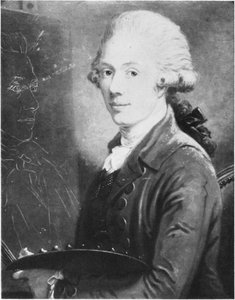
Carl Fredrik von Breda
1759 - 1818 , Zweden
Belangrijkste feiten
- Artistic Movement Or Style: Portretkunst, Romantiek
- Artists Or Movements Influenced By This Artist: ['Zwedische portretschilders']
- Artists Who Influenced This Artist:
- Lorens Pasch
- Joshua Reynolds
- Date Of Birth: 1759
- Date Of Death: 1818
- Full Name: Carl Frederik von Breda
- Nationality: Zwitsers
- Notable Artworks:
- Reynolds portret
- Teresa Vandoni
- James Watt
- Matthew Boulton
- Place Of Birth: Stockholm, Zweden