Romantic Industrialization · 1823
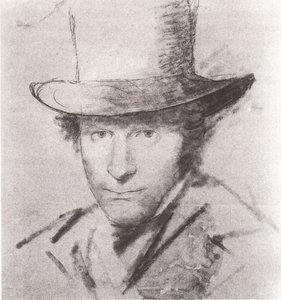
Self-Portrait (Carl Blechen, 1823)
Carl Blechen (1798–1840) maakte Self-Portrait. Het dateert uit 1823. Het behoort tot de Romantic Industrialization-stroming. Het is gemaakt van Acrylic. Het is te vinden in Nationalgalerie in Berlijn, Duitsland. De afmetingen zijn 26 × 20 cm.
- 1823
- Acrylic
- 26 × 20 cm
- Nationalgalerie, Berlijn

 Voorvertoning

 Met de hand geschilderd olieverfwerk
 Verstuur
 Delen
 Informatieblad


 Download
 Vergelijkbare items
 Röntgenonderzoek
 Diavoorstelling
 Vraag & antwoord

 Statistieken
Self-Portrait, in het kort
- Titel
- Self-Portrait
- Kunstenaar
- Carl Blechen (1798–1840)
- Geboren in [jaar]
- Cottbus, Duitsland
- Datum
- 1823
- Medium
- Acrylic
- Afmetingen
- 26 × 20 cm
- Te zien in
- Nationalgalerie, Berlijn, Duitsland
- Beweging
- Romantic Industrialization
- Onderwerp
- self-portrait, landscape painting, romanticism, german art, baroque style, artist’s vision
Wat stelt Self-Portrait voor?
A Visionary Encounter with Industry’s Dawn
- Subject Matter: This striking self-portrait by Carl Blechen captures a contemplative gaze directed downwards, presenting an image of intellectual introspection amidst the burgeoning industrial landscape. The artist's posture exudes seriousness and thoughtfulness—a deliberate contrast to the prevailing Romantic preoccupation with sublime landscapes.
- Style: Blechen’s work exemplifies the Romantic Industrialization movement, marking a pivotal shift away from traditional artistic conventions. While rooted in Romantic ideals of emotion and imagination, he simultaneously confronts the realities of industrial progress with unflinching honesty. The portrait eschews idealized beauty for a psychologically nuanced depiction.
- Technique: Executed in black and white lithograph printing, Blechen skillfully employs tonal gradation to convey depth and texture. Lithography, a relatively new technique at the time, allowed for precise reproductions of detail—a testament to Blechen’s artistic vision and his willingness to experiment with innovative methods.
- Historical Context: Created in 1823, this portrait emerged during a period of intense social and intellectual ferment. The Industrial Revolution was reshaping Europe, prompting artists like Blechen to grapple with questions of modernity, alienation, and the human condition. It reflects a broader artistic dialogue concerning how nature and humanity coexist within an evolving world.
- Symbolism: Beyond its formal representation, the self-portrait carries symbolic weight. The downward gaze suggests introspection and contemplation—a desire to reconcile Romantic idealism with the tangible pressures of industrial society. Furthermore, the suit symbolizes professionalism and social responsibility, mirroring Blechen’s own aspirations as he navigated his artistic career.
Lithograph Printing: A Revolutionary Medium
The choice of lithograph printing was particularly significant for Blechen's time. Unlike oil paints or watercolor—the dominant mediums of the Romantic era—lithography offered unparalleled precision and tonal control. Developed in France during the preceding decade, it allowed artists to achieve photographic realism without resorting to camera obscura techniques. This method ensured that Blechen’s portrait would retain its intricate detail and expressive atmosphere for generations to come.Romantic Industrialization: Bridging Imagination and Reality
Blechen's artistic trajectory represents a fascinating intersection between Romantic idealism and the burgeoning realities of industrialization. While acknowledging the sublime beauty of nature—a hallmark of Romantic art—he simultaneously recognized its vulnerability to encroachment by technological advancements. This duality is powerfully conveyed in his self-portrait, prompting viewers to consider the complexities inherent in reconciling aesthetic ideals with societal transformations.Emotional Resonance: A Portrait of Quiet Contemplation
Ultimately, Blechen’s self-portrait transcends mere visual representation; it communicates a profound emotional resonance. The artist's gaze—directed downwards—suggests a preoccupation with internal reflection and a yearning for understanding amidst the turbulent currents of his era. It invites contemplation on themes of identity, purpose, and the enduring human spirit—a timeless message that continues to captivate audiences today.In welk museum bevindt Self-Portrait zich?
Nationalgalerie
Berlijn, Duitsland
De geschiedenis van de Nationalgalerie Berlin De Nationalgalerie maakt deel uit van de Staatsmusea van Berlijn. De oorsprong van deze instelling is geworteld in de collectie die aanvankelijk bekendstond als de Wagenersche und Nationalgalerie. Dit fundament legde de basis voor een schatkamer gewijd aan de kunst van de 19e, 20e en 21e eeuw.


Hoogwaardige afbeeldingen van Self-Portrait

Publiek domein: de kunstenaar is overleden in 1840.
Andere formaten, uitsneden en citatie →Carl Blechen, Self-Portrait (1823), Nationalgalerie. Publiek domein
Vragen over Self-Portrait, beantwoord
Waar is "Self-Portrait" door Carl Blechen tegenwoordig te zien?
Het originele "Self-Portrait" door Carl Blechen wordt bewaard in Nationalgalerie, Berlijn, Duitsland. Een reproductie maakt het mogelijk om het werk thuis tentoon te stellen.
In welk jaar werd "Self-Portrait" door Carl Blechen gemaakt?
"Self-Portrait" dateert uit 1823. Deze datum plaatst het werk binnen de carrière van Carl Blechen en het betreffende tijdperk.
Met welke techniek is "Self-Portrait" gemaakt?
Het medium van "Self-Portrait" door Carl Blechen is Acrylic. Reproducties zijn bedoeld om de uitstraling van deze techniek weer te geven.
Wat zijn de werkelijke afmetingen van "Self-Portrait" door Carl Blechen?
Het originele werk "Self-Portrait" door Carl Blechen heeft de afmetingen 26 x 20 cm.
Wat stelt "Self-Portrait" voor?
De onderwerpen van "Self-Portrait" zijn self-portrait, landscape painting, romanticism, german art, baroque style, artist’s vision, psychological depth.
Is de afbeelding van "Self-Portrait" door Carl Blechen vrij van auteursrecht?
Wat betreft het auteursrecht valt "Self-Portrait" onder bevindt zich in het publiek domein - de auteursrechten zijn verlopen.
Wie is de kunstenaar achter "Self-Portrait"?
De kunstenaar achter "Self-Portrait" is Carl Blechen. Het werk is gecatalogiseerd onder de naam van Carl Blechen.
Bij welke kunststroming behoort "Self-Portrait" door Carl Blechen?
"Self-Portrait" is een werk uit de Romantic Industrialization. De stroming geeft de artistieke traditie aan waartoe het werk behoort.
Uit welke fase van de carrière van Carl Blechen is "Self-Portrait"?
"Self-Portrait" vertegenwoordigt de Early Romanticism van Carl Blechen.
Over de kunstenaar, Carl Blechen
1798–1840, Duitsland
Carl Blechen
Een Pionier van de Romantische Industrialisering: Het Leven en Werk van Carl Blechen Carl Eduard Ferdinand Blechen, geboren in Cottbus, Duitsland, in 1798, neemt een unieke en vaak over het hoofd geziene positie in binnen de traditie van het landschapsschilderen. Zijn leven werd gekenmerkt door zowel artistiek vernuft als persoonlijke onrust – een dualiteit die zijn evocatieve en baanbrekende werk diepgaand vorm gaf. Aanvankelijk voorbestemd voor een pragmatische carrière in de bankwereld vanwege financiële beperkingen van het gezin, zegevierden Blechens aangeboren artistieke neigingen uiteindelijk. Hij vervolgde studies aan de Berlijnse Academie voor Kunst in 1822 en begon aan een pad dat hem tot een van de eerste kunstenaars zou maken die worstelden met de esthetische uitdagingen – en mogelijkheden – die zich voordeden bij het beginnende industrialisme.
Ook van Carl Blechen
 Sanssouci Palace1830
 The Interior of the Palm House on the Pfaueninsel Near Potsdam1834
 Tarantella1830
 Afternoon on Capri1829
Essays over Self-Portrait
 The Echo of Self: Reflectivity as a Core Theme in Art History & Contemporary PracticeExplore the rich history of self-representation in art, from Renaissance masters to modern innovators. Discover how artists use portraiture…
 The Inner Landscape: Exploring Themes of Introspection in Visual Art Across Movements & ErasExplore the captivating world of introspective art! Discover how artists across eras – from Rembrandt to Kahlo – used self-portraiture to r…
 Romantic Realism's Finest: 10 Masterpieces for Your Home | OriginalUniqueArtExplore 10 defining masterpieces of Romantic Realism! Discover Courbet, Millet & Daumier's powerful paintings—capturing emotion and social …