

 Bekijk op ware grootte
 Verstuur
 Delen
Delen
 Details bekijken
 Gids voor studentenkunstwerken

 Download
 Vergelijkbare items
 Röntgenonderzoek
 Diavoorstelling
 Statistieken
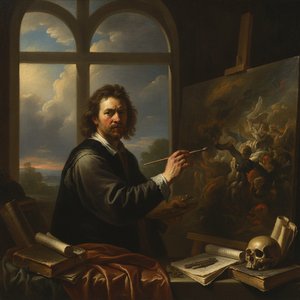
Self-Portrait
 Oil On Panel
- Baroque Painting
 1645
1645 65.0 x 49.0 cm
 Museum Boijmans Van Beuningen
 Lees meer
Giclée / Kunstafdrukken
Giclée- of canvasafdruk van museumkwaliteit met een snelle productie en flexibele afwerkingsmogelijkheden. ( Koop handgeschilderd kunstwerk Schakel over naar digitale afbeeldingen)




P118B €10

P118H €10

P118W €10

P438Z €10

P508JH €12

P508YH €12

P805H €10

P805Z €10

P919BZ €10

P919G €10

P919XJ €10

P959ZH €10

P968JZ €12

W106C €8

W218G €10

W218JH €8

W218Y €10

W307PJ €10

W316G €10

W316PJ €8

W316Y €10

W398PJ €8

W4111J €10

W500HY €15

W500JH €15

W692G €12

W849H €8

W940BG €15

W953PJ €8




Kies uit onze vooraf ingestelde maten die overeenkomen met de originele verhoudingen van het kunstwerk.

Voer de breedte en de hoogte in die u nodig heeft, passend bij uw lijst of uw muur. Een afdruk kan alleen worden ingekort, nooit groter worden gemaakt dan het origineel, waardoor een formaat met een andere verhouding een deel van de afbeelding verliest. Wij sturen u een digitaal mockup ter goedkeuring voordat we iets drukken. De afbeelding op deze pagina toont niet de werkelijke uitsnede — dit is alleen te zien op het mockup.
Wereldwijde levering () binnen 2 weken in plaats van de standaard 4/5 weken. (22 oktober)

Gratis wereldwijde expressverzending

Hoogwaardig linnen canvas

Volledige verzendverzekering

Garantie op terugbetaling van invoerrechten

Garantie op exacte kleurweergave

Retourbeleid van 100 dagen (alleen bij defecten)

100% Geld-terug-garantie

Korting bij meerdere afnames
 De optie voor glas is alleen beschikbaar bij een formaat kleiner dan 110 cm.

Self-Portrait
Giclée / Kunstafdrukken
Formaat reproductie
-


Totaalprijs
€ 71
A Window Into the Soul: Carel Fabritius’s “Self-Portrait”
The year is 1645. Within the bustling studio of Rembrandt in Amsterdam, a young artist named Carel Fabritius was meticulously crafting a portrait unlike any seen before. This wasn't merely a likeness; it was an intimate unveiling – the "Self-Portrait," a remarkably candid and profoundly moving depiction of the artist himself. More than just paint on panel, this work offers a rare glimpse into the mind of a man grappling with his craft, his identity, and perhaps, the anxieties inherent in artistic creation. The painting, now housed within the Museum Boijmans Van Beuningen in Rotterdam, is a testament to Fabritius’s burgeoning talent and his willingness to experiment with light, shadow, and the very nature of self-representation.
Fabritius's early work was deeply influenced by Rembrandt, inheriting his masterful use of chiaroscuro – the dramatic interplay of light and dark. However, this self-portrait marks a decisive shift. While retaining Rembrandt’s foundational techniques, Fabritius develops a distinctly personal style, prioritizing color and an almost palpable sense of immediacy. The painting isn't about formal perfection; it’s about capturing a fleeting moment, a particular mood. The loose brushstrokes and slightly asymmetrical composition contribute to this feeling of raw authenticity, as if the artist is offering us not just a portrait, but a fragment of his inner world.
Deconstructing the Image: Technique and Detail
Examining the details reveals Fabritius’s meticulous approach. The painting is executed in oil on panel, a medium that allowed for rich color saturation and subtle gradations of tone – crucial to achieving the dramatic lighting effects characteristic of his style. Notice how he renders the texture of his clothing: the folds of the open-necked shirt, the rough weave of the fabric, all rendered with remarkable precision. The artist’s hands, resting casually on his lap, are particularly noteworthy; they possess a delicate sensitivity and an evident awareness of their own form. The long, curly hair, falling across his shoulders, adds to the sense of relaxed contemplation, while the slightly off-center gaze invites the viewer into a silent conversation.
The background is deliberately dark and indistinct, serving not as a mere backdrop but as a powerful tool for emphasizing the subject’s face. This technique draws our attention directly to Fabritius's features – his thoughtful expression, the subtle lines around his eyes hinting at both intelligence and weariness. The careful modeling of light and shadow creates a three-dimensional effect, giving depth and volume to the image, as if we are truly observing him in person.
A Reflection on Identity and Art
Beyond its technical brilliance, the "Self-Portrait" is imbued with a profound sense of introspection. Fabritius’s contemplative gaze suggests a moment of quiet reflection – perhaps a consideration of his own artistic journey, or simply a pause in the creative process. The painting speaks to the universal human desire for self-understanding and the challenges inherent in defining one's identity. It is a remarkably vulnerable work, offering an unprecedented level of intimacy with its creator.
The historical context further enriches our understanding of this compelling image. Fabritius’s brief but impactful career coincided with the flourishing of Dutch Golden Age painting – a period marked by artistic innovation and a celebration of realism. His association with Rembrandt, coupled with his membership in the Delft School, positioned him within a vibrant artistic community that valued both technical skill and emotional expression. The tragic circumstances surrounding his death—caught in the devastating explosion of the Delft gunpowder magazine—only amplify the poignant beauty of this self-portrait, transforming it into a powerful meditation on life, loss, and the enduring legacy of art.
Bringing Fabritius Home: Reproductions and Legacy
Today, reproductions of “Self-Portrait” are available through OriginalUniqueArt.com, offering art lovers the opportunity to own a piece of this remarkable artistic achievement. These meticulously crafted hand-painted reproductions capture not only the visual details of the original but also its emotional depth and atmospheric quality. Whether displayed in a private residence or a corporate space, this iconic image will undoubtedly serve as a source of inspiration and contemplation for years to come.
For those seeking to delve deeper into the life and work of Carel Fabritius, we encourage you to visit https://en.wikipedia.org/wiki/Carel_Fabritius for further information. And don’t miss the Google Arts & Culture page: https://artsandculture.google.com/asset/self-portrait/JwGBKHEZH4veSA?hl=en, where you can explore high-resolution images and learn more about this extraordinary artist.
Vragen & Antwoorden
Wat zijn de werkelijke afmetingen van "Self-Portrait" door Carel Fabritius?
"Self-Portrait" heeft in zijn originele vorm de afmetingen 65 x 49 cm. De originele afmetingen zijn een nuttig referentiepunt bij het kiezen van een reproductiegrootte.
Uit welke fase van de ontwikkeling van Carel Fabritius is "Self-Portrait"?
"Self-Portrait" vertegenwoordigt de Mature Period van Carel Fabritius.
Wat voor soort kunstwerk is "Self-Portrait"?
"Self-Portrait" is een wall art-werk.
Biografie van de kunstenaar
Een Kort Leven Verlicht: De Raadselachtige Wereld van Carel Fabritius
Carel Fabritius, een naam die met eerbied wordt gefluisterd onder kenners van de Nederlandse Gouden Eeuw, blijft ondanks de grote impact die zijn korte carrière op de ontwikkeling van de schilderkunst heeft gehad, een ongrijpbare figuur. Geboren in Middenbeemster in 1622 en tragisch verloren bij de Delftse buskruitexplosie van 1654 op slechts tweeëndertigjarige leeftijd, liet Fabritius een verrassend klein maar intens krachtig oeuvre achter dat tot op de dag van vandaag boeit en inspireert. Zijn schilderijen zijn niet louter representaties van de werkelijkheid; het zijn onderzoeken naar licht, perceptie en de essentie van visuele ervaring.
Fabritius’ artistieke reis begon in de stimulerende omgeving van zijn ouderlijk huis. Zijn vader, Pieter Carelsz Fabritius, was zelf schilder – een schoolmeester die ook zijn vak uitoefende en bij jonge Carel al vroeg een waardering voor de kunsten inscherpte. Deze basis leidde hem rond 1641 naar Amsterdam, waar hij toetrad tot het atelier van Rembrandt van Rijn. Hoewel de exacte duur van zijn leertijd onderwerp van discussie blijft, is de invloed van de meester onmiskenbaar. Fabritius was echter geen simpele imitator. Hij begon al snel zijn eigen weg te smeden, week af van Rembrandts karakteristieke tenebrisme en ontwikkelde een unieke stijl die helderheid, koele harmonieën en een bijna wetenschappelijke observatie van de effecten van licht prioriteerde.
De Delftse School en een Eigenzinnige Visie
Na zijn tijd bij Rembrandt vestigde Fabritius zich in Delft, waar hij in 1652 lid werd van het plaatselijke schildersgilde. Hier, binnen de bloeiende kunstgemeenschap die bekend staat als de Delftse School, bloeide zijn volwassen stijl volledig op. In tegenstelling tot veel van zijn tijdgenoten die zich richtten op grootschalige historische verhalen of levendige genrescènes, concentreerde Fabritius zich op intieme huiselijke interieurs en zorgvuldig bestudeerde alledaagse objecten. Zijn schilderijen bezitten een opmerkelijke stilte, een rustige intensiteit die de kijker meeneemt naar een wereld die bevroren in de tijd lijkt te zijn.
Wat Fabritius onderscheidt is zijn meesterlijke manipulatie van licht. Hij portretteerde verlichting niet simpelweg; hij analyseerde het, ving de subtiele gradaties ervan op en het vermogen om vorm te definiëren en sfeer te creëren. Deze fascinatie voor optica leidde hem tot experimenten met perspectief – vaak door ongebruikelijke gezichtspunten te gebruiken die het gevoel van realisme versterken en de kijker in de scène trekken. De Putter, misschien wel zijn meest gevierde werk, is hiervan een perfect voorbeeld. De schijnbaar eenvoudige weergave van een vastgeketende putter tegen een strakke witte muur is feitelijk een tour de force van trompe-l'oeil techniek en ruimtelijke illusie. De vogel lijkt net buiten het schilderij te zweven, zijn veren met verbazingwekkend detail weergegeven, terwijl het samenspel van licht en schaduw een bijna tastbaar gevoel van diepte creëert.
Belangrijke Werken en Blijvende Erfenis
Naast De Putter omvat Fabritius’ oeuvre andere boeiende werken die zijn eigenzinnige visie demonstreren. Gezicht op Delft (1652) is een betoverend stadsgezicht, opmerkelijk vanwege het unieke perspectief en de atmosferische weergave van de architectuur van de stad. Het schilderij is niet slechts een topografische registratie; het is een evocatie van een plek, doordrenkt met een gevoel van rust en poëtische schoonheid. De Wacht, geschilderd kort voor zijn dood, is misschien wel zijn meest raadselachtige werk – een onthutsend portret van een eenzame soldaat dat aanzet tot contemplatie over thema’s als plicht, isolatie en de menselijke conditie.
Fabritius’ tragisch korte carrière betekende dat hij slechts ongeveer twaalf bewaarde schilderijen produceerde. Toch hadden deze weinige werken een enorme invloed op latere generaties kunstenaars. Zijn innovatieve gebruik van licht en perspectief wordt algemeen beschouwd als een diepgaande impact te hebben gehad op Johannes Vermeer, die een vergelijkbare fascinatie had voor optische effecten en huiselijke interieurs. De koele tonaliteiten, precieze weergave en rustige intimiteit die de meesterwerken van Vermeer kenmerken, kunnen worden herleid tot Fabritius’ baanbrekende werk.
Een Schilder Voor Zijn Tijd Uit
De explosie in Delft maakte niet alleen een einde aan Fabritius’ leven, maar ook aan een potentieel revolutionaire artistieke ontwikkeling. Zijn schilderijen bieden een blik in de geest van een kunstenaar die de grenzen van representatie verlegde en de aard van het zien en waarnemen onderzocht. Terwijl zijn tijdgenoten vaak bezeten waren van narratief of symboliek, concentreerde Fabritius zich op de fundamentele elementen van schilderkunst – licht, kleur, vorm – en creëerde zo werken die zowel visueel verbluffend als intellectueel stimulerend zijn.
Vandaag de dag wordt Carel Fabritius erkend als een sleutelfiguur in de Nederlandse Gouden Eeuw, een schilder wiens korte maar briljante carrière een onuitwisbare stempel heeft gedrukt op de kunstgeschiedenis. Zijn schilderijen blijven resoneren met kijkers en bieden een tijdloze getuigenis van de kracht van observatie, innovatie en de blijvende schoonheid van licht.

Carel Fabritius
1622 - 1654 , Nederland
Snelle feiten
- Artistic Movement Or Style: Barok
- Artists Or Movements Influenced By This Artist: ['Johannes Vermeer']
- Artists Who Influenced This Artist: ['Rembrandt van Rijn']
- Date Of Birth: 27 februari 1622
- Date Of Death: 12 oktober 1654
- Full Name: Carel Pietersz Fabritius
- Nationality: Nederlands
- Notable Artworks:
- De Goudvink
- A View of Delft
- De Wachter
- Place Of Birth: Muiden, Nederland
Gerelateerde artikelen

Top 10 Barok Meesterwerken: Kunstgeschiedenis voor uw Interieur | OriginalUniqueArt.nl
Ontdek de 10 meest iconische Barok meesterwerken van Caravaggio, Rembrandt & Rubens! Duik in de geschiedenis en passie achter deze klassieke schilderijen. Vind museumkwaliteit reproducties voor uw interieur op OriginalUniqueArt.com.

Rembrandt van Rijn: A Life Illuminated – Innovation, Emotion, and the Dutch Golden Age
Explore the life & art of Rembrandt van Rijn, a Dutch Golden Age master. Discover his innovative techniques, iconic paintings like 'The Night Watch', and enduring legacy. Expert insights for collectors & enthusiasts.

Rembrandt's Meesterwerken: De Top 25 – Kunst voor uw Interieur | OriginalUniqueArt
Ontdek de 25 meest iconische schilderijen van Rembrandt van Rijn! Duik in de Gouden Eeuw, bewonder zijn portretten & zelfportretten. Museumkwaliteit reproducties voor uw interieur op OriginalUniqueArt.com. Bekijk de collectie!
Dutch Baroque Unlocked: Mastering Chiaroscuro, Epic Drama, and the High-Impact Legacy of Rembrandt
Explore the dramatic power of Dutch Baroque art. Master the secrets of Rembrandt’s chiaroscuro, discover the epic scale of the Golden Age, and learn how to bring high-impact, hand-painted historical masterpieces into your modern collection with expert precision.

Top 10 Nederlandse Barok Meesterwerken: Kunstgeschiedenis voor uw Interieur
Ontdek de 10 meest iconische meesterwerken van de Nederlandse Barok! Leer over Rembrandt, Vermeer en andere Hollandse meesters. Prachtige reproducties voor uw interieur op OriginalUniqueArt.com – museumkwaliteit kunstprints & decoratie.