() ·

Een schilderij speciaal voor u gemaakt, met de hand

Courtyard

Handgemaakte olieverfreproductie

Met de hand geschilderd in olieverf op canvas in uw gewenste maat en lijst, op bestelling gemaakt door onze kunstenaars. ( Schakel over naar print Schakel over naar digitale afbeeldingen)

Beschrijving verzamelobject

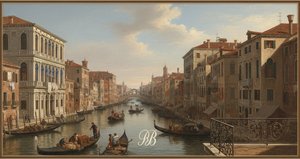
Admire Bernardo Rossellino's 'Courtyard,' a stunning Renaissance masterpiece capturing Pienza’s architectural beauty. A detailed painting showcasing classical design and serene atmosphere.

Biografie kunstenaar

Bernardo Rossellino (1409-1464) was een sleutelfiguur in de vroege Renaissance als beeldhouwer en architect, bekend om zijn klassiek geïnspireerde grafmonumenten en zijn rol bij de heropbouw van Pienza.

vanaf ·

Hoofdstuk 1

Hoe groot moet het zijn?

Schuif om de afmetingen te wijzigen; de afbeelding aan de linkerzijde toont de lijst in de werkelijke breedte. De oorspronkelijke verhoudingen blijven behouden.

Standaardformaat
op maat gemaakt
CM
INCH

Kies uit onze vooraf ingestelde maten die overeenkomen met de originele verhoudingen van het kunstwerk.

breedte
hoogte

Voer de breedte en hoogte in die u nodig heeft, passend bij uw lijst of uw muur. Omdat dit handgeschilderd is, kan de kunstenaar bij een afmeting met een andere beeldverhouding iets meer rondom het schilderij schilderen of juist iets meer weglaten — u kiest zelf. Wij sturen u een digitaal mockup ter goedkeuring voordat het schilderwerk begint. De afbeelding die op deze pagina wordt getoond, is niet het uiteindelijke resultaat — alleen de mockup geeft dit weer.


Hoofdstuk 2

Hoe moet het worden geleverd?

Kies de randen van het canvas

Kies uw lijst

Corner sample of the WhiteWrap canvas edge finish, stretched on massief hout bars
Wit €1
Corner sample of the BlurSideWrap canvas edge finish, stretched on massief hout bars
Vervagende randen €1
Corner sample of the ExtendedWrap canvas edge finish, stretched on massief hout bars
Doorlopende rand €1
Corner sample of the P118B picture frame: gegoten polystyreen, 5 cm wide and 3 cm thick
P118B €10
Corner sample of the P118H picture frame: gegoten polystyreen, 5 cm wide and 3 cm thick
P118H €10
Corner sample of the P118W picture frame: gegoten polystyreen, 5 cm wide and 3 cm thick
P118W €10
Corner sample of the P438Z picture frame: gegoten polystyreen, 5.5 cm wide and 3.5 cm thick
P438Z €10
Corner sample of the P508JH picture frame: gegoten polystyreen, 7 cm wide and 3.5 cm thick
P508JH €12
Corner sample of the P508YH picture frame: gegoten polystyreen, 7 cm wide and 3.5 cm thick
P508YH €12
Corner sample of the P805H picture frame: gegoten polystyreen, 5 cm wide and 3.5 cm thick
P805H €10
Corner sample of the P805Z picture frame: gegoten polystyreen, 5 cm wide and 3.5 cm thick
P805Z €10
Corner sample of the P919BZ picture frame: gegoten polystyreen, 7 cm wide and 3.5 cm thick
P919BZ €10
Corner sample of the P919G picture frame: gegoten polystyreen, 7 cm wide and 3.5 cm thick
P919G €10
Corner sample of the P919XJ picture frame: gegoten polystyreen, 7 cm wide and 3.5 cm thick
P919XJ €10
Corner sample of the P959ZH picture frame: gegoten polystyreen, 5 cm wide and 3 cm thick
P959ZH €10
Corner sample of the P968JZ picture frame: gegoten polystyreen, 6 cm wide and 4 cm thick
P968JZ €12
Corner sample of the W106C picture frame: massief hout, 5 cm wide and 3 cm thick
W106C €8
Corner sample of the W218G picture frame: massief hout, 5 cm wide and 3 cm thick
W218G €10
Corner sample of the W218JH picture frame: massief hout, 5 cm wide and 3 cm thick
W218JH €8
Corner sample of the W218Y picture frame: massief hout, 5 cm wide and 3 cm thick
W218Y €10
Corner sample of the W307PJ picture frame: massief hout, 6 cm wide and 3 cm thick
W307PJ €10
Corner sample of the W316G picture frame: massief hout, 6 cm wide and 3 cm thick
W316G €10
Corner sample of the W316PJ picture frame: massief hout, 6 cm wide and 3 cm thick
W316PJ €8
Corner sample of the W316Y picture frame: massief hout, 6 cm wide and 3 cm thick
W316Y €10
Corner sample of the W398PJ picture frame: massief hout, 5 cm wide and 3 cm thick
W398PJ €8
Corner sample of the W4111J picture frame: massief hout, 6.5 cm wide and 3.5 cm thick
W4111J €10
Corner sample of the W500HY picture frame: massief hout, 7 cm wide and 5 cm thick
W500HY €15
Corner sample of the W500JH picture frame: massief hout, 7 cm wide and 5 cm thick
W500JH €15
Corner sample of the W692G picture frame: massief hout, 8 cm wide and 4 cm thick
W692G €12
Corner sample of the W849H picture frame: massief hout, 5 cm wide and 3 cm thick
W849H €8
Corner sample of the W940BG picture frame: massief hout, 7.5 cm wide and 4.5 cm thick
W940BG €15
Corner sample of the W953PJ picture frame: massief hout, 6 cm wide and 3.5 cm thick
W953PJ €8
Corner sample of the H24-GOLD picture frame: gesneden hout met gesso, 10 cm wide and 6 cm thick
H24-GOLD €30
Corner sample of the H24-SILVER picture frame: gesneden hout met gesso, 10 cm wide and 6 cm thick
H24-SILVER €30
Corner sample of the H36-GOLD picture frame: gesneden hout met gesso, 15 cm wide and 6.5 cm thick
H36-GOLD €45
Corner sample of the H36-SILVER picture frame: gesneden hout met gesso, 15 cm wide and 6.5 cm thick
H36-SILVER €45
Lijstvoorbeeld
Ingelijst

Lijstrand: . Totale afmetingen inclusief lijst: .

Hoofdstuk 3

Wie schildert het, en moet er iets veranderen?

Voorbeelden van wat aangepast kan worden: Vervang het gezicht door een foto van de klant; Voeg een huisdier toe (bijv. vervang de kat door een hond); Voeg een verborgen boodschap toe aan de achtergrond; Wijzig het landschap of de elementen in de achtergrond.
Na de bestelling zal het team van OriginalUniqueArt.com per e-mail contact opnemen met de klant voor instructies en een mockup-voorbeeld verstrekken

Wereldwijde levering () binnen 3 tot 4 weken in plaats van de standaard 5 weken. (3 november). Zonder concessies aan de kwaliteit.

Hoofdstuk 4

De laatste hand aan

Een naambordje, zoals in een museum?

Details van de gegraveerde bronzen plaat

This elegant plaque features the artist's name and the title of the artwork, finely engraved for a timeless presentation.

It is made from bronze with a refined, elegant finish. The text is precisely laser-engraved for a sharp and permanent result. Measuring 9x2 cm, the plaque is compact yet easy to read. It's built to be durable and scratch-resistant, offering a professional, museum-quality look. Mounting is simple thanks to the included adhesive backing.

Details transparante acrylplaat

The plaque includes essential engraved details such as the artist's name, the title of the artwork, the date it was created, the type of media used-like oil on canvas or watercolor-a brief description of the piece, and a QR code that links to the complete artwork information.

It is crafted from clear acrylic, offering a sleek, modern appearance. The text is UV-engraved in black to ensure strong visual contrast. With a size of 10x15 cm, it ensures optimal readability. It comes equipped with two metal hooks for secure wall mounting. The plaque is designed to be weather-resistant, making it suitable for various environments, and it includes interactive features that work seamlessly with smartphone scanning.

Details zwarte acrylplaat

This elegant plaque includes engraved information such as the artist's name, the title of the artwork, the date it was created, the type of media used (like oil on canvas or watercolor), a short description of the artwork, and a QR code for quick access to more information.

The plaque itself is made from refined black acrylic with a premium finish. The text is laser-engraved in white for high contrast and readability. Its size is 10x15 cm, designed to be easy to read. It comes with two metal hooks for professional mounting. The design is sleek and fits any interior style. It is also weather-resistant and durable, with built-in digital integration for mobile compatibility.

Een beschermende vernis?

Wanneer heeft u het nodig?

Hoofdstuk 5

Uw schilderij, zoals u het heeft besteld

Courtyard

Druktechniek

Afmetingen reproductie

-

Geselecteerde topkunstenaars

Meer detail, verfijning en extra productietijd

-

Lijst voor reproductie

-

-

Voor kunstwerken of reproducties die aan één zijde groter zijn dan 105 cm (ongeveer 41 inch), wordt de lijst als een losse set verzonden. Deze methode garandeert een veilige levering en voorkomt schade tijdens het transport.

Professionele montage vereist - dit is geen doe-het-zelfproduct.
De set moet worden gemonteerd en het canvas moet worden gespannen door een ervaren professionele lijstenmaker, met gebruik van houtlijm (niet inbegrepen), een doekspanter en klemmen om de sponningen recht te houden terwijl de lijm droogt. Onjuiste montage of een ongelijkmatige spanning op het canvas kan het kunstwerk permanent beschadigen en wordt niet gedekt door onze garantie.

  • Alle massief houten onderdelen zijn inbegrepen, nauwkeurig op maat gesneden voor montage.

  • Te monteren met de meegeleverde schroeven, plus houtlijm voor de hoekverbindingen, die niet wordt meegeleverd en door uw lijstenmaker moet worden aangeschaft.

  • Professioneel gereedschap is vereist en niet inbegrepen: een spanner voor canvas en klemmen om de latten recht te houden terwijl de lijm droogt.

Belangrijk:
De hoekverbindingen vereisen houtlijm, de latten moeten met lijmklemmen worden vastgehouden tot de lijm volledig is opgedroogd, en het spannen van het canvas op het samengestelde frame vereist een doekspanter. Geen van deze artikelen is inbegrepen in de set. Wij adviseren u om een ervaren professionele lijstenmaker te raadplegen voordat u deze maat bestelt.

Naamplaatje

-

-

Beschermende vernislaag

Glanzende vernis (versterkt de kleuren en biedt bescherming tegen licht en vocht)

-

Mijn kunstwerk aanpassen

Voorbeelden van aanpassingen: vervang het gezicht door een eigen foto; voeg een huisdier toe (bijv. vervang de kat door een hond); verwerk een verborgen boodschap in de achtergrond; wijzig het landschap of andere elementen op de achtergrond.

-

Spoedlevering

Wereldwijde levering () binnen 3 tot 4 weken in plaats van de standaard 5 weken. (3 november). Geen concessies aan de kwaliteit.

-

Spoedlevering

Wereldwijde levering naar binnen 5 weken. (10 november).

Inbegrepen

Eindtotaal

€ 268

Totaalprijs € 268

De optie voor glas is alleen beschikbaar bij een formaat kleiner dan 110 cm.

Inbegrepen bij elke bestelling

  • Gratis wereldwijde expressverzending
  • Hoogwaardig linnen canvas
  • Volledige verzendverzekering
  • Garantie op terugbetaling van invoerrechten
  • Garantie op exacte kleurweergave
  • Retourbeleid van 100 dagen (alleen bij defecten)
  • 100% Geld-terug-garantie
  • Korting bij meerdere afnames

A Glimpse of Pienza’s Heart: Bernardo Rossellino's Courtyard

Bernardo Rossellino’s “Courtyard,” painted in 1459, isn’t merely a depiction of an outdoor space; it’s a carefully orchestrated tableau of Renaissance ideals – a harmonious blend of classical geometry, humanist philosophy, and the burgeoning spirit of civic pride. Created during his tenure as Master of Works for the Palazzo Piccolomini in Pienza, Italy, this painting offers a serene window into the heart of a planned city, reflecting the ambition and artistic vision of Pope Pius II.

The scene unfolds within a meticulously designed courtyard, its proportions echoing the principles of Vitruvius’s architectural treatise. The dominant form is a square, bisected by an elegant arcade – a deliberate nod to Roman precedents, yet imbued with a distinctly Florentine sensibility. Notice the careful balance between the solid strength of the stone arches and the lightness suggested by their open spaces; this interplay speaks directly to the Renaissance fascination with achieving perfect harmony between opposing forces.

Architectural Echoes: The Palazzo Piccolomini and its Context

To fully appreciate “Courtyard,” one must understand its setting. Pienza, envisioned as a new humanist city by Pope Pius II, was designed to emulate the grandeur of ancient Rome. Rossellino’s work here wasn't isolated; it was integral to the overall urban plan. The Palazzo Piccolomini, with its carefully considered layout and architectural details, served as a model for the entire city. The courtyard itself became a focal point, a space designed for contemplation, social interaction, and a connection to nature – values deeply rooted in humanist thought.

Rossellino’s design incorporates elements of both Gothic and Renaissance styles. The robust arches, reminiscent of Roman structures, are softened by the delicate detailing of the columns— Corinthian capitals, a hallmark of classical architecture. This fusion reflects the artistic trends of the time, where older traditions were reinterpreted through a new humanist lens. The light filtering through the arches creates an atmosphere of tranquility and invites the viewer to step into this idealized space.

Symbolism and Humanist Ideals

Beyond its architectural merits, “Courtyard” is rich in symbolism. The courtyard represents more than just a physical space; it embodies the humanist ideal of *vita activa* – an active life focused on civic engagement and intellectual pursuits. The open space encourages interaction and dialogue, reflecting the Renaissance emphasis on human potential and the importance of community.

Furthermore, the painting’s composition subtly references classical mythology. The careful arrangement of elements—the arches, the columns, the light—evokes images of Roman gardens and temples, suggesting a connection to the glories of antiquity. Rossellino was deeply influenced by the rediscovery of classical texts and art during the Renaissance, and this influence is evident in every detail of the painting.

A Masterpiece of Realism and Light

Rossellino’s skill as a painter is equally impressive. He captures the textures of stone, the play of light on surfaces, and the subtle nuances of color with remarkable precision. The scene feels remarkably real, inviting the viewer to step into this idealized space. The soft lighting, diffused by the arches, creates an atmosphere of serenity and tranquility – a testament to Rossellino’s mastery of chiaroscuro, the technique of using light and shadow to create depth and drama.

“Courtyard” is more than just a painting; it's a window into the Renaissance mind—a celebration of human ingenuity, civic pride, and the enduring beauty of classical ideals. Reproductions of this masterpiece offer a chance to bring this serene vision into your own home, serving as a constant reminder of the power of art to inspire and uplift.

Veelgestelde vragen

Kan "Courtyard" door Bernardo Rossellino, onderdeel van de collectie van Palazzo Piccolomini, op legale wijze worden gereproduceerd?

De auteursrechtstatus van "Courtyard" door Bernardo Rossellino is duidelijk: het werk is bevindt zich in het publiek domein - de auteursrechten zijn verlopen. De aanwezigheid ervan in Palazzo Piccolomini verandert die status niet.

Toont "Courtyard" sterke licht-donkercontrasten?

Het licht-donkercontrast van "Courtyard" wordt weergegeven als Bold. Contrast beschrijft hoe sterk de lichte en donkere vlakken van elkaar verschillen.

Wie heeft "Courtyard" gemaakt en in welke stijl is het uitgevoerd?

"Courtyard" werd gecreëerd door Bernardo Rossellino in de Early Renaissance-stijl. De kunstenaar en de stroming bepalen de traditie van het werk.

Meer over dit schilderij

Voorvertoning Bekijk in AR Schakel over naar print Schakel over naar digitale afbeeldingen Verstuur
Details bekijken Gids Toevoegen aan favorieten Download Vergelijkbare items Röntgenonderzoek Diavoorstelling Vraag & antwoord Statistieken

In cijfers

  • 1459het jaar waarin het werd geschilderd
  • 29lijsten om uit te kiezen
  • standaardmaten, in hun eigen verhoudingen
  • 5weken om te schilderen en te leveren
Bernardo Rossellino

Bernardo Rossellino

1409 - 1464, Italië

Snelle feiten over Bernardo Rossellino

  • Artistic Movement Or Style: Renaissance
  • Artists Who Influenced This Artist:
    • Brunelleschi
    • Donatello
    • Masaccio
  • Date Of Birth: Florence, Italy (1409)
  • Date Of Death: 1464
  • Full Name: Bernardo di Matteo del Borra Gamberelli
  • Nationality: Italiaanse
  • Notable Artworks:
    • Leonardo Bruni Tomb
    • Madonna della Misericordia Relief
  • Place Of Birth: Settignano

Biografie kunstenaar

Bernardo Rossellino: The Florentine Renaissance Architect

Bernardo di Matteo del Borra Gamberelli, affectionately known as Bernardo Rossellino (1409–1464), stands as a cornerstone of Early Renaissance art and architecture in Florence. His legacy extends far beyond his prolific output; he embodies the spirit of innovation and humanist ideals that defined the era, shaping artistic sensibilities for generations to come. Born into a family rooted in Florentine stonemasonry—his uncle Jacopo di Domenico di Luca del Borra Gamberelli imparted foundational skills—Rossellino’s trajectory mirrored the burgeoning dynamism of his time. Early Life and Training: Little is known about Rossellino's formative years beyond his familial connection to stonemasonry. However, evidence suggests he honed his craft under Nanni di Bartolo, “il Rosso,” a pivotal figure in Florentine sculpture who championed classical ideals. This influential teacher instilled in Rossellino a profound appreciation for the aesthetic principles of antiquity—a conviction that would become central to his artistic endeavors throughout his career. The Influence of Brunelleschi and Masaccio: Like many artists of his generation, Rossellino absorbed the revolutionary aesthetic pioneered by Filippo Brunelleschi and Masaccio. Their audacious embrace of linear perspective and idealized human form fundamentally reshaped artistic vision—a breakthrough that irrevocably altered the course of Renaissance art. Brunelleschi’s mastery of geometry and proportion served as a beacon for Rossellino, inspiring him to strive for unparalleled harmony and balance in his architectural designs. Similarly, Masaccio's groundbreaking frescoes demonstrated the transformative power of chiaroscuro—the dramatic interplay of light and shadow—a technique that Rossellino skillfully incorporated into his sculptural works. Arezzo and the Misericordia Facade: A Bold Experiment in Synthesis Rossellino’s career gained prominence in 1433 when he accepted a commission from the Fraternita di Santa Maria della Misericordia to revitalize the façade of their headquarters in Arezzo. This project presented an extraordinary challenge—the existing Gothic structure demanded a radically different approach. Demonstrrating remarkable ingenuity, Rossellino fused Gothic elements with classical principles, mirroring Alberti’s pioneering efforts at Santa Maria Novella. The resulting design incorporated paired pilasters and aediculae derived from Roman architectural models, establishing Rossellino as a champion of stylistic eclecticism—a hallmark of the Florentine Mannerist style. This daring fusion symbolized the Renaissance spirit of intellectual curiosity and artistic exploration—a testament to Rossellino’s ability to transcend stylistic boundaries. Rome and Papal Patronage: Mastering Classical Revival Rossellino’s reputation soared during his tenure in Rome under Pope Nicholas V. He undertook monumental projects, including the restoration of St. Peter's Basilica and the expansion of its choir—tasks that cemented his position as a leading architect of the era. Furthermore, he collaborated with Michelangelo on the rebuilding of St. Peter's, demonstrating an unparalleled understanding of classical architectural techniques. His meticulous attention to detail and unwavering commitment to upholding Roman grandeur solidified his legacy as one of the most influential architects of his time. He skillfully utilized marble—a material favored by Roman sculptors—to create breathtaking spaces that evoked the majesty of imperial Rome. Legacy and Influence: Shaping Artistic Sensibilities for Generations Bernardo Rossellino’s workshop dominated Florentine stonemasonry throughout the 1450s and 1460s, fostering a vibrant artistic environment. His influence extended beyond his own creations—he mentored younger sculptors like Desiderio da Settignano and Michelangelo—propagating his distinctive Mannerist style across Florence. Most notably, Rossellino’s tomb for Leonardo Bruni served as a template for subsequent funerary monuments, establishing him as the progenitor of the humanist tomb tradition—a testament to his enduring contribution to Renaissance art history. His work continues to inspire artists today, reminding us of the transformative power of artistic innovation and the pursuit of beauty in harmony with reason.

Snelle feiten

  • Influences:
    • Brunelleschi
    • Rossellino
  • Movement: Early Renaissance
  • Title: Courtyard
  • Location: WahooArt.com
  • Medium: Oil on Canvas

Kunstquiz

Er is slechts één goed antwoord op elke vraag.

Vraag 1:
What architectural style is prominently featured in Bernardo Rossellino’s ‘Courtyard’?
Vraag 2:
The image description mentions the courtyard is likely part of a building from which era?
Vraag 3:
Who is credited with designing the Palazzo Piccolomini, which this courtyard likely belongs to?
Vraag 4:
The description highlights the presence of Corinthian capitals in the courtyard. What is a key characteristic of this architectural order?
Vraag 5:
Based on the description, what is the overall atmosphere conveyed by the image of ‘Courtyard’?