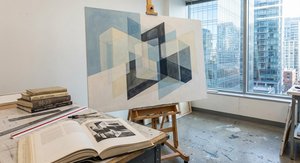
1934 (relief)
Acrylic On Canvas
WallArt
Abstract Expressionism
1934
8.0 x 8.0 cm
Kettle's Yard
Handgemaakte olieverfreproductie
Met de hand geschilderd in olieverf op canvas in uw gewenste maat en lijst, op bestelling gemaakt door onze kunstenaars. ( Bestel print
Koop afbeelding)
P118B $10
P118H $10
P118W $10
P438Z $10
P508JH $12
P508YH $12
P805H $10
P805Z $10
P919BZ $10
P919G $10
P919XJ $10
P959ZH $10
P968JZ $12
W106C $8
W218G $10
W218JH $8
W218Y $10
W307PJ $10
W316G $10
W316PJ $8
W316Y $10
W398PJ $8
W4111J $10
W500HY $15
W500JH $15
W692G $12
W849H $8
W940BG $15
W953PJ $8
Kies uit onze vooraf ingestelde maten die overeenkomen met de originele verhoudingen van het kunstwerk.
U kunt uw eigen afmetingen invoeren om in een specifieke lijst of ruimte te passen. Als de door u gekozen maat niet overeenkomt met de verhoudingen van het originele beeld, zullen we het kunstwerk bijsnijden of het schilderij uitbreiden met extra handgeschilderde elementen. Een digitale mockup wordt ter goedkeuring naar u verzonden voordat de productie begint.
Houd er rekening mee dat de preview op het scherm niet de werkelijke uitsnede of uitbreiding weergeeft. Alleen de mockup toont de uiteindelijke compositie nauwkeurig.
Hoewel aangepaste afmetingen mogelijk zijn, raden we aan een maat uit de vooraf gedefinieerde lijst te selecteren om de originele verhoudingen te behouden.
Na de bestelling zal het team van OriginalUniqueArt.com per e-mail contact opnemen met de klant voor instructies en een mockup-voorbeeld sturen.
Wereldwijde levering () binnen 3 tot 4 weken in plaats van de standaard 5 weken. (20 augustus). Zonder concessies aan de kwaliteit.
Gratis wereldwijde expressverzending
Hoogwaardig linnen canvas
Volledige verzendverzekering
Garantie op terugbetaling van invoerrechten
Garantie op exacte kleurweergave
Retourbeleid van 60 dagen (alleen bij defecten)
100% Geld-terug-garantie
Korting bij meerdere afnames
1934 (relief)
Druktechniek
Afmetingen reproductie
-
Eindtotaal
$ 300
Beschrijving kunstwerk
The Genesis of a Fragmented World
Ben Nicholson’s ‘1934 (relief)’ isn't merely a painting; it’s a distilled moment, a carefully constructed fragment of a world viewed through the lens of geometric abstraction. Created in the tumultuous years following the 1934 Nepal–India earthquake – an event that profoundly impacted British artists and their perspectives – this small yet potent work embodies a shift towards pure form and a quiet contemplation of space. Nicholson, deeply influenced by European avant-garde movements like Cubism and Constructivism, sought to move beyond representational imagery, exploring the inherent beauty within simplified shapes and textures. The piece’s genesis lies in a period of intense experimentation, marked by visits to influential artists like Piet Mondrian and a growing fascination with the interplay between physical layering and abstract language.
(Image of Ben Nicholson's '1934 (relief)')
A Symphony of Grey and White
The work itself is deceptively simple in its composition. Dominated by a palette of muted greys, punctuated by stark white circles and rectangles, ‘1934 (relief)’ immediately draws the eye into its carefully orchestrated arrangement. Nicholson employed oil paint on a composite board, layering it with deliberate roughness – visible scrapes and uneven surfaces speak to a process of controlled destruction and reconstruction. The lower third of the piece was deliberately cut away, revealing the underlying wood grain and creating an intriguing sense of depth. The two larger circles, painted white, are strategically placed to create visual balance against the darker, textured background, while the smaller circle in the upper left corner offers a subtle point of contrast and focalization.
- Technique: Layered oil paint on composite board.
- Color Palette: Primarily grey with stark white accents.
- Texture: Rough, layered, and deliberately distressed.
Echoes of Mondrian and the Poetics of Relief
Nicholson’s exploration of relief – a technique involving creating raised surfaces on a flat plane – was deeply influenced by his encounter with Piet Mondrian in Paris. Mondrian's emphasis on primary colors, straight lines, and geometric forms provided a crucial framework for Nicholson’s own abstract explorations. However, unlike Mondrian’s rigorously structured compositions, Nicholson embraced a more intuitive approach, allowing the inherent qualities of the materials – wood grain, paint texture – to contribute to the overall aesthetic. The work also reflects the influence of Alfred Wallis, a Cornish fisherman-painter whose simple, geometric forms resonated with Nicholson's desire to strip away unnecessary detail and focus on essential shapes.
A Moment of Quiet Contemplation
‘1934 (relief)’ is more than just an exercise in abstraction; it’s a meditation on form, space, and the relationship between the visible and the implied. The fragmented composition evokes a sense of instability and uncertainty, mirroring the emotional landscape of a nation grappling with the aftermath of a devastating earthquake. Yet, within this apparent chaos lies a profound sense of balance and harmony. The work invites viewers to slow down, to consider the subtle nuances of color and texture, and to find their own meaning within its carefully constructed geometry. It’s a testament to Nicholson's ability to transform personal experience – in this case, the seismic event of 1934 – into a timeless exploration of abstract form.
Biografie van de kunstenaar
Ben Nicholson OM: A Life in Abstract Art
Ben Nicholson OM (1894–1982) was a British painter and sculptor whose groundbreaking exploration of abstraction revolutionized the landscape of modern British art. Born Benjamin Lauder Nicholson at Denham, Buckinghamshire, he descended from a family steeped in artistic tradition – his father, Sir William Nicholson, and mother, Mabel Pryde, were both accomplished painters—a lineage that profoundly shaped his own creative trajectory.Early Life and Artistic Training
Nicholson’s formative years were marked by rigorous academic pursuits. He attended Tyttenhangar Lodge Preparatory School in Seaford, Heddon Court in Hampstead, and Gresham's School in Holt, Norfolk, imbibing a foundational understanding of artistic principles. His formal education culminated at the Slade School of Fine Art (1910–1911), where he forged connections with fellow artists like Paul Nash, Stanley Spencer, Mark Gertler, and Edward Wadsworth—artists who would become pivotal companions in his artistic journey. Anecdotally, Nicholson spent considerable time engrossed in billiards during this period, perceiving within the game’s geometric patterns and dynamic movement a latent aesthetic potential.Artistic Development and Influences
Nicholson's initial artistic endeavors leaned towards naturalistic still lifes, mirroring his father’s stylistic sensibilities. However, around 1926, he embarked on a transformative voyage into abstraction, decisively influenced by Synthetic Cubism and the pioneering work of Pablo Picasso. This pivotal shift wasn’t merely stylistic; it represented a fundamental reimagining of artistic expression. Further enriching his artistic vision were encounters with Piet Mondrian—whose reductive geometric style championed clarity and order—and Henri Rousseau—whose primitivist approach rekindled an appreciation for raw emotion and instinctive representation. These influences coalesced into a distinctive aesthetic language that would characterize Nicholson’s subsequent oeuvre. He became deeply involved with movements like the Seven and Five Society, Unit One, and Abstraction-Création, actively participating in dialogues about artistic innovation and redefining boundaries within British art.Major Works and Artistic Style
Nicholson's legacy rests primarily upon his monumental relief sculptures—beginning in 1933—which fused painting with sculptural elements to create immersive visual experiences. The white reliefs of the mid-1930s stand as emblems of Nicholson’s artistic achievement, embodying a masterful synthesis of form and color. Alongside these ambitious undertakings, he produced compelling still lifes and landscapes that incorporated geometric forms and muted palettes—demonstrating his versatility as an artist. Notably, “The Nicholson Wall,” commissioned for Sutton Place in Guildford, Surrey, served as a testament to his conviction that abstract art should transcend elitism and engage a broader audience. He experimented extensively with materials – oil paint, pencil, gravel, masonite – combining them in inventive ways to achieve unprecedented textural and chromatic effects.Legacy and Historical Significance
Ben Nicholson is recognized as an indispensable figure in modern British art—a catalyst for abstraction and relief sculpture—whose work garnered international acclaim and cemented his place among the foremost artists of his time. Exhibitions at prestigious venues such as the Venice Biennale and retrospectives at major museums worldwide underscored his enduring artistic significance. He received numerous accolades, including the Order of Merit in 1968, acknowledging his contribution to British culture. Nicholson’s paintings command considerable prices at auction—reflecting their intrinsic artistic merit and historical importance; “Sept 53 (Balearic)” fetched $1,650,500 at Christie's New York in 2011, while “Fiddle and Spanish Guitar” achieved €3,313,000 at Christie’s Paris in 2012. Generations of artists have drawn inspiration from Nicholson’s pioneering approach to abstraction—his unwavering dedication to exploring form and space—establishing him as a cornerstone of artistic innovation.Ben Nicholson OM
1894 - 1982 , Verenigd Koninkrijk
Belangrijkste feiten
- Artistic Movement Or Style: ['Abstract kunst']
- Artists Who Influenced This Artist:
- Henri Rousseau
- Pablo Picasso
- Date Of Birth: April 10, 1894
- Date Of Death: February 6, 1982
- Full Name: Ben Nicholson OM
- Nationality: Britse kunstenaar
- Notable Artworks:
- Sept 53 (Balearic)
- Fiddle en Spaanse Gitaar
- Place Of Birth: London, United Kingdom

De optie voor glas is alleen beschikbaar bij een formaat kleiner dan 110 cm.