Voorvertoning
 Verstuur
 Delen
Delen
 Details bekijken

 Download
 Vergelijkbare items
 Röntgenonderzoek
 Diavoorstelling
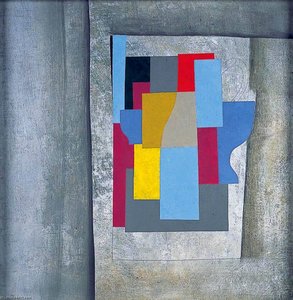
1934 (painted relief)
 Acrylic On Canvas
- WallArt
- Geometric Abstraction
 1934
1934 93.0 x 93.0 cm
 University of Hertfordshire
 Lees meer
Giclée / Kunstafdrukken
Giclée- of canvasafdruk van museumkwaliteit met een snelle productie en flexibele afwerkingsmogelijkheden. ( Bestel handgeschilderde reproductie Koop afbeelding)




P118B $10

P118H $10

P118W $10

P438Z $10

P508JH $12

P508YH $12

P805H $10

P805Z $10

P919BZ $10

P919G $10

P919XJ $10

P959ZH $10

P968JZ $12

W106C $8

W218G $10

W218JH $8

W218Y $10

W307PJ $10

W316G $10

W316PJ $8

W316Y $10

W398PJ $8

W4111J $10

W500HY $15

W500JH $15

W692G $12

W849H $8

W940BG $15

W953PJ $8




Kies uit onze vooraf ingestelde maten die overeenkomen met de originele verhoudingen van het kunstwerk.

U kunt uw eigen afmetingen opgeven om in een specifieke lijst of ruimte te passen. Als de door u gekozen maat niet overeenkomt met de proporties van het originele kunstwerk, zullen wij de afbeelding bijsnijden of uitbreiden met een gespiegelde of effen rand. Een digitaal mockup wordt ter goedkeuring naar u verzonden voordat de productie begint.
Houd er rekening mee dat de preview op het scherm de werkelijke bijsneding of uitbreiding niet weergeeft. Alleen de mockup toont de uiteindelijke compositie nauwkeurig.
Hoewel aangepaste maten beschikbaar zijn, raden wij aan een afmeting uit de vooraf bepaalde lijst te kiezen om de originele proporties te behouden.
Wereldwijde levering () binnen 2 weken in plaats van de standaard 4/5 weken. (20 augustus)

Gratis wereldwijde expressverzending

Hoogwaardig linnen canvas

Volledige verzendverzekering

Garantie op terugbetaling van invoerrechten

Garantie op exacte kleurweergave

Retourbeleid van 60 dagen (alleen bij defecten)

100% Geld-terug-garantie

Korting bij meerdere afnames
 De optie voor glas is alleen beschikbaar bij een formaat kleiner dan 110 cm.

1934 (painted relief)
Giclée / Kunstafdrukken
Afmetingen reproductie
-


Eindtotaal
$ 81
Beschrijving verzamelobject
Exploring Geometric Minimalism: Ben Nicholson’s ‘1934 (relief)’
Ben Nicholson OM's '1934 (relief)' stands as a testament to the understated elegance of geometric abstraction, embodying the spirit of mid-century modern design and inviting contemplation on form and texture. Created in 1934, this mahogany painted relief exemplifies Nicholson’s pioneering exploration of spatial relationships within simplified shapes—a deliberate departure from representational art that sought to capture the essence of experience rather than visual likeness.A Symphony of Beige and Gray
The artwork's dominant palette is a muted symphony of beige and gray tones, skillfully blended to create an atmosphere of quiet serenity. These hues aren’t merely decorative; they contribute significantly to the piece’s emotional impact, fostering a sense of calm and introspection—a hallmark of Nicholson’s artistic vision. The surface texture itself is equally important, achieved through layering oil paint onto mahogany, resulting in a rough, uneven finish that speaks to the materiality of the medium and adds depth to the visual experience.Cubist Influences & Spatial Dynamics
Nicholson's work draws heavily from Cubist principles, evident in the fragmented planes and intersecting geometric forms that constitute the composition’s core. However, unlike traditional Cubism which dissects objects into multiple perspectives, Nicholson prioritizes spatial dynamics—creating an ambiguous sense of depth without relying on conventional vanishing points. Instead, he utilizes subtle tonal variations and textural differences to guide the viewer's eye across the surface, fostering a feeling of movement and suggesting hidden connections between the shapes.Technique & Material Considerations
The artist’s meticulous technique involved applying oil paint with impasto—building up thick layers of pigment onto the mahogany panel—to maximize textural contrast and enhance visual interest. This deliberate choice underscores Nicholson's commitment to exploring the expressive potential of materials, transforming a seemingly simple surface into a richly layered artwork. The careful consideration of light and shadow further contributes to the piece’s aesthetic appeal, emphasizing its understated beauty and reinforcing its connection to the natural world—a recurring theme in Nicholson’s oeuvre.Symbolic Resonance & Artistic Legacy
While devoid of overt symbolic imagery, ‘1934 (relief)’ possesses a profound resonance rooted in Nicholson's philosophical engagement with art and its role in conveying emotion. It represents a pivotal moment in Nicholson’s artistic development—a decisive step toward abstraction that solidified his reputation as one of Britain’s foremost modernist painters. Today, this artwork continues to inspire artists and collectors alike, serving as an enduring emblem of geometric minimalism and demonstrating the transformative power of form and texture to evoke contemplation and beauty.Biografie van de kunstenaar
Ben Nicholson OM: A Life in Abstract Art
Ben Nicholson OM (1894–1982) was a British painter and sculptor whose groundbreaking exploration of abstraction revolutionized the landscape of modern British art. Born Benjamin Lauder Nicholson at Denham, Buckinghamshire, he descended from a family steeped in artistic tradition – his father, Sir William Nicholson, and mother, Mabel Pryde, were both accomplished painters—a lineage that profoundly shaped his own creative trajectory.Early Life and Artistic Training
Nicholson’s formative years were marked by rigorous academic pursuits. He attended Tyttenhangar Lodge Preparatory School in Seaford, Heddon Court in Hampstead, and Gresham's School in Holt, Norfolk, imbibing a foundational understanding of artistic principles. His formal education culminated at the Slade School of Fine Art (1910–1911), where he forged connections with fellow artists like Paul Nash, Stanley Spencer, Mark Gertler, and Edward Wadsworth—artists who would become pivotal companions in his artistic journey. Anecdotally, Nicholson spent considerable time engrossed in billiards during this period, perceiving within the game’s geometric patterns and dynamic movement a latent aesthetic potential.Artistic Development and Influences
Nicholson's initial artistic endeavors leaned towards naturalistic still lifes, mirroring his father’s stylistic sensibilities. However, around 1926, he embarked on a transformative voyage into abstraction, decisively influenced by Synthetic Cubism and the pioneering work of Pablo Picasso. This pivotal shift wasn’t merely stylistic; it represented a fundamental reimagining of artistic expression. Further enriching his artistic vision were encounters with Piet Mondrian—whose reductive geometric style championed clarity and order—and Henri Rousseau—whose primitivist approach rekindled an appreciation for raw emotion and instinctive representation. These influences coalesced into a distinctive aesthetic language that would characterize Nicholson’s subsequent oeuvre. He became deeply involved with movements like the Seven and Five Society, Unit One, and Abstraction-Création, actively participating in dialogues about artistic innovation and redefining boundaries within British art.Major Works and Artistic Style
Nicholson's legacy rests primarily upon his monumental relief sculptures—beginning in 1933—which fused painting with sculptural elements to create immersive visual experiences. The white reliefs of the mid-1930s stand as emblems of Nicholson’s artistic achievement, embodying a masterful synthesis of form and color. Alongside these ambitious undertakings, he produced compelling still lifes and landscapes that incorporated geometric forms and muted palettes—demonstrating his versatility as an artist. Notably, “The Nicholson Wall,” commissioned for Sutton Place in Guildford, Surrey, served as a testament to his conviction that abstract art should transcend elitism and engage a broader audience. He experimented extensively with materials – oil paint, pencil, gravel, masonite – combining them in inventive ways to achieve unprecedented textural and chromatic effects.Legacy and Historical Significance
Ben Nicholson is recognized as an indispensable figure in modern British art—a catalyst for abstraction and relief sculpture—whose work garnered international acclaim and cemented his place among the foremost artists of his time. Exhibitions at prestigious venues such as the Venice Biennale and retrospectives at major museums worldwide underscored his enduring artistic significance. He received numerous accolades, including the Order of Merit in 1968, acknowledging his contribution to British culture. Nicholson’s paintings command considerable prices at auction—reflecting their intrinsic artistic merit and historical importance; “Sept 53 (Balearic)” fetched $1,650,500 at Christie's New York in 2011, while “Fiddle and Spanish Guitar” achieved €3,313,000 at Christie’s Paris in 2012. Generations of artists have drawn inspiration from Nicholson’s pioneering approach to abstraction—his unwavering dedication to exploring form and space—establishing him as a cornerstone of artistic innovation.
Ben Nicholson OM
1894 - 1982 , Verenigd Koninkrijk
Belangrijkste feiten
- Artistic Movement Or Style: ['Abstract kunst']
- Artists Who Influenced This Artist:
- Henri Rousseau
- Pablo Picasso
- Date Of Birth: April 10, 1894
- Date Of Death: February 6, 1982
- Full Name: Ben Nicholson OM
- Nationality: Britse kunstenaar
- Notable Artworks:
- Sept 53 (Balearic)
- Fiddle en Spaanse Gitaar
- Place Of Birth: London, United Kingdom
Gerelateerde artikelen

Ben Nicholson OM: Modernism's Abstract Pioneer & the Poetics of Relief
Explore the revolutionary abstract art of Ben Nicholson OM. Discover his geometric masterpieces, collaborations with Barbara Hepworth & investment potential. Expert insights for collectors.

Top 10 Meesterwerken van de Geometrische Abstractie | OriginalUniqueArt.nl
Ontdek de 10 meest invloedrijke meesterwerken van de geometrische abstractie! Van Mondriaan tot Malevich, leer over kunstenaars, technieken & kleuren. Museumkwaliteit reproducties op OriginalUniqueArt.com – voor een unieke interieurstijl.

Neo-Abstract Art: The High-Impact Evolution of Modern Visual Energy and Geometric Sophistication
Discover the power of Neo-Abstract art. Explore how bold geometric forms and high-impact visual energy are redefining modern design. Learn to curate sophisticated, high-energy spaces with the latest trends in contemporary abstraction and structural color.

Beyond Form & Color: Geometric Abstraction's Evolution in 20th/21st Century Art
Explore the evolution of geometric abstraction from Cubism to contemporary art. Discover key artists like Malevich & Mondrian, investment insights, and expert collecting advice at OriginalUniqueArt.
Beyond Form & Color: Geometric Abstraction's Enduring Legacy in Art History
Explore the captivating world of geometric abstraction! Discover its origins, key artists like Malevich & Mondrian, and why this movement remains highly valued by art collectors today. Expert insights at OriginalUniqueArt.