- Home

- Reproductie van olieverfschilderij
- Bartolomeo Passarotti
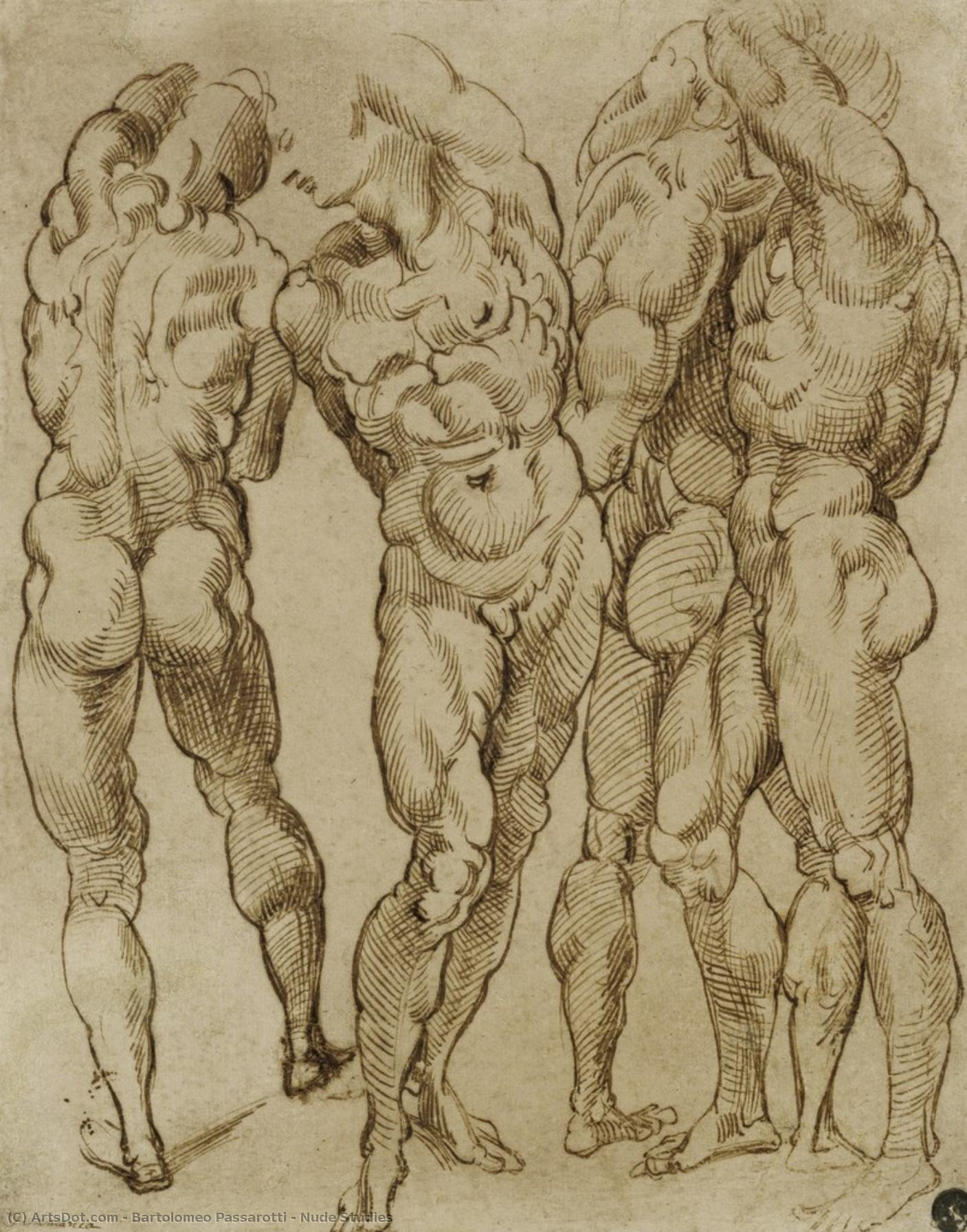
- Nude Studies
 Print kopen Koop afbeelding in hoge resolutie
 Verstuur
 Delen
Delen
 Details bekijken
 Toevoegen aan favorieten

 Download
 Vergelijkbare werken
 Röntgenonderzoek
 Diavoorstelling
Nude Studies
 Renaissance
 1580
1580 30.0 x 24.0 cm
 Lees meer
Handgemaakte olieverfreproductie
Met de hand geschilderd in olieverf op canvas in uw gewenste maat en lijst, op bestelling gemaakt door onze kunstenaars.




































Kies uit onze vooraf ingestelde maten die overeenkomen met de originele verhoudingen van het kunstwerk.

U kunt uw eigen afmetingen invoeren om in een specifieke lijst of ruimte te passen. Als de door u gekozen maat niet overeenkomt met de verhoudingen van het originele beeld, zullen we het kunstwerk bijsnijden of het schilderij uitbreiden met extra handgeschilderde elementen. Een digitale mockup wordt ter goedkeuring naar u verzonden voordat de productie begint.
Houd er rekening mee dat de preview op het scherm niet de werkelijke uitsnede of uitbreiding weergeeft. Alleen de mockup toont de uiteindelijke compositie nauwkeurig.
Hoewel aangepaste afmetingen mogelijk zijn, raden we aan een maat uit de vooraf gedefinieerde lijst te selecteren om de originele verhoudingen te behouden.
Na de bestelling zal het team van OriginalUniqueArt.com per e-mail contact opnemen voor instructies en een mockup-voorbeeld sturen.
Wereldwijde levering () binnen 3/4 weken in plaats van de standaard 5 weken. (23 juli). Geen concessies aan de kwaliteit.

Gratis wereldwijde expressverzending

Hoogwaardig linnen canvas

Volledige verzendverzekering

Garantie op terugbetaling van invoerrechten

Garantie op exacte kleurweergave

60 dagen retourbeleid (alleen bij defecten)

100% Geld-terug-garantie

Korting bij meerdere afnames
 De optie voor glas is alleen beschikbaar bij een formaat kleiner dan 110 cm.

Nude Studies
Techniek reproductie
Afmetingen reproductie
-


Eindtotaal
-
Biografie van de kunstenaar
A Bolognese Master of Mannerism: Bartolomeo Passarotti
Bartolomeo Passarotti, born in Bologna in 1529 and passing away in 1592, occupies a fascinating, if sometimes overlooked, position within the Italian art landscape. He wasn’t a revolutionary like Michelangelo or Raphael, but rather a skilled and sensitive interpreter of the Mannerist style, deeply rooted in his native city yet informed by broader artistic currents. His life unfolded during a period of significant change—the High Renaissance giving way to the more elongated forms, complex compositions, and emotional intensity characteristic of Mannerism, and then subtly shifting towards the Baroque. Passarotti’s career reflects this transition, beginning with studies under prominent Roman artists and culminating in works that foreshadowed the developments of the next generation. He established a thriving workshop in Bologna, becoming an influential figure who shaped the artistic sensibilities of numerous pupils, including members of his own family—his sons Ventura, Aurelio, and Tiburzio all followed in his footsteps.Early Training and Roman Influences
Passarotti’s formative years were marked by a journey to Rome around 1550. This was not merely a geographical relocation but an immersion into the heart of artistic innovation. He sought out the tutelage of Giacomo Barozzi da Vignola, renowned for his architectural precision and clarity, and Taddeo Zuccari, a leading exponent of Mannerist painting known for his sophisticated allegorical works. These influences are subtly discernible in Passarotti’s early style—a meticulous attention to detail combined with an increasing interest in complex narrative structures and elegant figural arrangements. While in Rome, he absorbed the prevailing aesthetic trends, learning to balance classical ideals with a more dynamic and emotionally charged approach. This period was crucial in establishing his technical foundation and broadening his artistic vocabulary before returning to Bologna, ready to forge his own path.The Bolognese Years: A Flourishing Workshop
Upon his return to Bologna, Passarotti quickly established himself as a leading painter within the city’s artistic community. He founded a large and successful workshop, becoming a sought-after artist for both religious commissions and secular subjects. From 1564 to 1565, he undertook a significant project—a large altarpiece for the Basilica of San Giacomo Maggiore—demonstrating his ability to manage complex compositions and engage with prominent civic patrons. This commission solidified his reputation and attracted a steady stream of students eager to learn from his expertise. Passarotti’s workshop became a hub of artistic activity, fostering a collaborative environment where traditional techniques were refined and new ideas explored. He wasn't simply replicating existing styles; he was actively shaping the next generation of Bolognese painters. His genre scenes, in particular—depictions of everyday life like *The Beaneater* and *The Butcher’s Shop*—were remarkably innovative for their time, offering a glimpse into the lives of ordinary people with an unusual degree of realism and psychological insight. These works would later exert a considerable influence on artists such as Annibale Carracci, who recognized Passarotti's pioneering spirit in capturing authentic human experience.Development of Style: From Naturalism to Tuscan Models
Passarotti’s artistic development wasn’t static; his style evolved over the course of his career. Initially influenced by Roman Mannerism, he gradually incorporated elements from Tuscan artists like Giorgio Vasari and Prospero Fontana. This shift is evident in his later works—a move towards more refined forms, heightened color palettes, and a greater emphasis on elegance and grace. However, Passarotti never fully abandoned the naturalistic tendencies that characterized his earlier paintings. Instead, he skillfully blended these contrasting approaches, creating a unique style that was both sophisticated and emotionally resonant. His final known work, *The Presentation of Mary in the Temple* (1583), now housed in the Pinacoteca Nazionale di Bologna, exemplifies this mature style—a harmonious balance between classical ideals, Mannerist elegance, and a deeply felt religious sensibility.Legacy and Historical Significance
Bartolomeo Passarotti’s historical significance lies not in groundbreaking innovation but in his role as a pivotal figure in the transition from Mannerism to Baroque art. He was a master craftsman who skillfully synthesized diverse influences, creating works that were both aesthetically pleasing and emotionally engaging. His workshop played a crucial role in shaping the artistic landscape of Bologna, fostering a new generation of painters who would later contribute to the rise of the Bolognese School—a movement renowned for its classical rigor and dramatic intensity. His influence on Annibale Carracci, one of the most important artists of the Baroque period, is particularly noteworthy. Passarotti’s genre scenes provided a crucial foundation for Carracci's own explorations of realism and psychological depth. Furthermore, his family—his sons Ventura, Aurelio, and Tiburzio—continued his artistic legacy, ensuring that his style and techniques were passed down to future generations. While perhaps not as widely celebrated as some of his contemporaries, Bartolomeo Passarotti remains a significant figure in the history of Italian art—a testament to the enduring power of skill, sensitivity, and artistic innovation within the vibrant cultural context of Renaissance Bologna.
Belangrijkste feiten
- Artistic Movement Or Style: Mannerism
- Artists Or Movements Influenced By This Artist:
- Annibale Carracci
- Lucio Massari
- Francesco Brizzi
- Artists Who Influenced This Artist:
- Giacomo Barozzi da Vignola
- Taddeo Zuccari
- Giorgio Vasari
- Date Of Birth: 1529
- Date Of Death: 1592
- Full Name: Bartolomeo Passarotti
- Nationality: Italian
- Notable Artworks:
- Study of An Eagle
- Homer's Riddle
- Presentation of Mary
- Place Of Birth: Bologna, Italy

