

 Bekijk op ware grootte
 Verstuur
 Delen
Delen
 Details bekijken
 Gids voor studentenkunstwerken

 Download
 Vergelijkbare items
 Röntgenonderzoek
 Diavoorstelling
 Statistieken
Self-Portrait
 Oil On Canvas
- WallArt
- Baroque
 1650
1650 107.0 x 77.0 cm
 The Frick Collection
 Lees meer
Giclée / Kunstafdrukken
Giclée- of canvasafdruk van museumkwaliteit met een snelle productie en flexibele afwerkingsmogelijkheden. ( Koop handgeschilderd kunstwerk Schakel over naar digitale afbeeldingen)




P118B €10

P118H €10

P118W €10

P438Z €10

P508JH €12

P508YH €12

P805H €10

P805Z €10

P919BZ €10

P919G €10

P919XJ €10

P959ZH €10

P968JZ €12

W106C €8

W218G €10

W218JH €8

W218Y €10

W307PJ €10

W316G €10

W316PJ €8

W316Y €10

W398PJ €8

W4111J €10

W500HY €15

W500JH €15

W692G €12

W849H €8

W940BG €15

W953PJ €8




Kies uit onze vooraf ingestelde maten die overeenkomen met de originele verhoudingen van het kunstwerk.

Voer de breedte en de hoogte in die u nodig heeft, passend bij uw lijst of uw muur. Een afdruk kan alleen worden ingekort, nooit groter worden gemaakt dan het origineel, waardoor een formaat met een andere verhouding een deel van de afbeelding verliest. Wij sturen u een digitaal mockup ter goedkeuring voordat we iets drukken. De afbeelding op deze pagina toont niet de werkelijke uitsnede — dit is alleen te zien op het mockup.
Wereldwijde levering () binnen 2 weken in plaats van de standaard 4/5 weken. (21 oktober)

Gratis wereldwijde expressverzending

Hoogwaardig linnen canvas

Volledige verzendverzekering

Garantie op terugbetaling van invoerrechten

Garantie op exacte kleurweergave

Retourbeleid van 100 dagen (alleen bij defecten)

100% Geld-terug-garantie

Korting bij meerdere afnames
 De optie voor glas is alleen beschikbaar bij een formaat kleiner dan 110 cm.

Self-Portrait
Giclée / Kunstafdrukken
Formaat reproductie
-


Totaalprijs
€ 71
Bartolomé Esteban Murillo’s Self-Portrait: A Window Into Baroque Dignity
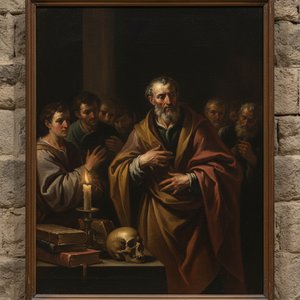
Painted during his formative years in Seville—around 1650–55—Bartolomé Esteban Murillo's self-portrait transcends mere likeness; it embodies the spirit of the Spanish Baroque, capturing a profound sense of aristocratic composure and intellectual contemplation. More than just an image of a man, it’s a meticulously crafted meditation on artistic identity within a broader cultural landscape.- Subject Matter: Murillo presents himself in a contemplative pose against a backdrop of weathered stone—a deliberate choice that speaks to the passage of time and imbues the portrait with an aura of solemn dignity. His gaze is direct, yet inward-looking, suggesting a preoccupation with artistic principles and philosophical inquiry.
- Style: The painting exemplifies Murillo’s signature Baroque style—characterized by dramatic chiaroscuro (the interplay of light and shadow)—which lends depth and realism to the depiction. Unlike many contemporaries who favored flamboyant ornamentation, Murillo opted for restraint, prioritizing clarity of form and tonal gradation.
- Technique: Murillo employed a masterful oil painting technique, layering pigments with painstaking precision to achieve smooth transitions and subtle gradations of tone. The artist skillfully modeled the flesh tones, capturing the nuances of light and shadow—a hallmark of Baroque realism that distinguishes Murillo’s work from earlier artistic traditions.
- Historical Context: Seville in Murillo's time was a vibrant center of artistic patronage and intellectual ferment—the seat of the Habsburg monarchy and a hub for commerce and cultural exchange. The portrait reflects the prevailing ethos of the era, which valued erudition, piety, and refined aesthetic sensibilities.
Symbolism: Stone, Light, and Artistic Reflection
The stone ledge upon which Murillo’s hand rests is laden with symbolic significance—representing permanence, stability, and the enduring legacy of artistic endeavor. The weathered surface suggests that time has etched its mark on both the artist and his craft, reminding viewers of the ephemeral nature of human existence alongside the timeless beauty of art. Simultaneously, the directional lighting casts strong shadows that accentuate Murillo’s facial features and clothing—a technique employed to heighten dramatic effect and convey a sense of three-dimensionality.- Stone: Symbolizing permanence and stability, mirroring the artist's desire for lasting recognition
- Light: Used dramatically to illuminate Murillo’s face and clothing, enhancing depth and realism—a cornerstone of Baroque artistic expression
Emotional Impact: Dignity Amidst Imperfection
Despite the subtle signs of aging—the receding hairline and graying moustache—Murillo conveys an unwavering sense of dignity and self-assurance. The artist’s gaze is serene, yet imbued with intellectual curiosity—suggesting a profound engagement with artistic principles and philosophical contemplation. Ultimately, Murillo's Self Portrait invites viewers to contemplate the complexities of human experience—embracing both beauty and imperfection as integral components of life’s journey. It stands as a testament to Murillo’s ability to capture not only physical likeness but also the inner spirit of his subject—a feat that cemented his place among the most revered artists of the Baroque period.Conclusion: A Legacy Illuminated
Murillo's Self Portrait remains an enduring emblem of Baroque artistic achievement—a masterpiece that continues to inspire admiration and contemplation centuries after its creation. Its meticulous technique, symbolic richness, and profound emotional impact solidify Murillo’s reputation as one of Spain’s greatest painters—a figure whose legacy shines brightly through the lens of art history.Vragen & Antwoorden
Kan ik "Self-Portrait" door Bartolome Murillo op mijn eigen muur bekijken voordat ik het koop?
De AR-voorvertoning-pagina van "Self-Portrait" door Bartolome Murillo maakt gebruik van augmented reality om het kunstwerk op een compatibel apparaat in uw eigen ruimte te tonen.
Is "Self-Portrait" vrij van auteursrecht?
"Self-Portrait" door Bartolome Murillo is bevindt zich in het publiek domein - de auteursrechten zijn verlopen. Deze status bepaalt hoe de afbeelding van het werk mag worden gereproduceerd.
Welke sfeer zou een reproductie van "Self-Portrait" door Bartolome Murillo in een kamer brengen?
De Elegant sfeer van "Self-Portrait" door Bartolome Murillo past perfect bij de aanbevolen ruimte: een Living Room.
Biografie van de kunstenaar
A Life Bathed in Andalusian Light
Bartolomé Esteban Murillo, een naam die synoniem staat voor de gouden eeuw van de Spaanse Barokke schilderkunst, kwam tot leven uit het bruisende hart van Sevilla in 1618. Zijn leven, hoewel gekenmerkt door persoonlijke tragedie en maatschappelijke verschuivingen, bloeide uit tot een artistieke carrière die de geest van zijn tijd vastlegde – een periode van religieuze ferventie, sociale verandering en opkomende artistieke innovatie. Geboren als zoon van Gaspar Esteban, een lijkschriekers, en María Pérez Murillo, binnen een groot gezin van veertien kinderen, ervoer jonge Bartolomé vroege verliezen met het overlijden van beide ouders in korte tijd tijdens zijn jeugd. Dit leed leidde tot de voogdij van zijn zus’s man, Juan Agustín Lagares, een sleutelfiguur die indirect zijn artistieke pad zou beïnvloeden. Murillo's eerste training begon onder Juan del Castillo, een lokale kunstenaar en verwant via zijn moeder, waardoor een basis werd gelegd voor een stijl die uiteindelijk uniek van hem zou worden. De vroege jaren waren doordrenkt met de realistische tradities die in Sevilla heersten, waarbij invloeden werden opgedaan van meesters als Zurbarán, Ribera en Cano – kunstenaars die prioriteit gaven aan scherpe realisme en dramatische intensiteit. Echter, Murillo’s geniale kracht lag niet in simpel kopiëren, maar in deze fundamenten te transformeren tot iets zachters, meer lichtgevends en diep menselijks.Van Realisme naar Radiante Gratie
Murillo's artistieke reis was geen plotselinge sprong naar roem, maar eerder een evolutie gekenmerkt door verschillende fases. Zijn vroege werken, sterk beïnvloed door de strenge realiteit van zijn tijdgenoten, toonden een nauwkeurige aandacht voor detail en een sombere kleurenpalet. *Young Man with a Basket of Fruit (Personification of Summer)*, gemaakt rond 1640-50, illustreert deze periode – een ter plaatse weergave van alledaagse het leven weergegeven met buitengewone precisie. Toch verschenen er zelfs in deze vroege werken hints van de zachtheid en emotionele diepte die zijn volwassen stijl zouden definiëren. De *Young Beggar*, geschilderd rond 1645, demonstreert een groeiende gevoeligheid voor menselijk lijden, wat de invloed van Velázquez’s meesterlijke portretten van gewone mensen weerspiegelt. Naarmate Murillo volgorde, onderging zijn stijl een opmerkelijke transformatie. Hij verlegde zich weg van de scherpe realiteit van zijn voorgangers en omarmde een verfijnder en polijster esthetiek die resoneerde met de smaken van Sevilla’s groeiende burgerij en aristocratie. Deze verschuiving was vooral zichtbaar in zijn religieuze werken, waar hij traditionele iconografie verrijkte met een ongekende mate van warmte, gratie en emotionele toegankelijkheid. *St. Jerome*, geschilderd tussen 1650-52, is een getuigenis van deze volwassen stijl – een zacht lichtgevend portret dat sereniteit en devotie uitstraalt.Een Meester van Religieuze Sentimenten en Genre Scènes
Murillo’s artistieke productie was buitengewoon divers, omvattend religieuze schilderijen, genre scènes, portretten en mythologische onderwerpen. Echter, hij is het meest bekend vanwege zijn weergaven van de Onbevlekte Ontvangst – een onderwerp dat hem gedurende zijn hele carrière fascineerde en resulteerde in talloze variaties, elk met een unieke uitstraling van etherische schoonheid. Deze werken, gekenmerkt door hun delicate penseelstreken, levendige kleuren en gracieuze composities, werden enorm populair en vestigden Murillo als de toonaangevende schilder van religieuze beelden in Spanje. Naast zijn heilige onderwerpen schilderde Murillo ook scènes uit het alledaagse leven van gewone mensen. Zijn genre scènes – weergaven van bloemenmeisjes, straatjongeren en bedelaars – bieden een aangenaam beeld van de sociale realiteiten van 17e-eeuws Sevilla. Deze schilderijen zijn niet alleen observatieonderzoeken; ze zijn doordrenkt van een diepe empathie en compassie, waardoor de eenvoudige onderwerpen een niveau van waardigheid en gratie bereiken. Hij bezat een buitengewone gave om de onschuld van kinderen vast te leggen, waarbij jonge kinderen met opmerkelijke realisme en zachtheid werden afgebeeld.Erfgoed en Duurzaam Invloed
Bartolomé Esteban Murillo’s impact op het verloop van de Spaanse kunst – en daarbuiten – is onmiskenbaar. Hij vestigde een unieke stijl die religieuze devotie combineerde met menselijke sentimenten, waardoor werken ontstonden die diep resoneren met publiek over verschillende sociale klassen heen. Zijn invloed strekte zich uit verder dan zijn geboorteland Spanje en inspireerde generaties kunstenaars in heel Europa. Gainsborough en Greuze, onder meer, erkenden zijn schuld aan Murillo’s lichtgevende stijl en gevoelige weergaven van menselijke emotie. Hij trainde talloze leerlingen in zijn Sevilla werkplaats, waardoor zijn artistieke nalatenschap voortleeft. Zijn schilderijen worden te vinden in prestigieuze musea wereldwijd, waaronder het Prado Museum in Madrid, het Hermitage Museum in Sint-Petersburg, de Wallace Collection in Londen en het Timken Museum of Art in San Diego – getuigenissen van zijn blijvende aantrekkingskracht en historische betekenis. Murillo’s kunst blijft kijkers verbluffen met zijn schoonheid, gratie en diepe menselijkheid, waardoor zijn plaats als een van de meest geliefde en invloedrijke schilders van de Spaanse Barokke periode wordt bevestigd. Zijn vermogen om religieuze beelden te verrijken met emotionele diepte en het alledaagse leven met empathie weer te geven, zorgt ervoor dat zijn werk relevant en inspirerend blijft eeuwen na zijn dood in 1682.
Bartolome Murillo
1618 - 1682 , Spanje
Snelle feiten
- Artistic Movement Or Style: Barokke schilderkunst
- Artists Or Movements Influenced By This Artist:
- Gainsborough
- Greuze
- Artists Who Influenced This Artist:
- Zurbarán
- Ribera
- Date Of Birth: 1 januari 1618
- Date Of Death: 3 april 1682
- Full Name: Bartolomé Esteban Murillo
- Nationality: Spaans
- Notable Artworks:
- Immaculata Ontvangen
- Jonge bedelaar
- St. Jerome
- Place Of Birth: Sevilla, Spanje
Gerelateerde artikelen

The Golden Age Reforged: Dramatic Realism & Religious Zeal in Spanish Baroque Art
Explore the dramatic world of Spanish Baroque art! Discover masters like Zurbarán & the powerful influence of religious zeal on painting techniques – a guide for collectors and enthusiasts.

Top 10 Barok Meesterwerken: Kunstgeschiedenis voor uw Interieur | OriginalUniqueArt.nl
Ontdek de 10 meest iconische Barok meesterwerken van Caravaggio, Rembrandt & Rubens! Duik in de geschiedenis en passie achter deze klassieke schilderijen. Vind museumkwaliteit reproducties voor uw interieur op OriginalUniqueArt.com.
Spanish Baroque Art: The Dramatic Mastery of Light and Shadow in the Age of Velázquez
Explore the profound drama of Spanish Baroque art. Delve into the mastery of light, shadow, and realism through the legendary works of Diego Velázquez and the Spanish Golden Age.

The Dramatic Flourish: Exploring the Baroque Movement's Enduring Legacy in Art History
Explore the dramatic world of Baroque art! Discover iconic artists like Caravaggio & Rubens, defining techniques, and its lasting impact on art history. Expert insights for collectors & enthusiasts at OriginalUniqueArt.

Bartolomé Esteban Murillo: Divine Light & Social Commentary in Golden Age Seville
Explore the captivating world of Bartolomé Esteban Murillo, a master of Spanish Baroque painting. Discover his luminous religious scenes, tender genre paintings & lasting legacy in Golden Age Seville. Learn more at OriginalUniqueArt.