

 Bekijk op ware grootte
 Verstuur
 Delen
Delen
 Details bekijken
 Gids voor studentenkunstwerken

 Download
 Vergelijkbare items
 Röntgenonderzoek
 Diavoorstelling
 Statistieken
Onement I
 Oil On Canvas
- WallArt
- Color Field Painting
 1948
1948- Modern
 69.0 x 41.0 cm
 Museum of Modern Art
 Lees meer
De kunstwerken die op deze pagina worden weergegeven, zijn beschermd door de auteursrechtwetgeving, wat betekent dat het ons wettelijk niet is toegestaan om identieke reproducties te maken of te verkopen. Deze bescherming wordt gehandhaafd onder internationale overeenkomsten zoals de Conventie van Bern en door nationale wetgeving, waaronder de bepalingen van de Amerikaanse auteurswet - Titel 17. Alle rechten voorbehouden. Reproduceren of distribueren van afbeeldingen is niet toegestaan zonder uitdrukkelijke schriftelijke toestemming van WahooArt.com en de rechthebbenden.
Als een respectvol en legaal alternatief bieden wij op maat gemaakte, handgeschilderde kunstwerken aan die geïnspireerd zijn op het origineel. Onze bekwame en professionele kunstenaars bestuderen zorgvuldig de stijl, sfeer en artistieke essentie van het origineel om een nieuw, uniek werk te creëren dat dezelfde emotie oproept – terwijl het een op zichzelf staande, originele creatie blijft.
Deze methode voldoet volledig aan de auteursrechtwetgeving, omdat het niet gaat om het kopiëren of dupliceren van het beschermde kunstwerk. In plaats daarvan is er sprake van een creatieve herinterpretatie — een nieuw schilderij dat door het origineel wordt geïnspireerd, maar er niet identiek aan is.
Handgemaakte olieverfreproductie
Met de hand geschilderd in olieverf op canvas in uw gewenste maat en lijst, op bestelling gemaakt door onze kunstenaars. ( Schakel over naar print Schakel over naar digitale afbeeldingen)




P118B €10

P118H €10

P118W €10

P438Z €10

P508JH €12

P508YH €12

P805H €10

P805Z €10

P919BZ €10

P919G €10

P919XJ €10

P959ZH €10

P968JZ €12

W106C €8

W218G €10

W218JH €8

W218Y €10

W307PJ €10

W316G €10

W316PJ €8

W316Y €10

W398PJ €8

W4111J €10

W500HY €15

W500JH €15

W692G €12

W849H €8

W940BG €15

W953PJ €8




Kies uit onze vooraf ingestelde maten die overeenkomen met de originele verhoudingen van het kunstwerk.

Voer de breedte en de hoogte in die u nodig heeft, passend bij uw lijst of uw muur. Dit is handgeschilderd, dus bij een afmeting met een andere vormverhouding kan de kunstenaar iets meer rondom het schilderij schilderen of juist iets meer weglaten — u kiest zelf. Wij sturen u een digitaal mockup ter goedkeuring voordat het schilderwerk begint. De afbeelding die op deze pagina wordt getoond, is niet het uiteindelijke resultaat — alleen de mockup geeft dit weer.
Na de bestelling zal het team van OriginalUniqueArt.com per e-mail contact opnemen met de klant voor instructies en een mockup-voorbeeld sturen.
Wereldwijde levering () binnen 3 tot 4 weken in plaats van de standaard 5 weken. (23 oktober). Zonder concessies aan de kwaliteit.

Gratis wereldwijde expressverzending

Hoogwaardig linnen canvas

Volledige verzendverzekering

Garantie op terugbetaling van invoerrechten

Garantie op exacte kleurweergave

Retourbeleid van 100 dagen (alleen bij defecten)

100% Geld-terug-garantie

Korting bij meerdere afnames
 De optie voor glas is alleen beschikbaar bij een formaat kleiner dan 110 cm.

Onement I
Reproductiemethode
Formaat reproductie
-


Totaalprijs
€ 264
A Singular Vision: The Dawn of Color Field Painting
In the landscape of twentieth-century modernism, few works possess the quiet, seismic power of Barnett Newman’s Onement I. Completed in 1948, this masterpiece serves as a profound emblem of Abstract Expressionism and stands as a foundational cornerstone for the Color Field movement. To encounter this painting is to witness a pivotal moment in art history where the boundaries of representation were irrevocably dissolved, replaced by an exploration of pure perception. Newman, moving away from the surrealist influences of his early career, sought a visual language that could articulate the profound spiritual anxieties and existential longings of the post-war era. In doing so, he created more than just a painting; he crafted a meditative space where color and form converge to touch the sublime.
The composition of Onement I is a masterclass in radical simplification. Measuring 69 x 41 cm, the work utilizes oil on linen to establish a striking, dualistic atmosphere. The artist meticulously employed masking techniques to delineate two distinct zones of color: a deep, resonant maroon that anchors the lower portion of the canvas, and a vibrant, radiating orange-red that emerges from the upper section. This horizontal division is not merely a structural choice but a deliberate attempt to establish spatial relationships that transcend traditional perspective. The way the colors meet creates a tension that feels both grounded and ethereal, inviting the viewer to lose themselves in the subtle gradations of pigment.
Symbolism and the Divine Presence
Beyond its formalist brilliance, Onement I is steeped in deep philosophical and biblical symbolism. Newman’s work often sought to bridge the gap between the human experience and the divine, and this piece is no exception. The horizontal band of color acts as a visual metaphor for the Pillar of Fire that descended from Heaven during Moses’ journey through the Exodus—a symbol of guidance, light, and transcendence. This "zip" or division serves to both separate and unite the canvas, mirroring the way spiritual revelation can divide the mundane world from the sacred. For the collector or enthusiast, this layer of meaning transforms the painting from a purely aesthetic object into a profound vessel for contemplation.
The emotional impact of the work lies in its ability to evoke a sense of awe through minimalism. There is no narrative to follow, no recognizable figure to cling to; there is only the raw, unmodulated presence of color. This creates an immersive environment that can alter the atmosphere of any space it inhabits. For interior designers and curators, Onement I offers a unique opportunity to introduce a focal point of intellectual depth and sophisticated calm. It is a piece that demands attention not through noise, but through a powerful, silent resonance that lingers in the mind long after the initial viewing.
A Timeless Addition to the Modern Collection
Owning or displaying a high-quality reproduction of Onement I allows one to bring the revolutionary spirit of New York's mid-century avant-garde into a contemporary setting. The painting’s bold palette and clean, geometric precision make it an ideal companion for modern, minimalist, or even classical interiors, providing a sophisticated anchor that complements diverse design aesthetics. Whether viewed as a historical artifact of the Abstract Expressionist movement or as a contemporary study in color and light, this work remains a vital, breathing part of the art canon.
Vragen & Antwoorden
Zijn de kleuren van "Onement I" door Barnett Newman levendig of gedempt?
"Onement I" door Barnett Newman is vastgelegd met een Balanced Soft verzadiging en een Balanced intensiteit.
Met welk gevoel wordt "Onement I" geassocieerd?
De emotionele toon die is vastgelegd voor "Onement I" door Barnett Newman is Spiritual. Het vat het gevoel samen dat het werk uitdrukt.
Hoe past "Onement I" binnen de thema's en stijl van Barnett Newman?
"Onement I" behoort tot het Color Field Painting-werk van Barnett Newman, waarvan de bekende thema's onder meer surrealism, expressionism, jewish identity, spirituality, minimalist aesthetic omvatten.
Biografie van de kunstenaar
A Pioneer of Abstract Expressionism: The Life and Art of Barnett Newman
Barnett Newman, born in 1905 in New York City to Jewish immigrant parents from Poland, emerged as a pivotal figure in the landscape of American art. His journey wasn’t one of immediate recognition but rather a slow burn of artistic exploration and philosophical inquiry that ultimately redefined the possibilities of abstract painting. Initially studying at the Art Students League and later at the City College of New York, Newman absorbed the influences of his time – the burgeoning Cubism of Picasso and the vibrant color palettes of Matisse were early touchstones. However, he soon felt constrained by these established modes of representation, sensing a need to forge a new visual language capable of expressing the anxieties and spiritual longings of the post-war era. He even destroyed much of his earlier representational work, a deliberate act signifying his commitment to an entirely new artistic path. This period of self-imposed creative destruction was crucial; it cleared the ground for the radical simplicity that would come to define his mature style. Newman’s formative years were marked by intellectual curiosity and engagement with philosophy—a passion he carried throughout his life. He pursued a doctorate in philosophy at Columbia University, delving into existentialist thought and grappling with questions of meaning and purpose. This philosophical grounding profoundly shaped his artistic vision, informing his rejection of traditional conventions and his insistence on exploring the inner landscape of experience. His early paintings reflected influences from Surrealism, experimenting with dreamlike imagery and subconscious associations—a stylistic detour that ultimately served as a springboard for his groundbreaking breakthrough.The Birth of the “Zip” and the Expansion of Color
Newman’s artistic revolution began in 1948 with *Onement I*, a monumental canvas dominated by a single field of dark red bisected by a vertical stripe of orange. This seemingly simple composition—a radical departure from representational art—became his signature style, establishing him as one of the foremost practitioners of Color Field painting. The “zip,” as Newman termed it, wasn’t merely a line; it was a dynamic force, asserting presence within the expansive emptiness of the canvas and simultaneously dividing and uniting the composition. He meticulously crafted these zips using pigment dispersions—a technique that prioritized color saturation and tonal variation over traditional brushstrokes—creating an immersive experience for the viewer. This method allowed him to convey profound emotional resonance without resorting to explicit imagery or narrative content. Newman’s exploration of color extended beyond mere aesthetic considerations; he believed that color possessed inherent spiritual significance, reflecting the underlying rhythms and harmonies of existence. He painstakingly researched pigments and experimented with layering techniques to achieve optimal tonal balance—a dedication to craftsmanship that underscored his conviction that art could communicate truths inaccessible to rational thought. His subsequent works continued to refine this approach, culminating in monumental canvases like *Vir Heroicus Sublimis*, which incorporated multiple zips to evoke a sense of spatial depth and grandeur. These paintings were conceived as arenas for confronting existential anxieties—a reflection of the turbulent postwar period and Newman’s own personal struggles with faith and identity.Spirituality, The Sublime, and Philosophical Underpinnings
Newman's artistic philosophy was deeply intertwined with his intellectual convictions. He rejected the notion that painting should merely depict the external world, believing instead that it could serve as a vehicle for exploring profound existential questions—questions of mortality, meaninglessness, and transcendence. Influenced by thinkers like Sartre and Heidegger, he sought to capture what he called “the sublime”—an experience of overwhelming grandeur and awe—through his abstract forms. This wasn’t about religious iconography but rather an attempt to evoke a primal sense of wonder in the viewer—a desire to confront the immensity of existence without resorting to comforting illusions. He saw his work as a rejection of societal norms and an affirmation of individual freedom, striving to create art that was both intellectually rigorous and emotionally powerful. Newman’s unwavering commitment to philosophical inquiry permeated every aspect of his life—from his academic pursuits to his engagement with political activism. He championed the cause of civil liberties and passionately defended artistic expression as a fundamental human right—a stance that reflected his belief in the transformative potential of art to challenge conventional wisdom and inspire social change. His profound understanding of human psychology informed his artistic process, guiding him toward creating works that resonated deeply with viewers on an emotional level. Newman’s legacy extends beyond his paintings; he remains an enduring symbol of intellectual courage and artistic integrity—a testament to the power of art to grapple with existential dilemmas and illuminate the mysteries of consciousness. Newman's influence on subsequent generations of artists is undeniable. His pioneering use of color and form challenged established aesthetic conventions, paving the way for Minimalism and inspiring countless painters to explore new expressive possibilities. He demonstrated that art could transcend representational limitations—that it could communicate profound truths without resorting to visual imagery—a conviction that continues to resonate with contemporary artists today. Barnett Newman’s enduring contribution to modern art lies not only in his iconic canvases but also in his unwavering belief in the transformative power of artistic contemplation—a legacy that ensures his place as one of the most visionary figures of the 20th century.
Barnett Newman
1905 - 1970 , Verenigde Staten van Amerika
Snelle feiten
- Artistic Movement Or Style: Abstract Expressionisme
- Artists Who Influenced This Artist:
- Henri Matisse
- Pablo Picasso
- Date Of Birth: 29 januari 1905
- Date Of Death: 4 juli 1970
- Full Name: Barnett Newman
- Nationality: Amerikaans
- Notable Artworks:
- Onement VI
- Vir Heroicus Sublimis
- Place Of Birth: New York City, USA
Gerelateerde artikelen
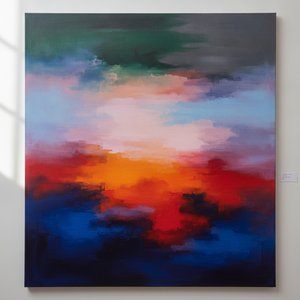
Color Field Painting: The Emotional Power of Pure Abstraction and Chromatic Depth
Explore the profound emotional depth of Color Field painting. Discover the history of mid-century abstraction, from Rothko to Newman, and learn how pure color transforms the viewer's experience through our expert art history guide.

Kandinsky's Meesterwerken: 25 Abstracte Kunstparels voor uw Interieur | OriginalUniqueArt
Ontdek de 25 meest iconische werken van Wassily Kandinsky! Duik in zijn abstracte wereld vol kleur, expressionisme & spirituele diepgang. Vind museumkwaliteit reproducties en interieurinspiratie op OriginalUniqueArt.com.
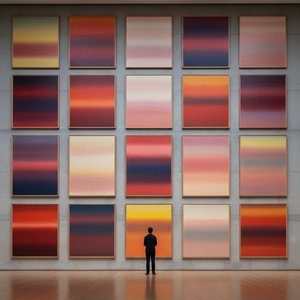
Mark Rothko's Top 25 Meesterwerken: Kleur, Emotie & Abstracte Kunst voor uw Interieur
Ontdek de top 25 meesterwerken van Mark Rothko! Duik diep in zijn emotionele kleurveldschilderijen en abstract expressionisme. Vind museumkwaliteit Rothko reproducties & interieurinspiratie op OriginalUniqueArt.com.

Carl Newman: Exploring Abstraction's Spiritual Resonance Through Color Field Painting
Explore the profound spiritual resonance of Color Field Painting with insights into Rothko, Newman & Still. Discover the techniques & legacy of this influential abstract art movement.

Top 10 Abstract Expressionisme Meesterwerken: Kunst voor uw Interieur | OriginalUniqueArt.com
Ontdek de 10 meest invloedrijke werken van Abstract Expressionisme! Leer over Jackson Pollock, Mark Rothko & meer. Museumkwaliteit kunst reproducties voor uw interieur. Bekijk de collectie op OriginalUniqueArt.com.
