

 Verstuur
 Delen
Delen
 Details bekijken
 Gids voor studentenkunstwerken

 Download
 Vergelijkbare items
 Diavoorstelling
 Statistieken
Single Form (Antiphon)
 Bronze
- Sculpture
- Modern Abstract
 1969
1969 270.0 x 61.0 cm
 The Hepworth Wakefield
 Lees meer
De kunstwerken die op deze pagina worden weergegeven, zijn beschermd door de auteursrechtwetgeving, wat betekent dat het ons wettelijk niet is toegestaan om identieke reproducties te maken of te verkopen. Deze bescherming wordt gehandhaafd onder internationale overeenkomsten zoals de Conventie van Bern en door nationale wetgeving, waaronder de bepalingen van de Amerikaanse auteurswet - Titel 17. Alle rechten voorbehouden. Reproduceren of distribueren van afbeeldingen is niet toegestaan zonder uitdrukkelijke schriftelijke toestemming van WahooArt.com en de rechthebbenden.
Deze methode voldoet volledig aan de auteursrechtwetgeving, omdat het niet gaat om het kopiëren of dupliceren van het beschermde kunstwerk. In plaats daarvan is er sprake van een creatieve herinterpretatie — een nieuw schilderij dat door het origineel wordt geïnspireerd, maar er niet identiek aan is.
Giclée / Kunstafdrukken
Giclée- of canvasafdruk van museumkwaliteit met een snelle productie en flexibele afwerkingsmogelijkheden. ( Koop handgeschilderd kunstwerk Schakel over naar digitale afbeeldingen)




































Kies uit onze vooraf ingestelde maten die overeenkomen met de originele verhoudingen van het kunstwerk.

Voer de breedte en de hoogte in die u nodig heeft, passend bij uw lijst of uw muur. Een afdruk kan alleen worden ingekort, nooit groter worden gemaakt dan het origineel, waardoor een formaat met een andere verhouding een deel van de afbeelding verliest. Wij sturen u een digitaal mockup ter goedkeuring voordat we iets drukken. De afbeelding op deze pagina toont niet de werkelijke uitsnede — dit is alleen te zien op het mockup.
Wereldwijde levering () binnen 2 weken in plaats van de standaard 4/5 weken. (21 oktober)

Gratis wereldwijde expressverzending

Hoogwaardig linnen canvas

Volledige verzendverzekering

Garantie op terugbetaling van invoerrechten

Garantie op exacte kleurweergave

Retourbeleid van 100 dagen (alleen bij defecten)

100% Geld-terug-garantie

Korting bij meerdere afnames
 De optie voor glas is alleen beschikbaar bij een formaat kleiner dan 110 cm.

Single Form (Antiphon)
Giclée / Kunstafdrukken
Formaat reproductie
-


Totaalprijs
€ 71
A Silent Dialogue: Exploring Barbara Hepworth’s ‘Single Form (Antiphon)’
Barbara Hepworth's 'Single Form (Antiphon)', created in 1969, isn’t merely a sculpture; it’s an invitation to contemplation. Standing nearly three meters tall and cast from bronze, this piece embodies the core of Hepworth’s mature style – a masterful synthesis of abstract form and deeply rooted connection with nature. It resides outdoors, nestled against a weathered brick wall and embraced by the verdant textures of ferns and foliage, suggesting an immediate dialogue between human creation and the organic world. The sculpture's elongated, subtly curving shape evokes both a standing figure and a stylized stone monolith, hinting at ancient forms and timelessness.
Hepworth’s approach to sculpture was profoundly influenced by her time in St Ives, Cornwall, where she found inspiration in the rugged coastline and the interplay of light and shadow. This piece reflects that sensibility – a deliberate simplification of form, achieved through meticulous modeling and casting. The bronze itself is not merely a material; it's treated with a subtle patina, revealing the artist’s hand and adding layers of texture and history to the surface. The smooth, almost polished sections contrast beautifully with the rougher, more textured base, creating a dynamic tension that draws the eye upwards.
Form and Gesture: Hepworth’s Sculptural Language
Hepworth's work is characterized by a deliberate avoidance of representational imagery. Instead, she focused on capturing essential gestures and underlying forms – the movement of water, the curve of a branch, the solidity of stone. ‘Single Form (Antiphon)’ exemplifies this approach perfectly. The elongated form seems to possess an internal life, suggesting a sense of contained energy and quiet dynamism. The subtle shifts in scale and proportion create a feeling of spatial ambiguity, inviting viewers to engage with the sculpture from multiple perspectives.
Her technique involved a process of subtractive modeling – starting with a rough block of material and gradually removing excess until the desired form emerged. This method allowed her to explore the inherent qualities of the chosen medium—in this case, bronze—and to create surfaces that were both tactile and visually arresting. The resulting texture is not simply a surface treatment; it’s integral to the sculpture's expressive power, conveying a sense of age, weathering, and the passage of time.
A Historical Context: Modernism and the British Art Scene
Barbara Hepworth was a pivotal figure in the development of modern sculpture. Born in 1903, she emerged during a period of radical artistic experimentation, challenging traditional notions of form and representation. Her work aligned with the broader currents of abstraction and non-objective art that were gaining momentum throughout Europe and America. During her time in St Ives, Hepworth was part of a vibrant artistic community alongside Ben Nicholson and Patrick Heron, contributing to the development of British modernism.
‘Single Form (Antiphon)’ was created during a period of significant social and political change – the late 1960s. The sculpture reflects this era’s interest in exploring new forms of expression and challenging established conventions. It stands as a testament to Hepworth's enduring legacy as one of the most important sculptors of the 20th century, whose work continues to resonate with audiences today.
Symbolism and Emotional Resonance
While devoid of explicit imagery, ‘Single Form (Antiphon)’ is rich in symbolic potential. The sculpture’s verticality suggests aspiration and connection to the heavens, while its grounded base anchors it firmly within the earth. The interplay between smooth and rough surfaces evokes a sense of balance and harmony – reflecting Hepworth's belief that art should be both intellectually stimulating and emotionally engaging.
Ultimately, ‘Single Form (Antiphon)’ is an invitation to experience a moment of quiet contemplation. It’s a reminder of the beauty and power of abstract form, and of the enduring connection between art and nature. Its presence outdoors creates a powerful dialogue with its surroundings, inviting viewers to consider their place within the larger world.
Vragen & Antwoorden
Welke techniek is gebruikt voor "Single Form (Antiphon)" en wanneer is het gemaakt?
"Single Form (Antiphon)" werd gemaakt in 1969, in Bronze.
Zijn de kleuren van "Single Form (Antiphon)" door Barbara Hepworth verzadigd of gedempt?
"Single Form (Antiphon)" door Barbara Hepworth is vastgelegd met een Clear Color Presence verzadiging.
Wordt "Single Form (Antiphon)" bewaard in het land van de maker?
Ja - het kunstwerk wordt bewaard in het land van herkomst van de kunstenaar. "Single Form (Antiphon)" wordt bewaard in Verenigd Koninkrijk, terwijl Barbara Hepworth werd geboren in Verenigd Koninkrijk.
Biografie van de kunstenaar
Early Life and Education
Barbara Hepworth (née Jocelyn Barbara Hepworth) was born on January 10, 1903, in Wakefield, Yorkshire, the eldest child of Herbert and Gertrude Johnson Hepworth. Her father, a civil engineer for the West Riding County Council, instilled in her a fascination with landscapes and structures—a passion that would profoundly shape her artistic vision. Growing up in rural Yorkshire provided Hepworth with formative experiences that contrasted sharply with the urban environment of London where she later pursued her studies. From an early age, Hepworth demonstrated musical talent, earning music prizes at Wakefield Girls’ High School, a testament to her innate creativity and dedication. This scholarship enabled her to attend Leeds School of Art in 1920, where she encountered Henry Moore—a fellow student who would become a lifelong friend and collaborator. Their shared artistic sensibilities fostered a dynamic creative partnership that spanned decades. Hepworth's formative years instilled within her an appreciation for both natural beauty and formal experimentation, laying the groundwork for her groundbreaking contributions to modern sculpture.Academic Career
Hepworth’s pursuit of artistic excellence continued at the Royal College of Art in London from 1921 until she graduated in 1924 with a diploma. The RCA's emphasis on abstraction and exploration of new materials proved instrumental in shaping her artistic trajectory. Notably, Hepworth secured a prestigious West Riding Travel Scholarship, allowing her to immerse herself in the Italian Renaissance—a pivotal experience that exposed her to monumental sculpture and influenced her aesthetic sensibilities. Her studies at the RCA coincided with the burgeoning modernist movement, where she honed her skills alongside influential figures like Moore and Nicholson, fostering an environment of intellectual exchange and artistic innovation. Hepworth’s dedication to mastering sculptural techniques cemented her position as one of Britain's foremost artists during this period.Early Career and Influences
Following her graduation, Hepworth embarked on a collaborative project with John Skeaping, whom she married in 1925. Together they established a studio in Hampstead, London—a hub for avant-garde artistic activity—where they championed “direct carving”—a technique that prioritized working directly into raw materials like wood and stone rather than modeling sculptures from clay. This approach reflected Hepworth’s belief in honoring the inherent qualities of the material itself, aligning her practice with the principles of Cubism and Surrealism. Skeaping's influence on Hepworth extended beyond their partnership; he encouraged her to embrace experimentation and challenge conventional artistic conventions. Hepworth’s early work was characterized by simplified forms inspired by Egyptian sculpture—a fascination that would endure throughout her career.Mid-Career Achievements
Hepworth’s artistic breakthrough arrived during the Second World War when she relocated to St Ives, Cornwall, alongside Ben Nicholson—a fellow artist and collaborator who had become her romantic partner. The Cornish landscape profoundly impacted Hepworth's creative output, informing her sculptures with references to geological formations and organic shapes. Her distinctive style—characterized by a sensual blend of abstraction and naturalism—became synonymous with the St Ives School of Art movement, attracting artists from across Europe. Hepworth’s monumental sculpture *Winged Figure* (1961–3), commissioned for John Lewis department store in Oxford Street, London, stands as a testament to her artistic ambition and technical prowess. It exemplifies her masterful manipulation of bronze—a material she embraced wholeheartedly throughout her later years.Legacy and Recognition
Barbara Hepworth’s enduring legacy rests on her pioneering contributions to modern sculpture and her unwavering commitment to exploring the relationship between form and space. Her sculptures—including *Two Forms*, *Totem*, and numerous smaller pieces—are housed in museums worldwide, demonstrating their universal appeal and artistic significance. Hepworth was awarded the Dame Commander of the Order of the British Empire (DCE) in 1958—a recognition of her distinguished artistic achievements—and she received the rank of Dame in 1965—honoring her lifetime dedication to art and creativity. Hepworth’s influence continues to inspire artists today, cementing her place as one of Britain's most celebrated sculptors and a pivotal figure in the history of modern art.
Barbara Hepworth
1903 - 1975 , Verenigd Koninkrijk
Snelle feiten
- Artistic Movement Or Style: Modernisme
- Artists Or Movements Influenced By This Artist: ['Unit One']
- Artists Who Influenced This Artist: ['Henry Moore']
- Date Of Birth: 10 januari 1903
- Full Name: Jocelyn Barbara Hepworth
- Nationality: Engels
- Notable Artworks:
- Oval Form
- Two Forms
- Totem
- Place Of Birth: Wakefield, Yorkshire
Gerelateerde artikelen
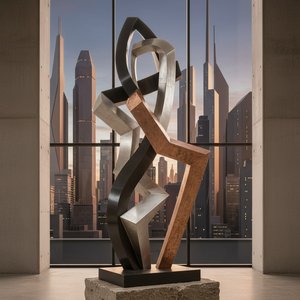
Forged in Fire: The Timeless Strength and Ethereal Beauty of Metal Art
Discover the enduring allure of metal art. Explore how masterfully forged sculptures blend industrial strength with organic elegance to create timeless investment pieces for sophisticated collectors and luxury interiors.

Metal Art for Commercial Spaces: A Procurement Guide to Durable & Modern Large-Scale Decor Solutions
Expert procurement guide for hotel designers and managers. Discover durable, large-scale metal art solutions for commercial spaces. Learn about material selection, maintenance, and efficient bulk ordering for high-traffic hospitality and corporate interiors.

Top 10 Bronzen Beeldhouwwerken die de Kunst Voorgoed Veranderden | OriginalUniqueArt
Ontdek de 10 meest legendarische bronzen beeldhouwwerken die kunstgeschiedenis schreven! Van Rodin tot Michelangelo, leer over hun meesterwerken & technieken. Vind museumkwaliteit reproducties en inspiratie voor uw interieur op OriginalUniqueArt.com.
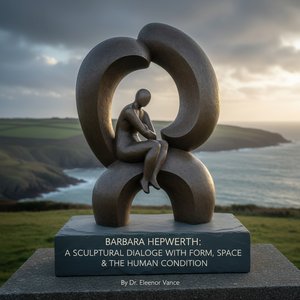
Barbara Hepworth: A Sculptural Dialogue with Form, Space & the Human Condition
Explore the profound world of Barbara Hepworth's sculpture. Discover her artistic evolution, iconic forms, and lasting influence on modern art. A guide for collectors & enthusiasts.

The Enduring Form: Exploring Themes & Techniques in Sculpture Across Historical Periods
Explore the rich history of sculpture from ancient masterpieces to contemporary innovations. Discover key techniques, influential artists & investment potential for discerning art collectors.


